



A 6:00 AM departure works best when the morning is the final step of a routine built the night before. The goal is a short, visible system that gets everyone out the door with fewer decisions and fewer arguments.
If you are pouring coffee with one hand while hunting for a missing shoe, a lunch box lid, and a work badge in the dark, the problem is usually not the morning itself. Families that choose clothes, bags, breakfast, and the day’s schedule before bedtime usually wake up to execution instead of negotiation. The result is a calmer routine, an easier way to get kids moving, and a clearer test for whether a digital fridge calendar belongs in your kitchen.

What a 6:00 AM routine really needs
A good morning routine is not a glamorous ritual. It is a set of predictable, repeatable steps that gets everyone fed, dressed, packed, and moving on time with as few new decisions as possible. For shift-working parents, that usually means focusing on essentials first: clothes, bathroom, breakfast, bags, keys, and departure. If a step does not directly help your family leave safely and on time, it probably belongs the night before or later in the day.
Consistency lowers friction, but too much structure makes the system brittle when someone wakes up cranky, sick, or slow. Advice built around life stage and family needs matters here. A routine should be stable in order, not rigid in attitude. In practice, the best 6:00 AM systems keep the sequence the same while leaving a little slack in the clock.
Build the morning backward from the door
The easiest way to design an early-exit routine is to block time in reverse. Start with 6:00 AM as the fixed departure point, then subtract the final 10 minutes for shoes, coats, keys, and getting everyone into the car. Subtract another 10 minutes for breakfast, 10 minutes for dressing, 5 minutes for brushing teeth and hair, and 5 minutes for last checks. That simple math shows many families that children need to be up around 5:20 AM, while the working parent may need a 15- to 25-minute head start to dress, review the day, or load the car.
Move decisions to the night before
Most of the stress disappears when the night before carries the decisions. Lay out full outfits, including socks and outerwear. Pack backpacks and work bags, put water bottles in the refrigerator, decide on breakfast options, and place anything that must leave the house by the door. If your child needs lunch, make it or at least choose it the night before. If you need scrubs, steel-toe boots, a badge, or a travel mug, stage those items in one visible place.

Breakfast is easier when it is intentionally repetitive, not endlessly creative. A simple, repeatable breakfast such as overnight oats, yogurt and fruit, egg bites, or the same protein shake each workday saves more peace than a new menu ever will. The same logic applies to adults: if your vitamins sit next to the protein powder or coffee beans, you have already removed another small decision from a low-energy hour.
Help kids cooperate without turning into a drill sergeant
One useful framework comes from Self-Determination Theory, developed by Edward Deci and Richard Ryan at the University of Rochester. The short version is that children do better when mornings support connection, competence, and autonomy. In a 6:00 AM household, that means waking them calmly instead of abruptly, giving them age-appropriate jobs they can actually master, and offering small choices such as “blue hoodie or red hoodie” or “oatmeal or yogurt.” You are not giving up authority; you are reducing avoidable power struggles.
Use visual cues instead of repeated reminders
A visible morning routine chart is often more effective than repeating yourself 10 times. For younger children, pictures work better than words. For older kids, a short checklist in the bedroom or by the kitchen table is often enough. “When-Then” language also helps because it makes the sequence obvious without a lecture: when shoes are on and teeth are brushed, then breakfast happens; when backpacks are by the door, then the music goes on in the car.

Connection is part of the routine
After a night apart, children have usually been away from you for about 8 to 12 hours, which helps explain why rushed mornings can unravel so quickly. Five warm minutes at the edge of the bed, one joke in the bathroom doorway, or a quick hug before breakfast can buy far more cooperation than three sharp reminders. Even 5 to 10 minutes of playful connection can improve the tone of the rest of the morning, and in a shift-working home that can be as simple as a silly song while shoes go on.
Make the first five minutes gentler
The wake-up itself matters more than many tired parents realize. A gentler alarm system or soft music can keep the first minutes from feeling like an emergency, and child-selected music can also give kids a useful sense of control. If one child needs more bathroom time or takes longer to eat, stagger wake-ups rather than forcing everyone into the same bottleneck at once.
When a digital fridge calendar actually helps
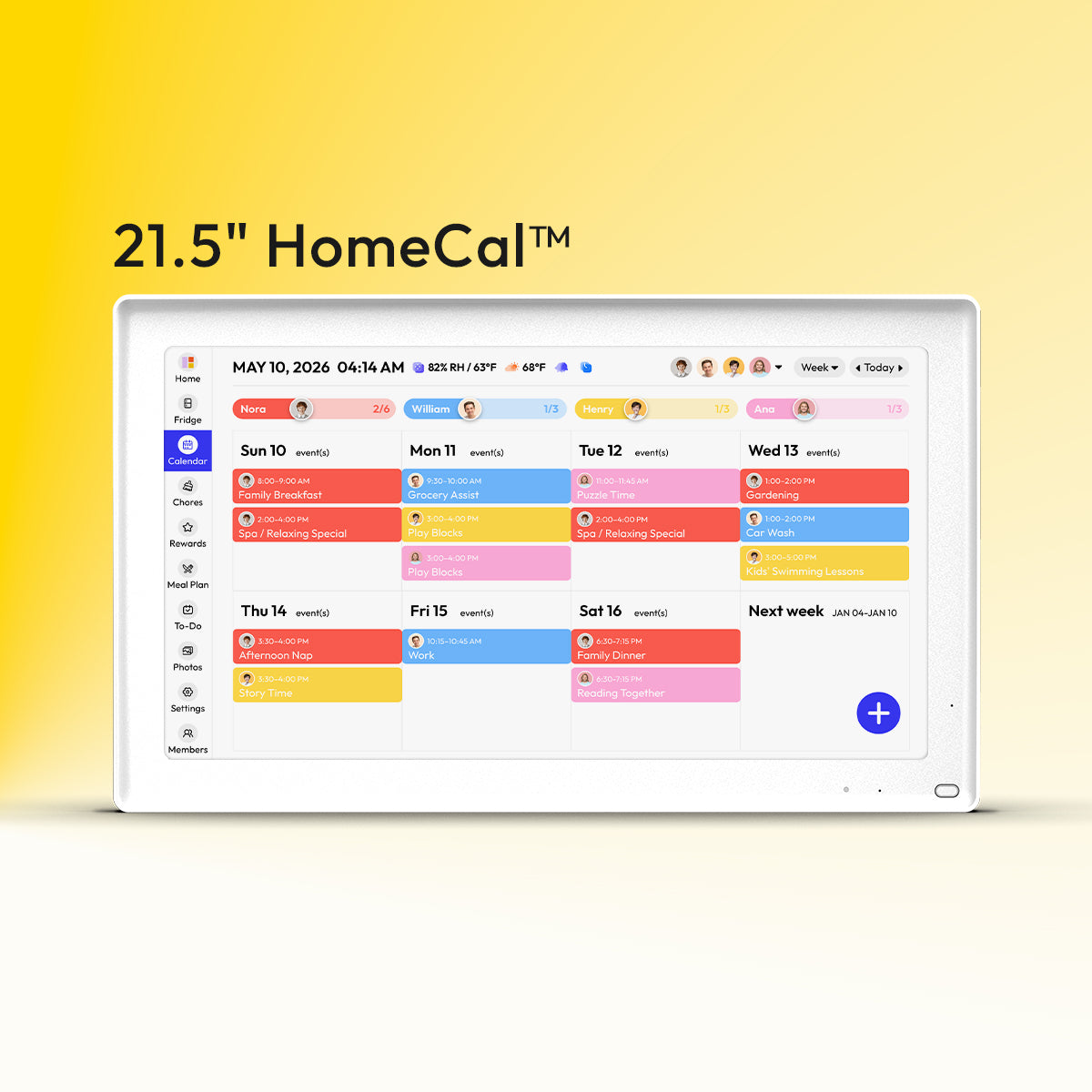
A digital family calendar is most useful when your real problem is not remembering the plan individually, but sharing one central view across the household. In practice, that can be a fridge-area screen, a wall display near the kitchen, or another always-visible family hub. For shift-working parents, it matters most during handoffs. If one adult is leaving before sunrise and another adult, grandparent, or older child is finishing the morning, a shared display can show pickup plans, after-school activities, meal notes, and chore reminders without a string of half-awake texts.

Shared screen or shared app?
Independent testing suggests the device is only valuable when it lives in a high-traffic shared space, especially near the kitchen. That matches real household behavior: people do not reliably walk into a home office at 5:45 AM just to check a calendar, but they do pass the refrigerator, the coffee maker, or the landing zone by the door. A smart display becomes useful when it replaces verbal reminders, not when it adds another screen no one looks at.
The tradeoff is cost and complexity. The split between wall-mounted and mobile access matters because many families do just as well with a shared phone calendar plus a paper or picture routine chart for children. Some options are one-time-purchase household planners, while others add subscriptions or premium features. The right question is not “Is this smart?” but “Will this remove daily nagging and missed handoffs in my house?”
System |
Best fit |
Main strength |
Main tradeoff |
Shared phone calendar |
Adults who already rely on a shared digital calendar |
Low cost and easy updates from anywhere |
Kids may never see it unless an adult translates it |
Fridge-area digital display |
Families needing visible handoffs, chores, and a shared morning dashboard |
Everyone can see the same plan at once |
Higher upfront cost and possible feature limits or subscriptions |
Paper or picture chart |
Young children who need simple routine cues |
Very clear for repeat tasks and cheap to set up |
Manual updates and limited value for changing appointments |
If the system breaks, shrink it instead of scrapping it
The most durable routines are the ones that adjust to circumstances without losing their backbone. If you work rotating shifts, keep the order fixed even when the clock changes: bathroom, clothes, breakfast, bags, door. If you have a newborn, a sick child, or a brutal run of early call times, protect the minimum viable morning instead of chasing a perfect one. Your family does not need a beautiful sunrise routine on those days; it needs a functional launch.
That minimum viable version still benefits from a 10- to 15-minute buffer, even if the rest of the morning is stripped down. In practical terms, that means you may skip elaborate breakfasts, extra chores, or last-minute cleanup, but you still preserve the essentials and the buffer. The routine is working when people know what comes next, the house is quieter, and leaving on time no longer depends on one exhausted parent carrying the whole mental load alone.
A 6:00 AM departure is never effortless, but it can become ordinary. When the routine is short, visible, and prepared ahead of time, your home feels less like a fire drill and more like a team that knows the plan.


