






The best interactive calendar is the one your household will actually check and update. For most families, that means a system that is visible, easy to manage, and flexible enough to handle schedules, meals, and recurring chores in one place.
The right interactive calendar is the one your household will actually use every day, not the one with the longest feature list. For most families, that means choosing a system that is visible, simple to update, and flexible enough to handle appointments, dinner plans, and recurring chores in one place.
Is everyone still asking what is for dinner, who is picking up after-school activities, and whether the trash already went out? Families usually reduce that daily friction fastest when the plan lives somewhere everyone can see and update, especially in a kitchen or another high-traffic spot. This guide will help you decide between an app, a fridge display, or a dedicated wall calendar without overbuying or overcomplicating the job.

Illustration of scattered family scheduling methods causing communication gaps
What an interactive calendar should do for a family
A digital wall calendar is more than a shared appointment list. In a family setting, it should function as a visible command center that shows who needs to be where, what the household is eating, and which tasks still need attention.
That matters because shared scheduling breaks down in ordinary, predictable ways. One parent keeps everything on a cell phone, another person forgets to check it, a child only remembers what they can see, and meal planning lives in a separate app no one opens at 5:30 PM. An interactive calendar helps when it reduces those handoffs. The strongest systems combine shared access, reminders, simple editing, and a layout that is easy to scan at a glance.
In practice, the best standard is simple: if your family can check it in under 10 seconds and act on what they see, it is doing its job. If it takes multiple taps, separate logins, or too much training, adoption drops fast.
Start with the real question: app-first or display-first
A shared family organizer makes the most sense when your household mainly needs coordination on phones and tablets. This path is usually cheaper, faster to test, and easier to adopt if everyone already uses digital calendars. It works especially well for couples, smaller households, and families where the adults are the primary planners.
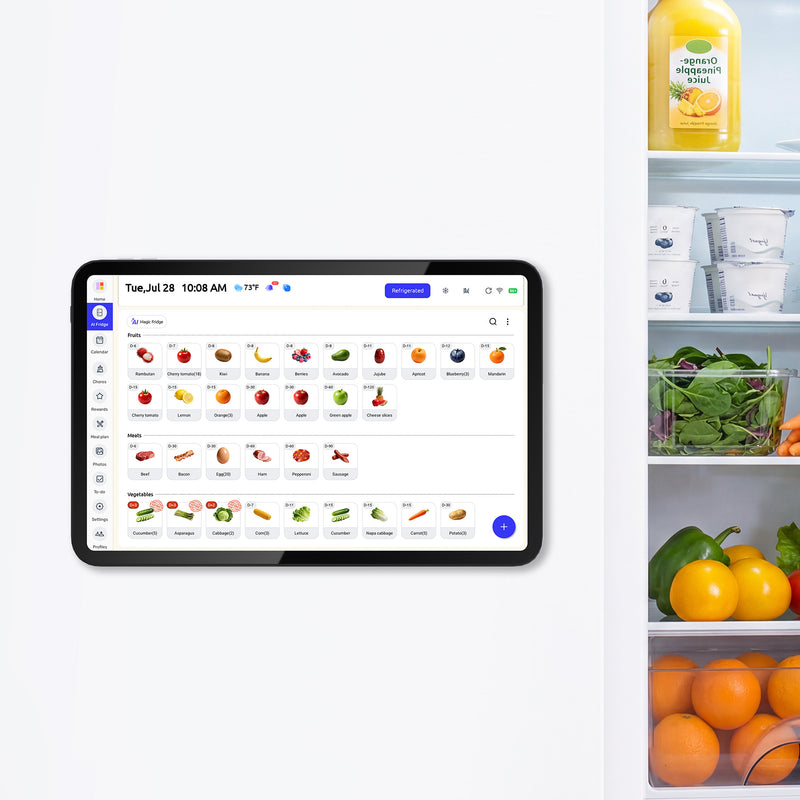
A display-first setup makes more sense when the problem is not syncing but visibility. Consumer guidance on digital calendars notes that placement strongly affects usefulness, and a calendar hidden in an office is far less helpful than one near the kitchen where everyone naturally passes in the morning. That matches what happens in real homes: a visible screen cuts down on repeated questions because the schedule stops living inside one person’s head.

Comparison of ignored phone calendar versus visible fridge display being checked
If you already rely on a shared digital calendar, you may not need a brand-new ecosystem at all. A meal-planning calendar you can share and color-code is often enough for families who want function without another subscription or device.
If your family ignores phone notifications but responds well to something mounted on the fridge, a hardware option may earn its keep. Marketplace listings for digital fridge calendars show three common sizes: about 10.1, 15.6, and 21.5 inches. That matters because screen size is not just cosmetic. A compact unit may work for two people, but once you are viewing several family members, dinners, and chores on the same screen, readability becomes a real issue.
Choose the features that solve shared scheduling first
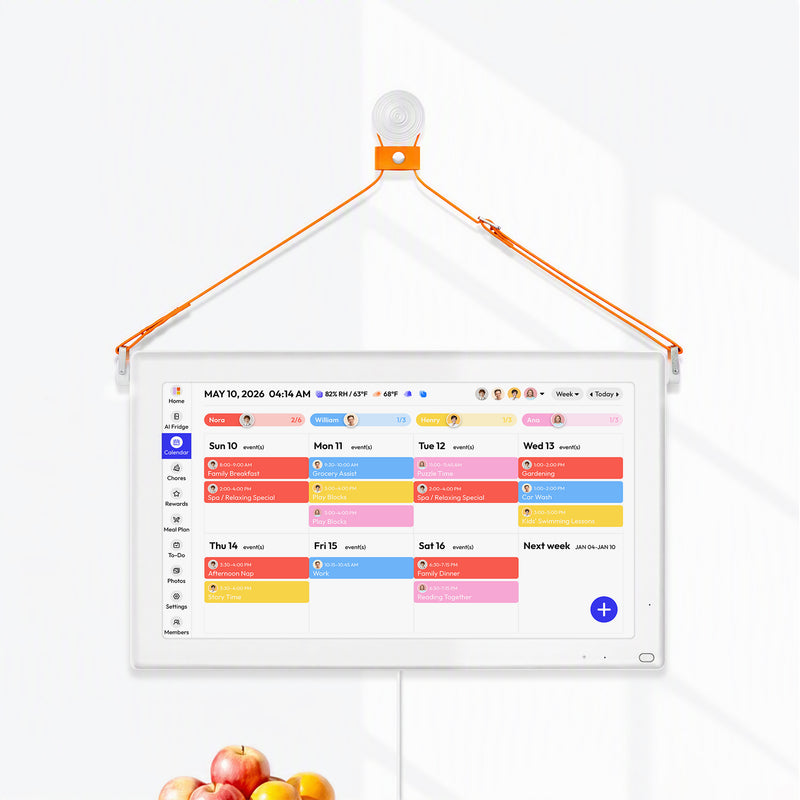
A family dashboard earns its place when it makes everyone’s schedule visible in one view instead of scattering it across separate reminders. The features that matter most are shared access, color-coding by person, reminders, and straightforward syncing. Those basics do the most to prevent double bookings and missed pickups.
Color-coding sounds minor until you live with it. In a busy week, being able to spot one child’s sports, another child’s school event, and an adult work commitment by color is much easier than reading every line. It also helps grandparents, babysitters, and older kids understand the plan without asking for a verbal update.

Editing rights matter too. A household usually runs better when at least two adults can add or change plans, but not everyone needs full control. In many homes, read-only access works better for younger kids while adults keep editing access. That is one reason app-based tools can be effective: they let you match permissions to how each person actually participates.
The catch is that more features do not always create more calm. Independent reviews of digital calendars often note that these devices can cost several hundred dollars for a fairly narrow job. That is a useful reminder to buy for the problem you actually have. If your real pain is missed appointments, prioritize visibility and syncing. If your real pain is the mental load of meals and chores too, broader features matter more.
Make sure meal planning follows the same weekly rhythm
A shared meal-planning calendar works because it turns dinner into part of the week’s schedule instead of a separate decision waiting at the end of the day. The strongest advice across meal-planning examples is consistent: assign meals to days, use recurring themes when helpful, and keep the plan flexible enough to move meals when life shifts.
That flexibility is what makes a digital calendar better than many paper systems. If Tuesday soccer runs late, tacos can move to Thursday and leftovers can move to Tuesday without rewriting the whole week. In real family use, that small adjustment is often the difference between following a plan and abandoning it.
Weekly meal planning calendar with color-coded dinner assignments
A separate meal calendar is usually cleaner than mixing meals into the main appointment view. A dedicated meal calendar also lets you store recipe links and notes directly inside each event, which reduces the “what was that recipe again?” scramble. One practical example is setting a reminder for 6:00 PM two days before a roast or slow-cooker dinner so someone remembers to thaw meat or check ingredients.

If your family wants a more all-in-one approach, a day-by-day meal planner can help by organizing breakfast, lunch, dinner, and snacks in one structure. That is useful for households where dinner is not the only planning pain point. Still, for many families, dinner-only planning is the better place to start because it solves the biggest stress with the least setup.
Keep chore tracking simple enough to last
A chore schedule is best understood as a repeatable plan for assigning household work across people and days, but the available source material here is thinner than it is for scheduling and meals. The safest advice is also the most practical: choose a calendar that supports recurring tasks, clear assignment, and visible completion without turning chores into a second full-time management job.
An Everblog family calendar system is appealing on this front because it combines chores, schedules, and meal planning on one shared screen, and it adds child-friendly features like voice-based task entry and rewards. For some households, that is genuinely helpful, especially when children respond better to checkmarks, stars, or visible progress than to repeated verbal reminders.
The main caution is that chore systems often fail when they demand too much consistency from already-tired adults. A complex points system may look impressive for two weeks and then quietly disappear. A better standard is this: if trash day, dishwasher duty, pet care, and one or two room resets can repeat automatically, and everyone can tell whether they are done, the system is probably simple enough to last.

Simple chore rotation system with task icons and completion checkmarks
Compare the common options before you buy
Type |
Best fit |
Main advantages |
Main drawbacks |
Shared calendar app |
Families already using phones heavily |
Low cost, quick setup, easy sharing |
Less visible to kids and forgetful adults |
Tablet or fridge display using existing calendars |
Families wanting visibility without a full new platform |
Reuses current calendar habits, strong kitchen visibility |
Depends on mounting, screen quality, and existing device reliability |
Dedicated family calendar display |
Busy households needing scheduling, meals, and chores in one place |
Always visible, household-friendly interface, broader family features |
Higher upfront cost and sometimes subscription fees |
A smart calendar review focused on product features highlights fast setup, shared family support, and remote updates as appealing features, but it also reads like promotional content. That does not make the claims useless, but it does mean you should weigh them against more independent guidance and your own household habits. A polished demo matters less than whether your family will still be checking the screen three months from now.
How to make the final decision without regret
A family organization platform is the right choice when your household needs one place for schedules, grocery planning, dinner planning, and to-dos. A simple shared calendar is the right choice when your household mostly needs to stop missing events. A visible display is the right choice when one person has been carrying the whole plan mentally and everyone else needs easier access.
Before buying, picture a normal Wednesday. If the issue is scattered information, start with a shared app. If the issue is that nobody looks unless it is directly in front of them, prioritize a screen in the kitchen. If the issue is dinner and chores constantly getting rebuilt from scratch, choose a system that supports recurring meals, recurring tasks, and quick edits.
The calmest homes usually do not have the fanciest setup. They have one trusted place where the plan lives, everyone knows to check it, and the system is simple enough to keep using when the week gets busy.


