

Not because you’re disorganized — but because you’re carrying more than anyone sees.
Most families don’t notice it — until one parent quietly burns out.
Most mornings don’t start with anything dramatic.
They start with half-packed backpacks, missing shoes, and the quiet pressure of getting everyone out the door on time.
On the surface, it looks like teamwork.
But underneath, one person is usually carrying far more than their share.

Dad’s Morning — 7:12 a.m.
Shoes are scattered across the entryway. One sneaker by the front door. The other missing — again.
Backpacks lean against the wall. A lunchbox is still open on the bench.
From the kitchen, he hears his wife quietly listing things under her breath — not really talking to anyone, just trying to stay on track.
- Don’t forget the water bottle
- Picture day is today
- Soccer cleats are in the trunk
- We still need to RSVP for Saturday
Everything she’s tracking lives in her head — schedules, reminders, details — none of it written anywhere everyone can see.
He wants to help.
Finally, he says the same thing he always says:
“Hey — what do you need me to do?”
She doesn’t look up. She’s already juggling too many things at once.
The Part No One Really Talks About
Most moms don’t realize this — but the problem isn’t effort.
It’s not time management.
It’s not discipline.
It’s mental overload.
- You’re always reacting, never fully ahead
- You feel behind even on “good” days
- Family life feels stressful instead of joyful
And worst of all — you quietly blame yourself.

The Question That Changes Everything
The turning point doesn’t come from asking:
“How can I remember more?”
It comes from asking:
“How can my home remember for me?”
A place where everyone can see:
- What’s happening today
- Who’s responsible
- What needs to be brought
Not hidden in one person’s phone. Not stored in one person’s head.
A Weekend Visit That Changed How She Saw Everything
That Sunday afternoon wasn’t anything special.
Just a casual visit to friends’ house — kids running in and out of the backyard, adults talking in half-finished sentences, coffee cups left on the counter.
At first, everything felt familiar.
Until it didn’t.
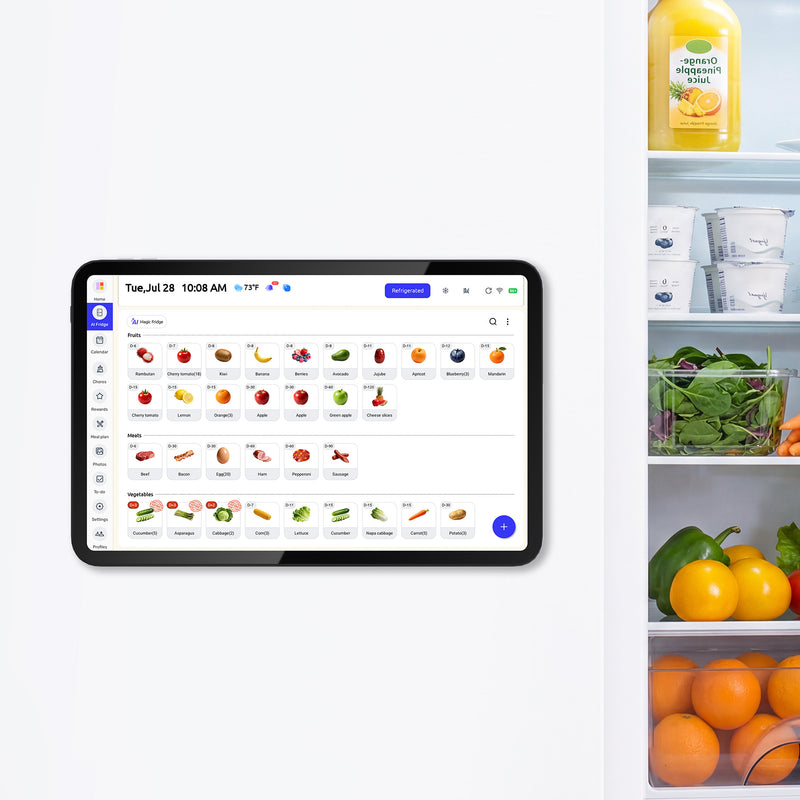
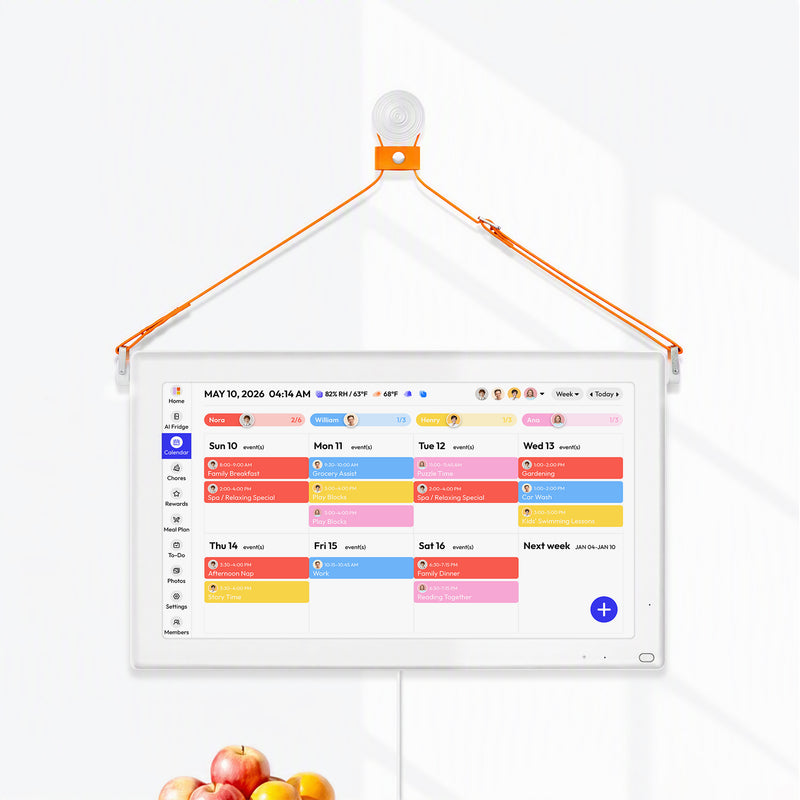
In their kitchen, right where everyone naturally passed through, there was a large screen mounted on the wall.
Not playing TV.
Not showing photos.
It quietly displayed the family’s week.
Color-coded schedules. School events. Practices. Dinner plans. Even small reminders like “bring library books” or “trash night.”
No one was hovering over it. No one was explaining it.
The kids glanced at it without being told.
“Do we have soccer today?”
“Yep — it’s right there.”

The Drive Home Was Quieter Than Usual
Later that evening, on the drive home, the visit stayed on her mind.
Not the food. Not the conversation.
But the feeling.
At their friends’ place, life didn’t feel rushed — even though they were just as busy.
No one seemed to be holding everything together in their head.
She realized something uncomfortable:
At home, she was the system.
The reminders. The backup plan. The safety net.
If she forgot something, everything fell apart.
At their friends’ house, the system was visible.
Shared. External.
It Wasn’t About Doing More
That night, she didn’t search for “how to be a better mom.”
She searched for something else entirely.
Something that could live in the home — not just on her phone.
Something everyone could see.
Something that didn’t rely on her remembering everything first.
That’s when she found Everblog.
A shared family calendar designed to stay in one place — the kitchen, the living room — where life actually happens.
Not another app. Not another notification.
A quiet reference point for the whole family.
The Change Was Subtle — But Meaningful
The first week felt small.
Schedules went up. School events were added. Meals were planned a little more clearly.
Then quiet shifts started to happen.
The kids stopped asking, “What’s today?”
Dad stopped asking, “Did you remind me?”
Instead, they looked.
Mornings became less frantic — not because there was less to do, but because fewer things were floating in her head.
She wasn’t the only one keeping track anymore.
What Actually Changed
- Mom stopped being the walking reminder system
- Everyone knew where to look
- Family life felt more shared — and less carried alone
The house started doing some of the remembering for her.
And for the first time in a long while, she felt more present — not just responsible.
You’re not behind. You’re just carrying too much.
Disclosure: This article is sponsored content and was created for advertising purposes. Some links in this article may result in a commission if you decide to make a purchase.


