
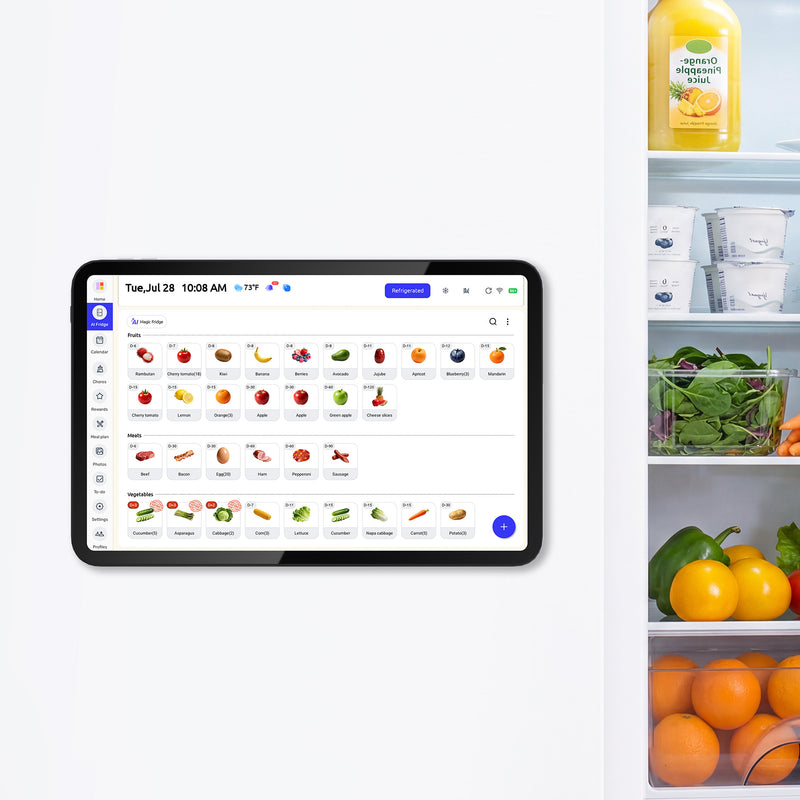

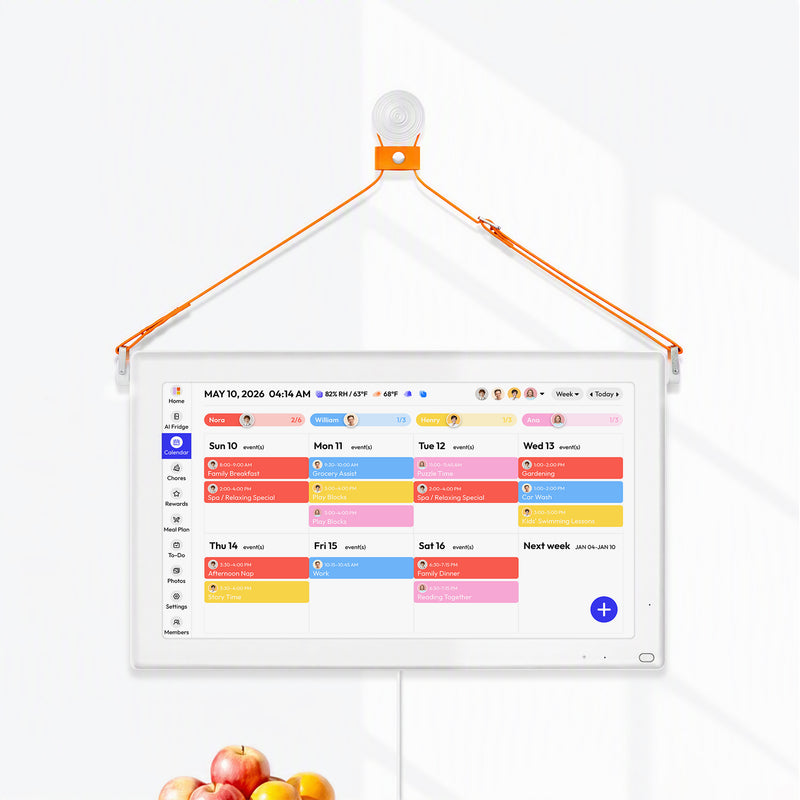



You can make a digital calendar feel right at home in a farmhouse interior by treating it like built-in millwork, not a standalone gadget.
Ever glance at your kitchen wall and feel like every device pulls the room away from the warmth you worked hard to create? A staged farmhouse retrofit can combine hidden smart controls with rustic finishes without forcing a style-vs-function tradeoff, but outcomes depend on house layout, insulation, climate, device ecosystem, and user behavior. One utility billing analysis of Oregon homes reported statistically significant smart-thermostat savings, including 22 ±4 therms annually for 2022-2023 self-installed natural-gas homes (n=13,762) using normalized monthly utility billing data. This result is specific to Oregon program participants from 2019-2023 and to the natural-gas self-install segment in that dataset, so transferability to other climates, fuels, and programs is uncertain Billing Analysis of Residential Smart Thermostats, 2019-2023.
You will leave with a clear build plan, material choices, and day-to-day setup that keeps the look calm and the system useful.
Safety Notice: This guide is general reference only. Before any electrical or structural modification, turn off power at the breaker and verify circuits are de-energized with a tester. If you are unsure about wiring, grounding, ventilation clearances, moisture exposure, or wall load capacity, stop and consult a licensed electrician or qualified contractor.
Start With the Finished Look You Want
Define one “anchor wall”
A farmhouse setup looks intentional when device design language and materials match what is already in the room, such as oak, brushed brass, matte black, and ceramic. Pick one high-traffic wall first, usually between the kitchen and mudroom, and build around that visual center.

Treat the calendar as a household station, not wall clutter
A shared schedule works best when the display acts as a a company where everyone naturally passes by. For most homes, a 21.5-inch screen reads clearly from a few feet away without dominating the room.
A practical target is eye-level center around 57-60 in from the floor, with nearby space for a small chalk rail, a mail slot, or a key hook so the wall feels crafted instead of “screen-only.”
Choose Materials and Light That Blend, Not Compete
Hardware finishes that age well
A farmhouse-smart blend is easiest when you avoid glossy white and chrome fronts and use warmer finishes with texture, like aged brass plates, linen-textured grilles, and reclaimed wood trim. Keep visible plastic to a minimum, especially around outlets and raceways.
Material trade-offs for the frame
Material |
Look |
Pros |
Trade-offs |
Reclaimed pine |
Soft, rustic grain |
Easy to cut, budget-friendly |
Dents more easily |
White oak |
Clean, premium farmhouse |
Durable, stable |
Higher cost |
Poplar + paint |
Traditional built-in style |
Smooth finish, easy touch-up |
Less natural texture |
Thin steel trim (matte black) |
Modern-rustic contrast |
Crisp edges, durable |
Can feel too industrial if overused |
Warm lighting keeps the wall integrated with the rest of the room: 2200K-2700K light supports candle-like ambience, while 5000K+ bulbs often make the install look clinical.
Build the Surround in a Safe, Functional Sequence
Pre-work safety checklist (in order)
- Turn off the target branch breaker and label it so the circuit is not re-energized during work.
- Verify de-energization in two passes: a non-contact tester first, then a contact meter at the device and in-box conductors.
- Confirm grounding continuity before reconnecting any device conductors.
- Mark stud locations and verify planned cuts will not compromise studs, blocking, or other load paths.
- Confirm permit/code requirements before opening walls; local amendments vary by jurisdiction 2023 NEC Changes 2023 FBC electrical code changes.
Licensed electrician required
- New branch circuits.
- Service panel changes or breaker-space reconfiguration Electrical Service Panel standard.
- Receptacle relocation or outlet modifications Electrical conductor, outlet, and switch standard.
- Unresolved GFCI/AFCI or moisture-zone questions, including outlets near water sources GFCI/AFCI outlet or breaker standard.
Use a 7-day rollout to avoid rework
A staged 7-day rollout is a practical way to test fit, cable routes, and glare before you lock in trim. Day 1-2: select wall and mock size with cardboard. Day 3-4: run power and test Wi-Fi strength. Day 5: mount and verify ventilation. Day 6: add trim and finish. Day 7: stress-test daily routines.

Mini Spec + Template
- Centerline height: 57-60 in from finished floor to screen center.
- Printable template: create a full-size paper mock of the 21.5-inch display face plus planned outer frame, tape it to the wall, and mark stud centers and fixing points before drilling.
- Ventilation: keep rear and top gaps at or above the display manufacturer’s stated minimum clearance.
- Fixing points: anchor into studs or approved blocking, not drywall alone.
- Visual checkpoints: mark rear ventilation space, screen-height centerline, and frame fixing points before trim close.
Common mistakes and how to avoid
- Blocked airflow: keep ventilation paths open through final trim.
- Poor Wi-Fi path: verify signal at final install height before closing cable routes.
- Inaccessible reset/power: preserve one discreet service-access path.
Before Day 3 electrical work, shut off the breaker, verify no live voltage, confirm grounding continuity, check ventilation clearance, and verify the wall can support the combined display-and-frame load; after mounting, run a short heat and sync test before final trim.
Stop and call a licensed pro if...
- You cannot confidently verify the circuit is de-energized or you find unexpected live conductors. If uncertain, stop and contact a licensed electrician.
- The install needs a new circuit, panel work, or receptacle relocation. If uncertain, stop and contact a licensed electrician.
- The surround requires cutting that could affect studs, blocking, or other load-bearing elements. If uncertain, stop and contact a licensed electrician.
- The location raises moisture-zone or GFCI protection questions you cannot resolve. If uncertain, stop and contact a licensed electrician.
- Grounding checks fail, ventilation clearances cannot be maintained, or the device overheats during testing. If uncertain, stop and contact a licensed electrician.
Keep concealment honest
Concealment should never block heat release, ports, antennas, or sensors. Leave breathing space behind and above the display, and include discreet access to reset buttons and power if the device freezes.
Once mounted, complete the household setup flow: each person installs the companion app, links their calendar once, and confirms shared events render correctly across phones and wall display.
Make the Calendar Useful in Real Life, Not Just Pretty
Configure the core workflow first
A household calendar delivers value when a company within seconds. Start with three layers only: family events, chores, and meal plan. Add more categories later if needed.

Add food-safety reminders where they matter
Kitchen command centers are ideal for timed safety prompts because the Danger Zone is 40°F to 140°F 40°F to 140°F. These are general U.S. household thresholds and local or state health authority requirements take precedence Leftovers and Food Safety. Set recurring alerts for “refrigerate leftovers within 2 hours” within 2 hours (or 1 hour when it is above 90°F) 1 hour when it is above 90°F, plus reheating leftovers to 165°F 165°F. Use these values as baseline household guidance, then follow current local official updates first. These thresholds come from USDA/FDA guidance and should be checked against current local health authority updates food safety guidance.
Build a power-outage fallback routine
Outage checklists reduce guesswork because an unopened refrigerator stays cold about 4 hours, and a full freezer can hold temperature about 48 hours about 48 hours. Add one pinned routine card: door-closed rule, thermometer check, discard thresholds, and recovery steps when power returns.
Troubleshooting What Usually Goes Wrong
“It looks good, but performance is bad”
Most failures come from over-concealment, and blocking ventilation, Wi-Fi paths, or sensor lines causes lag, overheating, or dropped sync. Fix by opening rear airflow, widening cable exits, and testing signal strength before refinishing trim.

“We have duplicate or missing events”
Multi-calendar homes break when two people publish the same shared calendar or one phone account loses permissions. Recheck which calendars are writable vs read-only, then test one event edit from each family member and verify the wall refresh.
“The system got messy after a busy month”
Reset to a simple structure: family events, chores, meals. Archive specialty calendars, clean notification rules, and set one monthly 20-minute maintenance block so the board stays helpful instead of noisy.
Practical Next Steps
A farmhouse-tech setup works best when it is beautiful at a glance and frictionless in use, and the Vermont case study’s 18% seasonal heating cost reduction should be treated as a non-generalizable project claim rather than a guaranteed result. Results can vary with house layout, insulation, climate, device ecosystem, and user behavior. To self-validate impact, track 8-12 weeks of baseline utility use and compare with 8-12 weeks after the changes, using weather-aware billing comparisons where possible normalized monthly billing data. Retrofit research also notes that baseline definition affects reported savings pre-retrofit metric. Build small, test hard, and expand only after the first wall works for two full weeks.
Action checklist
- Pick one anchor wall and mock the display size with cardboard.
- Choose frame and hardware finishes that match existing wood and metal tones.
- Mount with ventilation and service access before final trim.
- Link each family member’s calendar once; confirm two-way sync.
- Add chore and meal workflows, then add leftover and outage safety reminders.
- Run a monthly tune-up: remove stale calendars, verify alerts, clean cables and trim.
Maintenance and skill growth are where this project pays off long-term. Wipe the frame and screen weekly, check sync health monthly, revisit lighting seasonally, then level up by adding geofenced lighting scenes or a second smaller display in a mudroom once your first station stays stable.
FAQ
Q: Do I need to hide the entire calendar screen to keep a farmhouse look?
A: No. Hide cables and supporting hardware, then frame the screen like built-in woodwork so it reads as intentional furniture.
Q: What is the most common beginner mistake?
A: Overbuilding the enclosure and choking airflow or Wi-Fi. Keep openings for heat and signal, then test for several days before final paint or stain.
Q: Is the kitchen really the best location?
A: Usually yes, because household traffic is highest there. If glare is heavy, move to an adjacent hallway wall and keep line-of-sight from the main prep area.
Safety & Warranty Disclaimer
This installation and decor guide is for general reference and creative inspiration. Physical home modifications carry inherent risks, including structural damage or electrical hazards. Always prioritize your product’s official installation manual and ensure compliance with local building codes. If you are uncertain about performing a task, please seek assistance from a certified professional. [Brand Name] is not responsible for any damage or injury resulting from DIY applications of these suggestions.
References
- USDA Food Safety Basics: How temperatures affect food
- FDA: Food and water safety during power outages and floods
- Everblog: Digital calendar for wall
- Rustic smart-home integration article: How to blend smart home devices with rustic decor


