
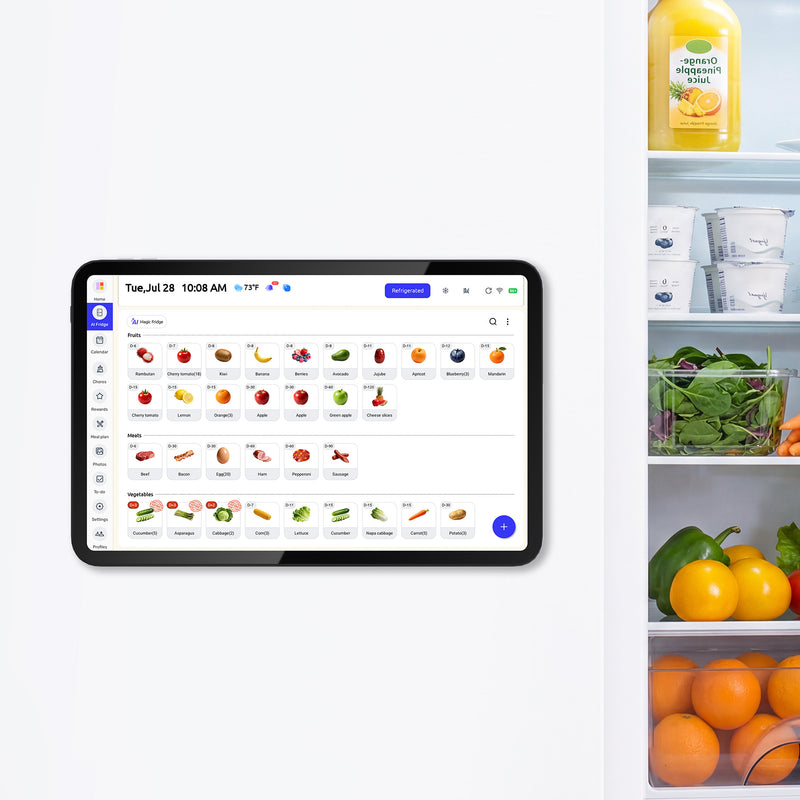


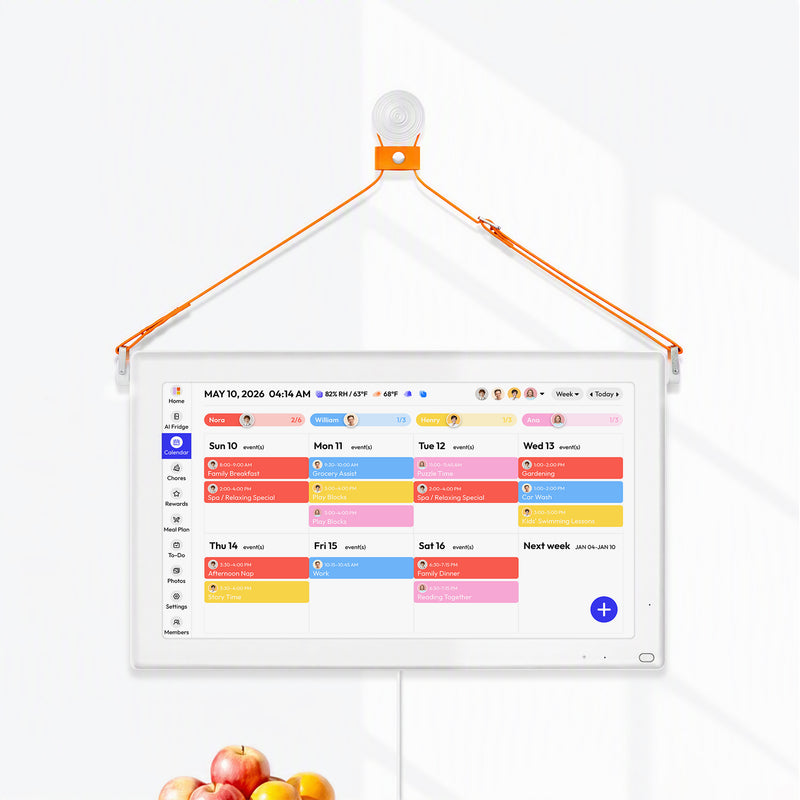


A digital wall calendar is basically a smart, Wi-Fi-connected screen that becomes the central nervous system for your family's schedules, chores, and meal plans. Think of it as the ultimate replacement for that chaotic mess of sticky notes, fridge magnets, and conflicting phone apps. It gives you one highly visible, instantly synced command center for the entire household.
Taming Family Chaos With a Digital Command Center

If your kitchen counter looks like a battlefield of permission slips, appointment reminders, and grocery lists scribbled on the back of an envelope, you know what modern family chaos feels like. Trying to juggle school pickups, soccer practice, and your own work deadlines often feels like a full-time job. It’s no wonder things get missed and you hear the constant question, "What's for dinner tonight?"
This mental load—the endless task of coordinating everyone’s life—is just plain exhausting. And while our smartphone calendar apps are helpful, they often just create more digital clutter. Important notifications get buried, and everyone is staring at their own little screen, siloed from the rest of the family. This is where a digital calendar for wall placement is a total game-changer.
The Central Command Center Your Home Needs
Think of it as the air traffic controller for your household. Instead of trying to track a dozen different flight paths on separate little radars, you get one big, clear display showing everything at a glance. A digital wall calendar is so much more than just a schedule; it’s a dynamic hub designed to bring back a sense of order and communication.
It tackles all that common household friction by:
- Centralizing Information: It pulls in every family member’s schedule from their phone (Google Calendar, iCal, you name it) and merges it into one unified view.
- Creating Visibility: When it’s hanging in a high-traffic spot like the kitchen, everyone sees the day's plan without having to ask. No more excuses.
- Simplifying Coordination: When plans change, an update on one person's phone instantly appears on the wall display for everyone else to see.
This single source of truth finally puts an end to the classic "I didn't know!" excuse. It makes it so much easier to manage the daily logistics, from who's on kid-pickup duty to remembering whose turn it is to take out the trash.
It takes that jumbled collection of notes, alerts, and mental reminders and transforms it into a streamlined, even elegant, solution. By swapping out all that physical and digital clutter for simple clarity, a dedicated digital family command center helps everyone start the day on the same page—feeling calm, organized, and ready for whatever’s next.
How a Digital Wall Calendar Actually Works

So what's really going on inside one of these smart screens? It's way more than just a fancy display hanging in your kitchen.
Think about it like upgrading from an old paper road map to a live GPS. The paper map shows you a fixed route—one that’s instantly wrong the second there’s a traffic jam. A live GPS, on the other hand, is constantly updating with new information to give you the real-time picture.
Your paper calendar works the same way. It's a static plan that becomes outdated the moment someone’s schedule changes. A digital calendar for wall displays gives you a living, breathing view of your family’s entire day, week, and month that’s always current.
This smart display is basically a dedicated, Wi-Fi-connected screen built for one core purpose: to be your family’s central command center. Digital wall calendars are specialized IoT devices for home automation designed to wrangle household chaos. The magic happens through the seamless connection between the physical display on your wall and a companion app on each family member’s phone.
The Brains Behind the Screen
The whole process is surprisingly simple, but that’s what makes it so powerful. Each person in the family just downloads the companion app and links their existing digital calendars, like Google Calendar or iCal. That’s it. This initial sync is all it takes to pull everyone’s scattered schedules into one unified place. You can even learn more about how to sync with Google Calendar to make this step a breeze.
From that moment on, the system works quietly in the background:
- Step 1: The Sync. You add a dentist appointment to your phone’s calendar while you're at the office. The app instantly sends that update to the cloud.
- Step 2: The Broadcast. The cloud service immediately pushes that new event to the smart display hanging in your home.
- Step 3: The Display. Within seconds, the wall calendar refreshes, and the new appointment pops up for the whole family to see.
This constant, two-way communication makes sure the screen is never out of date. It completely gets rid of the need to text, call, or shout reminders across the house. The information is just there, visible to everyone, all the time.
This ‘at-a-glance’ benefit is the device’s superpower. During a chaotic morning, a quick look at the wall can confirm who is handling school pickup or remind a teenager about soccer practice, preventing miscommunications before they happen.
Ultimately, the technology is designed to feel invisible. You don’t need to be a tech wizard to make it work. You just live your life, update your schedules on your phone like you always do, and the digital calendar handles the rest—keeping everyone perfectly in sync.
The Features That Actually Tame Household Chaos
A good digital wall calendar does way more than just show you what day it is. It’s packed with smart tools designed to tackle the biggest headaches of running a family. This isn't just tech for the sake of tech—these are real, practical solutions that change how your family coordinates, communicates, and stays connected.
Let's dive into the core functions that turn a simple screen into the command center of your home.
This move from static paper to dynamic screens is definitely picking up steam. In 2024, the global wall calendar market was valued at USD 176 million, but the interesting part is that 25% of buyers aged 18-34 have already switched to digital calendar apps. It shows a real hunger for smarter options like the 21.5-inch Everblog digital family wall calendar, especially with smartphone use now past 6.8 billion people globally. You can see more about this trend over at IntelMarketResearch.com.
The Chore Manager That Finally Ends the Nagging
Let's be honest, chore charts can be a battle. A digital chore manager transforms that whole dynamic. It’s less about a list of demands and more about an interactive tool that teaches kids what it means to be responsible.
- Crystal-Clear Assignments: You can assign tasks like "Take out the trash" or "Feed the dog" to specific kids, complete with due dates. No more "I thought you were doing it!"
- A Visual Pat on the Back: Kids get to physically check off their completed chores on the screen. That little action gives them a satisfying hit of accomplishment that a paper chart just can't match.
- Built-In Rewards: Systems like Everblog’s connect chore completion directly to a rewards tracker. Suddenly, chores are part of a game, motivating kids to pitch in without you having to ask a dozen times.
Think of it as a personal assistant for your kids' responsibilities. It handles the reminders and tracking, freeing you from the mental load of being the "chore police" and empowering them to manage their own duties.
This single feature can turn a daily power struggle into a team effort, building independence and a solid work ethic along the way.
The Meal Planner That Solves the 5 PM Scramble
Ah, the daily dreaded question: "What's for dinner?" A built-in meal planner puts that stress to bed by giving everyone a clear, visible plan for the week. No more last-minute panic or defaulting to expensive takeout.
But its real magic is how it connects to everything else.
When your meal planner syncs up with a collaborative grocery list, the whole process just flows. As you add recipes for the week, the ingredients can automatically pop up on a shared list that everyone can see on their phone. That means anyone can grab what's needed on their way home from work or school. It saves time, cuts down on food waste, and simplifies one of the most chaotic parts of the day.
Voice Entry and a Media Hub for Real-Life Convenience
Life with kids is messy and hands-on. A great digital calendar gets that. With voice entry, you can add appointments or grocery items while your hands are covered in dough or you're trying to get a toddler's shoes on. Just say, "Add milk to the grocery list," and boom—it's there.
Plus, a media hub turns the calendar into more than just an organizer. It becomes a living family scrapbook. You can share photos and videos right to the screen, creating a personalized slideshow that keeps your best memories front and center. It’s a fantastic way to feel connected, especially with grandparents or relatives who live far away, making the calendar a source of both organization and genuine joy.
Digital vs. Traditional Family Organization Tools
So, how does a smart calendar really stack up against the old ways of doing things? It's one thing to talk about features, but seeing them side-by-side with the tools we've all been using for years—paper lists, whiteboards, or a mishmash of apps—really clarifies the difference. The table below breaks it down.
| Feature | Digital Wall Calendar (e.g., Everblog) | Traditional Method (Paper, Whiteboard, Apps) |
|---|---|---|
| Central Hub | One unified screen for schedules, chores, and meals. | Multiple separate tools: a paper calendar, a whiteboard for chores, a notepad for groceries. |
| Real-Time Syncing | Instantly updates across all connected devices (phones, etc.). | Manual updates are required; easily becomes outdated. |
| Automated Reminders | Sends notifications for events and overdue tasks. | Relies on one person (usually a parent) to be the "human reminder." |
| Collaborative Lists | Grocery and to-do lists update in real-time for everyone. | Lists are static; requires texting photos or rewriting. |
| Interactive Chores | Kids check off tasks themselves; rewards can be automated. | Often a one-way street; lacks engagement and motivation. |
| Meal Planning | Integrates with grocery lists for streamlined prep. | A separate process; requires manually creating a shopping list from recipes. |
| Hands-Free Control | Voice commands let you add items when your hands are full. | Requires you to stop what you're doing to write things down. |
At the end of the day, it's about shifting the mental load. Traditional methods put the burden of managing, reminding, and updating on one person. A digital hub automates those tedious jobs, freeing up parents' brain space and empowering the whole family to be part of the solution.
How to Choose the Right Digital Calendar for Your Family
Okay, you're sold on the idea of a digital wall calendar—fantastic! Now comes the fun part: picking the right one for your family. But with so many options out there, it’s easy to get overwhelmed by screen sizes, feature lists, and different pricing models.
Let's break it down. I'll walk you through a simple checklist to help you find a device that not only fits your family’s needs and budget but also looks great on your wall. Think of it as an investment in a calmer, more organized home. Getting this right will pay off every single day.
Hardware and Aesthetics
First things first: the physical device. This is something you'll see every day, so it needs to be both functional and fit your home's vibe.
-
Screen Size and Quality: You need a screen that's big and clear enough to be read from across the room during the morning chaos. A larger display, like the 21.5-inch screen on the Everblog calendar, makes it easy for everyone to see schedules and to-do lists at a glance.
-
Design and Decor: Does it look like a clunky piece of tech, or does it blend in? Look for options with different frame materials or colors that match your kitchen cabinets or living room decor. Some have a clean, minimalist look designed to fit in anywhere.
This concept map shows just how many moving parts there are to running a household—it's way more than just appointments.

It’s a great visual reminder that a truly helpful family hub needs to pull together chores, meals, and schedules into one central place.
Software and User Experience
The software is the brains of the whole operation. Let me be blunt: if it's confusing or clunky to use, your family just won't use it. An intuitive interface is absolutely essential.
Make sure it has a clean, simple companion app so you can add events or check off chores easily from your phone. Also, see if the company pushes out regular updates. A brand that’s constantly adding new features is one that’s invested in making your experience better over the long haul.
The Hidden Costs: Subscription Models
This is a big one, so pay close attention. Many digital calendars seem like a good deal upfront, but then they hit you with a monthly or annual subscription fee to unlock the best features—like meal planning or chore rewards. Those costs really add up.
A no-subscription model offers incredible long-term value. With a one-time purchase, you get permanent access to all current and future features without the stress of another monthly bill.
This is a huge differentiator. The demand for family-specific planning tools is booming, with personalized wall calendars making up 58% of the 950 million units shipped globally in 2024. As people look for tools that truly adapt to their lives, models like Everblog’s—which unlock everything with one purchase and include a 2-year warranty—are exactly what families need. You can see more on this trend over at MarketGrowthReports.com.
By choosing a device without a subscription, you’re making sure your family’s new command center won’t come with any surprise fees down the road.
Making the Calendar a Part of Your Daily Routine

A digital calendar is a fantastic tool, but let's be real—it only works its magic if it actually becomes part of your family’s rhythm. Like any new gadget or system, you have to weave it into your life. The goal is to make checking the calendar as automatic as grabbing a snack, not another task on your already-full plate.
Getting started is usually pretty simple. You’ll mount the device somewhere everyone sees it—the kitchen is almost always the best spot—get it connected to your Wi-Fi, and set up profiles for each person in the family. This gives everyone their own color-coded space on the screen, which is a game-changer.
Once it's lit up and running, the real work begins: building the habits that make it indispensable. Don't just set it and forget it. The key is to actively pull it into your daily and weekly conversations.
Building Sustainable Family Habits
The single most effective way to get started is with a weekly "planning huddle." It sounds formal, but it’s not. Just pick a time that works, like Sunday night after dinner, and gather everyone around the calendar for ten minutes.
During this quick chat, you can:
- Look at the Week Ahead: Scan everyone's schedules to catch any clashes, like a soccer game and a birthday party happening at the same time.
- Assign Chores: Let the kids see their responsibilities for the week right on the screen. It makes it clear how they're contributing to the household.
- Plan Meals: Map out a few dinners together. This move alone kills the daily "what's for dinner?" headache and helps you build a grocery list in minutes.
This little ritual gets everyone on the same page and gives them a stake in how the week runs. It shifts the calendar from being a passive screen to an active, collaborative hub for the whole family.
Think of it as your family's weekly mission briefing. It's a small investment of time that prevents a week's worth of confusion, forgotten appointments, and last-minute scrambles. Everyone knows what's coming.
Getting the Whole Family Engaged
To make your digital wall calendar truly stick, everyone needs to use it—especially the kids. The good news is, these devices are designed to be interactive and even fun. Encourage your kids to take ownership of their corner of the calendar.
Let them be the ones to physically check off their chores on the screen. That little tap gives a satisfying sense of accomplishment that a paper chart just can't match. Show them how to use voice commands to add something to the grocery list; it feels like magic and is genuinely helpful when your hands are full.
When you turn these interactions into empowering little moments, you're doing more than just organizing your home. You’re teaching valuable life skills—time management, responsibility, and teamwork—in a way that feels completely natural. It stops being "Mom's calendar" and becomes "our family's command center."
Understanding Privacy and Security for Your Smart Calendar
Bringing any new smart device into your home is a big deal, especially one that holds the keys to your family's entire schedule. If you're wondering about privacy, you're asking the right questions. It's something we take seriously, too.
Let's break down how your information stays safe. Think of your family's schedule—all those appointments, notes, and photos—like a letter you're sending in the mail. You wouldn't want just anyone to be able to open it and read it. That's where data encryption comes in.
Encryption acts like a digital seal on that letter. It scrambles your information into a completely unreadable code while it travels from your phone or computer to the calendar display on your wall. Even if someone could somehow intercept it, all they'd see is gibberish. It's a non-negotiable layer of protection for your family's data.
Your Role in Securing Your Family Hub
While the calendar itself is built with security in mind, the device is only one half of the equation. Your home Wi-Fi network is the other. Think of your network as the front door to your digital home—you want to make sure it's locked up tight.
Here are a few simple but powerful steps every family should take:
- Secure Your Wi-Fi: This is your first line of defense. Make sure your home Wi-Fi is protected with a strong, unique password that isn’t easy to guess.
- Use Strong App Passwords: The password you set for the calendar’s companion app matters. Skip the obvious stuff like "Family123" and create something complex.
- Enable Two-Factor Authentication (2FA): If the app offers it, turn it on! 2FA adds an extra step, like sending a code to your phone, to prove it's really you logging in. It's one of the best ways to stop unauthorized access.
Protecting your family’s information is a partnership between you and the device manufacturer. By taking these simple steps, you significantly strengthen the security of your new family command center.
It's also a great idea to brush up on general online safety. Knowing some smart tips for safer surfing helps protect your family across all their devices, not just the calendar. For a more detailed walkthrough, you can learn more about setting up a secure digital family calendar in our guide.
Ultimately, a trustworthy company will always prioritize your privacy, giving you the peace of mind to make this incredible tool a central, worry-free part of your home.
Your Questions, Answered
Thinking about bringing a digital calendar into your home? It's a big step, and you've probably got a few questions. Let's tackle the most common ones we hear from families just like yours.
Is There a Subscription?
This is the big one, isn't it? Nobody likes getting hit with surprise monthly fees. Many smart calendars out there look great upfront, but then lock their most useful features—like meal planning or chore charts—behind a recurring subscription. Over a few years, those costs really add up.
We didn't think that was fair. That's why models like Everblog are a one-time purchase. You buy the device, and that's it. You get full access to every feature, plus all future updates, without ever paying another dime. It’s just a simpler, more honest way to help your family get organized.
How Hard Is It to Install?
If you can hang a picture frame, you can install a digital calendar. Seriously, you don't need a toolbox or a knack for DIY projects. Everything you need usually comes right in the box: a mounting bracket, screws, and even a handy paper template so you know exactly where to drill.
The whole process is a breeze:
- Find a good spot for it—somewhere everyone sees, like the kitchen, and near a power outlet.
- Tape the template to the wall and mark the spots for the screws.
- Attach the bracket, hang the screen, and plug it in.
- A few taps on the screen will get it connected to your Wi-Fi, and you're ready to go.
Can Everyone in the Family Add Events?
Of course! That's the whole point. A digital calendar for wall displays is designed to be a central hub for the entire family. Everyone can download the companion app on their phone.
From there, your teenager can add their soccer practice, your partner can block out a work dinner, and you can add the next dentist appointment. The second they hit "save" on their phone, it syncs instantly to the main display on the wall. No more texting updates or yelling reminders down the hall—everyone sees the same, up-to-the-minute schedule.
Ready to bring clarity and connection to your family's schedule? The Everblog digital wall calendar offers a subscription-free solution to tame household chaos. Learn more and order yours today at Everblog.com.


