





The easiest way to make school-night dinners run better is to put the plan, the timing, and the handoffs in one shared place. When your calendar, dinner plan, grocery list, and helper roles live together, fewer things stay stuck in one person’s head.
Does dinner fall apart at 5:15 PM because someone has practice, someone forgot to thaw chicken, and nobody knows who is picking up the younger kid? Many families do better when they use one visible hub instead of scattered texts, sticky notes, and memory. You’ll get a simple way to set up that hub, run it each week, and keep it realistic when life gets uneven.
Why dinner gets harder when the plan is split up
Too many surfaces means too many missed handoffs
A shared household planning hub works because it gives the family one place to check dinner, schedules, lists, and reminders without asking the same questions over and over. When the school calendar is on one phone, the grocery list is on the fridge, and dinner ideas are in someone’s head, the work turns invisible. That is when one parent becomes the default reminder system for everyone else.

This is also why school-night dinner stress often feels bigger than the meal itself. The real problem is not only cooking. It is coordinating pickup times, knowing who is home by 6:00 PM, spotting the late meeting before you start a slow recipe, and remembering whether there is anything usable in the freezer.
A shared system lowers decision fatigue
A weekly meal-planning routine can reduce weekday stress because the decisions happen before the rush starts. Even a short 15- to 20-minute planning session helps families shop with a list, use what they already have, and avoid the nightly “what are we eating?” loop.
That matters because school nights are shaped by homework, sports, clubs, and bedtime. A roundup of easy weeknight dinners from busy parents kept coming back to the same needs: speed, low cleanup, and budget control. Your planning hub should reflect those needs, not an ideal version of family life.
What to put in one shared dinner planning hub
Keep the core pieces visible
A functional family command center usually needs five things: a visible calendar, a drop zone for papers or bags, a place for important forms, simple storage, and a high-traffic location. For dinner coordination, add one weekly meal plan, one grocery list, and one short task area for handoffs like “defrost chicken,” “pack snacks,” or “Dad pickup at 5:30 PM.”
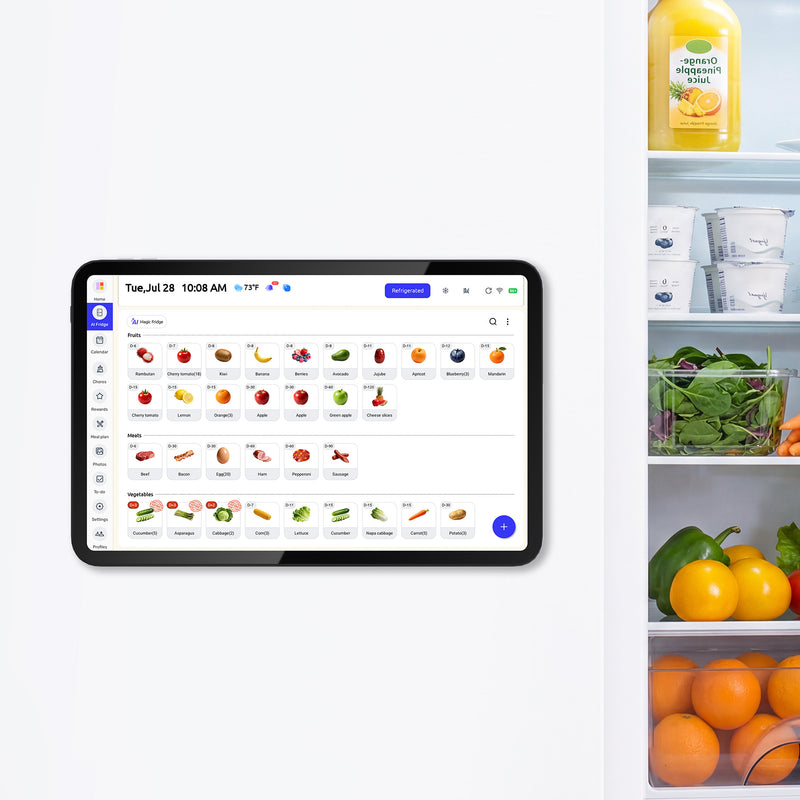
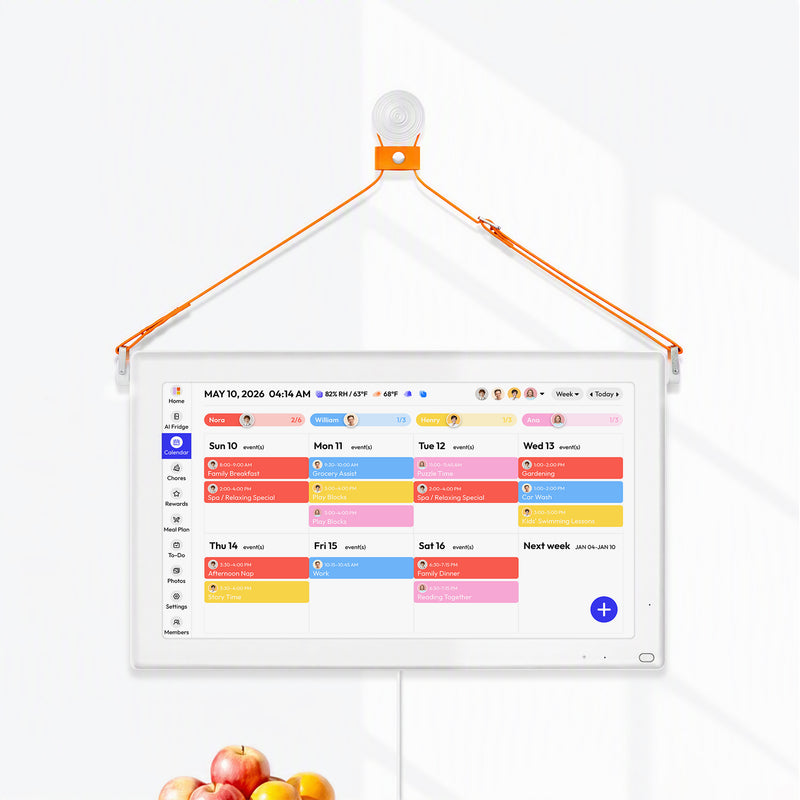
If you prefer paper, a wall calendar plus a dry-erase meal board can work well. If your family already uses phones all day, a shared family organizer with a color-coded calendar, lists, recipes, and automatic reminders may fit better. If you want a wall-mounted digital option, the Everblog digital calendar is one example of a shared hub, with a large touch display designed for wall mounting that helps families view plans, tasks, chores, and events on one screen. The best option is the one people will actually check without being chased.

Use one source of truth
A master calendar approach works best when one calendar holds the real schedule and the kitchen display mirrors it. That can mean a digital app on phones and computers, plus a visible kitchen surface for the current week. It can also mean a paper wall setup fed by one weekly planning session.
One family command-center example moved from a paper calendar to a digital shared app because both spouses needed to check and update it electronically in real time. That shift made the calendar and shopping list easier to share and reduced the chance that one person was working from outdated information.
Build a weekly rhythm that takes less than 30 minutes
Run the same short reset every weekend
A 3-step weekly meal-planning system does not need to be complicated: check the schedule, choose meals, then make the shopping list. Families who keep this habit often do it on Saturday or Sunday and use pantry and fridge inventory first.
Another practical planning method is to keep a master list of meals your family will actually eat, then pick from that list during a weekend reset. In one example, the weekly meal plan and grocery list could be built in less than 30 minutes because the family was not starting from a blank page each week. That is the difference between a routine and a fresh decision marathon.
Match meals to the real week, not the hoped-for week
A color-coded family calendar helps you see at a glance which nights are late, split, or crowded. Put your easiest meals on the hardest nights. Save anything that needs chopping, longer cook times, or more cleanup for the evening when everyone gets home earlier.
This is where simple categories help. Keep a short rotation like “under 20 minutes,” “slow cooker,” “leftovers remix,” “build-your-own,” and “no-cook backup.” When Tuesday has two practices and a late work call, you should know by Sunday that it is a quesadilla, rotisserie chicken, or snack-board night, not a recipe experiment.
Assign roles so dinner does not depend on one person remembering everything
Give each job a small owner
A family dinner routine gets easier when kids help in age-appropriate ways, from choosing recipes to setting the table or helping shop. That does not mean every child becomes a cook. It means dinner has visible jobs, and those jobs belong to someone before the 5:00 PM scramble.
For adults, split the work by type, not just by “who cooks.” One person can own the grocery order. Another can handle pickups on activity nights. A teen can start rice, wash produce, or text if practice runs late. A younger child can fill water glasses or put napkins out. Clear jobs reduce hidden work better than vague promises to “help more.”
Write the handoffs where everyone can see them
A shared planning surface is useful because family members can check plans themselves instead of relying on one person to repeat them. Put dinner-adjacent tasks right next to the meal entry: “thaw taco meat,” “bring home tortillas,” “leave by 4:45 PM,” or “Sam sets table.”
This also helps when follow-through is uneven. The system should not assume perfect memory. It should make the next action obvious. If someone forgets, the fix is often not more nagging. It is making the task easier to see, smaller to do, and tied to a time.
Plan for hard nights before they happen
Keep a backup menu, not just backup ingredients
A backup plan with shelf-stable and frozen staples is one of the easiest ways to protect school-night dinners. Think of it as a short emergency menu: frozen meatballs, canned beans, microwaveable rice, soup, bagged salad, tortillas, pasta, eggs, and rotisserie chicken.
On nights when homework takes over, no-cook or build-your-own dinners can keep everyone fed without turning the kitchen into another project. Quesadilla bars, snack-board dinners, wraps, yogurt parfaits, or salad kits with added chicken work well because each person can assemble their own plate fast.

Choose meals that fit school-night reality
A list of easy weeknight meals busy parents repeat includes sheet pan dinners, chicken fried rice, naan pizzas, quesadillas, and rotisserie-chicken meals. These are not exciting because they are trendy. They are useful because they solve three real problems at once: time, cleanup, and flexibility.
Regular family meals are still worth protecting. Families rebuilding school-year routines after pandemic disruption often said they wanted to keep eating at home more, connecting more, and holding onto the closeness that came from steadier dinners together in a family-dinner survey. The goal is not a perfect table every night. It is a repeatable rhythm your family can return to.
A simple setup you can try this week
Action checklist
- Pick one hub location your family already passes every day, such as the kitchen, mudroom, or entry wall.
- Combine four items there: weekly calendar, dinner plan, grocery list, and a short task list.
- Hold a 20-minute planning reset on Saturday or Sunday.
- Match the easiest meals to the busiest nights before the week starts.
- Assign one visible owner for each dinner-related job: cooking, pickup, table, cleanup, or shopping.
- Stock two backup dinners for nights when the original plan falls apart.
A high-traffic location matters more than having the fanciest setup. Some families ignore a small station near a side door but use a larger wall system every day once it is placed where everyone naturally gathers. Start with the smallest version that makes the next seven days easier.
FAQ
Q: Should our family use paper or digital for dinner coordination?
A: Use the format your household will check most often. A shared digital organizer is useful if adults need updates on their phones during the day. A paper or dry-erase board works well when people respond better to something they can see in the kitchen. Many families do best with digital as the source of truth and one visible weekly view at home.
Q: What if my partner or kids do not reliably check the system?
A: Make the system easier before making it stricter. Put it in a more visible place, reduce the number of things tracked there, and write smaller next actions. A command center that is within arm’s reach gets used more often because people can check it quickly without friction.
Q: How many dinners should we actually plan each week?
A: Most families do not need to plan all seven nights in detail. Start with three to five school-night dinners, one leftovers night, and one backup option. If this is new, planning just one or two nights is still a valid start.
Practical Next Steps
One shared planning hub works best when it stays visible, small, and current. Put the schedule, meals, and handoffs in one place, review it once a week, and stop asking dinner to survive on memory alone.
If you want the fastest win, do this first: choose next week’s three busiest nights, assign one easy meal to each, and write down who handles pickup, prep, and cleanup. That single change often does more for school-night calm than collecting a dozen new recipes.


