





Your phone is full, your cloud accounts don't match, and the best photos of your family are buried between screenshots, receipts, memes, and blurry duplicates. You know the memories matter, but finding one photo from last year's school concert can feel harder than planning the concert in the first place. For many families, photo organization sits in the same mental pile as paperwork, meal planning, and laundry. Important, but easy to postpone.
That's why the best way to organize photos isn't just a tech setup. It's a family life system. If your photos are scattered across phones, shared albums, old hard drives, and boxes of prints, the main problem isn't only storage. It's retrieval, consistency, and making sure the people you love can enjoy those memories later.
A good system should help you find photos fast, preserve context, and work even when more than one person is taking pictures. It should also be simple enough to maintain during normal life, not just during one heroic weekend cleanup. If you want a practical starting point, this guide pairs well with this overview of how to organize digital photos.
1. Chronological Date-Based Organization
If you want one method that almost always works, start with time. Organizing photos by date gives you a stable backbone for everything else. Devices already think this way, and so do most backup systems, which makes date-based sorting one of the least fragile approaches for busy households.
A practical folder structure is Year > Month > Event, or Year > Event. A photo management guide from Canto recommends a date-based folder hierarchy because it scales well across large libraries and preserves findability over time, while digital asset management tools can layer on bulk renaming, search, and AI-assisted sorting when your library gets bigger than basic folders can comfortably handle (date-based folder hierarchy for photo libraries).
Make dates readable
Names matter. For files and folders, use YYYY-MM-DD so everything sorts correctly in software and file explorers. That same approach is especially helpful when you're working with older family photos and trying to rebuild a timeline from clues such as life events, locations, and nearby shots in an album, as one organizing guide explains in its advice on dating and naming family photo files.
Practical rule: If you're scanning old albums, scan the full page before removing any photo. Handwritten notes and photo adjacency often hold the chronology you'll need later.
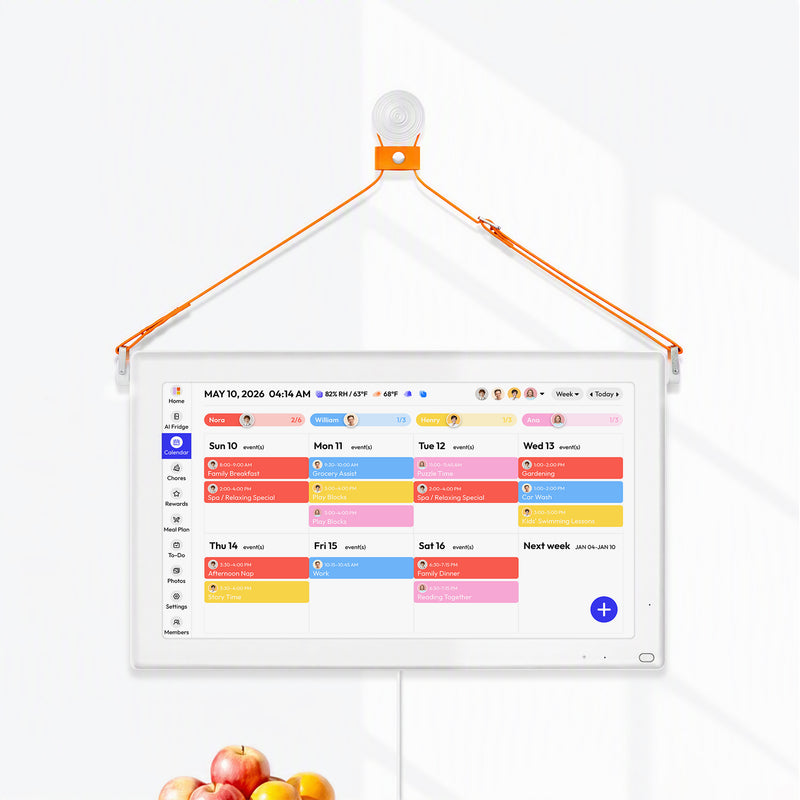
In a household system like Everblog's Media Hub, date-based organization also fits naturally with the family calendar. School events, birthdays, vacations, and performances already live on a timeline. Your photos should too.
- Use event detail when needed: Name key folders like “2025-12-25 Christmas” or “2026-05-18 Spring Recital.”
- Create a holding zone: Keep a temporary “Needs Sorting” folder for the photos you import but can't label right away.
- Review monthly: Add photo cleanup to the same routine you use for calendar reviews and household planning.
2. Event-Based Organization
Families rarely say, “Show me the photos from March.” They say, “Find the beach trip,” “Where are the birthday pictures?” or “Did anyone save the kindergarten graduation photos?” That's why event-based organization feels natural. It mirrors how people remember family life.
This method works well when several devices feed into the same shared archive. Instead of relying only on capture dates, you gather everyone's photos from one occasion into a single place. That's especially useful for birthday parties, holidays, school events, vacations, and multi-day visits with grandparents.

Organize around the way families remember
A strong event folder name gives you instant context. Try a simple pattern like Birthday-April-2026, Fall-Break-Trip-2026, or Soccer-Tournament-May-2026. If an event spans several days, add subfolders by location or day rather than dumping everything into one giant album.
For families who already coordinate life through calendars, pairing albums with scheduled events makes the system easier to maintain. A digital planning setup can connect those moments more directly, which is why some parents like using ideas such as linking pictures with Google Calendar events when building a shared memory workflow.
What doesn't work is waiting too long. The longer photos sit unsorted, the harder it becomes to remember who took what and which images belong together.
Group all contributors' images into one event album first. Clean up duplicates second. Families usually fail when they reverse that order.
A real-world example is the post-recital scramble. One parent has stage shots, another has lobby photos, grandparents text over their copies, and someone uploads a dozen nearly identical poses. Put all of it into “Dance Recital 2026” first. Then trim.
3. Family Member-Based Organization
In some homes, the most useful system isn't by date or event. It's by person. This is common in families with multiple children, blended households, or grandparents who want easy access to one child's milestones without hunting through every general album.
The strength of this method is emotional clarity. “Emma age 7,” “Lucas soccer,” or “Maya school art” matches the way many families revisit memories. It's also a practical way to support year-end school projects, graduation displays, birthday slideshows, and keepsake books.

Keep individual folders from becoming silos
The weakness of person-based organization is fragmentation. One family vacation might belong to four people at once. If you force every image into only one child's folder, you'll create blind spots and duplicate work.
A better approach is to keep a master archive and then create person-based collections on top of it. That could mean albums for each child, annual highlight folders, or tag-based views inside software like Apple Photos, Google Photos, Adobe Lightroom, or Flickr. Older kids can also take some ownership by helping choose favorite photos from their own activities and milestones.
Useful subfolders include:
- Age-based milestones: “Age 5,” “Age 6,” and so on make it easier to build retrospective albums later.
- Shared life moments: A “With Siblings” or “With Grandparents” collection prevents special group photos from disappearing into only one person's archive.
- Annual summaries: Folders such as “Emma 2026” help when you want a clean review of one year of growth.
This method shines when a family needs retrieval by person more than retrieval by date. If your daily questions sound like “Do we have enough photos of each child for the memory book?” this may be the best way to organize photos in your home.
4. Cloud-Based Photo Management Services
Cloud platforms solve a problem that folders alone can't solve. Families don't take photos from one device anymore. They take them from many phones, old tablets, shared albums, and sometimes cameras that only get imported every few months. A cloud service gives those images one hub.
That's part of why cloud-based systems work so well in real life. They reduce the friction of collecting images before you even start organizing them. Many also offer AI-assisted search, shared albums, and backup features that are far easier to maintain than a manual transfer routine.
Why the cloud helps households
A family photo workflow guide recommends keeping all images in one library with a consistent folder structure so the archive stays findable across devices and years (single photo library and consistent structure). In practice, cloud platforms such as Google Photos, Apple Photos with iCloud, Amazon Photos, and OneDrive make that centralization easier because they gather images automatically instead of relying on someone to remember cable transfers.
If you're building a shared household system, it also helps to think beyond storage. A family hub that includes calendar, planning, and media can reduce the usual app-hopping, which is one reason some families explore tools related to digital photo storage for family organization.
- Choose your primary platform carefully: Pick the service that fits the devices your family already uses most.
- Turn on automatic backup: Manual uploads are where many systems break.
- Set naming rules for shared albums: “Vacation” isn't enough. “Summer Lake Trip 2026” is.
- Separate sensitive images: Household documents, IDs, and personal records shouldn't live loosely beside everyday family photos.
Cloud systems are convenient, but they don't replace judgment. If you never curate, your cloud account becomes a better-synced mess.
5. Keyword and Metadata Tagging System
Folders answer one question well: where does this photo live? Tags answer a different question: what's in it? That's why tagging is powerful for families with overlapping categories such as child, location, holiday, sport, school year, and grandparents.
Software like Adobe Lightroom, Capture One, Photo Mechanic, Google Photos, and Flickr can all support some version of searchable metadata. You can tag by person, activity, place, or even internal family language. If “cabin weekend,” “first recital,” or “Sunday pancakes” means something in your house, tags can reflect that.
Think in search terms, not filing cabinets
Start small. A tagging system falls apart when it becomes too ambitious. A short list of primary tags is usually enough to make your archive more useful without turning organization into a second job.
Good tag categories include:
- People tags: Parents, children, grandparents, cousins, close family friends.
- Activity tags: Soccer, dance, camping, homeschool, baking, birthday.
- Location tags: Home, backyard, school, cabin, beach, grandparents' house.
- Purpose tags: Print, slideshow, memory book, frame, share.
To see how a tagging workflow can function inside a modern photo app, this walkthrough is worth watching:
One practical rhythm is to let the software handle broad recognition, then manually add only the tags your family uses. That's often enough to make retrieval far easier without drowning in metadata maintenance.
Search test: Before creating a new tag, ask whether someone in your family would realistically search for that word later.
6. Activity and Interest-Based Organization
Some of the most meaningful family photos aren't tied to one big event. They come from repeated activities that shape daily life. Soccer practice. Piano lessons. Nature walks. Science projects. Baking afternoons. If your household runs on routines and hobbies, activity-based organization often feels more useful than date-only filing.
This method is especially helpful when you want to document growth over time. A folder or album for “Art Projects” or “Baseball” makes it easy to see skill development, changing interests, and recurring family traditions. It also supports practical uses like end-of-season gifts, school portfolios, and progress displays.
Best for recurring parts of family life
A family with one child in theater and another in robotics might keep broad activity collections with annual subfolders inside each one. That way, “Robotics > 2026” holds practice photos, competition pictures, certificates, and project builds together. The same logic works for homeschooling records, music study, volunteer work, or gardening.
This method is strongest when family scheduling already revolves around those activities. If your calendar drives your week, your photo archive can reflect that same structure.
A few ways to make it work:
- Use annual subfolders: Keep “Soccer > 2026” cleaner than one giant all-years folder.
- Save milestone images: Include certificates, finished projects, uniforms, or first-and-last-day comparisons.
- Allow overlap: One photo can belong to both “Camping” and “Cousins” if your software supports albums or tags.
What doesn't work is forcing every image into a hobby bucket. Some photos are family-life photos. Let them stay general.
7. Hybrid Multi-Dimensional Organization
A common family scenario looks like this. One parent wants the beach trip under “Summer 2025,” a grandparent looks for “all photos of Maya,” and a child only remembers “the day we built the science fair volcano.” A single filing method breaks down fast in a household because people retrieve memories in different ways.
Hybrid multi-dimensional organization solves that problem by giving each photo one clear home and several useful paths back to it. In practice, that usually means a simple master structure, then added layers such as albums, person tags, favorites, and a few household-specific labels.
I recommend this approach for families who are past the camera-roll stage and are trying to manage a real shared archive across phones, cloud apps, old hard drives, and texted-in photos from relatives. The goal is not a perfect filing system. The goal is a photo library your household can use on a busy weeknight, during school form season, or when someone wants pictures for a birthday slideshow.
One file location. Several ways to find it.
The safest setup is one primary structure, usually by year and month, with secondary organization added through albums or tags. That prevents the duplicate-folder mess that happens when the same set of photos gets copied into “Vacations,” “Kids,” “Favorites,” and “Print Later.”
A practical version might look like this:
- Primary folders: 2026 > 03 March
- Albums: Spring Break, Grandma Visit, First Soccer Game
- People tags: each child, parents, grandparents
- Quick-access collections: Favorites, Print for Frame, School Photos
- Household labels: Medical, Documents, Home Projects, Pets
This method works well for family life management because the same photo often serves more than one purpose. A snapshot from the school play may belong to the month it happened, the child who performed, the “Performances” album, and the folder where you keep photos for end-of-year memory books. In a central family hub such as Everblog, that layered access is what turns a pile of images into something useful for daily family coordination and memory keeping.
Face grouping can reduce the manual work, especially in large family libraries. If your system supports it, learn how to use Google Photos facial recognition so person-based search becomes one more retrieval layer instead of a separate organizing project.
The trade-off is maintenance. A hybrid system helps families find what they need faster, but only if the extra layers stay limited and consistent. Keep the foundation stable. Add only the albums and tags your household will keep using. That balance gives you order without turning photo organization into another unfinished family admin task.
8. AI-Powered Automatic Organization
AI can save families from the most tedious parts of photo management. It can recognize faces, detect objects, group similar images, extract text, and make search far more forgiving. If you've ever found a photo by typing “dog,” “beach,” or “birthday cake,” you've already used this kind of automation.
The advantage isn't that AI creates a perfect archive. It doesn't. The advantage is that it lowers the amount of manual labor required to get from chaos to usable.

Use automation, then curate
Current guidance around large family collections points toward hybrid systems that combine automatic organization with selective curation. One article notes that Google Photos is described as automatically organizing photos, while users are still advised to create only a small curated set of albums or pick a limited set of best images for yearly books in order to keep the archive practical (organizing thousands of photos with selective curation).
That trade-off matters. AI can help you find all the pool photos or every image of one child, but it can't decide what your family values. It may group duplicates, but you still need to choose which expression, angle, or moment is worth keeping.
If you use Google Photos regularly, face grouping can be especially helpful for family retrieval, and this guide explains how to use Google Photos facial recognition.
A good rule is to let AI do first-pass grouping, then reserve human attention for:
- favorites
- milestone images
- sensitive photos
- final album curation
9. Memory Timeline and Story-Based Organization
Some photos deserve more than a folder. They deserve a story. Story-based organization is less about filing everything and more about shaping meaningful collections that explain who your family is, how relationships changed, and what certain seasons of life felt like.
This works beautifully for annual family books, birthday slideshows, graduation tributes, and legacy projects. It also helps rescue good images from digital obscurity. A child's first day of school every year becomes a timeline. Holiday baking becomes a family tradition archive. Grandparent visits become a visual history, not just a pile of images.
Add context while it's still fresh
This method is especially valuable for old physical photos and scans. Family archiving guidance stresses preserving context, including chronology, naming discipline, and metadata, instead of trusting memory to fill the gaps later. That matters because once names, places, and relationships are forgotten, the photo becomes much harder to use meaningfully.
For digital storytelling, pairing photos with calendar memory can help. Some families use planning tools and display features to keep those visual stories active, not hidden in storage, which is why a concept like a digital photo calendar frame for family memories can fit naturally into a household routine.
Save the facts with the feelings. Add names, dates, locations, and one sentence about why the moment mattered.
A practical example is a “School Years” narrative album. Instead of storing every random school photo together, you include first day, class project, recital, team photo, teacher note, and end-of-year portrait. The result feels like family history, not file management.
10. Shared Family Album and Collaborative Organization
Saturday night, one parent has soccer photos, a grandparent has birthday candids, and an older sibling has ten clips from the school play. By Sunday, nobody knows what was saved, what was already shared in a text thread, or where the best version lives. That is the core family photo problem. It is not just storage. It is household coordination.
Shared family album organization works best when the system reflects how families collect memories. Photos come from many people, across many devices, with different habits and attention spans. A workable setup gives everyone an easy way to contribute while keeping one reliable home for the photos your family wants to keep.
The trade-off is clear. Collaboration makes collecting easier, but it also creates duplicate images, unclear ownership, and missing context if nobody is steering the process. In practice, families do better with simple rules and one person acting as the editor of record.
Set the household rules before the backlog grows
A shared system needs decisions in four areas:
- One primary home: Choose the place where keeper photos are stored long term.
- One intake path: Decide how people add photos, such as a shared album, upload folder, or monthly send-to-parent routine.
- One review habit: Pick a recurring time to remove duplicates, label key moments, and move final images into the right albums.
- One privacy standard: Agree on what can be shared broadly, what stays within the immediate household, and who can edit or delete.
This structure matters even more in blended families, co-parenting arrangements, and grandparent-heavy households. Clear boundaries prevent small photo decisions from turning into relationship stress.
A central family hub can help here because the goal is not only to store pictures. It is to keep family information connected. If a birthday party album, school event photos, and a note about who attended all live in the same family system, it becomes much easier to find what you need later and use those memories in daily life. That is where a tool like Everblog can support the routine, especially for households trying to keep schedules, milestones, and family history from drifting into separate apps.
One practical way to run this method is to split responsibilities. Everyone contributes. One adult curates. That person does not need to sort every image in real time. They just need a regular checkpoint after trips, holidays, performances, and sports weekends.
Keep the standards light enough that people will follow them. If the process feels fussy, family members stop contributing and the system falls apart. A shared album should reduce friction, preserve context, and make it easier for the household to remember its life together.
10-Way Photo Organization Comparison
| Method | 🔄 Complexity | ⚡ Resource Needs | ⭐ Expected Outcomes | 📊 Ideal Use Cases | 💡 Key Advantages |
|---|---|---|---|---|---|
| Chronological Date-Based Organization | Low 🔄, automatic on most devices | Low ⚡, basic storage & metadata | ⭐⭐⭐, clear timeline, easy archiving | Calendar-aligned family events, backups | Simple, low-effort; universal compatibility |
| Event-Based Organization | Medium 🔄, manual folder creation | Medium ⚡, time to sort & name events | ⭐⭐⭐⭐, meaningful, shareable albums | Birthdays, vacations, holiday albums | Mirrors memory recall; great for prints/books |
| Family Member-Based Organization | Medium 🔄, per-person folder upkeep | Medium ⚡, additional folders & duplicates | ⭐⭐⭐, strong for individual milestone tracking | Multi-child households, school projects | Equitable documentation; easy child-specific sharing |
| Cloud-Based Photo Management Services | Low–Medium 🔄, setup + platform learning | High ⚡, subscriptions, bandwidth, storage | ⭐⭐⭐⭐, automatic backup, AI-assisted search | Multi-device families needing sync & collaboration | Auto-backup, cross-device access, collaborative tools |
| Keyword & Metadata Tagging System | High 🔄, consistent tagging practices needed | Medium–High ⚡, time and metadata-capable tools | ⭐⭐⭐⭐, powerful multi-dimensional searchability | Large libraries, advanced search and curation | Flexible retrieval; single photo, many contexts |
| Activity & Interest-Based Organization | Medium 🔄, manual categorization per activity | Medium ⚡, ongoing maintenance as activities change | ⭐⭐⭐, documents progression and portfolios | Homeschooling, sports, hobbies, project portfolios | Aligns with skill tracking; motivates continued activity |
| Hybrid Multi-Dimensional Organization | Very High 🔄, multi-layer setup and governance | High ⚡, tools, time, and documentation required | ⭐⭐⭐⭐⭐, flexible, scalable, multiple discovery paths | Large families, archives, mixed user preferences | Combines strengths of other methods; highly resilient |
| AI-Powered Automatic Organization | Low 🔄 (initial), ongoing review recommended | Medium–High ⚡, cloud compute, subscriptions, data | ⭐⭐⭐⭐, minimal manual work; improves over time | Busy families seeking hands-off management | Automated categorization; fast discovery; learns with use |
| Memory Timeline & Story-Based Organization | High 🔄, curative and narrative-intensive | Medium–High ⚡, time for curation and writing | ⭐⭐⭐⭐, emotionally rich heirlooms, presentations | Legacy projects, family storytelling, annual retrospectives | Creates meaningful narratives and tangible keepsakes |
| Shared Family Album & Collaborative Organization | Medium 🔄, requires rules and coordination | Medium ⚡, shared storage, contributor management | ⭐⭐⭐⭐, unified family collection, fewer silos | Co-parenting, blended families, extended family sharing | Equal contribution, reduces duplication, shared ownership |
Building Your Family's Perfect Photo System
The best way to organize photos is the one your family can keep up with after the first burst of motivation fades. That usually means choosing a system that matches real household behavior. If your family remembers life by holidays and vacations, event-based albums may carry more weight than a perfect folder tree. If you have multiple children and constant school activities, person-based or activity-based collections may be easier to use day to day.
In practice, most families do best with a simple combination. A central library gives you one trusted home. Date-based folders keep the archive stable. Shared albums, person tags, and a favorites collection make the library easier to search, enjoy, and share. That layered approach tends to hold up better than an overly rigid system or a purely automatic one.
Curation matters just as much as structure. One preservation-focused workflow recommends keeping at least two copies of your photo library, with one copy ideally in the cloud, and it also suggests limiting a yearly best-of archive to no more than 100 photos and finishing that selection in 3 to 4 hours to avoid decision fatigue and keep the archive usable (photo backup and yearly curation guidance). That advice is useful because it connects organization to actual retrieval. A giant archive that nobody can find anything in isn't serving your family well.
If you're also dealing with printed photos, old albums, and inherited boxes, preserve context before you reorganize. Scan album pages before removing photos, keep handwritten notes, and use filenames that sort cleanly. Those habits protect the story behind the image, not just the image itself.
The biggest mistake I see is treating photo organization like a one-time cleanup project. Families don't need a perfect archive assembled in a single weekend. They need a repeatable rhythm. A monthly review, a post-event upload habit, and a shared naming system will do more for long-term order than a complex setup that nobody maintains.
That's where a central family hub can help. If your calendar, routines, and media are already connected, photos stop feeling like an isolated digital mess and start becoming part of family life management. Everblog is one option in that broader setup because it includes a Media Hub alongside scheduling and household planning tools. For many parents, that kind of connection is the missing piece between “stored somewhere” and “easy to revisit.”
If you want additional tools to support your workflow, this roundup of photo organization software can help you compare approaches and decide what fits your family's habits.
Start small. Pick one method from this list, apply it to one recent month or one major family event, and build from there. Order doesn't come from doing everything at once. It comes from making your memories easier to keep, easier to find, and easier to enjoy together.
If you want one shared place for family schedules, routines, and photos, take a look at Everblog. It can help turn photo organization into part of your everyday household flow instead of another separate task to remember.


