




Let's be real—getting kids to help around the house can feel like an endless negotiation. But a good chore chart isn't just about getting tasks ticked off a list. It's a surprisingly powerful tool for teaching responsibility, building genuine self-esteem, and showing your kids what it means to be part of a team.
This is your first step toward ending the chore wars for good.
Why a Chore Chart Is So Much More Than a To-Do List
Forget the old idea of chores as punishment. A well-designed chart completely reframes household tasks. It turns them into a team effort that not only brings a little more balance to your home but also prepares your kids for life. Think of it as a visual roadmap that shows them they're a vital part of the family, and that their contributions really do matter.
This kind of structure builds independence and a solid work ethic right from the start. When a child successfully waters the plants or sets the table all on their own, they feel a real sense of accomplishment. It's not just about getting a job done; it's about building confidence and competence. The ultimate goal here is to nurture that internal motivation, where the pride of helping is the real reward.
Fostering Responsibility and Teamwork
A chore chart takes abstract ideas like "responsibility" and makes them tangible, everyday actions. It brings clarity by spelling out exactly what's expected, which means fewer reminders from you and a lot less friction in the house. For so many families, this simple change can seriously lower parental stress. You can even see how we use digital tools to boost these benefits in our guide on how Everblog made parenting less stressful.
It's also a fantastic way to teach fairness. Let's face it, in many homes, women still carry most of the domestic load. Gallup polls show that 58% of women in partnerships manage the laundry, while 51% are in charge of cooking and cleaning. Involving kids early with a simple chart helps disrupt that cycle by teaching shared responsibility from the ground up.
Here’s a great example of a chart that’s clear and visually appealing, so it assigns tasks without overwhelming a kid.
The key is simplicity. Kids know exactly what they need to do each day, no confusion involved.
Building Life Skills and Agency
Ultimately, a chore chart is a powerful tool for teaching kids about setting meaningful goals that build real agency, rather than just mindlessly completing a checklist. They're learning practical skills like time management, organization, and how to see a task through to the end—things that will serve them their entire lives.
By transforming chores from a source of conflict into a system for growth, you empower your children with skills and a sense of purpose. It’s not about creating a perfect home; it’s about raising capable, confident, and cooperative kids.
Matching Chores to Your Child's Age and Abilities
Ever tried to get a five-year-old to do a ten-year-old's job? It’s a fast track to frustration for everyone. The real key to making a chore system stick is to match the task to your child's developmental stage. You want to find that perfect balance where a chore is challenging enough to teach something new but simple enough that they can actually do it on their own.
When they succeed, that’s where the magic happens. You see their confidence soar, and they start to feel like a genuinely important part of the family team.
This is why a chore chart is so much more than just a to-do list.
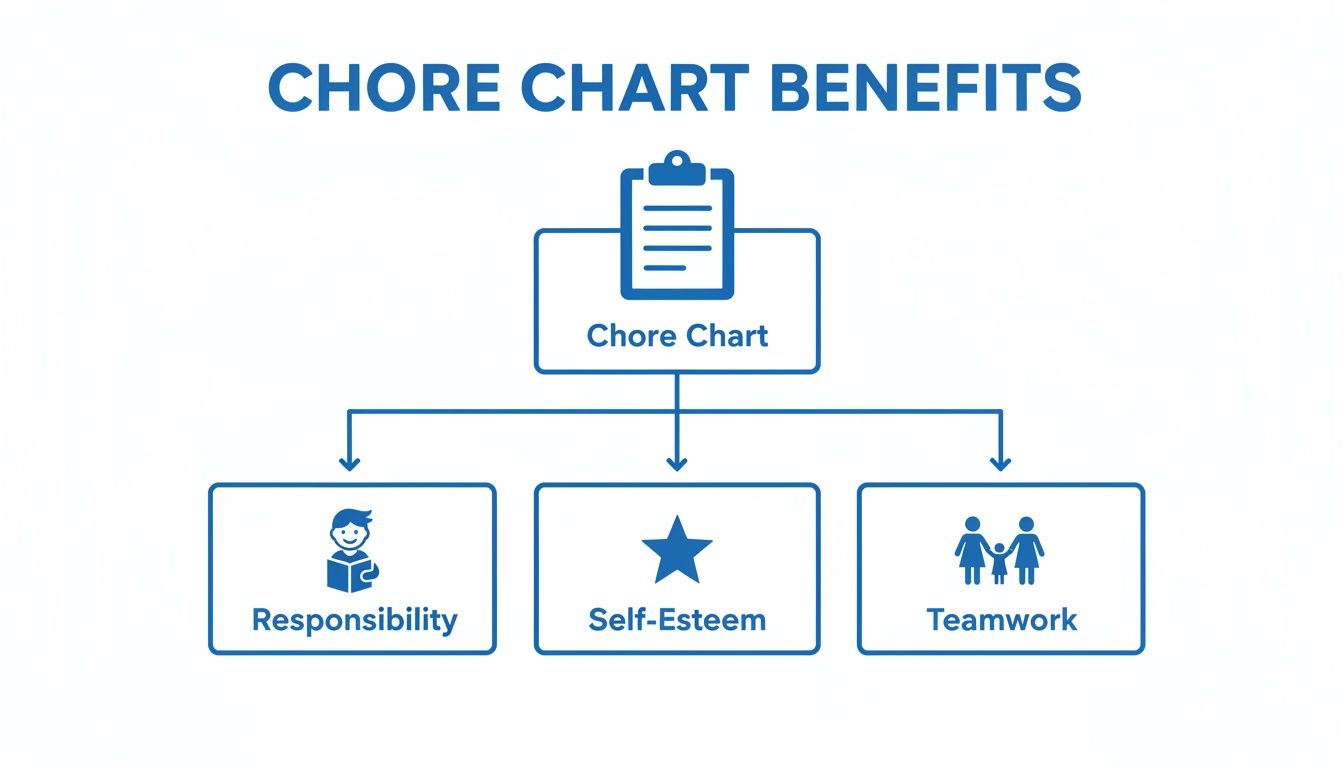
As you can see, it’s a simple tool that fosters huge life skills: responsibility, self-esteem, and a sense of teamwork.
To get you started, here's a breakdown of chore ideas organized by age.
Age-Appropriate Chore Ideas for Every Stage
| Age Group | Example Chores | Skills Developed |
|---|---|---|
| Toddlers (2-3) | • Put toys in a bin • Wipe small spills • Place clothes in hamper |
• Following simple directions • Gross motor skills • Concept of "clean up" |
| Preschoolers (4-5) | • Set the table (napkins/silverware) • Feed pets (with supervision) • Water plants |
• Multi-step routines • Empathy and care • Contribution to family tasks |
| Early Elementary (6-9) | • Sort laundry (lights/darks) • Empty small trash cans • Help with simple meal prep |
• Independence • Sorting and categorizing • Following clear instructions |
| Pre-Teens & Teens (10+) | • Do their own laundry • Prepare a simple meal • Yard work (mowing, raking) • Clean a bathroom |
• Life skills • Time management • Full responsibility for a task |
Let's dive a little deeper into what makes each stage unique.
Toddlers: Ages 2 to 3
At this age, it’s all about imitation and play. Toddlers want to be your little helper, so their "chores" should feel more like a game than work. The goal is simply to introduce the concept of tidying up.
- Put toys in a bin: Try calling it "putting the toys to bed for the night."
- Wipe up small spills: Give them their own special "toddler cloth" to feel important.
- Place dirty clothes in the hamper: A simple task that teaches where things belong.
These tiny jobs are the foundation. They build motor skills and a sense of order, paving the way for bigger responsibilities down the road.
Preschoolers: Ages 4 to 5
Now we’re getting somewhere. Preschoolers can handle tasks with a few more steps and are starting to understand how their help benefits the whole family. Their contributions can become a normal part of daily routines.
For some great ideas that build real-world skills, look into Montessori practical life activities. Think about giving them ownership over a small part of the household.
- Set the table: Start with just napkins and plastic silverware.
- Feed a pet: They can scoop the food into the bowl while you supervise.
- Water plants: A small, easy-to-handle watering can is perfect for this.
Early Elementary: Ages 6 to 9
Kids this age are ready for more independence and can take on chores that directly contribute to keeping the house clean and organized. This is also the perfect time to start breaking down old-fashioned gender stereotypes around housework.
Global data shows that families using chore charts often see kids handle 20-30% of routine household tasks. When your 7-year-old helps with laundry or yard work, you're building lifelong habits of equitable contribution.
- Sort their own laundry: A simple task of separating lights and darks into different hampers.
- Empty small trash cans: Bathroom and bedroom bins are the perfect size.
- Take out the recycling: Teach them to sort plastics, paper, and glass correctly.
My best advice for this age: Be crystal clear about what "done" looks like. Don't just say "clean your room." Instead, try, "Put all your books on the shelf and your dirty clothes in the hamper."
Pre-Teens and Teens: Ages 10 and Up
As they get older, kids can—and should—manage entire areas of household responsibility. This is how they learn the real-world skills they'll need to live on their own one day. Chores for this group should focus on multi-step processes and personal accountability.
These bigger tasks require planning and follow-through, which helps develop crucial executive functioning skills. For more tips on nurturing these abilities, head over to our other articles on the Everblog parenting blog.
A few great examples for older kids:
- Doing their own laundry: The full cycle—washing, drying, folding, and putting away.
- Preparing simple meals: Maybe they make their own lunch for school or cook a basic family dinner once a week.
- Yard work: Mowing the lawn, raking leaves, or weeding the garden.
- Cleaning a bathroom: Wiping counters, cleaning the mirror, and scrubbing the toilet.
By matching chores to your child's abilities, you create a system that grows right alongside them. Your simple chart becomes a powerful tool for building a competent, confident, and helpful human being.
Finding a Chore Chart Format Your Family Will Actually Use
Okay, so you’ve got a solid list of age-appropriate tasks. Now for the fun part: figuring out how to track it all. A boring spreadsheet isn’t going to cut it with a five-year-old, and frankly, it won't inspire you either. The format of your chore chart is just as crucial as the chores themselves because the right system can turn drudgery into a game.
The real goal here is to find something that clicks with your family's personality. Are you a hands-on, crafty crew that loves a good DIY project? Or a tech-forward household that runs on apps and smart devices? There's no single best answer, just what works for your home.
Let's break down some of the most popular chore chart ideas to help you find that perfect fit.
Hands-On and Visual Chore Charts
For many families, especially those with little ones, a physical chart is the only way to go. It makes the abstract idea of "chores" something they can see and touch. When a child can physically move a magnet or slap a sticker on a chart, that feeling of accomplishment is real and immediate.
These charts are fantastic for cementing daily routines and keeping everyone's duties right in front of their faces.
- Magnetic Fridge Chart: It's a classic for a reason. Its prime real estate on the fridge means everyone sees it dozens of times a day. You can grab pre-made magnets with pictures for non-readers or use dry-erase magnets for older kids who can read their own assignments.
- DIY Craft Chart: Get the kids involved! When they help create their chart with poster board, markers, and stickers, their buy-in goes through the roof. They feel a sense of ownership over the system.
- Whiteboard Calendar: A simple whiteboard is a powerhouse for family organization. Dedicate a section to weekly chores and use different colored markers for each kid. It’s incredibly flexible and can grow with your family.
The biggest win for these physical charts is their constant visibility. You can't just close the app and forget about it. It’s a physical reminder that you're all a team working together.
The Rise of Digital Chore Charts
If your family is always on the move or you have older, tech-savvy kids, a digital solution might be a game-changer. Chore chart apps and integrated family hubs can bring a whole new level of motivation through reminders, points, and easy tracking from literally anywhere.
These tools are brilliant at solving common problems, like a kid "forgetting" their chores or arguments over what was actually assigned. A University of Michigan study even found that kids are often more receptive to reminders from a device than from a parent. Less nagging? Yes, please.
The right digital tool can shift the dynamic from parental policing to personal accountability. When the app sends a reminder, it's a neutral notification, not a nagging parent.
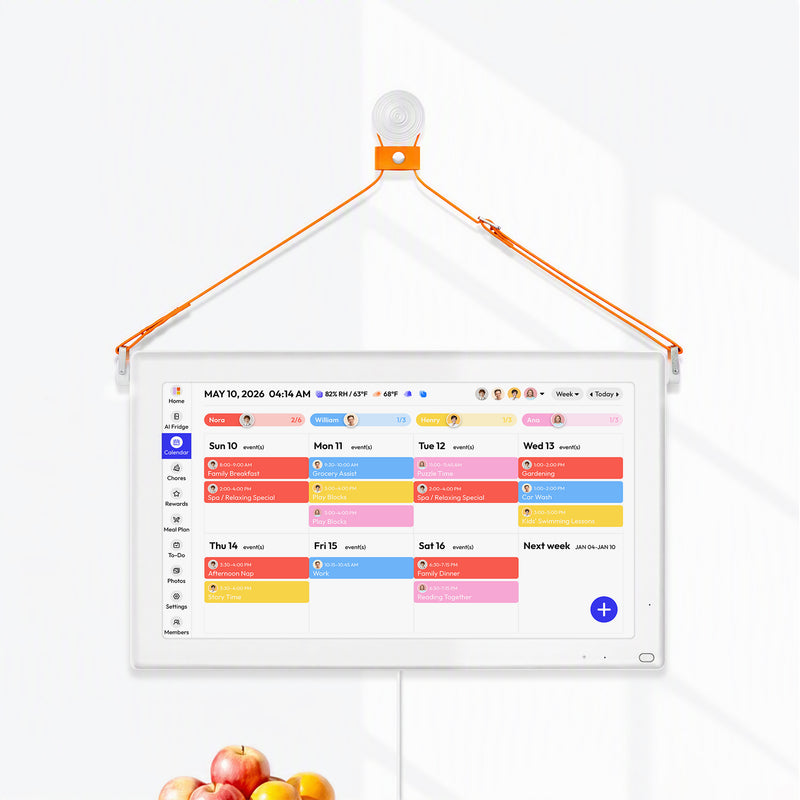
Take a shared family hub like Everblog, for instance. It weaves a chore manager right into the family calendar. This is huge—it shows kids that their contributions are an essential part of the family’s schedule, right alongside soccer practice and piano lessons. You can assign chores, see when they’re done, and link them to a rewards system, all in one spot.
Let's see how the two approaches stack up.
| Feature | Physical Chore Charts | Digital Chore Charts |
|---|---|---|
| Visibility | High (always on display) | Moderate (requires opening an app) |
| Engagement | Tactile and hands-on | Gamified with points and rewards |
| Flexibility | Easy to change on the fly | Can be updated remotely from anywhere |
| Best For | Younger children and visual learners | Older kids, teens, and busy families |
Choosing the Right Fit for Your Family
So, which way should you go? Think about your daily rhythm. If your mornings are pure chaos, a giant visual chart on the wall might be the anchor you need. If your kids are already motivated by leveling up in video games, a chore app could be the secret weapon you've been looking for.
And remember, there’s no rule against a hybrid approach. You could use a physical chart for daily must-dos and a digital tool for bigger weekly chores or allowance tracking. The most effective system is simply the one your family will actually use. Don't be afraid to experiment with different chore chart ideas until you find the one that brings more harmony—and a lot more help—into your home.
Creating a Reward System That Truly Motivates
This is where so many well-intentioned chore systems fall apart. You've got the chart and the tasks all lined up, but then comes the tricky part: how do you reward the effort without accidentally raising a kid who will only help if there’s a payout?
The goal isn't bribery. It's about building genuine, internal motivation that lasts a lifetime.
The secret I’ve found is to draw a clear line between an allowance and a reward. Think of an allowance as a tool for teaching financial literacy—it’s for learning to budget, save, and spend. A reward, on the other hand, is a bonus for consistent effort and a job well done.
Separating Allowance from Chore Rewards
Here’s how I break it down in my own home. Certain tasks are just part of being in the family. These are the non-negotiables, like clearing their own plate or putting dirty clothes in the hamper. These jobs don't get a payout because they’re about contributing to the team we call a family.
An allowance can be given independently to help them learn about money. Then, you can introduce "commissions" for extra jobs that go above and beyond their regular duties. For instance, washing the car or helping with a big yard project could earn a few dollars. This teaches a direct link between extra work and extra earnings.
I’ve learned that the most powerful motivators aren't always tangible. Specific, heartfelt praise for their hard work fosters a sense of pride that money can't buy. Saying, "I really appreciate how carefully you set the table tonight," means more than a dollar ever will.
This approach helps kids understand that some work is for the family, and some work is for earning. It’s a subtle but crucial distinction that builds a healthy work ethic right from the start.
Creative Non-Monetary Reward Ideas
Let's be honest, kids are often far more motivated by experiences and special privileges than by a few extra coins. These non-monetary rewards can feel more special and create amazing family memories at the same time.
The best part? You can tailor them to what your child truly values.
A great way to manage this is to have kids earn points or stars for completed chores, which they can then "spend" on a reward from a pre-approved list.
Here are some simple but powerful ideas that have worked for us:
- Extra Screen Time: Offer 30 minutes of bonus screen time on a weekend for a full week of completed chores.
- Choose the Movie: The person who earns the most "chore points" gets to pick the Friday night family movie. Total control!
- One-on-One Outing: A trip to the park, a bike ride, or a special ice cream date with just one parent is an incredibly powerful motivator.
- A "Get Out of a Chore Free" Card: This is always a hit! Let them earn a pass to skip one chore in the future.
- Control the Dinner Menu: Let them choose what the family eats for dinner one night. Taco Tuesday on a Thursday? Why not!
Implementing Your Reward System
Once you've landed on a system, it's time to put it into action. A digital family hub like Everblog makes this part so much easier. Its built-in Rewards Tracker lets you assign points to specific chores, and kids can watch their progress grow toward a goal you’ve set together.
This takes the manual tracking off your plate and turns it into a fun, visual game for them.
When they can see a progress bar filling up, it provides that immediate, positive feedback that keeps them going. It’s a simple, gamified approach that really works for keeping kids engaged long-term.
Remember, the goal is to celebrate their contribution, not just pay for it. A balanced reward system reinforces the idea that their hard work is valued and that being a helpful member of the family comes with some pretty awesome perks. That positive reinforcement is what turns a list of chore chart ideas for kids into a lasting, positive habit.
Putting Your Chore Chart Into Action
You've designed the perfect chart and picked out some great rewards. Now for the fun part—bringing it to life. This is where the real work happens, but it’s also where you’ll see the payoff. A great plan is one thing, but how you launch your new chore system sets the tone for everything that follows.

The initial rollout can make or break your success. Instead of just sticking the chart on the fridge and hoping for the best, make it a real event. A dedicated family meeting turns this into a team huddle, not a top-down decree from Mom or Dad.
Kick Things Off With a Family Meeting
Frame this gathering as a positive step for the whole family. Grab some snacks, keep the vibe light, and really focus on the "why." Explain that this isn’t about piling on more work; it’s about working together so everyone gets more time for the fun stuff.
Walk through the chart as a team, making sure everyone's role is crystal clear. This is the time for kids to ask questions and feel heard. I've found that when my kids feel like they’re part of the process, their buy-in goes through the roof.
The goal here isn't just to explain the rules. It's to build some genuine excitement and a shared sense of purpose. Think of the chore chart as a tool that helps your family "win" the week, together.
After the meeting, the real training begins. And trust me, never assume a child knows how to do a chore, even if it seems completely obvious to you.
Show, Don’t Just Tell
One of the biggest mistakes I see parents make is expecting a perfect result without ever giving a clear demonstration. Don't just tell your eight-year-old to "clean the bathroom sink." Grab the supplies and do it with them the first few times.
Show them exactly what "done" looks like.
- Walk through the process: "Okay, first we spray the cleaner right here, then we wipe it all down with this cloth, and for the last step, we make the faucet super shiny."
- Talk it out: Explain why you do things in a certain order. It helps the logic stick.
- Let them try: Supervise their first solo attempt, offering gentle pointers and a whole lot of encouragement.
This upfront time investment is huge. It prevents a ton of frustration down the road, means you won't have to secretly redo jobs later, and gives your child the confidence to actually succeed on their own.
Your Greatest Ally Is Consistency
Once the system is up and running, your most important job is to be consistent. If screen time is the reward for getting chores done, you have to follow through. Every. Single. Time. If you let it slide on a Tuesday just because you're tired, you've just taught them that the chart is optional.
This consistency builds the structure and predictability that kids secretly crave. It also removes the emotional back-and-forth from the equation—the chart becomes the authority, not you. This is a game-changer for managing daily schedules, and you can learn more about building that structure in our guide on why every mom needs a digital calendar.
Navigating the Inevitable Roadblocks
Even with the best-laid plans, you're going to hit some bumps. Kids will test boundaries, complain, or turn in a seriously sloppy job. How you handle these moments is what makes or breaks the whole system long-term.
What to do when they just refuse: Stay cool and neutral. The key is to avoid a power struggle. Simply connect the chore to a natural consequence. For example, "We can head to the park as soon as the toys are put away," or "Screen time kicks off right after your chores are checked off."
What to do when the job is done poorly: Resist the urge to jump in and fix it yourself—that completely undermines their effort. Instead, praise what they did right and then offer a gentle correction. "You did such a great job making your bed! Next time, let's see if we can get this corner tucked in just a little bit tighter."
When to make adjustments: A chore chart should be a living document, not something set in stone. Plan to revisit it every few months, or whenever you notice a task has become too easy or is causing constant friction. A quick family check-in can help you make the small tweaks needed to keep things running smoothly.
Implementing a chore chart isn't just about getting a little help around the house. It’s about building a more cooperative and fair family dynamic. Data from the BLS American Time Use Survey shows women still spend way more time on housework than men. A chart that gives a child just 10-15 minutes of daily tasks, like setting the table, directly helps rebalance that load. Families who stick with it report a 25-35% redistribution of these tasks, turning a national statistic into a real win for your home. You can see more on how these tasks are divided in Gallup's research.
Answering Your Biggest Chore Chart Questions
Even with a perfect-looking chart, you're bound to hit a few bumps. That's just part of the process of weaving a new routine into your family's life. Don't worry—most of these hurdles are completely normal.
Let's walk through some of the most common questions and sticking points that pop up for parents.
Should I Pay My Kids for Doing Chores?
This is the big one, isn't it? There's no single right answer here, but I've found that the most successful approach is a balanced one. Most experts agree it’s best to separate basic family contributions from an allowance, which is really a tool for teaching kids about money.
Chores like clearing their own plate, making their bed, or putting toys away are just part of being on the family team. No payout for those.
However, you can offer commissions for "extra" jobs that go above and beyond their everyday responsibilities. Think washing the car, helping with a big yard cleanup, or organizing the garage. This teaches a fantastic lesson: extra effort can lead to extra earnings, and it keeps everyday helpfulness from feeling like a transaction.
What if My Child Constantly Complains or Refuses to Do Their Chores?
First things first, take a breath and check two things: is the chore genuinely age-appropriate, and does your child know exactly how to do it? A lot of the time, what looks like defiance is actually just a kid feeling overwhelmed or unsure where to start.
If you've covered those bases, then consistency is your best friend. The goal is to avoid a power struggle at all costs. Instead, you'll want to calmly and firmly link chores to the privileges they care about.
A simple, neutral statement works wonders here. Try saying, "Screen time starts as soon as your chores are done," or "We can head to the park once the playroom is tidy." This little shift makes the chart the boss, not you.
If the refusal continues, it might be time for a low-key family meeting to chat about what isn't working and make some adjustments together.
How Often Should We Update the Chore Chart?
A chore chart should never be set in stone. Think of it as a living document that grows with your family. A good rule of thumb is to revisit it every few months, or whenever you notice a big change in your schedule or your child's abilities. Kids grow so fast, and the jobs that were a challenge last season might be a breeze for them now.
Keeping the chart fresh also heads off boredom before it can start.
- Rotate chores weekly or monthly. This gives every kid a chance to learn different skills and stops one person from getting stuck with the "worst" job forever.
- Level up the responsibilities. As your child masters putting away their laundry, maybe they're ready to learn how to load the washing machine. Keep them engaged by adding a little more challenge.
- Adjust for the seasons. Family life looks different in July than it does in December. Summer might bring more yard work, while winter could involve helping to shovel a walkway or bring in firewood.
My Kid Does the Chore, but Does It Poorly. What Do I Do?
Oh, this one is tough. It is so tempting to just sigh and redo a sloppy job yourself, but that can backfire by sending the message that their effort wasn't good enough—a total motivation-killer.
Instead, frame it as a teaching moment.
Start by praising the effort, not the final result. Something like, "Hey, thanks so much for wiping down the counters!" goes a long way.
Then, offer a gentle correction. "Next time, let's try using this spray to get those sticky spots right here, too. Want me to show you a quick trick?" This builds their skills without crushing their spirit. The real key to long-term success is setting super clear expectations for what "done" actually looks like.
Ready to bring clarity and cooperation to your family’s routine? The Everblog digital family calendar integrates a Chore Manager and Rewards Tracker right into your daily schedule. Assign tasks, watch progress, and celebrate achievements all in one beautiful, shared hub. Discover how Everblog can transform your home organization today.


