






You’re probably standing in the exact spot where this decision gets real. The kitchen counter has space for a frame. The shelf in your child’s room would look better without a cord dangling down. The hallway wall has the perfect viewing angle, but there’s no outlet nearby.
That’s why the idea of a digital picture frame rechargeable battery is so appealing. It promises the warmth of family photos without forcing you to design the whole room around a power cable. For parents, that matters. A frame isn’t just decor. It becomes part of the daily rhythm, showing birthday photos at breakfast, school snapshots after pickup, or a rotating slideshow while everyone drifts through the house.
The Allure of the Cordless Digital Frame
A battery-powered frame feels a lot like a smartphone. You charge it, place it where you want, and enjoy the freedom of not being tethered to a wall. That simple shift changes where a frame fits into family life.

For a busy parent, that freedom is easy to picture. You can set a frame on a kitchen island during the week, move it to the dining table for a birthday dinner, then place it on a bookshelf in the playroom for the weekend. A plugged-in frame can do the photo part. A rechargeable one can follow your family.
Why cordless feels so useful at home
Most homes don’t have outlets exactly where a frame looks best. The best spot for family photos is often where people gather, not where the electrician put a socket. That’s why cordless frames catch attention.
A rechargeable model can make sense in places like these:
- Kitchen counters: great for quick glances while packing lunches or making coffee
- Kids’ rooms: easier to place on a dresser without a visible cord
- Entry tables: useful when you want a clean look near the front door
- Temporary setups: handy for parties, holidays, or visiting grandparents
If you’re still comparing styles and sizes, this guide to the best digital frame options for home use can help you think through placement and everyday fit.
Practical rule: A cordless frame solves a placement problem first. The battery is the feature, but flexibility is the benefit.
The trade-off parents need to expect
Battery power brings freedom, but it also adds one more thing to manage. That’s the part many families underestimate. A frame with no cord looks cleaner. It also needs charging, and how often depends on screen size, brightness, wireless features, and how long the frame stays awake each day.
That doesn’t make rechargeable frames a bad choice. It just means they’re best when you match them to real behavior. If you want a frame that sits discreetly on a side table and wakes up when someone walks by, battery power can be a smart fit. If you want an always-on family display in a high-traffic area, the cord may be the easier option.
Understanding Your Frame's Power Source
A frame’s battery is its stored energy. The battery size tells you how much power it can hold. Your family’s daily habits decide how fast that power gets used.

Most modern digital frames use a lithium-ion battery, the same general battery type found in phones and tablets. Manufacturers use it because it can store a useful amount of power without making the frame thick and bulky. That matters if you want a frame that looks tidy on a kitchen counter or hangs neatly as a family message hub.
What battery capacity really means
You’ll usually see battery capacity listed in mAh. That number is a rough measure of how much charge the battery can hold. A bigger number often means more runtime, but it does not guarantee it.
Here’s the part that trips parents up. Two frames can have similar battery capacity and still last very differently in real life. One may have a brighter screen for sunny rooms. Another may stay connected to Wi-Fi all day so new photos from grandparents appear quickly. A third may include extra features that make it feel more like a small tablet than a simple photo display.
So mAh is helpful, but it is only one piece of the puzzle.
A larger screen usually needs more power, too. That is why a compact frame in a child’s room may feel easier to live with on battery than a large shared family display in the hallway.
What uses the most power
Analysts at Pix-Star report that battery-operated digital picture frames typically offer 2 to 5 hours of usage on a single charge, and Wi-Fi can drain the battery up to 50% faster in some cases, according to Pix-Star’s breakdown of battery-operated digital picture frame limits.
In everyday family use, the biggest power draw is usually the screen. A bright display in a sunny kitchen has to work harder than one in a shaded bedroom. Add constant syncing, video clips from the school recital, or a frame that stays awake all afternoon, and the battery drops faster.
Common causes of faster drain include:
- High brightness: the display uses more power to stay easy to see
- Wi-Fi always on: the frame keeps checking for updates or syncing photos
- Video playback: motion and sound require more processing than still images
- No sleep time: the frame keeps running instead of resting between uses
A battery frame behaves more like a quiet tablet for family photos than a traditional frame you can ignore for months.
If you enjoy the repair side of gadgets, this article on mastering 18650 batteries for repairs gives useful context for how rechargeable cells are used and maintained across devices.
Active use and standby are different jobs
This distinction matters because brands often describe battery life in a way that blends both together. Active use means the screen is on, showing photos, connecting, or responding to touch. Standby means the frame is sleeping and waiting.
For a busy parent, that difference changes the buying decision. A frame in a kid’s room that wakes for a few minutes at a time asks much less from its battery than a kitchen frame that stays on through breakfast, after-school snacks, and dinner cleanup.
That’s why the best question is simple: how will this frame live in your house?
If you’re also comparing controls and day-to-day usability, this guide to a touch screen digital picture frame for family use can help you weigh interaction style along with battery behavior.
Gauging Real-World Battery Runtimes
The most useful battery question isn’t what the box says. It’s what happens on a Tuesday.
If your frame sits on the kitchen counter during breakfast, runs in the afternoon while homework happens, and stays on through dinner cleanup, that’s a very different job from a frame that wakes only when someone walks past it. The same battery can feel disappointing in one home and perfectly fine in another.

What premium battery frames can really do
Some newer models have pushed beyond the old “few hours only” reputation. Reporting from BSIMB notes that premium models can deliver up to 6 hours of active use or weeks in motion-sensor standby mode, and that motion activation can double or triple runtime by reducing idle power draw by 30-50%, stretching time between charges to 2-3 weeks in standby-focused use cases, as described in BSIMB’s guide to cordless digital frames.
The key phrase there is active use. If the screen is on and working, you’re still dealing with a limited window. If the frame sleeps most of the time and wakes only when someone enters the room, battery life can feel dramatically better.
That’s why motion sensors matter so much for family spaces.
A family-use comparison
Here’s a simple way to think about it.
| Family setup | Best fit | Why it works |
|---|---|---|
| Kitchen counter with constant visibility | Plugged-in frame | You won’t need to think about charging during busy days |
| Nursery or child’s dresser | Rechargeable frame | Cleaner look and easier placement away from cords |
| Hallway table with occasional viewing | Rechargeable frame with motion sensor | The frame can sleep most of the day |
| Shared family hub used throughout the day | Plugged-in model | Better for dependable all-day access |
Many parents make the right choice by deciding room by room, not house by house. You don’t need one rule for every frame.
What changes runtime in ordinary life
A battery frame behaves a bit like your phone on a travel day. The battery drains faster when several demanding features are active at once.
Three real-world examples make this easier:
- Countertop slideshow near a bright window: higher brightness means shorter runtime
- Frequent Wi-Fi syncing: useful for fresh photos, but harder on the battery
- Video clips from school events: fun to watch, but much more demanding than still images
If you want the frame to last longer, the first question isn’t “Which charger should I buy?” It’s “Does this screen really need to be awake right now?”
Portable frame versus wall-mounted frame
Portable battery frames shine when flexibility matters more than nonstop operation. A parent can move the frame from a homework station to a bedroom shelf without planning around cords. That’s the emotional appeal and the practical benefit.
Wall-mounted displays are different. Once a frame becomes part of the household command area, reliability usually matters more than portability. If you expect a large display to stay visible every day, battery power starts to feel like a compromise rather than a feature.
A good buying question is this: Will this frame move often, or will it live in one place?
If it moves, battery may be worth it. If it stays put, plugging in usually wins.
Smart Charging Habits for Longer Battery Life
Once you bring a battery frame home, the goal changes. You’re no longer deciding whether rechargeable power is convenient. You’re trying to make that battery stay healthy for as long as possible.

This part is simpler than it sounds. Most modern digital frames use lithium-ion batteries, and those batteries generally prefer gentler habits over dramatic ones.
The 20 to 80 habit
Battery guidance from Pintura notes that lithium-ion cells maintain over 80% capacity after 500 cycles when kept within a 20-80% state-of-charge, which helps avoid the faster wear linked to repeated full drain-and-recharge cycles, according to Pintura’s battery care guidance for cordless digital frames.
In plain language, don’t treat your frame like an old flashlight. You don’t need to run it all the way down before charging it again. In fact, that’s usually harder on the battery.
A good family routine looks like this:
- Charge before it gets very low. If the battery is getting close to empty, plug it in sooner rather than later.
- Unplug after a solid top-up. It doesn’t need to live at full charge all the time.
- Use short charging windows. A quick recharge during dinner or bedtime often fits family routines better than waiting for a full drain.
Charging ports and convenience
Some frames use USB-C, while others use magnetic docks or brand-specific chargers. The practical difference is convenience. USB-C is usually easier because families often already have compatible cables in the house.
If your frame uses a proprietary charger, keep it in a predictable place. Parents lose more charging time to “Where did that cable go?” than to technical problems.
A simple system helps:
- Keep one charging spot: a drawer, basket, or shelf near the frame’s usual home
- Charge during quiet routines: after school, during dinner, or overnight if the manufacturer allows it
- Avoid heat: don’t leave the frame charging in direct sun or on top of warm appliances
Battery habit to remember: Small, regular top-ups are usually kinder than repeated deep drains.
Borrow lessons from laptop care
A lot of the same battery common sense that helps laptops also helps frames. If you want a plain-English refresher on those habits, Klimka Computer Solutions explains how to extend laptop battery life in a way that maps well to other lithium-ion devices.
What not to do
Parents often ask for the “don’ts” because that’s easier to remember than a long care checklist. Here are the main ones:
- Don’t ignore heat: warm batteries age faster
- Don’t store the frame empty: a long period at very low charge can create recovery problems
- Don’t treat every low-battery warning as an emergency: regular topping up is fine
- Don’t assume the battery will last forever: all rechargeable batteries wear over time
The easiest mindset is this: care for it the way you care for a good phone or tablet. Charge it sensibly, avoid extremes, and use the power-saving settings the frame already gives you.
Exploring Retrofit and Upgrade Possibilities
Some parents already own a plugged-in frame and wonder if they can add a battery later. Technically, sometimes yes. Practically, it’s often more trouble than it first appears.
A retrofit project usually involves more than attaching a battery pack. The frame needs the right voltage, safe charging behavior, and proper battery management. It also needs a secure place to house the battery so the setup doesn’t become awkward, unstable, or unsafe around kids.
When a retrofit makes sense
A DIY upgrade can appeal if you already enjoy electronics projects and understand that this isn’t a casual weekend shortcut. You may be able to improve portability or replace a weak internal battery in certain models.
Good candidates are usually:
- Older frames with simple power requirements
- Units with replaceable internal parts
- Projects for hobby use, not mission-critical family use
Why most families should be cautious
The problem isn’t just whether the frame turns on. A key concern is whether the power system behaves safely over time. A poor retrofit can create charging problems, swelling risk, unstable runtime, or messy cable work that defeats the original goal of a clean look.
For many households, buying a frame designed for battery use is the simpler answer. The battery, charging logic, and low-power modes are built to work together from the start.
If you’re comparing established frame types before attempting a modification, this overview of Skylight digital frame alternatives and considerations may help you decide whether replacing the frame is easier than rebuilding it.
Troubleshooting Common Battery and Power Issues
Battery frustration usually shows up in a few predictable ways. The good news is that many of them have simple fixes.
One of the most useful pieces of technical guidance here comes from Pix-Star’s rechargeable frame discussion. It notes that sudden battery drain is often caused by background processes, that WiFi/Bluetooth can add 1-2W of idle drain, that video playback can halve runtime, and that auto-sleep functions can cut power consumption by 80-90% when a room is unoccupied, as described in Pix-Star’s guidance on rechargeable digital photo frame battery behavior.
The battery drains much too fast
This is the complaint most parents notice first. The frame seemed fine on day one, then starts needing frequent charging.
Try these fixes in order:
- Lower the brightness: especially if the frame sits near a sunny window
- Turn off video playback: save clips for when the frame is plugged in
- Reduce wireless activity: if constant syncing isn’t necessary, scale it back
- Enable sleep or motion settings: let the frame rest when nobody is around
A frame that stays awake all day is doing the hardest possible job on battery.
The frame won't hold a charge anymore
This can mean battery wear, but don’t jump to that conclusion first. Start with the simple checks.
Quick checklist
- Test a different cable or charger: charging accessories fail more often than the frame itself
- Check the charging port: dust or a loose connection can interrupt charging
- Look at settings after recent updates: a new feature may have changed screen or wireless behavior
- Restart the frame: background tasks sometimes clear after a full reboot
If the frame charges normally but empties unusually quickly, the battery may be aging. That’s especially likely if the device has seen lots of heavy use and frequent deep drains.
Some “bad battery” complaints are really “screen stayed awake all day” problems.
The frame won't turn on even when plugged in
This feels alarming, but it isn’t always a dead device.
Work through this sequence:
- Leave it plugged in for a while before testing again. A completely depleted battery may need time before the frame responds.
- Try another outlet. Rule out the obvious first.
- Use the manufacturer’s original adapter if possible. Some frames are picky about charging power.
- Press and hold the power button longer than usual. Some frames need a longer wake-up press after a full shutdown.
If nothing changes, check whether the frame has a reset option in its manual. A frozen system can look like a power problem.
The battery percentage seems unreliable
Some frames don’t estimate battery level perfectly, especially right after setup, after an update, or after long storage. If the percentage jumps around, use a few normal charge cycles before judging the battery meter.
Also pay attention to what the frame is doing during those tests. A battery meter can seem wrong when the issue is heavy demand from brightness, wireless syncing, and media playback all at once.
Frequently Asked Questions About Battery Frames
Is it safe to leave my frame charging overnight
In many cases, modern frames are designed with charging controls that make routine charging manageable. Still, the safest answer is to follow the manufacturer’s instructions for your specific model. If the frame gets noticeably warm, sits in direct sun, or uses a damaged cable, overnight charging is less wise.
For many parents, a simpler habit works well. Charge the frame during an evening routine and unplug it once it has had enough time to recover.
Can I use the frame while it is charging
Usually, yes. Many digital frames can display photos while connected to power. In fact, that can be useful during parties, school project nights, or holiday gatherings when you want the frame running without worrying about battery level.
The practical catch is heat and cable placement. If the frame is on a narrow shelf or in a child’s room, charging while in use may create more clutter than you want.
Does a rechargeable battery make sense for a wall-mounted frame
Sometimes, but often not. A wall-mounted frame usually benefits more from dependable continuous power than from portability. If the frame will stay in one location and act as a regular household display, plugging it in is usually the easier long-term setup.
Battery power makes more sense when the wall mount is temporary or when avoiding visible cords matters more than nonstop uptime.
Are battery frames good for grandparents or kids
They can be, especially if the goal is flexible placement. A grandparent may enjoy moving a frame from the kitchen to the living room. A child may like seeing family photos on a dresser without a loose cable nearby.
The main question is who will remember to charge it. If the answer is “probably me,” then make sure the charging routine fits your week.
Should I keep Wi-Fi on all the time
Only if you need it all the time. Wireless convenience is helpful, but if the frame is mostly showing a stable photo collection, always-on syncing may not be worth the extra battery use. Many families are happiest when they update photos in batches and let the frame rest the rest of the time.
Is a bigger battery frame always better
Not automatically. A larger battery can help, but a larger screen can also demand more power. What matters is the whole package: display size, screen brightness, wireless behavior, sleep features, and how your family uses it.
What's the best room for a rechargeable frame
The best room is the one where cordless placement solves a real problem. Bedrooms, hallway tables, kitchen counters, and shelves often benefit most. Rooms where the frame needs to stay visible for long stretches usually favor plugged-in power.
Should I buy battery first or placement first
Placement first. If the ideal spot has no convenient outlet and the frame doesn’t need to run all day, a battery model may be perfect. If the frame will become an always-available household display, start with power reliability and work backward from there.
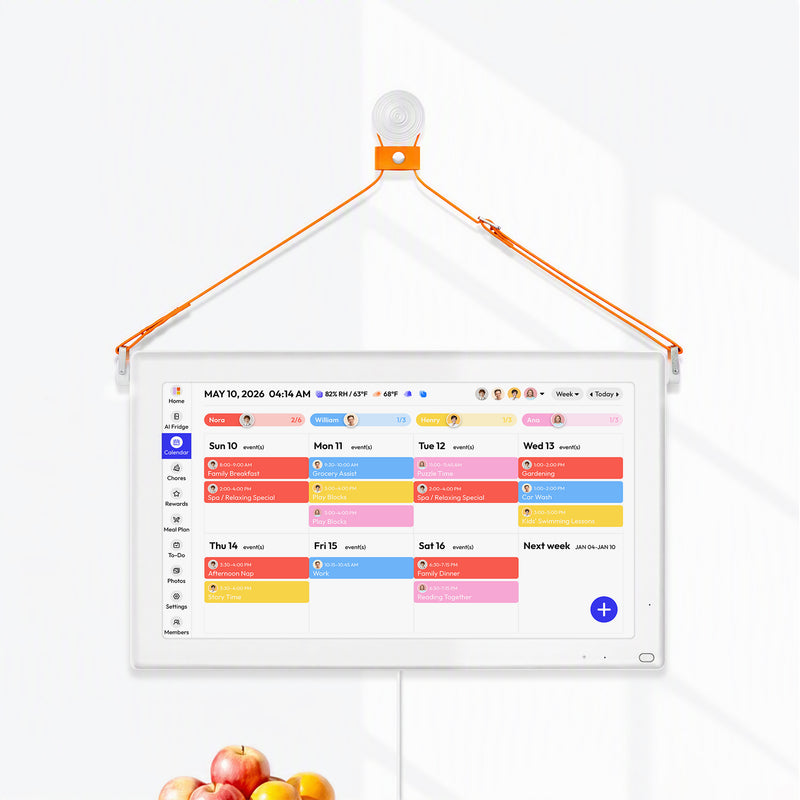
If your family wants more than a photo display and needs one shared place for schedules, chores, meals, and media, Everblog is worth a look. Its large family-focused display is built for daily visibility and coordination, helping parents keep everyone on the same page without juggling scattered notes, apps, and reminders.


