






Let’s be honest: the secret to meal planning for busy families isn’t about becoming a gourmet chef overnight. It's about turning a dreaded daily chore into a simple, once-a-week ritual.
When you make all the decisions ahead of time, you kill that "what's for dinner?" panic that hits at 5 p.m. It's about reducing stress and getting your evenings back so you can actually connect with your family.
Why Meal Planning Is a Lifeline for Busy Families

The daily scramble to get a meal on the table? It’s more than just a hassle. For parents juggling work, school runs, and sports practice, the mental energy it takes to decide, shop for, and cook dinner every single night is completely draining.
This is where meal planning stops being a nice idea and becomes a survival tool.
At its core, it’s about making one big decision for the whole week instead of seven small, stressful ones. That simple shift dramatically reduces your mental load, freeing up brain space for things that actually matter.
The goal isn't to create a rigid, complicated menu that just adds more pressure. It's about building a predictable, flexible system that brings a little calm and order to the most chaotic time of day.
This routine does more than just tell you what to eat. It creates a ripple effect that helps your wallet, your health, and your family's well-being.
More Than Just a Menu
The real magic of meal planning is in all the other problems it solves. When you have a plan, you create a system that pays off in big ways.
-
You save money. A clear plan means no more last-minute, overpriced takeout or impulse buys at the grocery store. You shop for exactly what you need, which means a lower food bill and a lot less waste.
-
You eat healthier. Planning lets you be intentional about building balanced, home-cooked meals. Instead of grabbing processed convenience foods out of desperation, you already have the ingredients for nutritious options that fuel your family.
-
You waste less food. Taking a quick inventory before you shop ensures you use up what you already have. It’s a simple habit that’s good for your budget and the planet.
Making Room for Family Connection
Ultimately, the best thing about meal planning is the time it gives back. When dinner is no longer a source of chaos, the entire evening transforms. It becomes a reliable time to gather, share stories, and just be together. That consistency builds a foundation of stability and strengthens family bonds.
Research backs this up. A global survey in the World Happiness Report found a direct link between sharing meals and greater well-being. But it also showed that time-strapped families struggle to make it happen, even when they know how important it is.
Planning is the bridge that closes that gap. It turns a good intention into a reality. You can dive into the details in the full report on meal sharing and happiness.
Creating Your Family's Meal Planning Blueprint
A great meal plan isn't about a rigid set of rules nobody can stick to. It's a flexible blueprint built around your family’s actual, messy, real life. Before you even start thinking about recipes, the most important first step is getting everyone on the same page. This single move turns a top-down chore into a team effort, which is the secret sauce for making the habit stick.
The foundation of any system that actually works is knowing what people will eat. This is where a quick "Family Food Audit" comes in handy.
It sounds way more formal than it is. Honestly, it's just a 15-minute conversation. Sit down together and make a few simple lists. Ask everyone for their absolute favorite dinners, the meals they could live without, and the snacks they always grab. Just including the kids gives them a sense of ownership, and you'll be amazed at how much it cuts down on the dinner-time complaints later.
Build Your Master Recipe List
With your family's feedback in hand, it's time to build your most powerful tool: the master recipe list. This isn't about finding complicated new dishes to try. It's your go-to list of 20-30 family-approved meals that you know fit your schedule and your budget.
Think of it as your own personal, curated cookbook. It completely removes that dreaded "what should I make?" question because your best options are already sitting right there. You’re just picking from a pre-approved menu.
To make this list even more useful, sort it into practical categories. This little bit of organization helps you find the perfect meal for any kind of night, no matter how chaotic.
- Under 20 Minutes: These are your lifesavers for nights with late meetings or soccer practice. Think scrambled eggs and toast, quick chicken quesadillas, or pasta with a good jarred sauce.
- Crock-Pot Heroes: Meals you can dump in the slow cooker in the morning and forget about. This is where your pulled pork, chili, and beef stew recipes live.
- Weekend Favorites: Dishes that might take a bit more effort but are totally worth it, like homemade pizza, a whole roasted chicken, or lasagna.
- Pasta Night: A whole category just for the pasta dishes your family can’t get enough of.
Having these categories makes your weekly planning session fly by. Instead of staring at a blank slate, you just have to grab a couple of ideas from each list to map out a balanced week.
Introduce Theme Nights to Beat Decision Fatigue
One of the biggest hurdles in meal planning for busy families is plain old decision fatigue. Trying to pick seven different meals from scratch every single week is exhausting. This is where theme nights come in and change the game.
Theme nights add a little structure and predictability, which kids surprisingly love. They also narrow down your choices, making the planning process so much faster. You're not deciding on any meal in the entire world; you're just deciding which taco recipe you feel like making this Tuesday.
By assigning a theme to a specific day, you automate a portion of your weekly decision-making. This simple trick frees up mental energy and makes your planning rhythm feel almost effortless.
Here are a few classic theme night ideas to get you started:
- Meatless Monday: A great way to work more plant-based meals into your routine.
- Taco Tuesday: Tacos, nachos, or burrito bowls are always a hit.
- "Breakfast-for-Dinner" Wednesday: Pancakes, waffles, or omelets make for a fun and super easy mid-week meal.
- Pizza Friday: Whether it's homemade, frozen, or takeout, it’s the perfect way to kick off the weekend.
This blueprint—your family audit, master recipe list, and theme nights—creates a reliable foundation designed for your family, by your family. Once this is in place, you’ll find that planning your shopping becomes ridiculously simple. To get that part dialed in, check out our guide on creating a collaborative family grocery list that syncs perfectly with your new meal plan. This framework turns what used to be a stressful weekly task into a simple, sustainable rhythm.
Your 30-Minute Weekly Planning Ritual
The idea of a weekly planning session can feel like just another chore on an already endless to-do list. But what if it only took 30 minutes? This short, focused ritual is the engine that powers a stress-free week, creating a predictable rhythm that eliminates daily dinner chaos before it even starts.
It's less about perfection and more about creating a simple, repeatable process. Pour a cup of coffee, put on some music, and treat this half-hour as an investment in your future sanity.
First, Look at Your Family Calendar
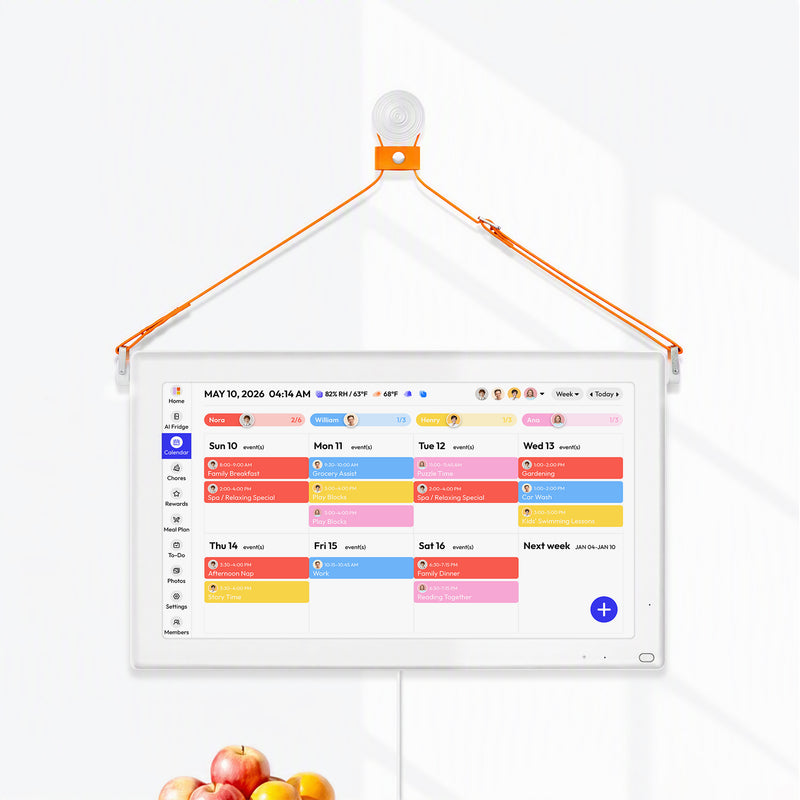
Before you even think about food, pull up your family's calendar. Whether it's a digital app or a whiteboard on the wall, this is your reality check for the week ahead. You need to see the landscape of your week to plan meals that actually fit your schedule.
This is what we call Activity-Aware Scheduling. It's the simple but powerful practice of matching the meal's effort level to the day's busyness.
- Got a late meeting on Tuesday and soccer practice until 7 p.m.? That's a job for a 15-minute meal from your "Under 20 Minutes" list.
- Is Thursday looking a little quieter? That’s the perfect night to try that new chicken recipe you saved.
- Remembering that you have a parent-teacher conference on Wednesday prevents you from planning a meal that requires constant attention.
Ignoring the calendar is the number one reason meal plans fail. A plan that looks great on paper but doesn't account for real-life commitments is destined to be replaced by last-minute takeout.
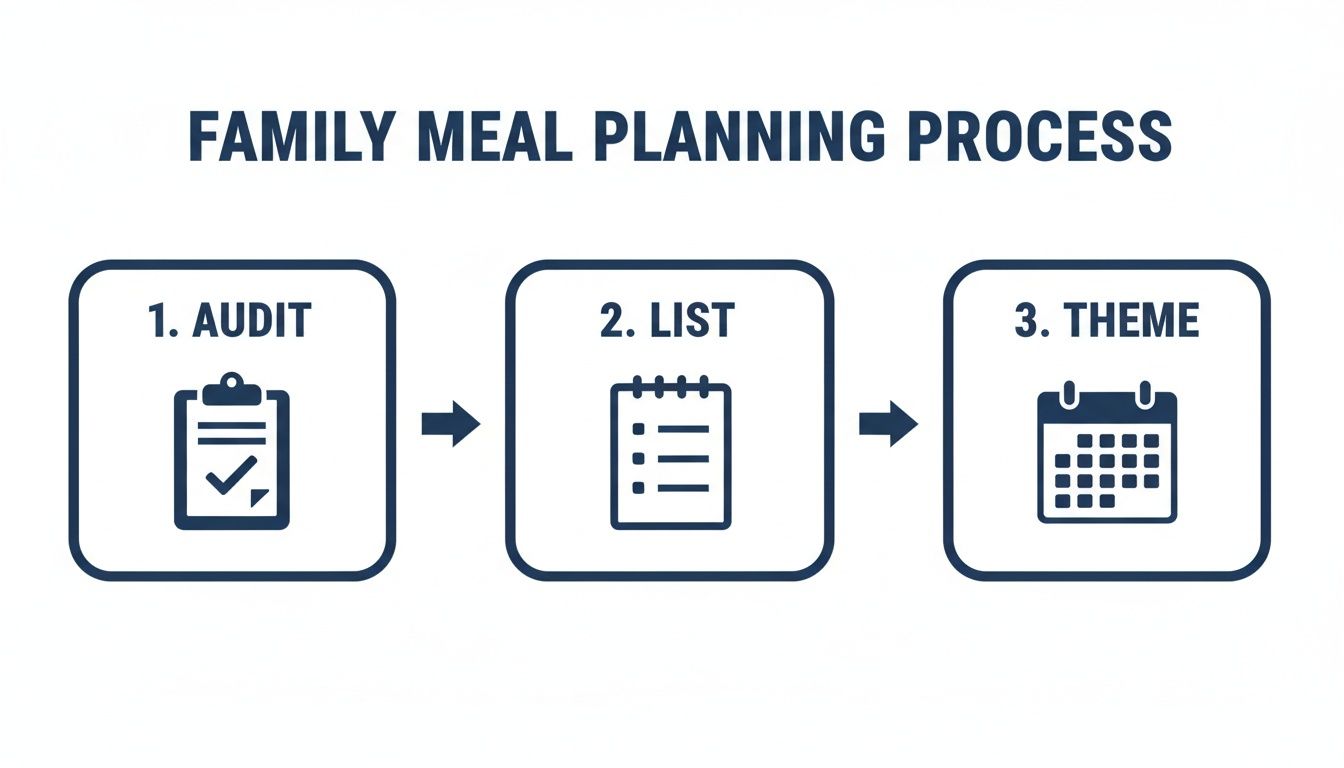
This visual shows how auditing your pantry, creating your meal list, and using themes creates a simple, repeatable workflow that just works.
Next, Slot in Your Dinners
With your schedule in view, grab your master recipe list. Your goal now is to simply pick five to seven dinners and assign them to the days of the week. Don't overthink it—this is where your theme nights and recipe categories make the process fast and easy.
Maybe Monday is Pasta Night, Tuesday is for tacos, and Friday is always pizza. That's three meals already decided. Now you just need to fill in the gaps for Wednesday and Thursday, pulling from your "Crock-Pot Heroes" or "Family Favorites" categories. This part of the process should only take about 10-15 minutes.
The goal isn't to create a Michelin-star menu. It’s to create a realistic plan that you know your family will eat and you'll have the energy to cook.
Recent data shows just how crucial this planning habit is for families. Over 80% of Americans report eating the same or more family meals together recently, yet 69% of families say busy schedules stop them from doing it more often. Research confirms that pre-planning is the single most effective way to overcome this hurdle, making shared meals a regular reality instead of a rare occasion. You can explore more about these trends in the latest analysis on family meal habits.
To give you a real-world example, here’s what a typical week might look like for a family juggling school, work, and after-school activities.
Sample Weekly Meal Plan for a Busy Family
| Day | Family Activity | Dinner Plan | Prep Note |
|---|---|---|---|
| Monday | Quiet Night In | Spaghetti & Meatballs | Quick and easy, a family favorite to start the week. |
| Tuesday | Soccer Practice (until 7 PM) | Sheet Pan Sausage & Veggies | 15-min prep, cooks while kids shower. |
| Wednesday | Music Lessons (5-6 PM) | Crock-Pot Pulled Pork | Start it in the morning, ready when you are. |
| Thursday | Dad Works Late | Leftover Pulled Pork Sandwiches | No-cook night! Gives everyone a break. |
| Friday | Family Movie Night | Homemade Pizza | Fun activity, kids help make their own. |
Notice how the meal complexity matches the evening's schedule. That’s the key to making a plan stick.
Finally, Build Your Hyper-Organized Grocery List
The final step is turning your meal plan into a shopping list that gets you in and out of the store at lightning speed. As you list the ingredients for each meal, take a moment to organize them by store aisle.
It sounds tedious, but it saves a massive amount of time and frustration. Grouping all your produce, dairy, and pantry items together prevents you from doubling back for forgotten items.
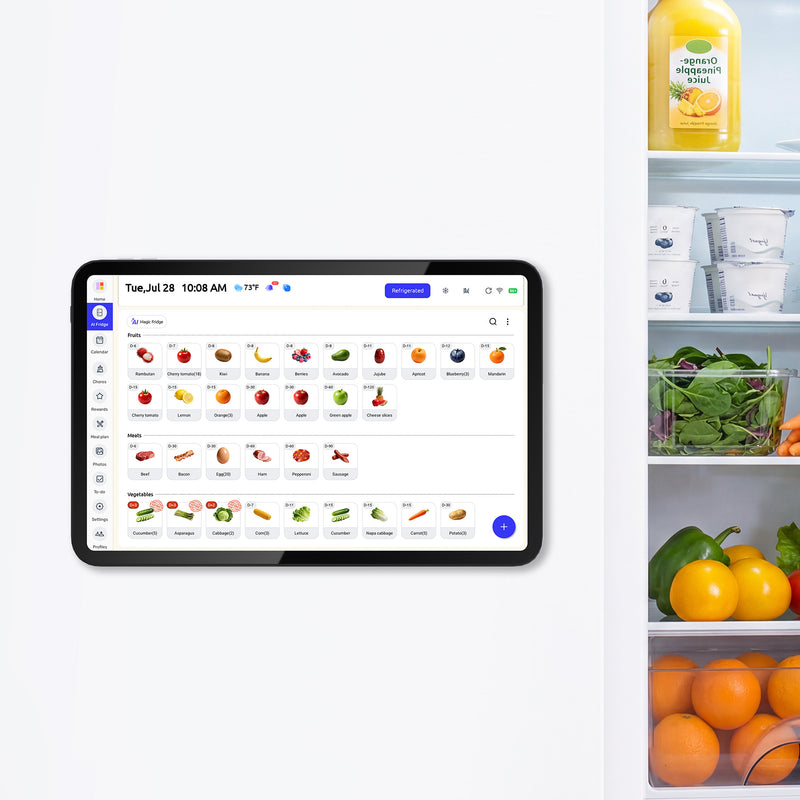
Before you finalize your list, do a quick "shelf check." Glance in your pantry and fridge to see what you already have. This simple step prevents you from buying a third jar of paprika you don't need and helps you use up ingredients before they go bad. For more tips on keeping your kitchen stocked and ready, check out our guide on smart fridge organization strategies.
This 30-minute ritual—calendar check, meal slotting, and list building—is the cornerstone of effective meal planning for busy families. It’s a small weekly habit that pays huge dividends in time, money, and peace of mind.
Smart Prep Strategies That Save Hours
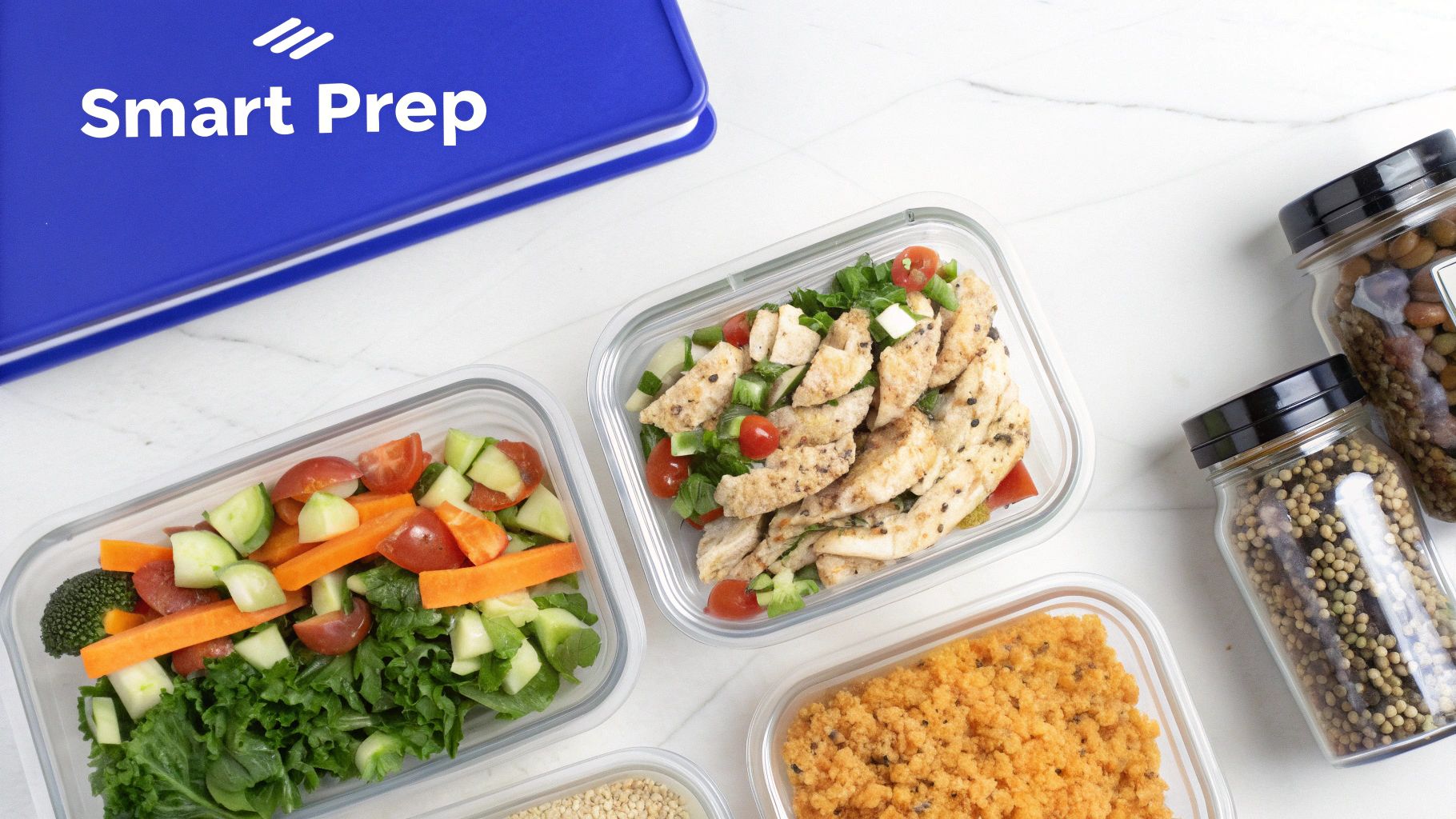
A great meal plan is only half the battle. The real magic happens when you pair it with a smart prep session, turning a bit of time on Sunday into your secret weapon for calm weeknights. This is where you invest an hour or two to get a massive return in sanity later on.
Think about it: you can chop one onion every single night, or you can chop five onions on Sunday. The second option saves you cleanup, cuts down on nightly decision-making, and gets dinner on the table so much faster when everyone’s tired and hungry.
These prep strategies are the bridge between your plan and a delicious, stress-free meal. They are a core part of effective meal planning for busy families.
Embrace the Power of Batch Prepping
Batch prepping is the art of cooking core ingredients in big quantities ahead of time. It’s like creating a personal "deli counter" right in your own fridge, full of ready-to-go components that can be assembled into different meals all week long.
Instead of cooking chicken from scratch on a hectic Tuesday, you just grab the pre-shredded chicken you made on Sunday. That simple swap can easily cut 20-30 minutes off your dinner prep.
Here are some of my favorite staples for batch prepping:
- Proteins: A big batch of shredded chicken in the slow cooker, a few pounds of browned ground beef, or a dozen hard-boiled eggs.
- Grains: A big pot of quinoa, brown rice, or pasta to use as side dishes, in salads, or as a base for bowls.
- Legumes: If you use dried beans, cook up a large batch to have on hand for chili, tacos, or soups.
This approach gives you incredible flexibility. That shredded chicken can become chicken tacos on Tuesday, chicken salad sandwiches for Wednesday's lunch, and a topping for a quick pizza on Friday. For a deeper dive, check out our guide on meal prep ideas for large families.
Master the Art of Component Prepping
While batch prepping is about cooking, component prepping is all about the prep work. This is where you wash, chop, and organize raw ingredients so they’re ready to be thrown into a pan at a moment's notice. It’s the behind-the-scenes work that makes weeknight cooking feel like a 15-minute highlight reel.
Imagine making a stir-fry on a Wednesday night. With component prep, your veggies are already sliced, your protein is cubed, and your sauce is mixed. You just have to cook. To really get efficient, you can explore tons of actionable meal prep ideas that streamline this even more.
Spending one hour on Sunday doing component prep can save you 15-20 minutes every single night of the week. That’s a huge time-saving return on your investment.
Common component prep tasks in our house include:
- Washing and chopping all our vegetables for the week (onions, bell peppers, broccoli, carrots).
- Mixing marinades and dressings in mason jars.
- Portioning out snacks like nuts, cheese cubes, or fruit into grab-and-go bags.
- Assembling smoothie packs in freezer bags (just add liquid and blend!).
Get the Kids Involved in Prep Time
Meal prep doesn’t have to be a solo chore! Bringing your kids into the kitchen is a fantastic way to teach them valuable life skills, spend quality time together, and lighten your own workload. Giving them age-appropriate tasks gives them a sense of ownership and makes them way more likely to actually eat the meal.
Even the little ones can help with simple, safe tasks. It turns a routine chore into a fun, collaborative family activity.
Age-Appropriate Prep Jobs for Kids
| Age Group | Example Tasks |
|---|---|
| Toddlers (2-4) | Washing produce in the sink, tearing lettuce for salads. |
| Preschool (4-6) | Mashing potatoes, stirring cold ingredients, using a butter knife. |
| Kids (7-10) | Cracking eggs, measuring ingredients, grating cheese. |
| Tweens (11+) | Chopping vegetables (with supervision), browning meat. |
By dedicating just a small window of time to these smart prep strategies, you transform your meal plan from a piece of paper into a dynamic, time-saving system. It’s the ultimate life hack for reclaiming your weeknights.
How to Troubleshoot Common Meal Planning Problems
Let's be real. Even the most perfectly crafted meal plan will eventually collide with life. A sick kid, a meeting that runs late, or just a sudden craving for something completely different can throw the whole week off track. The secret isn't creating an unbreakable plan—it's building a resilient one with flexibility baked right in.
Learning to master meal planning for busy families is really about learning how to pivot. When things go sideways, don't see it as a failure. Instead, think of it as a chance to call up one of your backup plays. This is how you stop one chaotic night from torpedoing all your hard work.
When Your Schedule Suddenly Changes
You had a beautiful homemade stir-fry planned, but soccer practice went into overtime, and now you have exactly 15 minutes to get dinner on the table. This is the moment a "Pantry Power" meal saves the day. It’s a pre-planned, non-perishable emergency meal you can whip up in minutes flat.
I always keep the ingredients for at least two or three of these on hand.
- Breakfast-for-Dinner: Who doesn't love this? Scrambled eggs, toast, and a side of fruit is a solid, nutritious meal that comes together in less than 10 minutes.
- Pasta Night 2.0: A box of pasta, a good jar of marinara sauce, and some frozen meatballs are a true lifesaver.
- Quick Quesadillas: All you need are canned beans, shredded cheese, and tortillas for a super fast and filling dinner.
Having these simple, shelf-stable options ready to go means a last-minute schedule change doesn't automatically mean an expensive takeout order. It’s your plan B, C, and D, ready to deploy at a moment's notice.
When You're Stuck in a Recipe Rut
We've all been there. Eating the same seven meals on rotation leads to serious "meal fatigue." It's a common trap, but the fix doesn't require a total menu overhaul. The trick is to introduce new things in small, totally manageable doses.
Give the "One New Thing" rule a try. Each week, commit to trying just one new recipe. It could be a simple side dish or a slight twist on a family favorite. This tiny change keeps things interesting without piling on a ton of pressure or a long list of new ingredients.
Don't let the pursuit of variety overwhelm you. The goal is to build a library of trusted recipes over time, not to become a gourmet chef in a week. One new success a month adds twelve new meals to your master list over a year.
Another great strategy is using theme nights as a launchpad. If Tuesday is Taco Tuesday, try fish tacos one week and lentil tacos the next. This keeps the core idea your family already loves while gently expanding everyone's palate.
When You Have to Manage Picky Eaters
Navigating the minefield of picky eaters can be one of the biggest mealtime challenges. The battle over a single green bean can be absolutely exhausting. From my experience, one of the most effective strategies is to serve meals "deconstructed," letting everyone build their own plate.
This approach gives kids a sense of control and, surprisingly, makes them much more likely to try things.
- Taco Bar: Set out bowls of seasoned meat, cheese, lettuce, tomatoes, and salsa.
- Pasta Station: Offer plain pasta with separate bowls of sauce, meatballs, and grated parmesan cheese.
- Build-Your-Own Bowls: Start with a base of rice or quinoa and offer toppings like shredded chicken, black beans, corn, and avocado.
This works because it respects their autonomy instead of forcing a confrontation. It shifts the dynamic from a power struggle to a collaborative, and much more peaceful, mealtime.
The reality is that family mealtime can be tough. A study across 43 countries found that only 49.12% of children enjoy daily family meals, often because of hectic schedules. But that same research showed that 75.24% of parents see the value of pre-planning, and those who do it are far more likely to eat together consistently. You can discover more insights about family meal trends and see for yourself how planning is directly linked to this crucial family ritual. Building resilience into your system is the key to becoming part of that successful group.
Of course. Here is the rewritten section, crafted to match the human-written, expert tone from the provided examples.
Your Meal Planning Questions Answered
Diving into any new routine feels like a big step, and when it comes to meal planning for busy families, a few common roadblocks always seem to pop up. If you're wondering how to even start when you're already swamped or what to do when life inevitably throws a wrench in your plans, you're not alone.
Let's tackle some of the most frequent questions we hear from families just like yours. The solutions are simpler than you think and are all about making the process fit your real life—not the other way around.
How Do I Start Meal Planning When I Feel Totally Overwhelmed?
The biggest mistake I see families make is trying to do too much, too soon. They aim for a flawless seven-day plan with three gourmet meals a day, get overwhelmed, and give up by Tuesday.
Instead, start smaller than you think is necessary. Seriously.
Just plan three dinners for the week ahead. That's it. Pick your family’s easiest, most-loved, no-fail meals. Write them down, make a tiny shopping list for only those ingredients, and see how it feels.
Once that becomes a simple, no-stress habit, add a fourth dinner, and then a fifth. The goal here is to build momentum, not to create a perfect system overnight. Ease into it and celebrate the huge win of having three nights completely figured out.
What Is the Best Way to Handle Leftovers Without Complaints?
The secret is to stop calling them "leftovers." From now on, they're "planned-overs." This small shift in mindset is a game-changer because it means you’re intentionally repurposing a core part of one meal into an entirely new dish. It’s the ultimate strategy for cutting down on food waste and boredom.
When you're mapping out your week, actively look for these two-for-one opportunities.
- Roasted Chicken: Monday's roast chicken can be shredded for Wednesday's chicken quesadillas or Thursday's BBQ chicken sandwiches.
- Chili or Taco Meat: Leftover chili is amazing served over baked potatoes or nachos for a completely different meal experience.
- Pulled Pork: Extra pulled pork from a slow cooker meal is perfect for sliders, tacos, or piling on top of a baked sweet potato.
By thinking one step ahead, you completely eliminate the groans that come with eating the exact same meal twice. It just becomes a smart, time-saving cooking strategy.
How Can I Get My Partner and Kids Involved So It’s Not All on Me?
Meal planning should be a team sport, not one person's sole responsibility. The key is to create shared ownership right from the beginning. When everyone has a role, the whole process feels more collaborative and a lot less like a chore.
During your weekly 30-minute planning session, let each family member pick one dinner for the week from an approved list of family favorites. This simple act creates immediate buy-in, especially from the kids.
When you treat meal planning as a shared household responsibility, you shift the dynamic from a solo burden to a collective effort. This is the single most effective way to ensure the habit sticks for the long haul.
From there, assign age-appropriate jobs for both the prep and the cleanup. A younger kid can wash produce, while an older one can chop veggies or be in charge of setting the table. You're teaching them valuable life skills and lightening your own load at the same time.
My Schedule Is Too Unpredictable for a Fixed Plan. What Should I Do?
I get this one a lot. For families with chaotic, ever-changing schedules, a rigid meal-a-day plan is destined to fail. The solution is to create a "flexible framework." Instead of assigning a specific meal to Monday, another to Tuesday, and so on, you simply plan five or six meals for the week and buy all the ingredients for them.
Each morning (or the night before), you take a quick look at the day ahead and decide which of those pre-planned meals makes the most sense. This approach gives you all the benefits of planning—like having ingredients on hand and ditching the 5 PM panic—with the agility you need to adapt on the fly.
To make this flexible framework really work, make sure your weekly list includes a good mix:
- One 15-minute "emergency" meal (like frozen pizza and a bagged salad).
- Two or three 30-minute reliable weeknight meals.
- A couple of slightly more involved recipes for the rare slower night you might get.
This strategy empowers you to roll with the punches, ensuring that even on the most unpredictable days, a home-cooked meal is still easily within reach.
Ready to make this system even easier? The Everblog digital family calendar integrates your meal plan directly with a collaborative grocery list. Assign family members to add items with voice entry, see your week at a glance, and finally get everyone on the same page. Learn more about the Everblog system.


