

A well-organized fridge is more than just a pretty picture for Instagram—it's the secret weapon for a less chaotic kitchen. When you know where everything is, you cut down on food waste, save money on groceries, and make meal prep feel less like a chore.
Your Blueprint For A Clutter-Free Fridge
Let's be real: opening the fridge door to a jumble of half-used jars, mystery leftovers, and wilted vegetables is a daily dose of stress nobody needs. Transforming that mess into a functional, organized space is the first step toward a smoother-running household.
This isn't about achieving perfection. It's about creating a simple, sustainable system that works for your family. A system that stops you from buying that third jar of mustard you didn't know you had and prevents science experiments from growing in the back. The average family can save hundreds of dollars a year just by cutting down on food waste, and it all starts here.
The Core Principle of Fridge Zoning
The single most important concept for a functional fridge is zoning. Your refrigerator doesn't have one uniform temperature; it has microclimates. The door is the warmest part, while the back of the bottom shelf is usually the chilliest. Understanding this is the key to making your food last longer.
It sounds technical, but the idea is incredibly simple:
- Warmest Zones (Doors): This area is perfect for things with natural preservatives that can handle temperature swings. Think condiments, jams, pickles, and sodas.
- Coolest Zones (Bottom & Back): Reserve this prime real estate for your most perishable items, like raw meat, poultry, and fish. Storing them here keeps them safer and fresher.
- Moderate Zones (Middle & Top Shelves): This is your go-to spot for dairy, eggs, drinks, and leftovers.
Think of it as creating a permanent map for your food. You’re not just tidying up; you're building an intuitive system that makes it easy for everyone—even the kids—to find things and put them back where they belong. It’s a small change that delivers big results in time, money, and sanity.
A well-organized fridge isn't just a tidy space—it's an active tool in your kitchen that supports your budget, simplifies your daily routine, and promotes healthier eating habits by making good choices visible and accessible.
It’s no surprise the global refrigerator market was valued at $78.39 billion in 2022—this appliance is the heart of the modern kitchen. As our homes get smarter, the way we manage them should too. You can learn more about the latest refrigerator market trends on Fortune Business Insights. But you don't need a brand-new fridge to get organized; this zoning framework is a simple, immediate way to make the most of the one you already have.
Getting to know your fridge's unique temperature zones is the foundation of smart food storage. Here’s a quick guide to help you map out your own.
Fridge Temperature Zones And Optimal Food Storage
| Fridge Zone | Typical Temperature | Best For Storing |
|---|---|---|
| Upper Shelves | Warmer, more consistent | Leftovers, drinks, herbs, ready-to-eat foods |
| Middle Shelves | Moderate, stable | Eggs, milk, cheese, yogurt, other dairy |
| Lower Shelves | Coolest area | Raw meat, poultry, and fish (in sealed containers) |
| Crisper Drawers | Humidity-controlled | Fruits (low humidity), Vegetables (high humidity) |
| Door Shelves | Warmest zone | Condiments, sauces, jams, butter, bottled water |
By storing foods in their ideal zones, you’re not just organizing—you’re actively extending their shelf life and ensuring they stay safe to eat.
Mastering The Art Of Fridge Zoning
Okay, let's turn theory into practice. A truly organized fridge isn't just about making things look pretty—it's about giving every single food item a permanent "home." This is what fridge zoning is all about, and once you have it down, it creates a predictable, efficient system the whole family can actually stick with.
The real goal here is to make your life easier. When you know exactly where the yogurt is, you shave precious minutes off that chaotic morning rush. When leftovers are staring you in the face, you’re way more likely to eat them, which saves money and cuts down on food waste.
The Top-Down Method For Fridge Shelves
A simple and incredibly effective way to organize your fridge is what I call the Top-Down Method. This strategy is brilliant because it uses the natural temperature differences inside your fridge to keep food fresher, longer. It’s a logical flow that’s all about visibility and, most importantly, food safety.
The golden rule is this: ready-to-eat foods go at the top, and anything that needs to be cooked goes toward the bottom. This layout is super intuitive and dramatically reduces the risk of cross-contamination.
This diagram breaks down the ideal vertical setup for your fridge, placing foods where they belong based on temperature and safety.
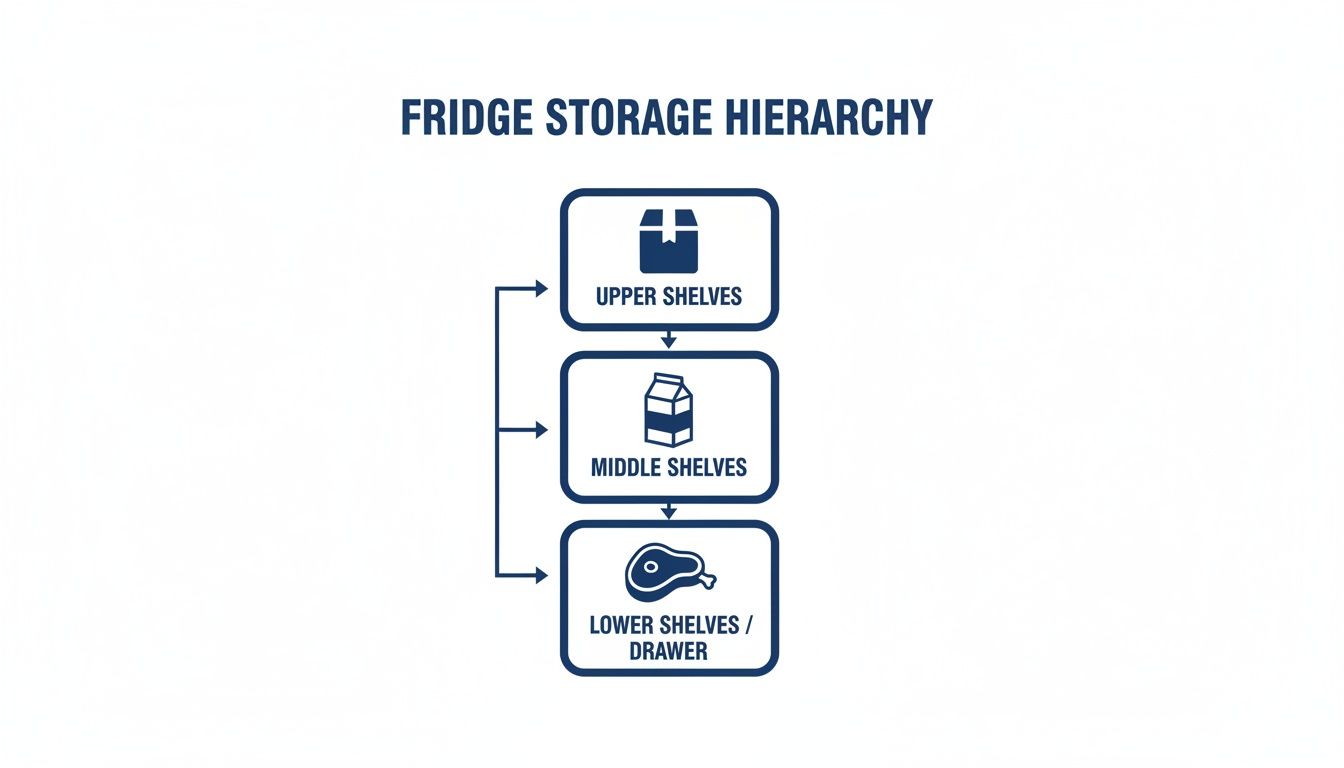
Think of this hierarchy as a safety net. It’s designed to make sure any drips from raw items can't possibly contaminate the ready-to-eat foods stored below them.
-
Top Shelf: Your "Ready-to-Eat" Zone The top shelf is the perfect spot for leftovers, drinks, yogurts, and other prepared foods. Putting leftovers here keeps them at eye level and top of mind, so they actually get eaten instead of being forgotten in some dark corner. I love using clear, stackable containers to make the most of this space.
-
Middle Shelves: The Dairy And Egg Hub Your middle shelves have the most consistent temperature, which makes them the ideal home for dairy products and eggs. I know, a lot of fridge doors have those little egg compartments, but moving them to a central shelf protects them from the constant temperature swings every time the door opens. It’s a small switch that really helps maintain their freshness.
-
Bottom Shelf: The Safest Place For Raw Meat If you remember one thing, let it be this. This is the most critical food-safety rule for fridge organization: Always, always, always store raw meat, poultry, and fish on the very bottom shelf. It’s the coldest part of the fridge, and putting them here means any potential drips or leaks can’t contaminate anything else. I highly recommend placing meat packages inside a dedicated bin or on a tray with a lip for an extra layer of protection.
Think of your fridge layout as a safety net. By designating the bottom shelf exclusively for raw meats, you create a physical barrier that helps prevent the spread of harmful bacteria like Salmonella or E. coli throughout your refrigerator.
This one habit is the cornerstone of a safe, efficient kitchen. For our family, it's a total non-negotiable.
Using Fridge Doors And Drawers Wisely
The doors and drawers in your fridge aren't just extra storage—they’re specialized zones that can seriously upgrade your organization game when you use them right.
The door is actually the warmest part of your fridge, so save it for items that are less perishable and can handle those temperature fluctuations.
- Condiments & Preserves: Things like ketchup, mustard, pickles, jams, and salad dressings have enough natural preservatives (salt, sugar, vinegar) to be perfectly fine here.
- Butter & Soft Cheeses: The slightly warmer temp is great for keeping butter spreadable without compromising its safety.
- Bottled Water & Soda: These are perfectly fine on the door, and it frees up valuable shelf space for more sensitive items.
One of the biggest mistakes I see people make is storing milk in the door. It’s far too temperature-sensitive and belongs on a colder middle shelf to keep it from spoiling early.
Your crisper drawers are another key feature, designed specifically to control humidity for your produce. Most fridges have two, and you can often adjust the humidity setting for each.
- High-Humidity Drawer: Set one drawer to high humidity for produce that tends to wilt, like leafy greens, broccoli, and carrots. This setting traps moisture, keeping everything crisp and fresh.
- Low-Humidity Drawer: Use the other drawer for fruits like apples, pears, and grapes. These release ethylene gas, which can make other produce ripen and spoil faster. The low-humidity setting lets this gas escape.
By separating your fruits and veggies into their ideal environments, you can easily extend their freshness by days, sometimes even a full week. It’s a small tweak that makes a huge impact on your grocery bill and the quality of your meals. And just like that, you have a complete zoning map for your fridge
Choosing The Right Tools For Fridge Mastery
Okay, so you’ve mapped out your fridge zones. That’s a huge first step! But the secret to making that system stick—especially with a busy family—is having the right gear. This isn't about running out and buying a bunch of expensive, trendy gadgets. It's about being smart with a few key items that make it almost effortless for everyone to keep the fridge in order.
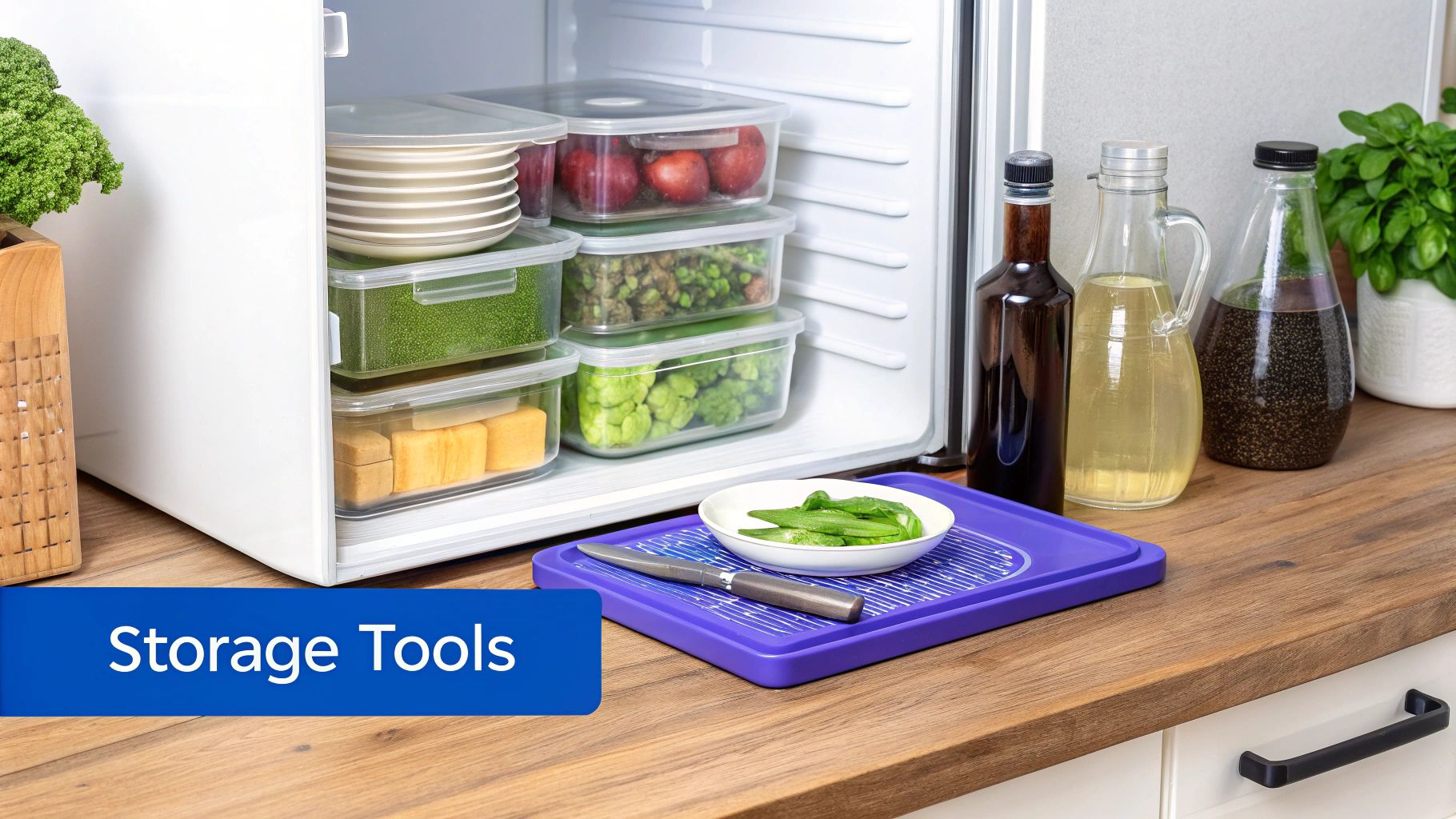
A few strategic purchases can honestly transform how your fridge works. I’m talking about clear, stackable containers that let you see exactly what you have at a glance. No more mystery leftovers turning into a science experiment in the back. They turn all that vertical air space into usable storage, finally putting an end to the chaos of half-empty bags and wobbly boxes.
Containers That Create Calm
The world of food storage can feel overwhelming, but you really only need a few workhorse containers to get your fridge under control. The real trick is to aim for uniformity—when things fit together like puzzle pieces, you maximize every single inch of that precious shelf space.
Here are the essentials I swear by in my own kitchen:
- Clear, Stackable Bins: These are totally non-negotiable for me. I use them to group similar items like yogurts, cheese sticks, or fruit pouches. They essentially act like removable drawers. Instead of rummaging, you just pull out the whole bin.
- Glass Storage Containers: When it comes to leftovers, nothing beats glass. They don’t hold onto stains or weird smells, you can see what’s inside, and they can go straight from the fridge to the microwave. A matching set with lids that fit multiple sizes is a game-changer.
- Turntable Organizers: You might know this as a Lazy Susan, and it’s a brilliant little tool for deep shelves or those awkward corner spots. Pop one in to hold jars of pickles, olives, and salad dressings. A quick spin brings everything to the front, no more knocking things over.
Here's a pro-tip from my own trial and error: get a turntable with a raised lip or edge. It's a small detail, but it stops bottles from tipping over and sliding off when you spin it. Trust me, it’s saved me from a sticky mess more than once.
When you choose versatile and durable tools, you’re setting yourself up for long-term success. The whole point is to make putting groceries away and grabbing ingredients as simple as possible for everyone.
The Surprising Power Of Labels
If there’s one tiny tool that makes a massive difference, it’s a simple label. Labeling your bins and even the edges of your shelves turns the fridge from your project into a shared system the whole family can actually use.
You don’t need anything fancy. A chalk marker on a plastic bin or even a piece of masking tape works perfectly. Consistency is what matters. When you're picking your tools, think about the convenience of stick-on labels for streamlining organization—that same logic applies just as well to food containers.
Labels help in two huge ways:
- Everyone Knows Where Things Go: Bins clearly marked "Snacks," "Dairy," or "Meats" take all the guesswork out of it. The kids know exactly where to find their apple sauce, and your partner can help put groceries away correctly without having to ask.
- You Can Track What’s What: For leftovers and prepped meals, adding a date is everything. A quick "Chicken, 10/26" note helps you follow the "First-In, First-Out" rule, making sure older food gets eaten first and cutting down on waste.
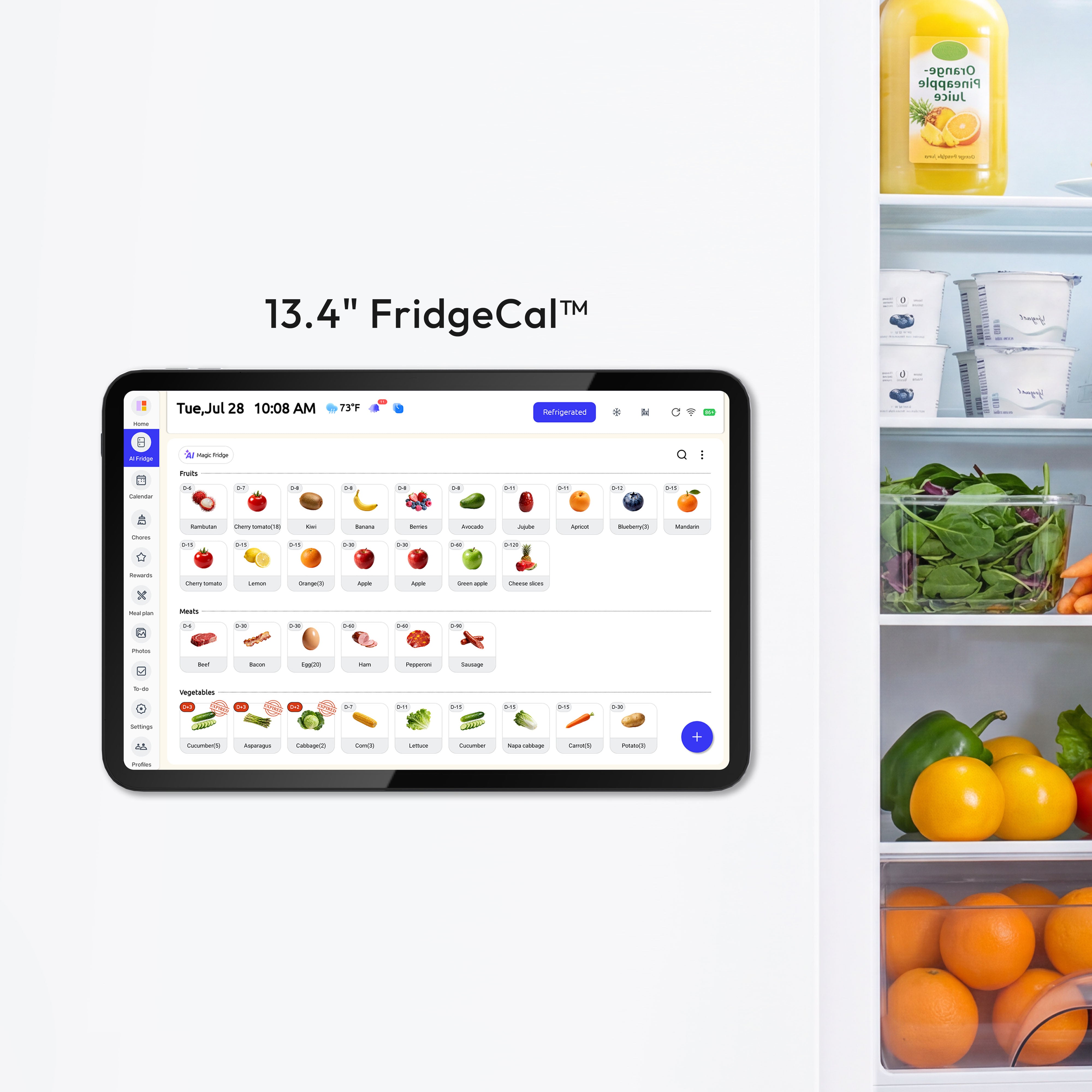
For families ready to take this a step further, Everblog’s system has you covered. Our Everblog FridgeCal feature helps you track expiration dates and manage your inventory right from your family’s digital hub. It’s a smart way to connect your physical fridge to your meal plan so nothing gets lost in the shuffle.
Making Fridge Organization A Family Habit
Let's be real: a perfectly organized fridge is one thing. Keeping it that way with a family in the mix? That’s a whole different ball game. The secret to making your system last isn’t about perfection; it’s about getting everyone on board.
When the fridge has a system and everyone knows the rules—where the yogurt goes, why the milk is on a specific shelf—the daily grind of putting away groceries or grabbing a snack gets so much easier. It stops being one person's job and becomes a simple, shared routine.
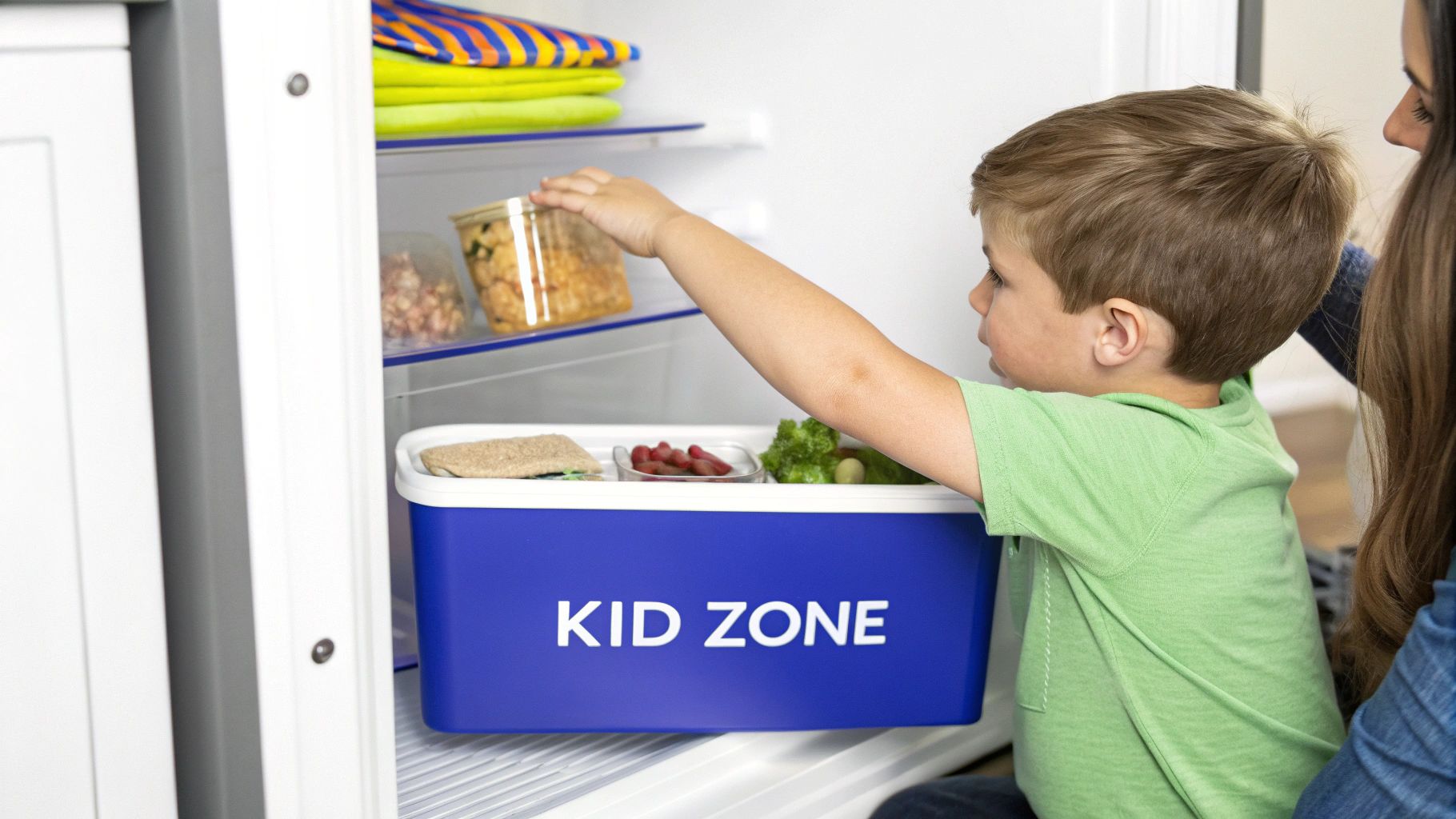
Create A Kid-Friendly Snack Zone
One of my favorite tricks for getting the kids involved is creating a "Kid Zone." This is a total game-changer. It’s a dedicated bin or a low shelf that is 100% theirs, and it drastically cuts down on the constant "Mom, can I have a snack?" requests.
Fill this spot with healthy snacks and drinks you’ve already approved. Think things like cheese sticks, fruit cups, applesauce pouches, and small juice boxes. Placing it at their level gives them a little bit of independence to grab what they want, all within the healthy boundaries you've set.
Empowering kids with their own fridge space is about more than just snacks. It teaches them responsibility and helps them feel like they're a real part of running the household.
Plus, it makes your life easier. When your little one can get their own snack without needing your help, that's one less thing you have to stop and do. It's a small tweak that delivers a huge win for family sanity.
Assign Age-Appropriate Fridge Chores
You don’t have to get complicated to involve your kids in fridge maintenance. It’s all about giving them jobs that fit their age and ability. This turns a boring chore into a real learning moment. If you're looking for more great ideas, check out our guide on how to get kids to do chores without the drama.
Start small and remember that consistency beats perfection every time.
-
Toddlers (Ages 3-5):
- The Spill Patrol: Arm them with a small cloth to wipe up little drips on their shelf.
- Snack Bin Helper: They can help you put their own snacks into the Kid Zone bin after a grocery trip.
- Grocery Assistant: Let them hand you items from the bags as you unload.
-
Young Kids (Ages 6-9):
- Grocery Unpackers: They're old enough to put away sturdier items like drinks, condiments, and yogurts in the right zones.
- Date Checker: Show them how to look for expiration dates and practice "first in, first out" by moving older items to the front.
- Crisper Crew: They can help rinse fruits and veggies before putting them away in the drawers.
-
Older Kids (Ages 10+):
- Leftover Manager: Put them in charge of labeling and storing leftovers correctly.
- Weekly Wipe-Down: Task them with giving the shelves and door bins a quick wipe-down once a week.
- Inventory Taker: Before you finalize the grocery list, they can go through the fridge and report back on what's running low.
By weaving these small jobs into your family’s routine, you lighten your own load and teach your kids skills they'll actually use. Suddenly, keeping the fridge organized isn't some huge project—it's just part of how your team works together.
How Smart Fridge Organization Simplifies Meal Planning
This is where all your hard work starts to pay off. A beautifully organized fridge isn’t just about looking good—it's your new command center for meal planning. When your physical storage system and your digital planning process are in sync, the whole routine of shopping, cooking, and eating gets so much easier.
Think about it. When you sit down to plan your meals for the week, you can actually picture where everything will go. The chicken for Tuesday's tacos has its designated spot on the bottom shelf, and the peppers for Wednesday's stir-fry have a home in the crisper. Your fridge stops being a passive black hole for food and becomes an active partner in your kitchen.
From Grocery List to Organized Shelves
The real magic happens when your fridge layout starts talking to your grocery list. Before you even think about heading to the store, a quick scan of your zones tells you exactly what you're out of. No more digging behind a wall of jars just to see if you have any sour cream—the "Dairy" bin gives you the answer in two seconds.
This is where a tool like the Everblog Meal Planner changes the game. When you can see your physical inventory at a glance, building an accurate and efficient shopping list is a breeze. This seamless connection leads to:
- Less Impulse Buying: You know exactly what you have, so you only buy what you truly need.
- Faster Grocery Trips: Your list is super targeted, getting you in and out of the store in record time.
- Easier Unloading: Putting groceries away is no longer a dreaded game of Tetris. Every item has a pre-assigned home, making it a quick job the whole family can help with.
When your fridge is this organized, building a shopping list becomes second nature. To make it even smoother, see how a shared grocery list app for family can sync everyone’s requests into one central place.
Master The First-In, First-Out Method
One of the best habits you can adopt to slash food waste is the First-In, First-Out (FIFO) system. It's a simple concept used by restaurants and grocery stores everywhere: use the oldest stuff first. With your new fridge zones, putting this into practice at home is surprisingly easy.
When you bring home a new carton of milk, just slide it behind the one that's already in the fridge. That's it. This small action ensures the older one gets grabbed first, preventing things from expiring in the mysterious back corner.
By consistently rotating your stock, you ensure food is eaten when it's at its best. This simple habit can make a huge dent in the estimated 30-40% of the food supply that goes to waste in the U.S. each year.
This disciplined rotation keeps your inventory fresh and your meal plan on track, since you'll always know which ingredients need to be used up next.
The "Eat Me First" Bin: A Waste-Reduction Hero
Ready to take your FIFO system to the next level? Create an "Eat Me First" bin. This is one of my all-time favorite fridge hacks, and it works wonders for busy families. Just grab a clear, open-top bin and place it on an eye-level shelf.
This bin is the perfect home for:
- Leftovers from last night’s dinner.
- Half an onion or bell pepper from a previous recipe.
- Yogurt or cottage cheese that’s getting close to its expiration date.
- That handful of spinach that’s starting to look a little sad.
Make it a family rule: before you cook something new or grab a snack, check the "Eat Me First" bin. It removes all the guesswork, drastically cuts down on waste, and inspires some pretty creative meals. This little visual cue transforms your fridge from a static box into a dynamic system that actively helps you manage your food, your budget, and your meal plan.
An organized fridge doesn't just happen, especially with a family constantly raiding it for snacks. The real secret to keeping things in order isn't some massive, one-time purge. It’s about weaving small, consistent habits into your weekly routine.
This approach stops clutter from creeping back in and makes fridge maintenance feel like a simple background task instead of a chore you dread.
You don't need to block out an entire afternoon for this. Seriously, a quick 10-minute "fridge reset" each week makes a world of difference. I always do this right before the weekly grocery delivery arrives—it’s the perfect time to take stock and make room for all the new stuff. This tiny commitment is what makes long-term fridge organization actually stick.
The 10-Minute Weekly Fridge Reset
This quick little routine is my secret weapon for keeping the system running smoothly. It’s a simple mental checklist that honestly becomes second nature after a couple of weeks.
- Quick Scan & Purge: Take about 60 seconds to scan every shelf. Is there a sad-looking half of a lemon? Are there leftovers that have seen better days? Get 'em out.
- Wipe Down Spills: Grab a damp cloth and quickly wipe up any sticky spots or crumbs. Catching these little messes right away saves you from a major scrubbing session down the road.
- Zone Tidy-Up: Spend a minute on each zone. Straighten the condiment bottles on the door, pull the older yogurts to the front of their bin, and double-check that the raw meat is still securely contained on the bottom shelf.
- Update the "Eat Me First" Bin: This is a big one. Move anything getting close to its expiration date into your "Eat Me First" bin. This simple action is a powerhouse for cutting down on food waste.
A weekly reset isn't about deep cleaning; it's about course correction. Think of it as a quick 'tidy-up' that reinforces your organizational system and prevents small messes from turning into overwhelming chaos.
Planning Your Seasonal Deep Clean
While the weekly touch-ups are non-negotiable, a more thorough deep clean every few months keeps your fridge fresh, hygienic, and running at its best. This is your chance to tackle everything the 10-minute reset doesn't cover. I find it easiest to tie this to the changing seasons, so I do it about four times a year.
Your deep clean checklist is pretty straightforward:
- Empty the fridge completely, but do it one shelf at a time so your kitchen counter doesn't become a disaster zone.
- Pull out all the shelves and drawers. Wash them in the sink with warm, soapy water.
- Wipe down the entire interior, paying special attention to the walls and those pesky door seals where crumbs love to hide.
- Before you put everything back, check your temperature settings and adjust if needed.
A good, thorough cleaning can really refresh your fridge and make your whole system feel new again. For an eco-friendly approach, this guide to cleaning your refrigerator with vinegar is fantastic. By pairing these quick weekly habits with a seasonal deep clean, you'll ensure your fridge stays a clean, safe, and efficient hub for your family’s food.
Got Questions? We've Got Answers
Even the best-laid plans come with a few questions. When you're staring into the depths of your fridge, it's normal for some "what ifs" to pop up. Let's tackle some of the most common ones I hear from families, so you can keep the momentum going.
The Great Milk Debate: Door or Shelf?
This is probably the number one question I get. It feels so natural to put the milk carton in the door for easy access, but please don't! The door is the warmest spot in your entire fridge, and the temperature swings every time you open it. This can make your milk spoil days faster.
For the freshest milk, always store it on a middle or bottom shelf towards the back where the temperature is coldest and most consistent.
To Wash or Not to Wash? The Produce Predicament
You've just returned from the grocery store with a beautiful haul of fresh fruits and veggies. Should you wash everything now to save time later?
My advice for most produce is to wait and wash it right before you're ready to eat or cook it. Washing can strip away the natural protective layer on things like berries, making them get moldy and mushy much faster. An exception? Leafy greens. You can wash, spin-dry them completely, and store them in a container with a paper towel to soak up any lingering moisture.
Conquering the Condiment Chaos
What about all those jars of pickles, mustard, and jam that get lost in the back? My secret weapon is a simple turntable, often called a "Lazy Susan." It's a total game-changer. Instead of having to pull everything out to find the soy sauce, you just give it a spin. No more forgotten jars or duplicate purchases.
The goal here isn't a picture-perfect, impossibly styled fridge. It's about creating a functional system that saves your family time, cuts down on food waste, and makes daily life just a little less chaotic.
How Often Should I Really Be Cleaning This Thing?
Let's be realistic. A quick, 10-minute wipe-down once a week is perfect for maintenance. I like to do this right before the weekly grocery trip when the fridge is at its emptiest. Just toss out old leftovers and wipe up any spills.
For a true deep clean—taking out shelves and drawers to wash them—aim for every three to four months.
Ready to connect your organized fridge to the rest of your family's life? The Everblog Meal Planner and collaborative Grocery List are designed to do just that. See how our all-in-one family hub can bring calm to your kitchen at https://everblog.com.


