





A four-week plan works best when you lock three decisions early and run everything else through one shared system.
If your child’s birthday is four weeks away and your home already feels full, it is normal to feel behind before you even buy balloons. Parents who use a 30-day checklist with early RSVP deadlines and weekly prep blocks avoid the last-week scramble for missing supplies, food timing, and cleanup help. You’ll leave this guide with a visual timeline, a shared-calendar workflow, and a meal plan structure that fits real family life.
1) Start With the Three Control Decisions
Most party stress starts with late decisions, not with decorations. Make three control decisions first: budget, guest list, and format (home, park, or venue). Those three choices set your food volume, seating plan, supervision needs, and timeline pressure.

A budget split framework helps you avoid overspending in week 1: venue 0–40%, food/drinks 25–30%, décor 10–15%, activities 10–20%, favors 5–10%, and a buffer 5–10%. For guest count, use the child-age-plus-one rule as a starting point, then adjust to your actual space and your supervision ratio.
Editor rule-of-thumb (adjust by context): budget percentages and the age-plus-one guest rule are planning defaults, not formal standards.
20-Minute Control Sheet
Decision |
Default Starting Point |
Why It Prevents Rework |
Budget cap |
Set a hard max + 10% buffer |
Stops impulse purchases in week 2 |
Guest count |
Child age + 1, then space check |
Aligns food, favors, and seating early |
Format |
Home / outdoor / venue |
Determines setup time, cleanup load, and backup plans |
If/Then Decision Mini-Matrix
If... |
Then... |
Why It Helps |
Format is home |
Cap invites by usable space, exits, and the number of adults who can actively supervise activity zones. |
Home layouts usually limit sightlines and cleanup bandwidth. |
Format is park/outdoor |
Confirm permit, shelter, and food rules before finalizing headcount because jurisdictions adopt food-safety provisions differently. |
Local operating constraints can change what is feasible. |
Format is paid venue |
Use the venue’s capacity, timing, and staffing rules as the hard cap, then back-plan invites. |
Contract limits reduce day-of surprises. |
Party size is small (up to 8) |
DIY is usually manageable if one adult is dedicated to food and setup. |
Keeps execution simple. |
Party size is medium (8–12) |
Shift to hybrid if helpers are limited, menu complexity is high, or setup windows are short. |
Prevents host overload at peak moments. |
Party size is large (over 12) |
Default to hybrid or catering unless you have kitchen support and a low-complexity menu. |
Protects service flow, safety checks, and supervision quality. |
2) Build a Visual 4-Week Timeline
A 30-day countdown structure works because each week has one job: foundation, commitments, prep, then setup. This keeps planning modular so busy parents can complete small blocks instead of one exhausting final push.
The week-by-week checkpoints are practical: lock date/location and invites first, finalize flow and menu next, then shop and stage zones in the final week. This sequence reduces forgotten basics like ice, trash bags, serving tools, and coat/storage flow.

4-Week Visual Timeline (Family Calendar + Home + Meal Plan)
Window |
Calendar Tasks |
Home Organization Tasks |
Meal Planning Tasks |
Week 4 (Days 30–25) |
Lock date/time, create shared event, send invites |
Walk space for entry, bathroom, food, trash, seating |
Pick simple menu style and make-ahead list |
Week 3 (Days 24–18) |
Set RSVP deadline (10 days before), assign helper roles |
Plan party zones and traffic flow |
Finalize menu and allergy questions |
Week 2 (Days 17–11) |
RSVP follow-ups, confirm vendors/help |
Deep-clean visible zones only |
Buy shelf-stable items and serving supplies |
Week 1 (Days 10–4) |
Post day-of run sheet, confirm pickups/drop-offs |
Pre-stage serving pieces and activity bins |
Prep make-ahead components |
Final 2 Days |
Final reminders and weather backup note |
Move furniture, set trash/recycling stations |
Chill drinks, finish prep, label food |
Party Day |
Time blocks + host cues |
10-minute zone check before guests arrive |
Refill plan + simple service order |
For length, age-based timing guidance is reliable: toddlers 60–90 minutes, preschoolers 90 minutes–2 hours, elementary ages 2.5–3 hours. For most busy households, a 2-hour format is the easiest to execute on time.
Editor rule-of-thumb (adjust by context): age-based duration ranges and the 2-hour format are practical starting points that should be adjusted for your child, schedule, and venue constraints.
3) Put the Timeline on a Shared Family Calendar
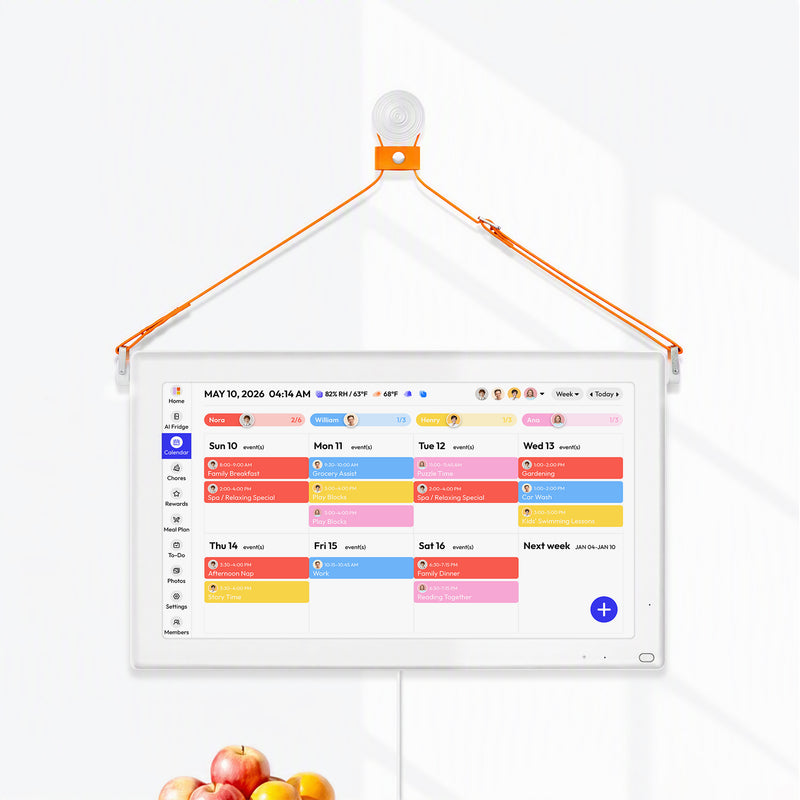
Paper systems fail under high change, while a a company gives everyone one visible source of truth. The practical setup is simple: one household screen in a high-traffic area, synced phones, and a weekly reset (for example, Sunday at 7:30 PM).
A real-parent app test shows why adoption matters more than feature count: setup speed, cross-device use, and clear shared lists reduce missed events. If onboarding takes too long, families stop using it before party week.
For complex schedules, family app comparisons point to a clear tradeoff: low-friction tools reduce mental load fastest, while full-feature tools help larger households coordinate tasks and reminders. Pick the tool your family will actually open daily.
14-Day Rollout for Party Month
- Days 1–3: choose screen location and connect existing calendars.
- Days 4–7: enter only core commitments (school, work, party milestones).
- Days 8–14: add color categories (4–6 max), nightly 3-minute check, weekly reset.
4) Use a Hybrid Meal Plan to Protect Your Time
The DIY vs catering threshold is straightforward: under 8 guests is usually manageable DIY, 8–12 is judgment-based, and over 12 often needs outside help unless you have kitchen support. Hidden DIY labor can run 6–8+ hours, so time capacity matters as much as budget. Use the If/Then Decision Mini-Matrix in Section 1 to adjust this threshold for helper availability, menu complexity, and setup constraints.

Editor rule-of-thumb (adjust by context): DIY guest thresholds and labor-hour estimates are planning heuristics and should be recalibrated for your household capacity.
For a 2-hour kids’ party, simple menus outperform ambitious ones: 1 main, 2 sides, cake/cupcakes, juice, and water. A practical hybrid is to outsource one pressure point (often cake or mains) and keep one personal item homemade for flexibility and family feel.
A safety baseline keeps food planning realistic: keep cold foods at or below 41°F and hot foods at or above 135°F during service using food service safety facts. Build this directly into your party calendar so prep, serving, and leftovers are one continuous system.
Evidence-based guideline: hot/cold holding temperature thresholds come from U.S. food-safety guidance.
Meal Prep Rhythm
- Week 2: finalize quantities after RSVP trend.
- Week 1: buy non-perishables and serving supplies.
- Final 2 days: prep/chill and stage by service order.
- Party day: keep refills simple and visible.
Safety and Food Handling Checklist
- Pre-chill drinks/cold trays and verify refrigeration is at 40°F or below before prep using refrigerator temperature guidance.
- Keep cold foods at or below 41°F and hot foods at or above 135°F during service using egg and food holding temperatures.
- Refrigerate perishable foods within 2 hours, or within 1 hour if outdoor temperature is above 90°F, based on safe food storage timing.
- Label leftovers with prep/serve date and time, then refrigerate promptly; timestamp labeling is an editor process control to reduce confusion.
- Discard perishable food left out too long or otherwise uncertain, and use when in doubt, throw it out as the final safety rule.
Allergy Protocol
- Collect allergy and dietary restrictions in the RSVP form, then confirm details with caregivers before finalizing the menu.
- Mark major allergens on food labels and use separate serving utensils; Clean, Separate, Cook, and Chill practices help reduce cross-contact risk.
- Keep fallback options (for example, one nut-free and one dairy-free choice) and avoid claiming any dish is safe unless ingredients and prep controls are verified.
- For severe allergies, require caregivers to provide written medical instructions and needed emergency medication at drop-off; this planner is organizational guidance only and does not replace medical advice.
5) Remove the Failure Points That Cause Last-Minute Panic
The biggest planning mistakes are no RSVP follow-up, no structure, and no clear activities. Treat RSVPs as a planning input, not a courtesy: food counts, favor counts, and activity groups all depend on it.
Theme works best as a social cue, not a perfection project, and theme fit guidance warns that if too many guests cannot relate, participation drops fast. Keep to about five touchpoints (invite, food, music, décor, activity), and make participation optional.

A home-party prep checklist prevents day-of bottlenecks: have/buy/borrow lists, weather backup, safety checks, and early helper assignments. Comfort and flow beat perfect décor every time.
Fast Home Reset Before Guests
- Clear entry drop zone for shoes, bags, and coats.
- Stock bathroom backups (toilet paper, hand soap, towels).
- Place visible trash and recycling bins near food areas.
- Stage one quiet corner for kids who need a break.
Practical Next Steps
A smooth birthday party is a systems win, not a perfection win. If you decide the three controls now, run a weekly timeline, and use one visible calendar for the household, the final week becomes execution instead of emergency response.
6-Step Action Checklist
- Block a 20-minute planning sprint tonight: budget, guest count, format.
- Send invites 2–3 weeks ahead and set RSVP due 10 days before the party. Editor rule-of-thumb (adjust by context): invite lead times and RSVP deadlines depend on school calendars, travel plans, and venue policies.
- Create your shared family calendar event with weekly milestones and helper assignments.
- Choose a simple menu and decide DIY, catering, or hybrid by guest count and time.
- Run a one-week visible-zone clean and supply check (ice, trash bags, serving tools, labels).
- Post a party-day run sheet with buffer time and a clear end time.
After the party, log what worked in your calendar notes so next year starts with a tested template instead of a blank page.
Important Note
The planning templates and organizational systems provided here are intended as adaptable blueprints. Every family’s needs, dietary requirements, and physical capabilities are different. We recommend tailoring these schedules to your specific health needs and household dynamics. Results from productivity or meal-planning systems may vary, and consistency remains the responsibility of the individual user.
References
- Party Planning Checklist: 30 Days Out to Party Day
- How to Plan a Birthday Party in 30 Days
- Kids’ Birthday Timeline (2026)
- Digital Family Calendar vs Paper
- Best Shared Family Calendar Apps Tested by a Parent
- Best Family Calendar Apps for Busy Parents
- Kids Birthday Party Mistakes to Avoid
- Theme Party Planning Tips
- When to Order Catering vs DIY
- Child’s Home Birthday Party Checklist


