







Gender-neutral chores are not about ideology; they are about building complete life skills. Boys need laundry skills and girls need tool skills so every child can run a home with confidence.
If you have ever watched one parent carry the planning burden while kids “help” only when told, you have seen how fast home systems break down. Over the last two decades, housework gaps have narrowed, with the biggest change in cleaning and laundry, which shows norms can shift when families assign work intentionally. You can build that shift at home with a practical system that combines skill training, visible task ownership, and calendar-based routines.
Start With the Right Operating Model
Chores are family operations, not punishment
A home system framed as shared family contribution helps children connect chores to responsibility, belonging, and capability. In practice, this means every child has recurring jobs tied to family life: laundry flow, reset tasks, meal-prep support, and basic maintenance.

Long-term outcomes are better framed as associations, not proof of causation: a longitudinal U.S. cohort study (Early Childhood Longitudinal Study-Kindergarten, published 2019; children entering kindergarten in 2010-2011; n=9,971) found that more frequent chores in kindergarten was associated with stronger third-grade self-competency and some academic outcomes in adjusted analyses. The widely cited 85-year Harvard-linked finding on chores and later success/happiness is a secondary summary and should be treated as suggestive context, not direct causal proof that chores alone drive adult success.
These findings are observational, so confounders such as parenting style, family structure, and socioeconomic context can influence outcomes.
Why gender-neutral assignment still matters
Recent ATUS 2003-2023 evidence shows housework gaps narrowed from 1.8:1 to 1.6:1, with the largest convergence in core chores like laundry and cleaning (trend estimates come from ATUS 2003-2023 multi-year microdata files, with 2023 sex-specific household activity estimates in Table A-1 and a 2025 analysis archived in PMC). Interpret these ratios cautiously: ATUS relies on self-reported daily diaries, category boundaries affect what is counted as housework, and population averages do not map directly to any one family. That is progress, but it also signals a planning requirement for families: assign both “core” and “occasional” chores to all kids, or older patterns will quietly reappear.
Make the Work Visible Before You Split It
Use a 60-minute setup to prevent fairness fights
A five-step chore split system can be set up in about 1 hour and usually surfaces 30-50 recurring chores when invisible work is included. That inventory is the foundation for fairness because it captures both physical tasks and mental load (noticing, remembering, coordinating).

Then weight effort with points (Light 1, Medium 2, Heavy 3), assign by preference first, and rotate disliked tasks by point balance. This avoids a common failure mode where families count task quantity instead of effort, which over-credits small tasks and under-credits time-heavy work.
Put ownership and due dates in a shared system
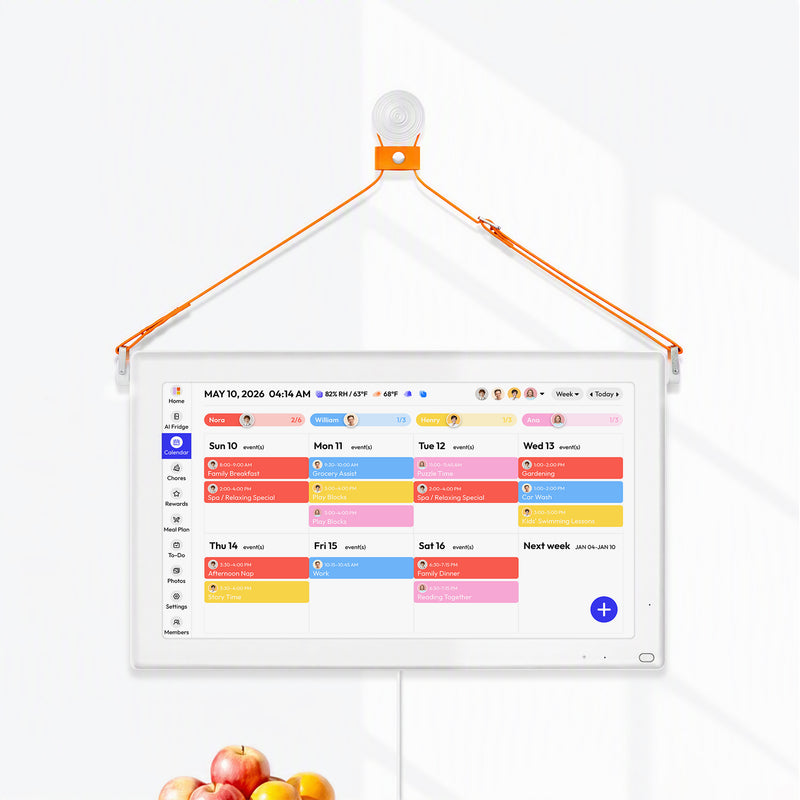
A shared family calendar and task stack turns chore plans into visible execution: one owner, one frequency, one due day, one reminder path. This is where home organization becomes real, because nobody needs to “keep everything in their head” for the system to run.
Build Laundry Independence for Every Child (Especially Boys)
Use an age-based skill ladder
A laundry progression by age recommends simple participation at ages 3-7, supervised process skills at 8-11, and full independence by ages 12-14. That timeline is realistic for family operations because it turns laundry from a parent rescue task into a child-owned routine before high school.

Pair this with explicit teaching from early-childhood chore methods: model each step, give specific instructions, and treat mistakes as learning reps. Praise effort and consistency first; precision improves with repetition.
Age & Safety Guardrails:
- Ages 3-7: keep laundry roles supervised and low-risk (sorting, matching, placing light items in a hamper).
- Ages 8-11: add supervised machine steps (measuring detergent, selecting cycle, moving light loads) with adult check-ins.
- Ages 12-14: move toward full independent runs with spot checks for labels, settings, and completion.
- Do not assign heavy wet loads, hot-surface tasks, or sharp-tool steps to younger children; use child-sized hampers/stools and stable footing.
- Adapt assignments to household reality: single-parent homes can use shorter daily micro-tasks, multi-child homes can rotate backup roles, and families with different cultural chore norms can assign equivalent responsibilities instead of identical tasks.
Standardize the process so quality is predictable
A workable standard includes four sorting criteria (color, weight, fabric, care label), two core cycles (normal, delicate), measured detergent, and no overloading so items can move freely in the drum. These are simple controls, but they prevent most rewash problems and shrink parent rework.
Connect laundry to weekly planning
Use a family calendar flow to block laundry around school, sports, and meal-prep windows (for example, Wednesday 7:00 PM and Sunday 4:00 PM). When laundry blocks are scheduled like lessons or practices, follow-through rises and last-minute clothing emergencies drop.
Teach Tool Skills to Every Child (Especially Girls)
Treat repairs as core life skill, not optional help
In time-use categories, repairs and yard work sit in “occasional housework,” historically coded masculine. If girls are excluded from this category, they miss planning, diagnosis, and execution skills that directly support adult independence.
Use the same progression logic as other chores
The start-early, specific-instruction model works for tools too: begin with supervised one-step tasks, then move to 2-3 step sequences, then independent completion with review. Keep tasks practical and home-organization focused: tighten loose handles, assemble storage bins, replace batteries, and reset small household fixtures.

Tool Safety Guardrails:
- Start with supervised one-step hand-tool tasks; avoid power tools, cutting blades, and ladder work for younger children.
- Use size-appropriate tools and simple protective setup (clear workspace, stable surface, eye protection when needed).
- Keep heat-producing or high-force tasks adult-led until the child can repeat the safety sequence reliably.
- In households with traditional role splits, keep norms if preferred but rotate basic diagnosis, setup, and cleanup practice so every child learns core independence skills.
Tie tool tasks to shopping and meal-planning systems
A calendar-task-shopping workflow helps tool work stick: create a repair task, add missing items to the shopping list, assign owner and due date, then close the loop after completion. This keeps repairs from becoming “someday” clutter and reduces friction in daily routines like cooking and cleanup.
Replace Chore Charts With Routine Design
Why most charts fail
Many parenting charts fail as skill-building tools because goals are vague, rewards are delayed, and adult consistency demands are too high. Behavior often gets treated as a motivation issue when the real blocker is missing skills, weak transitions, or poor environment setup.
If the system stalls
Use this micro-protocol before adding new rewards or penalties.
Weekly 5-item checklist:
- Is each chore written as one observable action?
- Does each child have only 1-2 measurable goals this week?
- Did adults give feedback immediately after completion?
- Is there one reminder cue (time, alarm, or location) instead of repeated verbal prompts?
- Did ownership stay stable for at least 7 days before reassignment?
Set short-term goals that can be checked this week, such as “Wednesday laundry sorted by 7:15 PM” or “one repair setup step finished before dinner.” Use immediate labeled feedback scripts: “You started on time and completed your step,” and “You checked the label before washing.”
If compliance drops, run a 3-step rapid reset: reduce task scope for 72 hours, increase feedback to every completion, then restore full scope one task at a time.
The same source summarizes practical guidance aligned with AAP/CDC principles: one clear direction at a time, immediate labeled praise, and targets specific enough to observe today. This method is less dramatic than sticker charts, but much more reliable for durable habits.
Use a loop that can survive busy weeks
Use one visible action per routine, immediate feedback, and a 15-minute monthly recalibration to rebalance effort points, update ownership, and fix skipped tasks. This keeps your family system adaptive when schedules, school loads, or seasons change.
Practical Next Steps
30-day implementation checklist
Start small, but implement fully so the system can run without constant reminders.
- Week 1: List all recurring home, calendar, and meal-planning chores (target 30-50 items).
- Week 1: Assign effort points (1/2/3) and identify one laundry task for each boy and one repair/tool task for each girl.
- Week 2: Define age-matched task steps and “done” criteria for each child.
- Week 2: Put every recurring task into a shared calendar/task app with owner, due day, and reminder.
- Week 3: Run daily with short directions and immediate labeled praise; track consistency, not perfection.
- Week 3: Run the weekly five-item checklist in “If the system stalls” to catch vague goals, delayed feedback, and reminder overload early.
- Week 4: Hold a 15-minute family review to rebalance points, rotate disliked tasks, and update schedules.
When this system is working, the visible result is not just a cleaner home. You get a fairer mental load, stronger child independence, and a family routine that supports calendar coordination, home organization, and meal planning without one person carrying the whole operation.
Important Note
The planning templates and organizational systems provided here are intended as adaptable blueprints. Every family’s needs, dietary requirements, and physical capabilities are different. We recommend tailoring these schedules to your specific health needs and household dynamics. Keep chores age-appropriate and supervised where safety is a factor (heat, sharp tools, heavy loads), and adapt expectations for developmental, medical, or accessibility needs. Results from productivity or meal-planning systems may vary, and consistency remains the responsibility of the individual user.
References
- Teach Kids Chores Guide
- How to Split Household Chores Fairly
- ATUS Gender Convergence Study
- Nori Family Organization Platform
- Kids Laundry Guide
- Why Parenting Charts Don’t Work
- Upper Valley Waldorf Chores and Development
- Associations Between Household Chores and Childhood Self-Competency
- ATUS 2003-2023 Multi-Year Microdata Files
- Table A-1, 2023 annual averages
- Who’s Doing the Housework and Childcare in America Now?


