



A useful meal plan with grocery list is a household coordination system: what you have, what the week allows, what you will cook, and what is missing. A phone app can support it, but when the plan disappears behind a screen, everyone must remember to look before acting.
The better question is not “paper or app?” It is whether everyone who buys, cooks, or uses food can see the current plan. For many families, the answer combines a shared digital tool with a visible kitchen view.

Why Standard Meal-Planning Advice Breaks in a Family
Most meal-planning advice solves the recipe problem but overlooks coordination. It works until another adult buys groceries, a child eats tomorrow's lunch ingredient, or Tuesday's schedule changes.
Small gaps follow: the list does not reflect the refrigerator, the cook cannot see the latest plan, or the shopper cannot tell whether an item was purchased.
U.S. shoppers averaged 1.7 grocery baskets per week in Flipp's 2025 grocery report. A Provoke Insights grocery study also found that 39% of parents shopped more than once a week, versus 31% overall. Multiple trips may reflect freshness or convenience, not failed planning. Still, a household system must work beyond Sunday.
|
Planning method |
What it organizes well |
What the household still has to do |
|
Recipe app |
Recipes, servings, and ingredients |
Open the app and check whether ingredients are already at home |
|
Printable planner |
A clear weekly snapshot |
Keep the paper current when plans or purchases change |
|
Shared phone list |
Remote edits and store access |
Remember to open the correct note and maintain it |
|
Visible shared system |
Kitchen context and household awareness |
Update one agreed source consistently |
Apps organize recipes well but still require attention
Meal-planning apps can save recipes, scale portions, create ingredient lists, and support shared access. Their limitation is that phone-based information is usually active: someone must unlock a device, open the right app, and check the right screen.
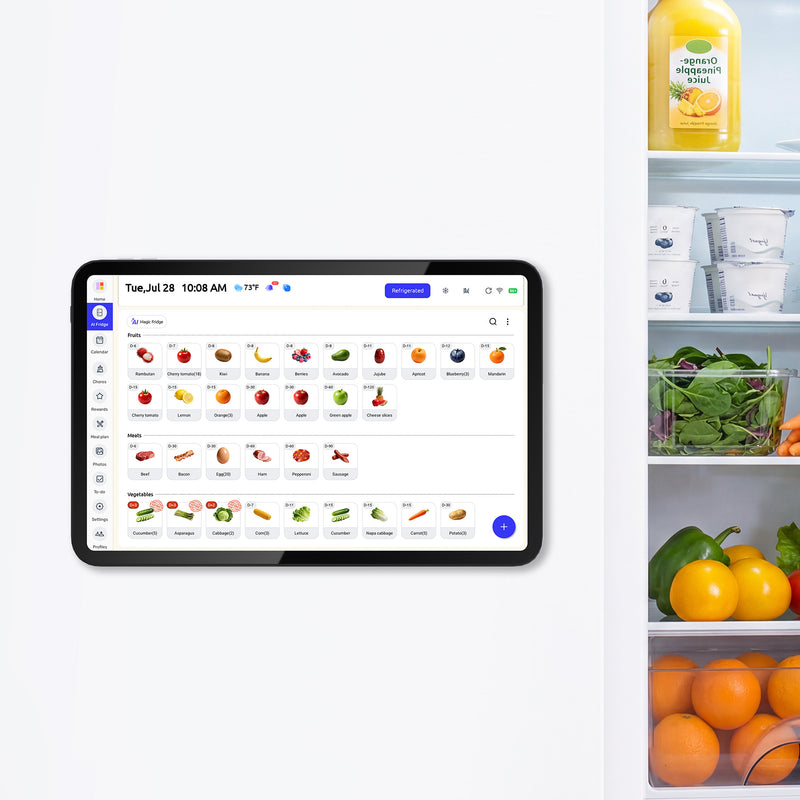
Kitchen information can be passive. A refrigerator plan is noticed while pouring coffee, putting away groceries, or deciding what to thaw.
How a Meal Plan and Grocery List Should Work Together
The meal plan should create the grocery list, but only after an inventory check. Reversing that order encourages duplicate purchases and ingredients without a clear job.
The practical sequence is:
Inventory → Schedule → Meals → Gaps → Shared display
|
Stage |
Question to answer |
Output |
|
Inventory |
What needs to be used, and what staples are available? |
A short “use first” and pantry note |
|
Schedule |
Which nights are busy, flexible, or away from home? |
Realistic cooking slots |
|
Meals |
What can we make with the time and food available? |
Planned dinners plus backup options |
|
Gaps |
Which required ingredients are genuinely missing? |
The grocery list |
|
Shared display |
Where will everyone see changes? |
One current household source |
Start with inventory, not recipe inspiration
Scan the refrigerator, freezer, and pantry for expiring food, open packages, leftovers, frozen proteins, and low staples. Skip the perfect database.
The U.S. Environmental Protection Agency's consumer food-waste estimate puts the cost of uneaten food at $728 per consumer per year, or about $2,913 for a household of four. Inventory-first planning will not eliminate food waste,but it gives perishables a chance to enter the plan before more food enters the house.
If the refrigerator itself is hard to scan, improve basic fridge organization first. A visible “eat first” zone is often more useful than an elaborate inventory that no one updates.
Turn each meal into a gap list
Choose meals that use what is available, compare them with the inventory, and list only the gaps. This keeps the plan and list connected.
|
Planned meal |
Already on hand |
Missing item |
Grocery section |
|
Chicken tacos |
Frozen chicken, tortillas, salsa |
Lettuce, limes |
Produce |
|
Pasta with vegetables |
Pasta, garlic, zucchini |
Parmesan |
Dairy |
|
Rice bowls |
Rice, eggs, carrots |
Cucumber, tofu |
Produce, refrigerated |
|
Soup and toast |
Broth, bread, canned beans |
Spinach |
Produce |
This matrix prevents shopping as though the kitchen were empty and exposes meals that require too many new ingredients.

Build a Weekly Plan in Five Steps
A reliable weekly process records what you own, matches meals to the calendar, identifies gaps, organizes the list, and publishes the plan where everyone will see it.
1. Write down the food that should drive the week
Record the items most likely to affect your choices, not every grain of rice. Start with perishables, leftovers, thawed proteins, open packages, and low staples.
A magnetic grocery list for the fridge can capture the moment someone finishes the milk instead of relying on memory.
2. Pick five meals and leave two flex nights
Five dinners plus two flex nights is a starting pattern, not a rule. Flex nights absorb leftovers, takeout, social plans, or pantry meals. If your family cooks three nights, plan three.
Match effort to the calendar. Put fast meals on busy nights and unfamiliar recipes on nights with more time.
3. List only what is missing
Check each meal against inventory. If you need two cans of beans and have one, list one. Use acceptable substitutes first.
Add breakfast, lunch, snack, pet, and household essentials. A dinner-only list can still trigger an extra trip for cereal or dish soap.
4. Group the list by store section
Group items under produce, dairy, meat, pantry, frozen, and household for faster scanning and easier duplicate checks.
When two adults shop, agree on a simple status convention such as unchecked, in cart, or purchased. A shared grocery list for families is useful only when both shoppers know which version is current.
5. Put the current plan where daily decisions happen
A meal plan works best when everyone can see the latest version before they shop or cook.
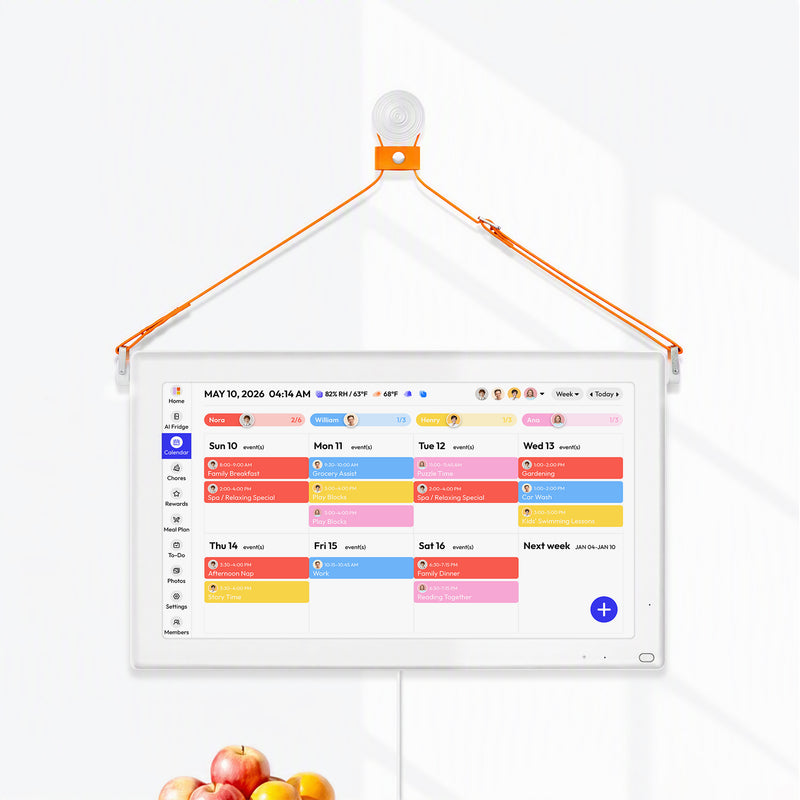
For a simple household, a whiteboard or shared note may be enough. When several people shop and plan meals, the Everblog FridgeCal™ AI Fridge Calendar can keep meal plans, grocery lists, food inventory, and expiration reminders in one shared kitchen view, with app access away from home.
The goal is simple: one place to check what you have, what you plan to cook, and what still needs to be bought.
How a Shared Grocery List Keeps the Meal Plan Current
A shared grocery list works best when everyone knows which version is current and purchases are updated as they happen.
Two shoppers need one current source
If taco night changes to soup but only the plan is updated, the list may still contain taco ingredients. Unmarked milk may be bought twice.
Use one source of truth with clear ownership. Decide where the current plan and list live, who confirms changes, and when purchases are cleared. This guide to visible family grocery planning offers a fuller multi-adult workflow.
Passive visibility removes a checking step
Passive visibility means information appears during an ordinary routine. A visible plan can prompt someone to thaw chicken or add yogurt while discarding the empty container.
Phone access still matters away from home. A hybrid pairs a visible kitchen surface with a connected shopping list. If your household prefers phones, choose a grocery list app for family everyone will update, then establish a daily or pre-shopping check.
Choose the Simplest Tool Your Household Will Maintain
The best meal plan with grocery list is not the one with the most features. It is the one everyone can see, update, and use before they shop or cook.
|
Tool |
Best for |
Main advantage |
Main tradeoff |
|
Paper or whiteboard |
One kitchen, simple routines |
Highly visible and quick to change |
Not available at the store unless photographed |
|
Printable planner |
People who like a structured weekly reset |
Clear format with low setup |
Static after printing and easy to misplace |
|
Shared note |
Two or more phone users |
Low cost and accessible away from home |
Depends on deliberate checking and consistent formatting |
|
Dedicated meal-planning app |
Recipe-heavy households |
Strong recipe and ingredient features |
May add subscriptions, setup, or another app to maintain |
|
Fridge display with phone access |
Families needing home visibility plus remote access |
Shared kitchen context and portable list access |
Hardware cost, connectivity, setup, and upkeep |
Test a system for two weeks. Then ask:
- Could every shopper find the current list?
- Did the plan reflect food already at home?
- Were schedule changes visible before dinner?
- Did anyone buy an avoidable duplicate?
- Which update step did people repeatedly skip?
Change the failed step, not the entire system. If the whiteboard is forgotten at the store, add a shared phone list or photo routine. If the digital list is accurate but dinner questions continue, add a visible weekly view. A good meal plan with grocery list puts useful information in the path of everyday behavior.
Frequently Asked Questions
Is there a free meal planner with a grocery list?
Yes. USDA MyPlate's free “Create a Grocery Game Plan” includes a calendar and grocery list. Shared documents, notes apps, and paper templates also work. Check inventory first and keep the plan accessible.
What is the 5-4-3-2-1 grocery method?
As Healthline's guide to the 5-4-3-2-1 method explains, one common version is five vegetables, four protein sources, three fruits, two carbohydrate sources, and one treat. Versions vary. The method is a useful category prompt, but it does not cover every recipe quantity, staple, allergy, or household supply.
What is the 3-3-3 rule for meal planning?
There is no single standard 3-3-3 rule. One structured meal-planning guide uses three protein, three fat, and three carbohydrate sources; other versions substitute vegetables for fats. Treat it as a mix-and-match prompt, not universal nutrition guidance.
Is there an app that uses pantry ingredients to suggest meals?
Yes. SuperCook suggests recipes from ingredients you enter. It knows what you have only when that pantry list remains current, so a physical inventory check is still useful.


