




Quick Answer
A useful basic grocery list starts with what your family already has, not a fixed shopping template. Check your fridge, freezer, and pantry first, plan meals around existing ingredients, then buy only the missing items.
A basic grocery list works best when it starts with what your family already has, not with a generic checklist. Scan the fridge, freezer, and pantry; choose meals that use those foods; then list only the gaps. That small change prevents the third jar of cumin from arriving while tonight's dinner is still missing a protein.
The categories below provide a starting point. The inventory-first workflow makes it specific to your household.

Why a Basic Grocery List Still Leads to Duplicate Buys
A basic list fails when it records what a family usually buys but ignores what is already at home. “Milk, eggs, bread” may be sensible, yet each becomes a duplicate when nobody checks the backup shelf. The U.S. Environmental Protection Agency estimates that uneaten food costs a four-person household $2,913 per year, or about $56 per week. That figure covers all uneaten food, not duplicates alone, but it shows why every purchase needs a likely use.
|
List habit |
What happens before the store |
Likely result |
|
Write from memory |
Recall familiar items |
Omissions and duplicates |
|
Copy last week's list |
Repeat old quantities |
Leftovers and schedule changes get ignored |
|
Check only the fridge |
Miss pantry and freezer stock |
Extra cans, frozen food, and condiments |
|
Check all storage, then plan |
Match food to meals |
A shorter gap list |
A template should prompt the check. Current inventory and the coming week's meals should decide what to buy.
The Basic Family Grocery List by Category
A useful family grocery list covers five categories, with quantities adjusted to diet, budget, schedule, and household size. This is a prompt, not a buy-everything checklist.
|
Category |
Flexible basics |
Check before adding |
Useful meal roles |
|
Produce |
Onions, carrots, potatoes, fruit, greens |
Ripe fruit, herbs, cut vegetables |
Snacks, sides, soup |
|
Proteins |
Eggs, beans, chicken, fish, tofu |
Open packs, cooked portions |
Breakfast, bowls, tacos |
|
Dairy or alternatives |
Milk, yogurt, cheese, substitutes |
Open cartons, use-by dates |
Breakfast, snacks, sauces |
|
Pantry |
Rice, pasta, oats, canned tomatoes, oil |
Duplicate cans, backup condiments |
Fast meals, baking |
|
Freezer |
Vegetables, fruit, bread, meal-size proteins |
Buried leftovers, open bags |
Low-prep and backup meals |
Keep durable staples stocked
Keep durable staples that repeatedly become meals your family enjoys. Rice, pasta, oats, canned beans, canned tomatoes, oil, and a few seasonings are common choices, but tortillas or noodles may fit better. If you cannot name two meals for an item, it is probably occasional rather than a standing basic.
Check perishables before every trip
Buy perishables for a specific use and realistic eating window. “Broccoli for Tuesday stir-fry” explains more than “vegetables.”
|
Buy as a standing staple when... |
Add only after checking when... |
|
It stores reliably and appears in frequent meals |
It spoils quickly or may already be open |
|
The family finishes a predictable amount |
Use changes with school, work, or travel |
|
A backup prevents an inconvenient shortage |
A backup is likely to be forgotten |
|
The storage location is easy to see |
The item tends to disappear in a crowded shelf or drawer |
Good fridge organization makes food easier to count and assign to meals. Each category simply needs a consistent home.
How to Build the List From What You Have
Build the weekly list in four passes: audit, plan, fill gaps, and arrange for the store.

1. Audit all three food zones
Check the fridge, freezer, and pantry, including open packages and leftovers. Label items have enough, use next, or running low. A World Resources Institute report describes 454 Australian households in which frequent food auditors discarded 1.57 kilograms weekly versus 1.89 kilograms among infrequent auditors, about 17% lower. This observational comparison does not prove that auditing caused the difference.
2. Plan meals around the week you will have
Choose dinners that use the “use next” foods, then account for late workdays, practices, takeout, and leftovers. A weekly meal plan for families should match available time. Four planned dinners, a leftovers night, a freezer backup, and an open night may be more realistic than seven new recipes.
3. Add only the missing ingredients
Compare each meal with inventory and add the exact gaps. If taco night needs tortillas and salsa but beans, cheese, and cabbage are present, the list gets two entries rather than five.
4. Sort the list for your usual store
Group items along your normal route, such as produce, proteins, dairy, dry goods, and frozen. Store layouts differ, so copy yours. “2 bell peppers for fajitas” is also easier to verify than “peppers.”
Which Grocery Items Should Stay on a Permanent Shopping List?
Standing lists cover predictable, durable essentials; weekly entries cover variable and perishable needs. Separation stops the template from becoming an automatic order.
|
List layer |
Typical contents |
Review rhythm |
Buying rule |
|
Standing checklist |
Rice, oats, canned beans, oil |
Weekly stock check |
Buy below your minimum |
|
Weekly gaps |
Produce, proteins, dairy |
After meal planning |
Buy for assigned meals |
|
Household needs |
Lunch or allergy-safe foods |
Based on routine |
Set a refill point |
|
Occasional items |
Specialty or party food |
Before the event |
Add for a named purpose |
Use 5-4-3-2-1 as a cart framework
The 5-4-3-2-1 method adds variety without a giant master list. One widely described version uses five vegetables, four protein sources, three fruits, two carbohydrates, and one treat. A medically reviewed explanation of the 5-4-3-2-1 method notes that it is adaptable and does not cover every staple.
|
Number |
Original category |
Family adjustment |
|
5 |
Vegetables |
Match types and amounts to planned meals |
|
4 |
Protein sources |
Count eggs, beans, tofu, fish, or meat |
|
3 |
Fruits |
Favor fruit the family finishes |
|
2 |
Carbohydrates |
Use bread, rice, pasta, or tortillas as needed |
|
1 |
Treat |
Pick a suitable family option |
This is not a nutrition prescription, and online versions vary. Use it after the inventory check. If rice is already stocked, do not buy another carbohydrate just to complete the numbers. A new kitchen may need a broader starter shop, but later lists should follow actual consumption.
When Should Families Use a Shared Grocery List?
A grocery list should become shared when more than one person buys, cooks, or notices low supplies. One current list helps prevent both no bread and two gallons of milk.
|
Format |
Best for |
Strength |
Limitation |
|
Paper on the fridge |
One main shopper |
Visible and simple |
No remote access |
|
Shared app |
Mobile shoppers |
Available away from home |
Easy to ignore at home |
|
Magnetic whiteboard |
Handwriting |
Visible and reusable |
Changes stay in the kitchen |
|
Display plus phone |
Multi-part coordination |
Home and remote access |
Hardware, setup, power, and Wi-Fi |
Give everyone one place to add and remove items
Choose one source of truth and two rules: add an item when the backup is opened, and mark it complete in the cart. A shared grocery list for families works only when everyone knows which version is current. Phone-first households can compare shared editing, categories, and access in this guide to a grocery list app for family.
Add a visible kitchen surface when phones get ignored
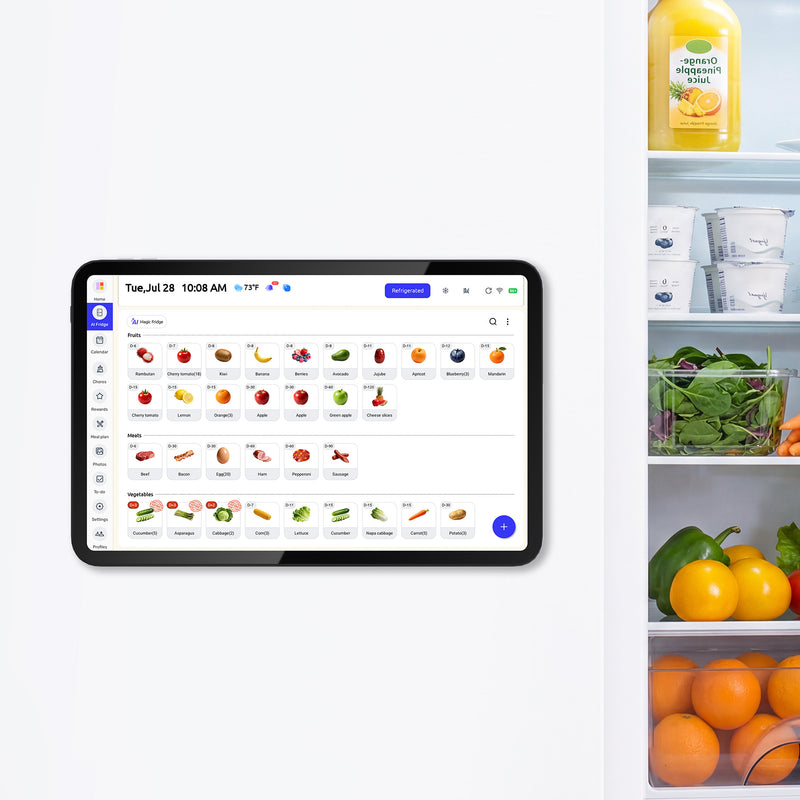
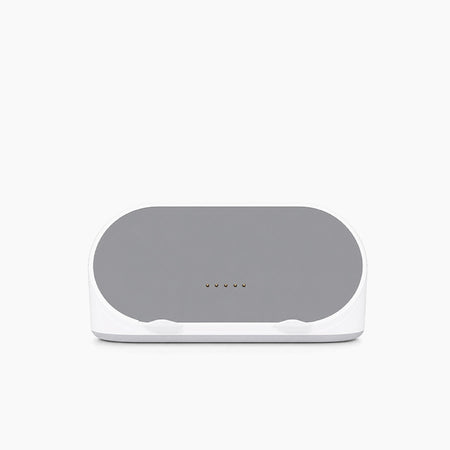
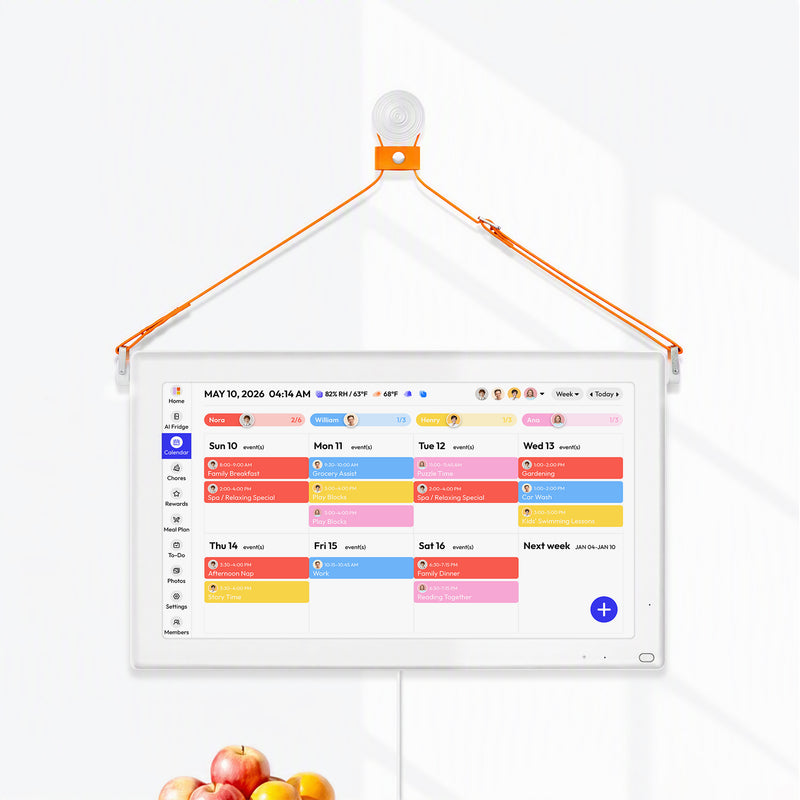
A visible list captures a shortage where people notice it. A fridge-mounted grocery list display can keep custom lists, meal plans, inventory, and expiration reminders on the refrigerator while the Everblog app provides phone access. Household members still have to keep it current.
Try the workflow on paper or a shared note first. If the habit works but visibility does not, FridgeCal may address that friction. These routines to save money with a fridge calendar do not treat hardware as a substitute for planning.
Frequently Asked Questions
What should be on a basic grocery list for a family of four?
Start with produce, proteins, dairy or alternatives, grains, pantry basics, and freezer options. Set quantities from planned meals and current inventory. Ages, appetites, schedules, and diets make a universal amount unreliable.
What are the top 10 basic grocery items?
A flexible starter set could include oats, rice, pasta, canned beans, canned tomatoes, eggs or tofu, frozen vegetables, onions, fruit, and cooking oil. Replace anything your family does not eat.
What is the 5-4-3-2-1 grocery shopping list?
One common version is five vegetables, four protein sources, three fruits, two carbohydrates, and one treat. It is a flexible framework, not a complete list or dietary rule. Check inventory and adapt it.
Should I organize a grocery list by store section?
Yes, when it matches your usual route. Grouping produce, proteins, dairy, pantry goods, and frozen items reduces backtracking. For several stores, keep a short section for each.
A dependable basic grocery list for a family follows a repeatable sequence: see what you have, plan what you will eat, buy the gaps, and share one version. Run that check before the next trip, then let actual consumption refine the template.


