





The best fridge calendar is the one your household will actually see and update every day. The right setup reduces missed plans, dinner confusion, and chore disputes without creating more work.
Is your kitchen full of "Don't forget" texts, last-minute dinner questions, and one child heading to practice while another misses a pickup? Independent testing found that digital wall calendars work best when they are, and that simple placement choice often matters as much as the device itself. You will leave with a practical way to choose between a dedicated fridge display, a tablet-based setup, or a simpler planner, and you will know which features are worth paying for.
Start With the Real Job the Calendar Needs to Do
A fridge calendar should do more than display dates. In a busy family kitchen, it becomes the single shared place where pickups, work meetings, practice times, dinners, grocery needs, and recurring chores live together. That "single source of truth" approach is what kitchen command-center calendars are designed to do, and it matters because most family stress comes from scattered information, not from a lack of calendars.

That is also why a phone-only system often breaks down at home. A shared family calendar on your phones can reduce double bookings and missed plans, but it still depends on each person opening an app and checking it. In real households, the fridge wins because people pass it many times a day. If your family already keeps personal digital calendars updated, a visible shared display usually works better than asking everyone to remember one more app.
Choose the Format Before You Compare Options
The first decision is not the device maker. It is the format. A dedicated digital calendar is best for families who want a polished, always-on hub with syncing, chores, and meal planning in one place. A tablet-based setup is often the practical middle ground. A paper or reusable meal planner still has a place when your main pain point is dinner, not full-household coordination.
Format |
Best for |
Strengths |
Tradeoffs |
Families juggling school, work, activities, meals, and chores |
Shared visibility, app syncing, color coding, built-in chore and meal tools |
Higher upfront cost, some features may require a subscription |
|
Budget-conscious households already using shared digital calendars |
Fast setup, uses existing hardware, flexible widgets and layouts |
Can feel more DIY, durability and mounting quality vary |
|
Reusable paper or adhesive meal planner |
Homes mainly struggling with dinners and grocery planning |
Simple, low cost, no Wi-Fi needed, easy for younger kids |
No auto-sync, weak for last-minute schedule changes |
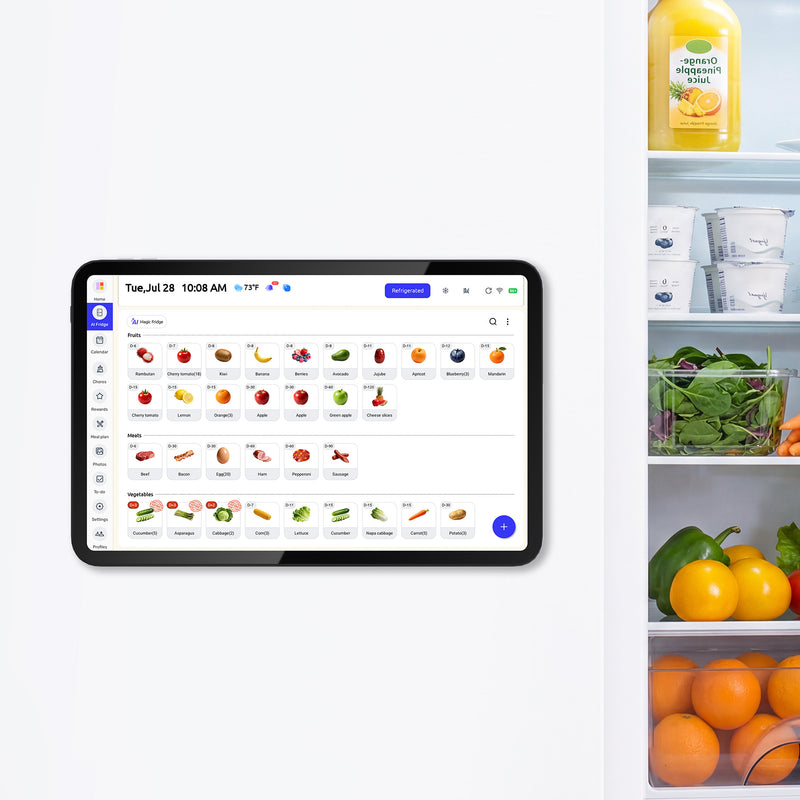
A tablet setup is often enough if your family already lives in shared digital calendars. One tablet-mounted option describes a setup that can be ready in under five minutes and sync with existing calendars, which makes it a sensible first step before buying dedicated hardware. By contrast, families wanting a more complete command center may prefer a purpose-built display with touchscreen scheduling, color-coded family members, chores, dinner planning, and remote updates in one system.
For Shared Scheduling, Prioritize Visibility and Sync
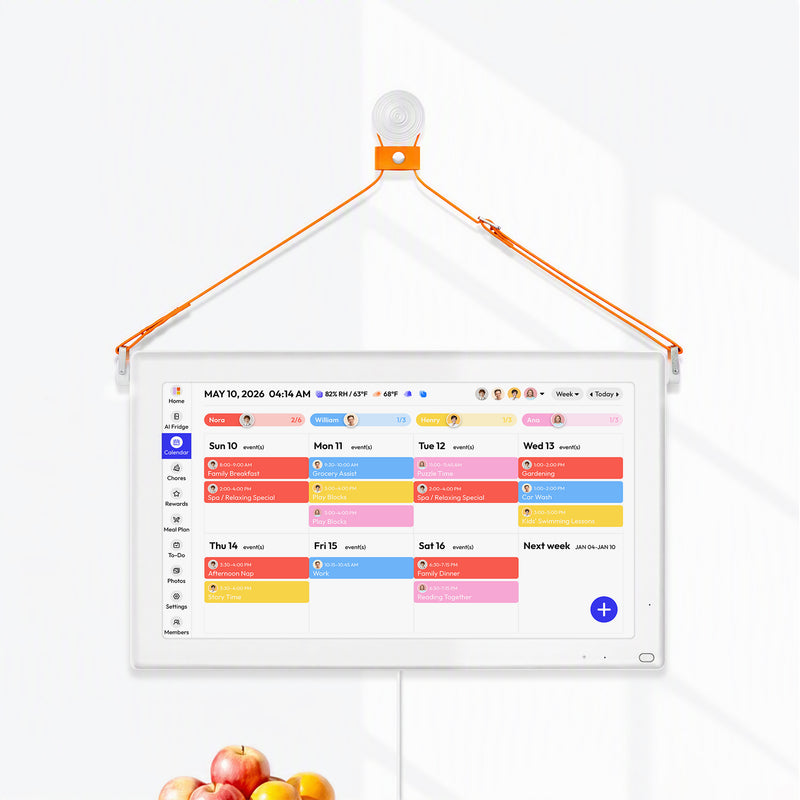
The most important scheduling features are cross-platform syncing, color coding, and quick scanning. One product page defines a digital family calendar as a centralized display that combines iOS and Google calendars into one shared household view, and that is exactly the baseline to look for. If parents use different work calendars and older kids keep their own schedules, the display should merge them without manual re-entry.
Color coding is not a cosmetic extra. It is what lets you stand 6 ft away and instantly see whether Tuesday belongs to one parent, one child, or the whole family. A household with piano at 4:00 PM, soccer at 5:30 PM, and a dentist visit at 3:00 PM does not need a prettier calendar; it needs one glance to answer who goes where. Independent reviews one six-month comparison of three digital family calendar options and another parenting review point to person-based color coding as one of the features that makes digital family calendars genuinely easier to use.

Screen size deserves more thought than most buyers give it. One review argues that 15 in is the practical sweet spot, while another household was satisfied with a 10-inch unit after more than six months of use. The difference likely comes down to distance and family size: a smaller screen can work in a compact kitchen for two adults and younger kids, but a larger household trying to read a weekly schedule from across the room will usually be happier around 15 in.
For Meals, Look for a Calendar That Reduces Tonight's Decision Fatigue
Meal planning only helps if it is visible where dinner decisions happen. One meal-planning guide ties weekly meal planning to lower food waste and fewer rushed weeknight decisions, which matches what families usually feel in practice. The benefit is not gourmet planning; it is ending the 5:15 PM scramble.
A good meal feature should show the week at a glance, allow notes or recipe details, and connect to a grocery list. If one child needs a different dinner because of allergies or a sports schedule, the system should handle more than one meal in the same slot. That is a meaningful edge case, not a luxury feature. In homes where one adult shops and another cooks, recipe notes and list syncing reduce handoff errors more than fancy automation does.

If meals are your main pain point and the rest of your schedule is manageable, a simpler option can be enough. One reusable planner combines weekly meals and grocery planning on the fridge, and that lower-tech approach can genuinely calm a household that mainly needs dinner structure rather than full calendar sync.
For Chores, Accountability Matters More Than Extra Features
Chore tools should make responsibility obvious, especially for children. One digital calendar includes an interactive chore chart, and everblog positions shared chore tracking and rewards as part of a broader family command center. That matters because chores fail when they stay verbal. When "empty dishwasher," "feed dog," and "set table" are attached to a person, visible on the kitchen screen, and easy to check off, there is less nagging and less arguing about who was supposed to do what.
The right system also depends on the age of your children. Younger kids often do well with a highly visible checkoff routine, while older kids and teens benefit more from reminders tied to the same screen that already shows their school and activity schedule. If chores and schedules live separately, families tend to ignore one of them. When they live together, ownership becomes part of the day instead of a separate lecture.
Interactive chore chart showing assigned tasks with family member icons
Watch the Hidden Costs Before You Buy
Digital family calendars can be genuinely useful, but they are still a meaningful household purchase. Independent testing notes that digital wall calendars can cost several hundred dollars, so the value depends on steady family use, not novelty. One parenting review places many dedicated models in roughly the $199.00 to $899.00 range, while paper calendars and dry-erase systems cost far less.
Subscription terms are where many families feel buyer's regret. everblog says its system has no subscription and includes free updates, while another option ties meal planning and other premium tools to a paid tier. Neither model is automatically better. A no-subscription device is attractive if you want predictable costs, but a subscription can be reasonable if the premium features solve real problems your family has every week. The mistake is paying for extras you will never use.

Placement also affects value. Independent testing and kitchen-calendar guides agree that the display should sit in a high-traffic shared space, usually the kitchen or near the main exit. A $300.00 calendar in a home office is less useful than a simple planner everyone sees at breakfast.
How to Make the Final Decision
If your biggest problem is missed appointments and clashing schedules, choose the calendar with the best syncing, clear color coding, and a screen large enough to read quickly from across the kitchen. If dinner stress is what drains the household, prioritize a meal view, recipe notes, and grocery list integration. If chores create the most friction, choose the system that makes assignments visible and easy for kids to complete without constant reminders.
A good fridge calendar should make the house feel quieter, not more complicated. When the right one is in the right place, your family stops asking where they need to be, what is for dinner, and whose turn it is, because the answers are already waiting in the room where life actually happens.


