


A calm color-coding system gives every family member and routine a visual home, so the day can be understood before anyone has to ask five questions. The strongest version is simple, consistent, visible in a shared space, and paired with words or icons for accessibility.
Is the morning already loud before breakfast, with one child asking about practice, another melting down over a changed pickup plan, and a parent trying to remember whether today is therapy, trash day, or both? A shared digital fridge calendar can make the next few hours visible from across the kitchen. When colors are used consistently for one week, families can test whether fewer verbal reminders and fewer missed transitions follow. This article shows how to build a color system that supports ADHD, autism, anxiety, dyslexia, executive-function challenges, and busy family life without turning your calendar into another chore.
Why Color-Coding Helps Neurodiverse Families
Color-coding means assigning a consistent color to a person, category, priority, or routine so the schedule can be understood quickly. For neurodiverse households, the value is not decoration. It is reducing the amount of reading, remembering, and interpreting required during stressful transition points.
A shared visual calendar works especially well because digital wall calendars solve a common family problem: phone calendars are useful individually, but they are often not visible enough for everyone to use throughout the day. When the calendar lives in the kitchen, near the fridge, or in another high-traffic morning area, it becomes part of the household environment rather than one more app to remember.
For a child with ADHD, a bright “soccer” color can cue action faster than a line of small text. For an autistic child, seeing the same blue block every Tuesday for speech therapy can make the day feel more predictable. For a parent carrying the mental load, a quick glance can reveal whether the afternoon is overpacked before the family is already in the car.

Start With the Decision: People, Categories, or Both?
The first choice is whether each color should represent a person, a type of activity, or a priority level. There is no universal best answer. The right system is the one your household can remember on a tired Wednesday.
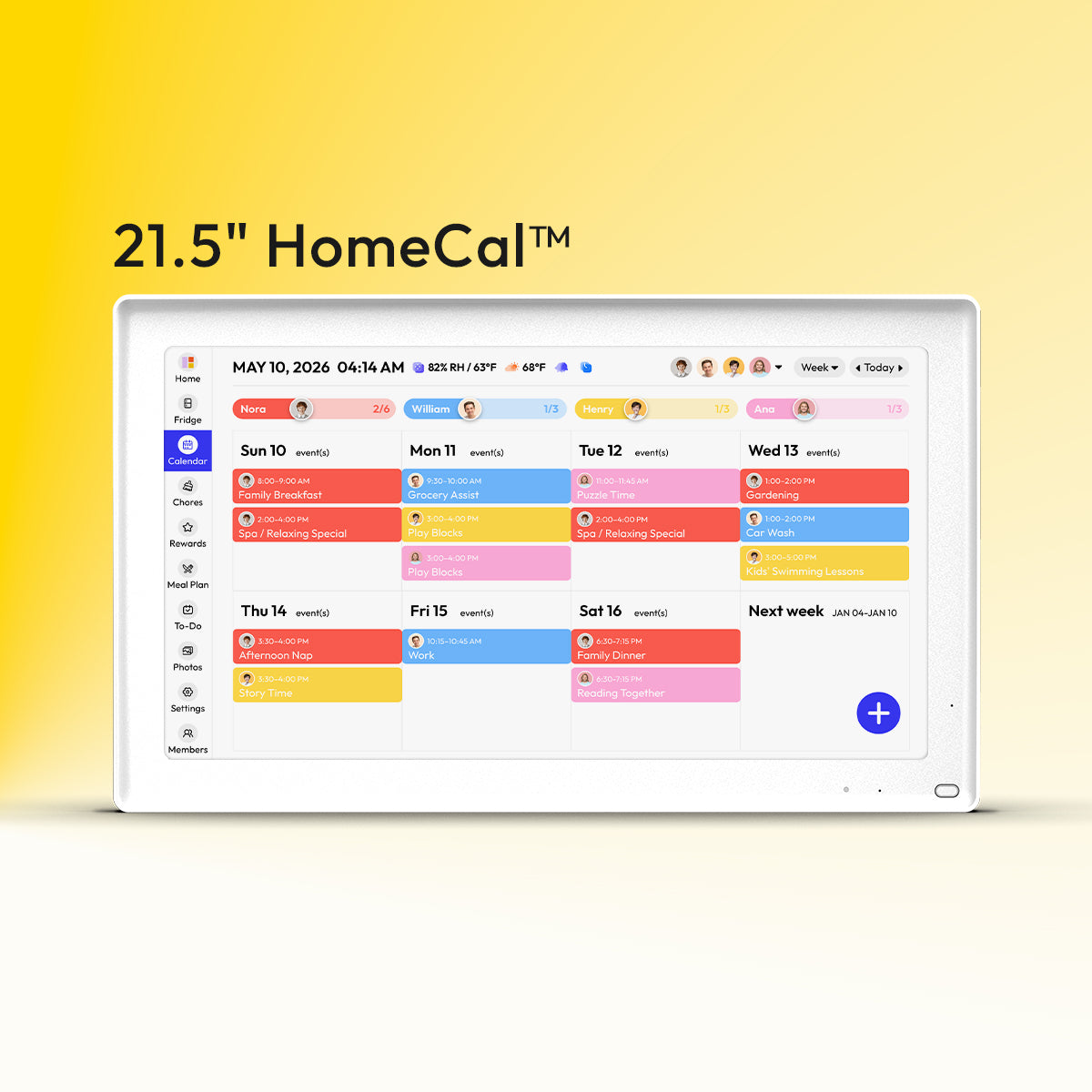
For most families, person-based colors are the easiest starting point. Well-being guidance describes color coding calendars as assigning colors or symbols to people, meetings, or categories so schedules can be understood quickly. In a family setup, that might mean green for Maya, orange for Leo, blue for Mom, and purple for Dad. If Maya has a green block at 4:30 PM, everyone knows it belongs to her before reading the event title.
Category-based colors work better when one child has many supports or when routines matter more than ownership. For example, red can mean “must happen today,” teal can mean medical or therapy appointments, yellow can mean school events, and soft blue can mean rest or downtime. This approach helps a child understand the shape of the day: school, appointment, home, dinner, quiet time.
A blended system can work, but only if the screen remains easy to scan. A practical rule is to use person colors for events and category colors for shared household blocks such as meals, chores, appointments, and rest. If the calendar starts looking like confetti, it is time to simplify.
System Type |
Best For |
Possible Drawback |
Person colors |
Multiple children, carpools, sports, school events |
Shared events may need extra labels |
Category colors |
Therapy, routines, chores, meals, rest |
Family members may need names added clearly |
Priority colors |
Urgent deadlines, flexible plans, reminders |
Can feel too abstract for younger kids |
Blended colors |
Complex households with older kids |
Easy to overcomplicate |
Build a Small Palette That the Brain Can Trust
Color only works when it means the same thing every time. Practical guidance on calendar color coding emphasizes consistency because repeated visual cues help the brain recognize event types and switch context more easily.
Keep the first version to five to seven colors at most. A four-person family might use four individual colors, one calm color for rest, and one attention color for urgent items. If your household includes color-vision differences, dyslexia, or early readers, pair every color with a name, icon, or short label. A red block that says “Urgent: Dentist 3:30 PM” is more accessible than a red block alone.
Try assigning warmer colors to active family commitments, calmer colors to rest or self-care, and gray to tentative plans. Red should be used sparingly because it grabs attention. If every task is red, nothing feels important; the calendar just starts to feel tense.
A real-world example might look like this: Ava is coral, Ben is green, Jordan is blue, parents are navy, medical and therapy appointments are teal, chores are yellow, and quiet time is lavender. On a Tuesday afternoon, the family sees green piano at 4:00 PM, teal occupational therapy at 5:00 PM, yellow dishwasher after dinner, and lavender reading time at 8:00 PM. Nobody needs to decode the whole day from scratch.

Use the Fridge Calendar as a Shared Anchor
A color system is strongest when it lives where the family naturally gathers. The kitchen is often the command center because backpacks, snacks, permission slips, lunch boxes, and last-minute questions all pass through it.
Smart family calendars can combine synced schedules, chores, dinner plans, tasks, and lists in one shared touchscreen display. That matters for neurodiverse families because the calendar can connect “what is happening” with “what needs to be done before it happens.” A child who sees a purple therapy appointment at 3:00 PM can also see a small task to pack headphones or bring a water bottle.
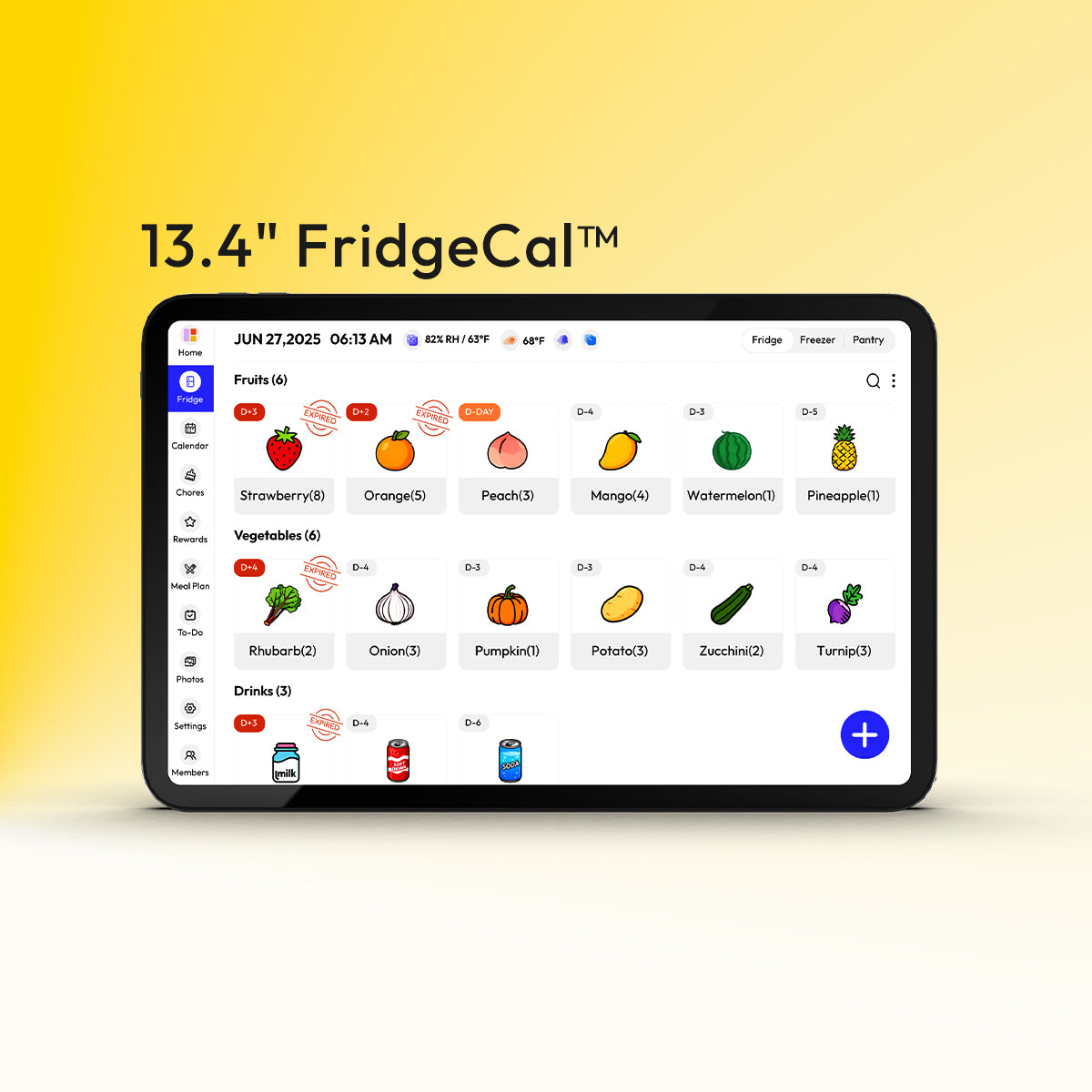
A similar household model uses color-coded scheduling, multiple synced calendars, chore charts, dinner planning, grocery lists, and remote app updates. The practical benefit is that one parent can add a changed pickup time from work, and the update appears where the rest of the family will actually see it.
If you are choosing a device, do not buy only for screen size or features. Buy for placement, calendar compatibility, and whether the system supports your existing habits. Product reviews note that digital wall calendars can cost several hundred dollars or more, so the purchase only makes sense if the display will be used daily in a visible household spot.
Make Transitions Easier With Color Blocks
Transitions are often where neurodiverse families feel the most strain. A child may understand that soccer happens today but still struggle when it is time to stop building, change clothes, find cleats, and leave. Color blocks can make the transition visible earlier.
Instead of putting only “Soccer 5:00 PM” on the calendar, create a sequence. The child’s color marks the event. A preparation color appears 30 minutes before: snack, shoes, water bottle. A travel color appears 10 minutes before leaving. A calm color appears after the activity if your child needs decompression time.

This is where color-coding and time blocking work well together. Time blocking gives a task a specific place in the day, while color adds the quick visual layer. For a child who resists verbal reminders, pointing to the next color block can feel less confrontational than repeating instructions.
Pros and Cons of a Color-Coded Family Calendar
The biggest advantage is shared visibility. Parents stop being the only calendar in the house. Kids can begin to anticipate what comes next. Caregivers, grandparents, and babysitters can understand the day without a long explanation.
Color-coding can also reveal imbalance. If every evening is packed with activity colors and there is no calm color anywhere, the calendar is showing why the family feels stretched. Scheduling unstructured time is useful here: downtime deserves a visible place, especially for children who need recovery after school, therapy, noise, or social effort.

The drawback is maintenance. A color system that requires perfect labeling, too many shades, or constant correction will not last. If someone forgets the meaning of turquoise versus teal, the system is doing too much. The solution is not more rules; it is fewer colors and clearer labels.
A One-Week Setup That Actually Holds
Begin with the next seven days, not the entire semester. Add the fixed events first: school, work, therapy, appointments, sports, pickup times, and bedtime routines. Then apply colors consistently. Finally, add only the support tasks that prevent stress, such as packing, medication reminders, quiet time, meal plans, or chore check-ins.
Organization advice for families often recommends assigning each family member a color because it makes responsibilities and schedules easier to spot. For neurodiverse households, that same idea becomes more powerful when it is paired with predictable review moments. A Sunday evening check-in can be short: look for crowded days, missing downtime, transportation conflicts, and events that need preparation.
At the end of the week, ask whether the calendar reduced questions, prevented missed items, and made transitions calmer. If not, adjust the system. Maybe colors should represent activity types instead of people. Maybe chores need icons. Maybe the calendar is in the wrong room. The test is whether the system lowers effort for the people who actually use it.
Keep It Human
A color-coded fridge calendar will not make family life perfectly smooth, and it should not become another standard children are scolded for missing. Its job is to make the invisible visible: plans, transitions, responsibilities, rest, and care.
Start small, keep the palette steady, and let the calendar carry more of the remembering. In a neurodiverse family, the best organization system is not the most elaborate one; it is the one that helps everyone feel a little more prepared before the day asks too much.


