
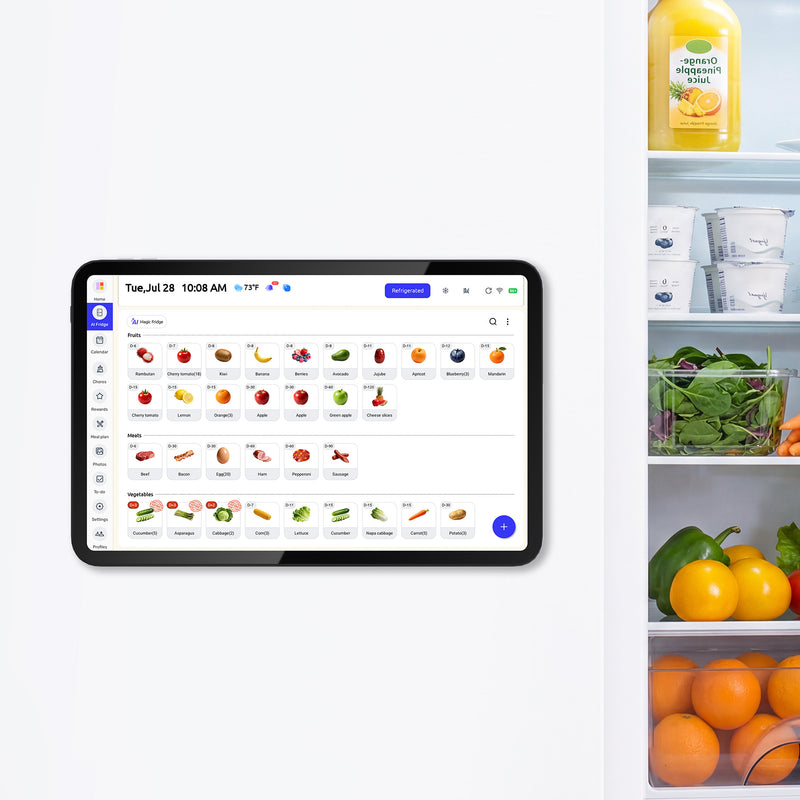

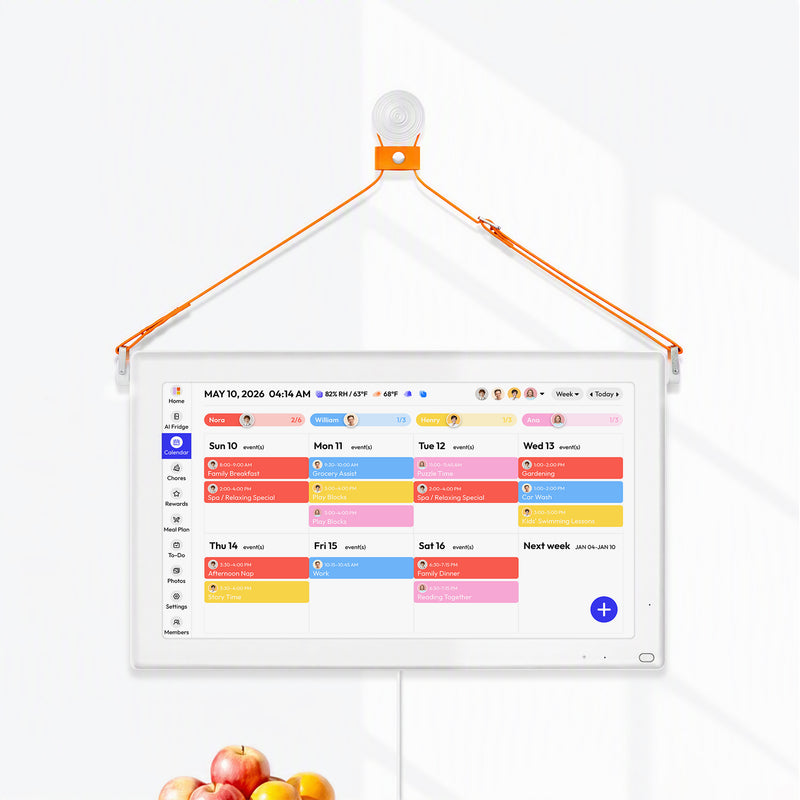



A magnetic fridge calendar gives your household one visible place to track the week. It works best when it handles the big picture at home while your phone handles reminders on the go.
A magnetic fridge calendar is a reusable or paper-based calendar that sticks to your refrigerator, giving everyone one visible place to track appointments, school events, meals, chores, and reminders. In a busy family home, it works best as the shared front door of your schedule, often paired with a digital calendar for alerts on the go.
Are mornings turning into a last-minute scramble because nobody remembers the dentist appointment, the snack sign-up, or whose turn it is to pick up from practice? In real family kitchens, one visible calendar often solves a specific problem: it cuts down the repeated "What's happening today?" conversation and makes the plan easier to follow at a glance. This article explains what a magnetic fridge calendar is, how to set one up so people actually use it, and when it works better than a phone alone.

What a magnetic calendar for the fridge actually is
A calendar designed to stick to your refrigerator is a physical calendar made for a fridge or another metal surface. Most family versions are monthly dry-erase boards with a day-by-day grid, space for notes, and a marker that stays nearby. Some are paper tear-off pads, some are acrylic boards, and some include extra magnetic note pads for grocery lists or meal plans.
What makes it different from a standard wall calendar is placement and access. The refrigerator sits in one of the highest-traffic areas of the home, which is why home organization advice keeps returning to visibility as the key to making systems useful over time. When a calendar is placed where people naturally pause, it becomes part of the routine instead of another tool buried in an app or a drawer.
In practice, that means the fridge calendar is less about perfect planning and more about shared awareness. You are not trying to build a beautiful command center that nobody updates. You are creating one quick-glance spot where a parent grabbing coffee, a teen making lunch, and a grandparent visiting for the afternoon can all see the same plan.
How it works in a busy family home
A shared schedule in plain sight works because it reduces friction. Nobody needs to unlock a cell phone, remember which app holds the soccer schedule, or ask the same question twice. The calendar stays in view and gets checked in passing, which is often enough to prevent missed pickups, surprise late nights, and duplicate commitments.
The simplest working model is straightforward. At the start of the week or month, one adult transfers the non-negotiables onto the calendar: school closures, work travel, practices, doctor visits, birthdays, and anything that changes dinner or pickup plans. Then the family adds short notes as life moves. A child might write "library book due," a parent might add "pay electric bill," and someone might circle Thursday because grandparents are coming over for dinner.

The households that get the most value from this use it as a kitchen checkpoint rather than a complete archive. The calendar holds the headline version of the week. If practice starts at 6:30 PM across town, the fridge gets "soccer 6:30 PM." The phone calendar holds the address, travel time, and reminder alert. That hybrid approach lines up with practical guidance from family-focused fridge calendar sources and using digital calendars for reminders: one shared master view prevents confusion, while digital tools handle portability and alerts.
The formats that matter most
Most busy households do best with a monthly layout because it shows the whole month at once and makes conflicts easier to catch. If you can see the school concert, a work trip, and a birthday party on the same spread, you are less likely to overbook the weekend. Weekly calendars can work well for families with packed after-school schedules, but they require more frequent maintenance and usually make more sense as a second planning layer rather than the only one.
Size also matters more than many people expect. A calendar with larger writing areas gives each day enough room for several entries, which matters quickly in a household with multiple children or caregivers. Smaller calendars look tidy, but they become hard to read once every square carries school, work, meals, and pickup changes.
Acrylic styles can look cleaner and more polished, while classic dry-erase magnetic boards are usually simpler and more forgiving. Options in acrylic fridge calendar styles and broader retail selections show how much the category now ranges from decorative to highly functional. For a busy family, function should come first: readable squares, strong magnets, easy erasing, and a marker that stays attached.
Type |
Best for |
Main tradeoff |
Monthly dry-erase magnetic board |
Most families who need one shared view |
Less room for detailed hourly planning |
Weekly magnetic board |
Families with many day-to-day schedule changes |
Requires more updating |
Acrylic fridge calendar |
Homes that want a polished look with reusable function |
Can cost more and still needs strong readability |
Paper magnetic pad |
Lower-cost, simple planning |
Less durable over time |
Why families often prefer it to phone-only planning
A shared kitchen calendar solves a household problem that digital calendars do not fully solve on their own: not everyone in the home engages with technology the same way. Younger kids may not have cell phones, older relatives may not use shared apps comfortably, and even adults who rely on their phones can miss a plan if it stays hidden inside separate accounts and notifications.
There is also a calm factor that matters. When the day is already noisy, looking at one clear board is easier than sorting through texts, school emails, and app alerts. That does not make the fridge calendar better than digital. It makes it better at one job: reducing ambiguity inside the home.

At the same time, digital calendars still handle things a fridge cannot. Time-based reminders and one synced master calendar are better for appointments away from home, workplace scheduling, and travel. If your family tries to force the fridge board to do everything, it usually becomes cluttered and stops being useful. The strongest system is visible at home and portable everywhere else.
How to set one up so people actually use it
Placement comes first. Home organization advice consistently points back to visibility, and that applies here too. A calendar works best at eye level on the main refrigerator door, not on the side panel nobody sees. If your fridge is paneled or nonmagnetic, the next-best location is a nearby metal board along the kitchen path.
Then keep the content simple. Write appointments, deadlines, activities, meal anchors, and reminders in language a tired person can scan in two seconds. "Pediatrician 4:00 PM" works. "Call office about insurance before visit" belongs somewhere else. The goal is clarity, not storing every detail of family life.
Color coding can help if it stays consistent. One color per family member is usually enough. In one four-person household, separate colors for each adult made conflicts easier to spot and turned the board into a quick visual map instead of a wall of handwriting. If every category gets its own color, though, the system becomes homework.
Maintenance is what separates a useful calendar from a decorative one. Set a two-minute reset on Sunday night or Monday morning. Wipe the finished week, check the next two weeks, and add anything new from school emails, work calendars, and appointment texts. If no one owns this step, the calendar quietly dies.

Pros, cons, and realistic expectations
A reusable magnetic calendar is easy to update, visible to everyone, and often more family-friendly than relying on memory or repeated verbal reminders. It is especially effective for homes with children, shared caregiving, or lots of rotating commitments. It also gives you a practical place for meal planning, grocery notes, and quick reminders.
The drawbacks are just as practical. Some markers ghost or fade, some magnets are weaker than expected, and some modern refrigerators have limited magnetic surfaces on certain doors. A too-small board becomes crowded fast. A too-pretty board with light writing or poor contrast can look nice and still fail the daily-use test.
There is one more limitation worth being honest about. A fridge calendar cannot remind you when you are already in the car, at the office, or standing in a waiting room. That is why the hybrid setup works so well. Let the fridge board answer "What's happening?" and let your phone answer "When do I need to leave?"
Choosing the right one for your household
A fridge calendar that fits your household is not necessarily the fanciest one. It is the one that matches the pace and size of your home. A family with one child and a predictable routine may be fine with a compact monthly board. A family juggling activities, split pickups, and changing work schedules usually needs larger squares, stronger magnets, and extra note space.
If you care about durability, pay close attention to magnetic strength and erasability before style. If you care about appearance, acrylic can work well, but only if the writing remains readable from a few feet away. If sustainability matters, some retail listings also point to certified recycled-material options, although product-by-product verification still matters.
The right fridge calendar should make the kitchen feel calmer, not busier. If you can walk past it and know the day in five seconds, it is doing its job. If it turns into a crowded message board that nobody trusts, simplify it. In family organization, the system that gets used beats the system that looks impressive every time.


