




Quick Answer:
Fridge organizers solve physical problems like access, grouping, and storage space. Smart food management solves information problems like tracking inventory, remembering dates, planning meals, and sharing grocery decisions. Many families need both: physical tools for where food goes and digital tools for knowing what needs attention next.
The useful question is not “bins or technology?” It is “what keeps failing after the refrigerator has been cleaned?” Diagnose that failure first, then buy the least complicated tool that addresses it.

The Short Answer: Organizers Fix Access; Food Management Fixes Decisions
Choose a physical organizer for access, grouping, spill control, or awkward shelf space. Add an information layer only when dates, duplicate buying, meal plans, or away-from-home decisions remain unclear.
|
If the recurring problem is... |
Start with |
Why it fits |
Watch for |
|
Small items disappear behind large ones |
Shallow clear bin or pull-out tray |
Moves a group into one reach |
Deep bins can create another hidden row |
|
Jars at the back are inaccessible |
Measured turntable or rotating pull-out |
Brings the back forward |
Door and shelf clearance may be tight |
|
Raw packages may leak |
Leak-catching tray |
Contains drips and simplifies cleanup |
Retail wrapping alone may not be leakproof |
|
Leftovers have unknown dates |
Removable label or short Use Next list |
Preserves storage history |
A bin cannot create the date |
|
Two people buy the same food |
Shared inventory or current photo |
Makes stock visible away from home |
Records become stale without updates |
|
Food has no planned use |
Meal note linked to the inventory |
Connects ingredients to a decision |
More data will not fix unrealistic shopping |
Diagnose the one-month-after failure
Picture the refrigerator four weeks after a reset. If yogurt cups scatter and a jar can only be reached by unloading a shelf, the problem is physical access. If the shelves look orderly but nobody knows whether the rice is from Monday or last week, the problem is storage history. If spinach remains visible yet no meal uses it, the missing piece is planning.
Sort repeated failures into five buckets: access, visibility, time, inventory, and planned use. A tool may address more than one, but no single container or app solves all five.
Most families need less equipment than they expect
One shallow clear bin plus a visible Use Next list can outperform a refrigerator filled with specialized containers or an app nobody updates. Start small enough that every household member understands the system without a tour.
What Physical Fridge Organizers Do Well
Bins, trays, turntables, and drawers are valuable when they make food easier to reach, safely contain leaks, or use measured space without hiding labels. The hardware should remove a specific motion, search, or spill risk.
Clear shallow bins keep small items together
Use a shallow bin for yogurt, snack packs, small produce, or one meal group that otherwise scatters. Clear sides help, but depth matters more than the label “transparent.” If three rows form inside the bin, the back row may disappear again.
Turntables and pull-outs bring deep shelves forward
A turntable works well for jars and condiments in a deep corner. A rectangular pull-out can serve a narrow shelf where a round base wastes space. Current IKEA refrigerator-organizer examples include clear boxes and rotating trays, which illustrates the range of physical mechanisms. It does not prove a waste-reduction outcome.
Stackable containers use height only when labels remain visible
Stacking can recover vertical space when containers are stable, sealed, and easy to separate. It fails when the bottom box is never opened or the stack blocks a vent. Face labels and prepared dates outward, and avoid building a tower that must be dismantled for one serving.
Leak-catching trays support safer containment
Use a washable tray under sealed raw meat, poultry, or seafood so a leak cannot reach ready-to-eat food. The FDA's refrigerator guidance also says to avoid overpacking because cold air must circulate. Any organizer that blocks vents or crowds the door closed is working against the refrigerator.
|
Organizer type |
Best use |
Measure before buying |
Common failure |
|
Shallow clear bin |
Loose small food or one removable meal group |
Width, depth, handle clearance |
Too deep to see the back |
|
Turntable |
Jars and condiments on a deep shelf |
Rotation diameter and door clearance |
Tall bottles fall or collide |
|
Pull-out tray |
Narrow, deep shelf areas |
Full extension path |
Items behind the tray remain hidden |
|
Stackable container |
Stable portions and leftovers |
Vertical clearance and lid reliability |
Labels or bottom containers disappear |
|
Leak-catching tray |
Sealed raw animal foods |
Package footprint and tray lip |
Tray is too small for a leak |
|
Add-on drawer |
Light items under a shelf |
Shelf thickness and drawer opening |
Hardware reduces usable clearance |
For a broader physical setup, use fridge organization basics to establish zones before buying specialty pieces.
What a Fridge Organizer Cannot Tell You
A container cannot know when food was cooked, whether another shopper bought the same ingredient, or what should become dinner. Those questions require a label, list, photo, or maintained inventory.
Containers cannot create storage history
A leftover can sit in a perfectly aligned box and still have an unknown age. Add the contents and prepared or opened date. Then use official cold-storage guidance for the specific food rather than treating the printed package date as the full answer.
Package dates also need interpretation. The internal guide to understand food date labels explains why many dates concern quality rather than a universal safety deadline.
Physical bins are invisible at the store
A shopper cannot see a refrigerator bin from the dairy aisle. A current photo is the lightest remote inventory. A shared list is better when several people shop, but it only helps if purchases and finished items are recorded.
Grouping an ingredient does not assign it a meal
Putting spinach beside other vegetables improves access. It does not decide whether the spinach belongs in Tuesday pasta, Wednesday eggs, or the freezer. Planning becomes a separate problem once food is visible but still has no next use.

What Smart Food Management Adds
A food-management layer externalizes household memory, yet its value depends on keeping records current enough for the next decision. Track high-consequence information instead of attempting a perfect catalog.
A shared inventory answers “do we already have it?”
Start with foods that are perishable, opened, frequently duplicated, or hidden in drawers. Long-lived condiments do not need constant logging unless duplicates are a recurring problem. A short, trusted inventory is more useful than a detailed list everyone ignores.
Use Next cues turn time into a decision
A reminder should prompt a review, not declare that food is safe. Separate four pieces of information: the manufacturer's date, the prepared or opened date, the official storage window, and the household reminder. The reminder can say “review soup Thursday,” while the safety decision still depends on handling and authoritative guidance.
Meal and shopping context closes the loop
The useful workflow is simple: what we have, what needs using, what we plan, and what we buy. It may live on paper, in a shared note, or in an app. Do not assume those steps update one another automatically unless the chosen system documents that behavior.
Readers deciding between dedicated tracking and a shopping-only tool can compare fridge tracking with grocery apps.
Use the Fridge Problem-to-Tool Matrix
Match each recurring failure to the least complicated intervention that can fix it. This matrix is an editorial decision framework, not the result of a controlled household trial.
|
Recurring problem |
Physical organizer |
Manual information fix |
Digital option |
Ongoing maintenance |
|
Small items disappear |
Shallow pull-out bin |
Label the group |
Usually unnecessary |
Wash bin; return items |
|
Raw food may leak |
Leak-catching tray |
Mark cook-or-freeze date |
Date reminder if useful |
Clean tray; check package |
|
Leftovers have unknown dates |
Clear leftover zone |
Contents plus prepared date |
Storage reminder |
Update after cooking or discarding |
|
Two shoppers buy duplicates |
No physical fix away from home |
Shared Have / Buy list |
Shared inventory |
Record purchases and finished items |
|
Produce has no planned use |
Visible Use Next bin |
Add it to a named meal |
Link inventory review to meal plan |
Replan when schedules change |
|
Fridge overfills after shopping |
Preserve one buffer space |
Set quantity limits |
Review inventory before checkout |
Change purchasing habits |
The maintenance column matters. A solution that takes more effort than the recurring problem will not last, even if it has more features.
Build a Two-Layer Fridge Without Overcomplicating It
Start with three physical zones and one short information list before adding more containers, labels, or software. The minimum viable system should take five minutes to reset.
Three physical zones cover the essentials
Create a ready-to-eat area, a leak-contained raw-food area, and a visible Use Next area for covered items needing attention. Keep vents clear and leave a buffer for leftovers. More detailed subcategories can wait until a repeated problem justifies them.
Have, Use Next, and Buy cover the essential information
Keep the list outside the closed refrigerator so it is visible. “Have” records easy-to-forget food, “Use Next” creates a priority queue, and “Buy” contains only planned gaps. Update it before shopping, not after the duplicate reaches the kitchen.
A five-minute reset maintains both layers
Move older compatible food forward, review dates, assign leftovers a next use, freeze suitable food that will not be used, and remove duplicates from the list. Then clean any spill and return the buffer space. The routine joins physical access with current information.
When a Digital Layer Is Worth Considering
Digital food management earns its maintenance when several people shop or cook, plans change away from home, duplicate purchases recur, or one person carries the household's food memory. It adds little when one shopper manages a tiny inventory or nobody will update records.
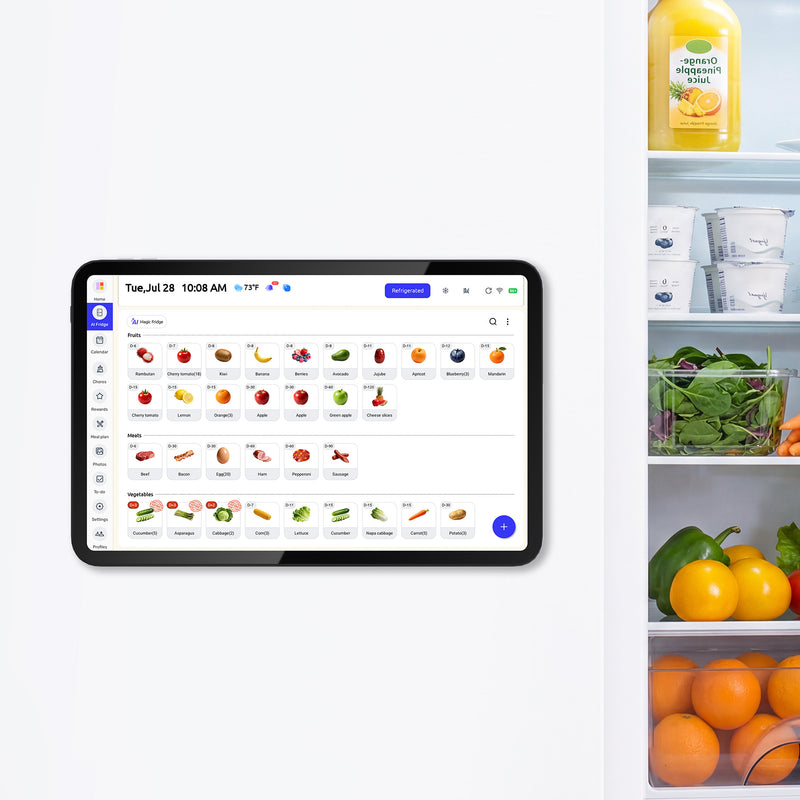
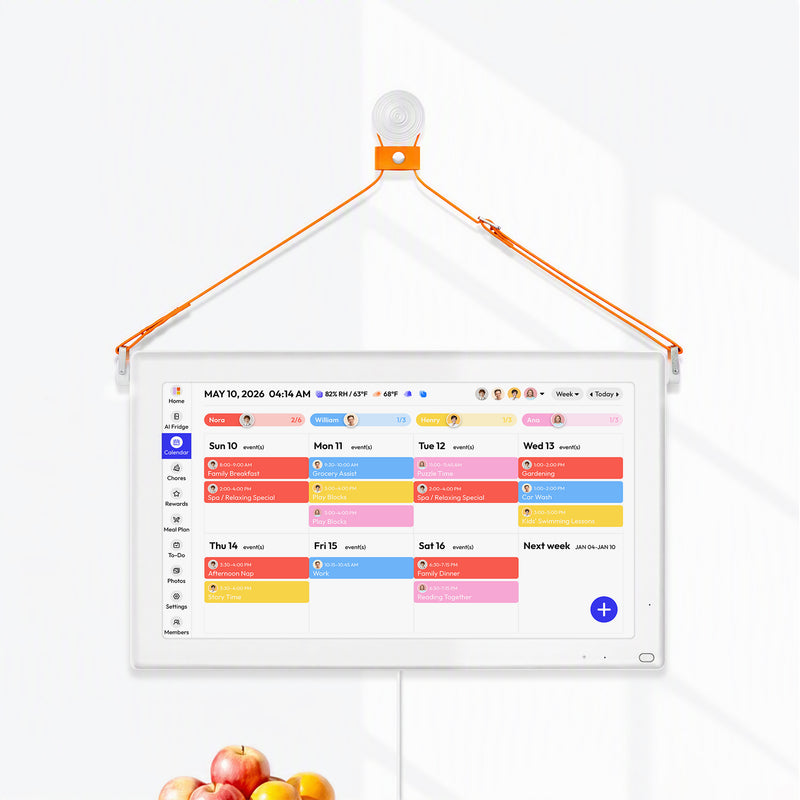
One optional implementation is a shared fridge-side inventory and planning display paired with a companion food-management app. Current official pages describe inventory capture, expiration information, meal ideas, custom lists, calendar functions, and phone access. Physical bins still handle reach, stacking, airflow, and spill containment.
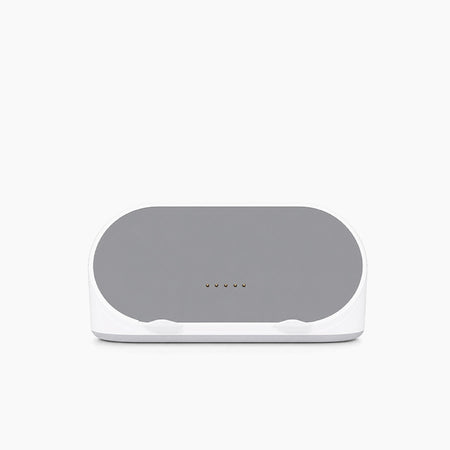
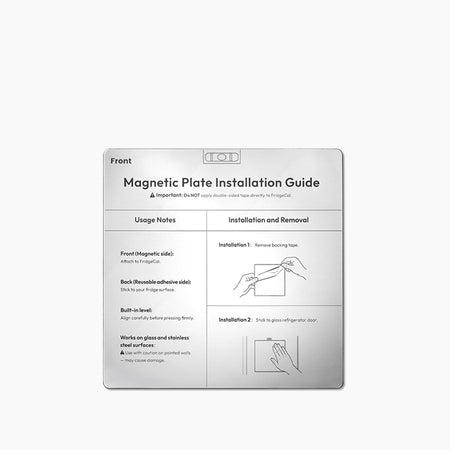
Account for hardware cost, door footprint, mounting, charging, Wi-Fi for connected functions, setup, and record correction. Do not assume automatic consumption tracking or guaranteed waste reduction. If a photo and a three-line list solve the problem, the simpler method is the better choice.
Test the System for 14 Days Before Buying More
A short audit reveals whether the failure is physical, informational, or both. The template below is for readers to complete with real observations; no test results are implied.
|
Failure to count |
Days 1–7 |
Days 8–14 after one change |
What to notice |
|
Could not reach an item |
____ |
____ |
Which shelf and what blocked it? |
|
Could not see an item |
____ |
____ |
Would a shallower zone help? |
|
Did not know a date |
____ |
____ |
Was a label or storage check missing? |
|
Nearly bought or bought a duplicate |
____ |
____ |
Was the list current at the store? |
|
Food had no planned use |
____ |
____ |
Did meal plans change or never exist? |
|
Reset minutes |
____ |
____ |
Is maintenance increasing or decreasing? |
Change one variable after the first week. Add a shallow bin for access, a tray for leakage, a Use Next note for time, or a shared list for duplicates. If you change everything at once, you will not know which tool helped.
Frequently Asked Questions
These answers focus on matching the tool to the failure rather than declaring one system best for every refrigerator.
Are fridge organizers worth it?
Yes, when they improve access, contain spills, or make measured shelf space usable. Skip an organizer that blocks vents, hides a second row, or requires more unloading than the original shelf.
Do fridge organizer bins reduce food waste?
They may improve visibility and access, which can support use. They do not replace date labels, inventory checks, meal planning, safe storage, or realistic purchasing, and a guaranteed waste-reduction claim would require outcome evidence.
What type of fridge organizer is most useful?
Choose the type that fixes a measured problem: shallow bins for loose items, turntables for deep corners, pull-outs for narrow shelves, and trays for leak containment. Measure before buying.
What is smart food management?
Smart food management is a lightweight system for knowing what food is available, what needs attention, what will be cooked, and what should be bought. It can be manual or digital.
Can physical organizers and a digital system work together?
Yes. Physical tools manage access and containment, while a maintained digital layer can support shared inventory, dates, meal context, and shopping decisions. Neither replaces food-safety guidance or responsible purchasing.
A tidy refrigerator and a managed refrigerator are related, but they are not the same result. Use the 14-day audit to identify the repeated failure, make one small change, and count again. Buy a container for a physical obstacle, use a list for a memory gap, and combine them only when both problems are real.


