




A touchscreen calendar works best as the one shared place your household checks for schedules, tasks, and meals. The most useful setup is visible, easy to update, and limited to information your family will actually use every day.
Is your kitchen the place where people ask the same schedule question three times before 8:00 AM, while someone else realizes a practice, pickup, or dinner plan was never written down? A well-placed shared screen offers an immediate, practical benefit: fewer double bookings, fewer “What’s for dinner?” interruptions, and a clearer handoff between the person who plans and the people who need to follow the plan. The goal is to create a screen that stays useful without becoming another chore.
What a touchscreen calendar is really for
A public view of family life is most useful as a shared display, not as a magical fix for disorganization. In real kitchens and family command centers, the screen helps because it makes information visible to people who do not naturally open an app before school, work, or bedtime. That visibility matters when family members are moving in different directions and need one clear answer about what happens next.

The larger goal is not just better scheduling but less household stress. Organizing a busy family schedule can reduce stress, especially when one person is mentally carrying school deadlines, practices, appointments, and grocery needs for everyone else. A touchscreen calendar helps by turning that private mental load into a shared, glanceable system.
The best role for the screen in your kitchen
A touchscreen calendar works best when the screen serves as the family’s public dashboard and your phone or laptop remains the editing station. That approach lines up with a digital-and-visible calendar system: one master calendar holds the official schedule, and the display becomes the calm, at-a-glance layer everyone can follow.
That distinction matters because kitchen screens succeed when they behave like appliances. A wall-mounted family calendar display tends to earn better family adoption than a device that needs frequent troubleshooting, app switching, or constant tapping. If the screen feels like a fussy tablet, people stop trusting it. If it feels like the household clock, people start checking it without being told.
Where to place it and what size works best
Placement usually matters more than extra features. The best spot is where your household naturally pauses, such as near the coffee station, pantry, mudroom entry, or the edge of the kitchen where backpacks and keys collect. The screen should be easy to read while standing a few feet away, without blocking prep space or feeling like another TV.

For many homes, a mid-sized display is the most practical choice. A 15-inch to 24-inch display range is often large enough to read across a kitchen without dominating the room. A 10-inch screen can feel cramped once you show multiple family calendars, while a 27-inch or 32-inch display makes more sense on a larger command-center wall than on a busy counter. If your family of five needs to see school, work, sports, and dinner at once, a larger weekly view may save time. If your goal is quick daily check-ins, a smaller screen can still work.
What to put on the screen and what to keep off
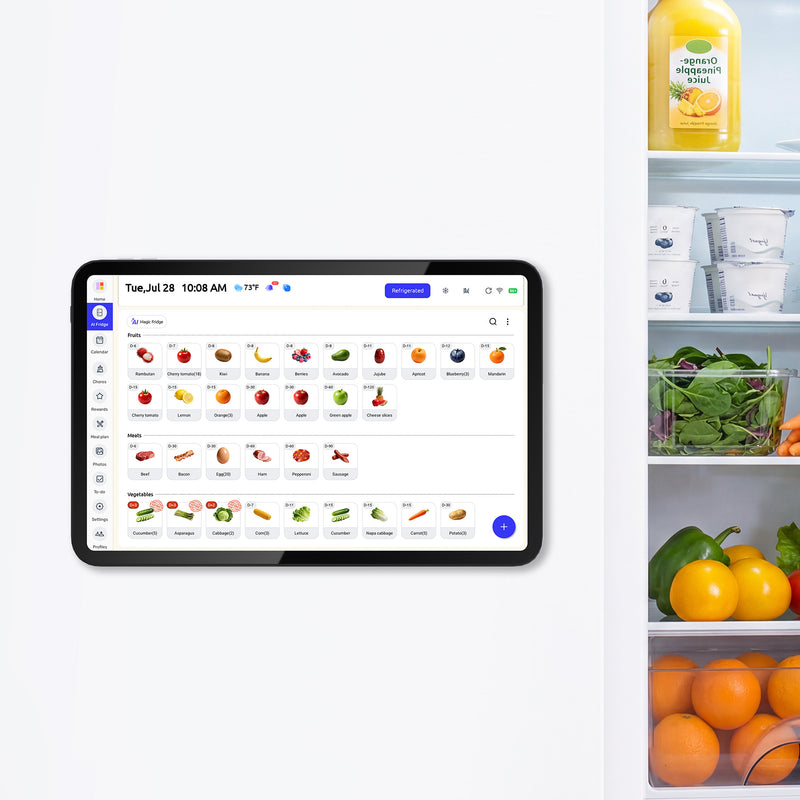
The strongest kitchen setups show only the information that answers routine family questions. An all-in-one family hub for calendars, meals, and chores is often most helpful when it combines the main calendar with dinner plans, chores, and one short list such as groceries or after-school tasks. That reflects how families actually operate: time, food, and responsibilities create most of the daily friction.
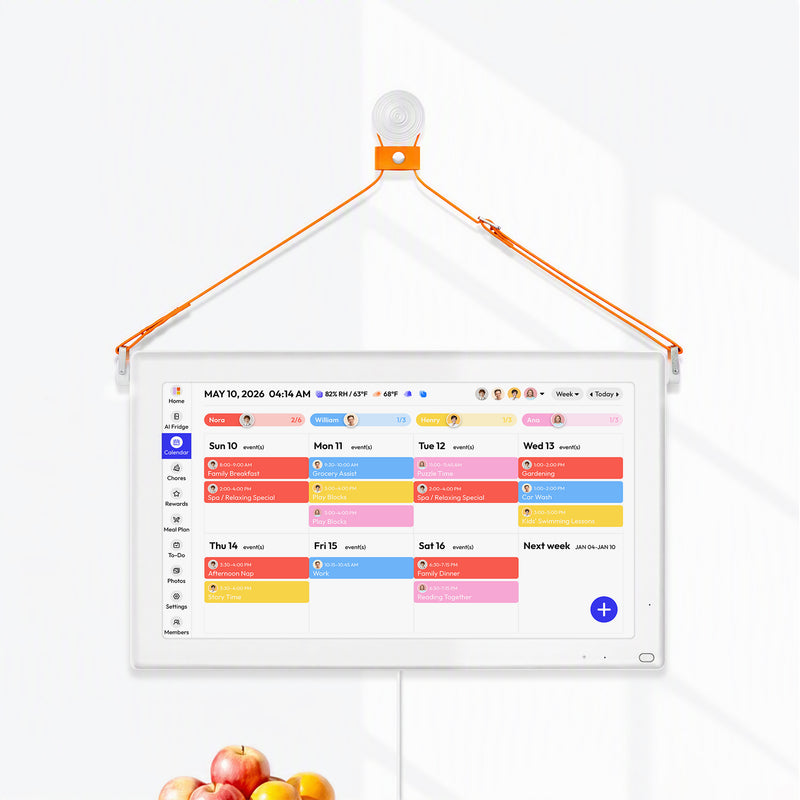
A good rule is to keep the visible screen focused on the next seven days plus today’s action items. If every idea, wish, and someday project gets dumped onto the kitchen display, the screen becomes wallpaper. In practice, the most useful view is often a weekly calendar with color-coded events, tonight’s dinner, and a short chore or routine panel. A household with two adults and two kids might show school pickup at 3:15 PM, soccer at 5:30 PM, tacos for dinner, and “take out trash” for one child. That is enough to prevent confusion without crowding the screen.

How to organize the calendar so people actually use it
Start with one master calendar
A shared family calendar works best when everyone knows which calendar is the official source for events. For many households, a shared digital calendar service works well because it is free, flexible, and easy to share. If your family already uses different calendar ecosystems, the key is less about the platform and more about making sure edits sync both ways between personal devices and the kitchen display.
One detail families often miss is permissions. In many shared family calendars, people with access can edit events, and non-family members may also be shareable depending on the settings. That can be useful for caregivers or grandparents, but it also means someone should review permissions before handing out access casually.
Use color coding with restraint
A color-coded schedule is one of the fastest ways to make a touchscreen calendar readable. Give each person one color and reserve one shared family color for events that affect everyone, like vacations, school closings, or holiday gatherings. The mistake is using too many shades or category rules at once. If your calendar needs a legend every time someone looks at it, it is overbuilt.
Children also read the screen differently than adults. Experience with digital calendar displays suggests older kids benefit more quickly because they can read and interpret the schedule on their own, while younger children may do better when events use simple words or even emojis in titles. “Dentist” may mean little to a first grader, but “Dentist - no snack after school” is much clearer.
Add chores and meals only if they reduce questions
A shared screen with dinner plans and chores can make the kitchen display far more useful, especially for families with school-age kids. The practical benefit is simple: when the screen answers “What’s for dinner?” and “What do I need to do before screen time?”, it starts solving daily friction instead of just displaying appointments.

Still, not every extra feature earns its place. Some families love chore rewards and meal-planning tools, while others use them for a month and drift back to verbal reminders. The better test is simple: if a feature cuts repeated questions or helps a child act independently, keep it on the screen. If it creates more tapping than follow-through, turn it off.
Dedicated calendar, smart display, or DIY build?
The right choice depends on whether you want simplicity, flexibility, or lower cost.
Setup |
Best fit |
Main upside |
Main tradeoff |
Dedicated family calendar |
Busy families who want quick setup |
Family-first features like color coding, chores, meals, and remote updates |
Higher upfront cost and, sometimes, subscriptions |
Smart display |
Households that already use a voice assistant |
Multipurpose screen for calendar, smart home, and media |
Calendar view is often secondary and less family-friendly |
DIY wall dashboard |
Technical households |
Lower cost and strong customization |
Setup, maintenance, and touch support can take real effort |
A purpose-built digital family calendar is usually the easiest path for a household that wants adoption more than tinkering. A DIY wall display can be excellent for a technical home, but that route works best when someone is willing to manage kiosk mode, power behavior, and sync quirks over time.
The most common mistakes
The first mistake is buying the screen before deciding who will update it and when. A family calendar is still a habit before it is a device. The second mistake is expecting the screen to replace planning conversations. Regular check-ins still matter because even the best display cannot resolve unspoken priorities or conflicts.
The third mistake is paying for features your household will not use. For many families, the best value sits in the middle of the market, especially if the main need is calendar visibility rather than premium routines or smart-home extras. If all you need is a shared weekly view and reminders, a free shared calendar plus an existing tablet or display may be enough.
The calmest kitchen is usually not the one with the most technology. It is the one where everyone can tell at a glance where they need to be, what is happening for dinner, and what still needs to get done before the day gets away from them.


