






When more than one adult shops or cooks, the plan has to be visible in one shared place, or the household will miss items, buy duplicates, and keep re-deciding the same things.
Have you ever come home with milk while someone else already bought milk, but nobody remembered sandwich bread? That kind of mix-up usually starts before the store, when the meal plan, shopping list, calendar, and pantry reality all live in different places. A visible system can cut those handoff mistakes fast, and this article will show you how to set one up for the next seven days without turning your kitchen into a project.
Invisible Planning Creates Predictable Grocery Mistakes
When the grocery plan stays in people’s heads, helping adults still work from different versions of reality. One person is thinking about dinner, another is thinking about school lunches, and someone else is noticing the toilet paper is low. Without a shared planning hub, that mental load gets spread across the house in a way nobody can actually see.
The usual breakdown points
A common pattern looks like this: the pantry is not checked, the fridge is not checked, the calendar is not checked, and the list gets updated too late. A 4-step grocery shopping system used by a large family starts with inventory, then a visible whiteboard, then the weekly calendar, then store planning. That order matters because it stops the household from shopping on memory alone.

Duplicate buying is also a visibility problem, not just a communication problem. When items are scattered, families lose track of what they already own, and zones act as a physical inventory that make duplicates easier to spot. That is the same reason organized pantry systems use clear containers, labels, risers, and turntables: if you have to dig, you will forget what is there.
Why “everyone helps” still fails
More adults does not automatically mean better coverage. It often means more chances for crossed signals. A shared grocery list that syncs instantly helps, but it still falls apart if nobody can tell which meals the list is for, who is shopping, or when the food is actually needed.
This is where families often blame follow-through when the real issue is structure. Organization systems tend to fail when they are inconvenient, too complicated, overloaded, or used differently than expected, and visibility is a core rule. If the plan is hidden in texts, half-finished notes, and private reminders, the system is asking people to remember too much.
A Visible Grocery Plan Needs Four Parts
A usable system is not just a list on the fridge. It needs one visible surface for meals, one for shopping, one for timing, and one quick way to capture needs as they come up. A kitchen command center works well because it keeps the calendar, grocery list, meal plan, mail, and writing tools in one place instead of scattered around the kitchen.

1. Meals
The meal plan answers, “What are we feeding people this week?” Keep it simple. Plan five dinners, not seven perfect days. If your week is busy, use repeatable pairings like “tacos Monday, pasta Wednesday, leftovers Friday.”
Meal planning works better when it reduces waste, not when it creates an ideal schedule nobody follows. The 2 meals from 1 ingredient method is a good example: buy spinach once, then use it twice before it spoils. That gives the grocery list a job beyond “buy food.”
2. Shopping
The shopping list answers, “What needs to be bought?” It should be shared, easy to update, and visible enough that nobody wonders where to write things down. In some homes, that is a dry-erase list in the kitchen. In others, it is a phone app both adults actually check.
The best version is the one your household will keep using. A shopping list and meal plan in one app can reduce friction because ingredients can move directly from recipes to the list. A paper version can still work well if it lives in the same place every day and gets reviewed before anyone leaves for the store.
3. Timing
The calendar answers, “When does this food need to exist?” That includes late work nights, sports practice, field trips, guests, and holidays. Families often forget that grocery planning is partly a scheduling task, which is why shared calendars reduce double-booking and help adults plan from the same week.
A grocery trip without calendar context is how you end up buying ingredients for a full dinner on the same night one parent gets home at 7:30 PM. If grocery shopping or meal prep needs protected time, some families use time-blocked planning so the job has a place on the calendar instead of floating around as a vague intention.
4. Capture
The capture step answers, “Where do I put this the moment I notice it?” Kids finish cereal. Someone opens the last trash bag. One adult notices the dog food is low. That information needs a home right away.
A refrigerator whiteboard for used-up items works because it catches needs at the moment they happen. If the capture point is not visible and fast, people tell themselves they will remember later, and later is when the breakdown starts.
Build the System Around Routines, Roles, Surfaces, and Timing
Households do better with a weekly rhythm than with constant discussion. A few minutes every day and one short reset before the next grocery trip is more realistic than trying to fix everything on Sunday night. One family organization approach recommends a few minutes each day and a weekly kitchen declutter before the next shopping trip, which is a solid maintenance pattern for busy homes.
Routines: what happens every week
Keep the routine boring on purpose. Friday: check the fridge and pantry. Saturday morning: pick meals. Saturday afternoon: build the list. Sunday: shop or assign pickup. Then use the 48-hour rule after shopping: check fresh ingredients within about two days and decide what gets cooked, repurposed, or frozen.

That 48-hour rule is especially helpful in multi-adult homes because it creates a second check after the excitement of stocking up wears off. It also helps uneven follow-through, since forgotten produce is usually a systems problem, not a character flaw.
Roles: who owns what
Shared does not mean ownerless. One adult can own the meal plan, another can own pantry inventory, and either person can shop. The key is that ownership is visible, so people know whether they are adding information, making a decision, or completing an errand.
This works even better when the house uses function-based zones. A Food Zone with visible grouping reduces duplicates and expired food because everyone knows where to check before adding items to the list. That is much easier than asking, “Do we have any more pasta?” from the middle of the kitchen.
Surfaces and timing: where the plan lives
The planning surface should match how your household moves. If everyone passes through the kitchen, put the command center there. If adults are out of the house all day, pair the wall system with a shared app so updates are visible at work too.
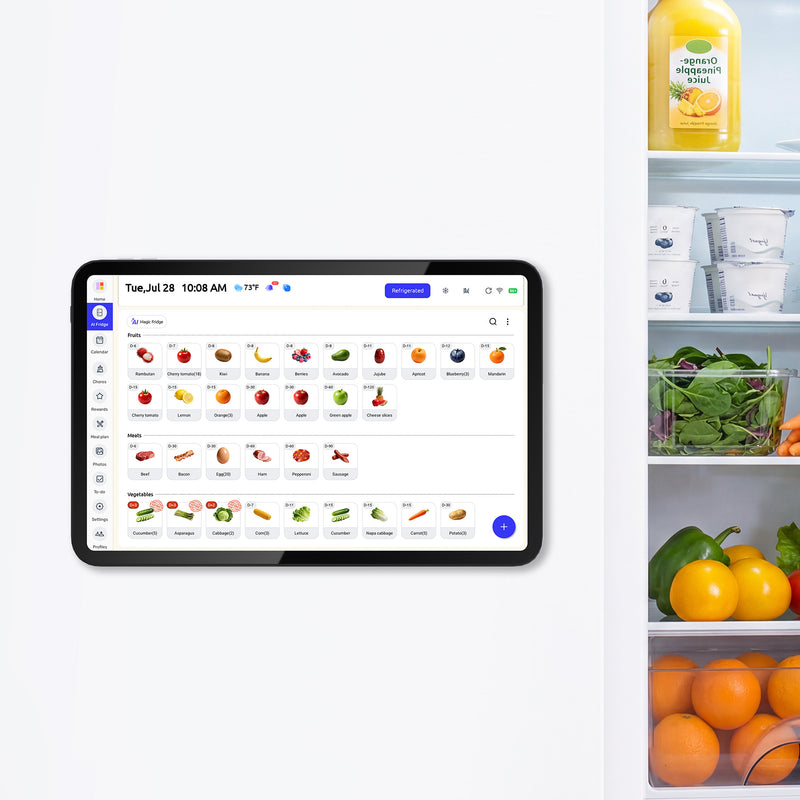
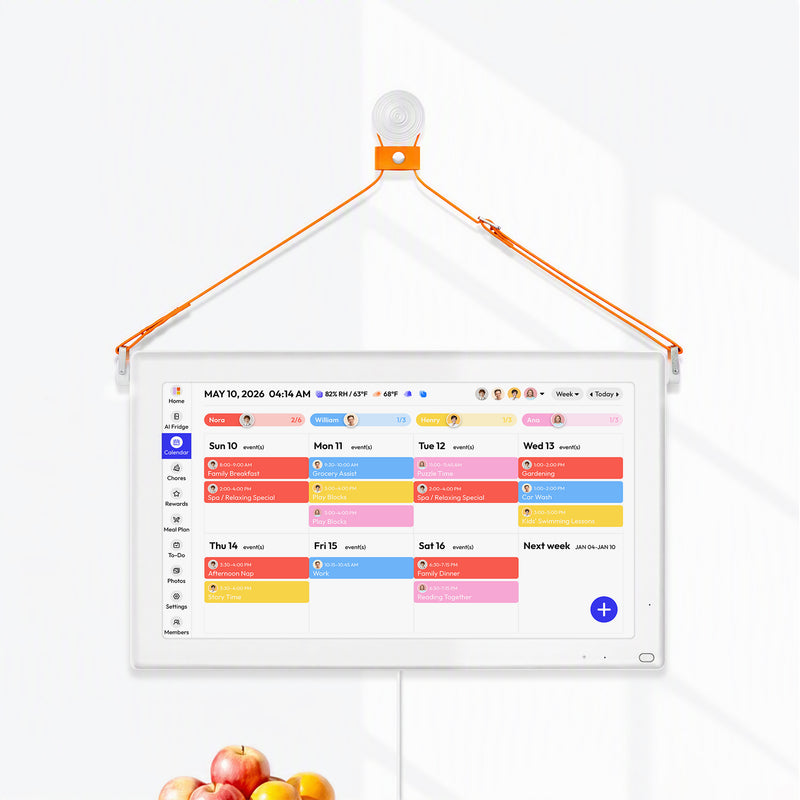
That hybrid model is common because visible wall calendars help adults get on the same page while synced tools let them check plans away from home. A fridge-mounted tool like the Everblog fridge calendar can give multiple adults one shared place to see meal notes, grocery items, and timing. The point is not paper versus digital. The point is whether the plan is visible at the moment someone needs to act.
Paper, Digital, and Hybrid Systems Each Have Trade-Offs
A paper system is cheap and easy to start. A paper wall calendar may cost about $9 to $19, and dry-erase or acrylic wall calendars often land around $45 to $90, while digital planning displays can range from $199 to $899.99. Paper is great for visibility at home, but it depends on someone manually updating it.
When paper works best
Paper works well when the household mainly needs one central surface and most grocery decisions happen at home. A command center with a framed shopping list, visible meal plan, and shared calendar can be enough for many families, especially when the friction of setting it up is low.
It also helps households that are tired of app sprawl. A centralized place for grocery lists, meal plans, and a family calendar reduces the “where do I put this?” problem immediately. If your issue is scattered reminders, paper may fix more than you expect.
When digital works best
Digital works better when adults are often apart, shop separately, or need real-time updates. A shared calendar, shopping list, and meal plan in one app can reduce the lag between noticing a need and recording it.
Real-time syncing matters most when more than one adult buys groceries in the same week. Still, digital lists need some discipline. One comparison notes that duplicate items can still happen when multiple people add things and list search is weak, so even with apps, naming conventions and quick review habits still matter.
When hybrid works best
Most families do best with hybrid. The wall surface handles household visibility. The app handles away-from-home updates. If you want a larger shared screen, even a DIY 15-inch family calendar display for about $100 shows that visible planning does not have to start with a premium device.

Hybrid systems are especially useful for homes with kids, shift work, or uneven routines. The wall keeps the plan public. The app keeps it portable. Together, they reduce hidden work.
Keep the System Simple Enough to Survive Real Life
The best grocery system is the one people can reset quickly after a messy week. That means fewer categories, fewer apps, and fewer storage tricks that only one adult understands. Organized homes work better when items have dedicated storage and clear labeling, because visibility lowers the effort of everyday upkeep.
What usually breaks
Systems usually break when they are packed too full or designed to look tidy instead of staying usable. If canned goods are stacked behind other canned goods, or snacks drift across three cabinets, people stop trusting the setup and go back to guessing.
That is why clear bins, risers, labels, and fixed limits matter so much in shared spaces. They make it obvious where things go and when a category is overfilled. In a grocery system, overfilled usually means one of two things: too much stock, or no one is checking what is already there.
How to keep it usable with uneven follow-through
Assume someone will forget. Build for that. Use fewer decision points. Put the list where people already stand. Keep one pen there. Give each adult one small ownership area. If kids can participate, let them add used-up items to the whiteboard instead of relying on verbal reminders.
If the system starts to slide, do not redesign the whole house. Reset one zone, one list, and one week at a time. The Decide Once rule is useful here: keep and assign a home, donate, recycle, or trash. Grocery planning improves fast when the kitchen stops carrying extra clutter and mystery inventory.
FAQ
Q: Why do we still forget basics even though both adults are trying to help?
A: Because effort is not the same as visibility. If one adult is tracking meals, another is noticing household supplies, and neither is using the same list and calendar, the handoff is weak. A shared capture point plus one weekly review usually fixes more than extra reminders do.
Q: Should we use a wall calendar or an app for grocery planning?
A: Use the version people will actually check. A wall calendar is better for at-home visibility. An app is better for real-time updates away from home. Many families do best with both: a visible command center in the kitchen and a shared list on phones.
Q: What if one person follows the system and the other does not?
A: Lower the complexity first. Cut extra categories, keep one obvious place for the list, and assign one clear responsibility to each adult. If the system depends on perfect habits, it is too fragile for family life.
Practical Next Steps
For the next seven days, do not aim for a perfect household system. Aim for a visible one. Start with one shared surface, one shared list, and one short weekly check-in so grocery decisions stop living in private memory.
Use this checklist:
- Pick one planning surface today: kitchen wall, fridge, or a shared app plus one visible home spot.
- Add four sections: meals, grocery list, calendar, and “running low.”
- Assign one adult to check pantry and fridge before the next shopping trip.
- Assign one adult to connect the list to the week’s schedule by 5:00 PM the day before shopping.
- Review fresh food again within 48 hours after shopping.
- Spend 5 to 10 minutes resetting the food zone before the next trip.
- If something gets missed, simplify the system instead of adding more tools.


