
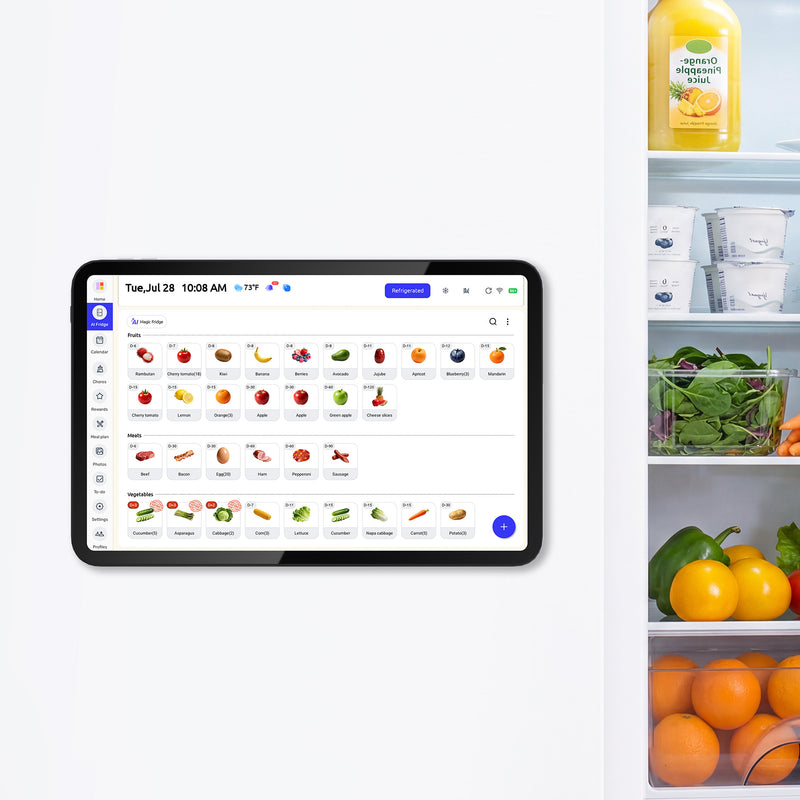


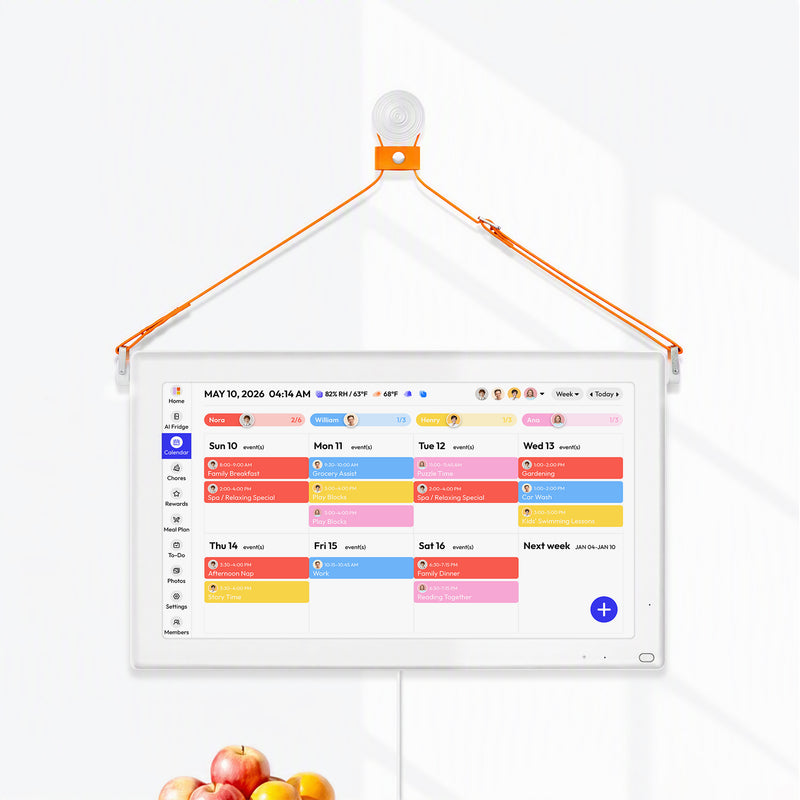


A home digital calendar display is like a smart hub for your family. It combines everyone's schedules from different digital calendars into one easy-to-view screen. This modern version of a kitchen bulletin board automatically updates appointments, chores, and meal plans.
From Family Chaos to Connected Clarity
If you’ve ever felt like you're trying to conduct an orchestra where every musician has different sheet music, you know what modern family scheduling is like. One parent is on Google Calendar, the other uses iCal, and the kids’ sports schedules are lost in a sea of emails. Meanwhile, the whiteboard calendar in the kitchen is three weeks out of date. This constant juggling act creates a huge mental load and turns simple coordination into a daily headache.
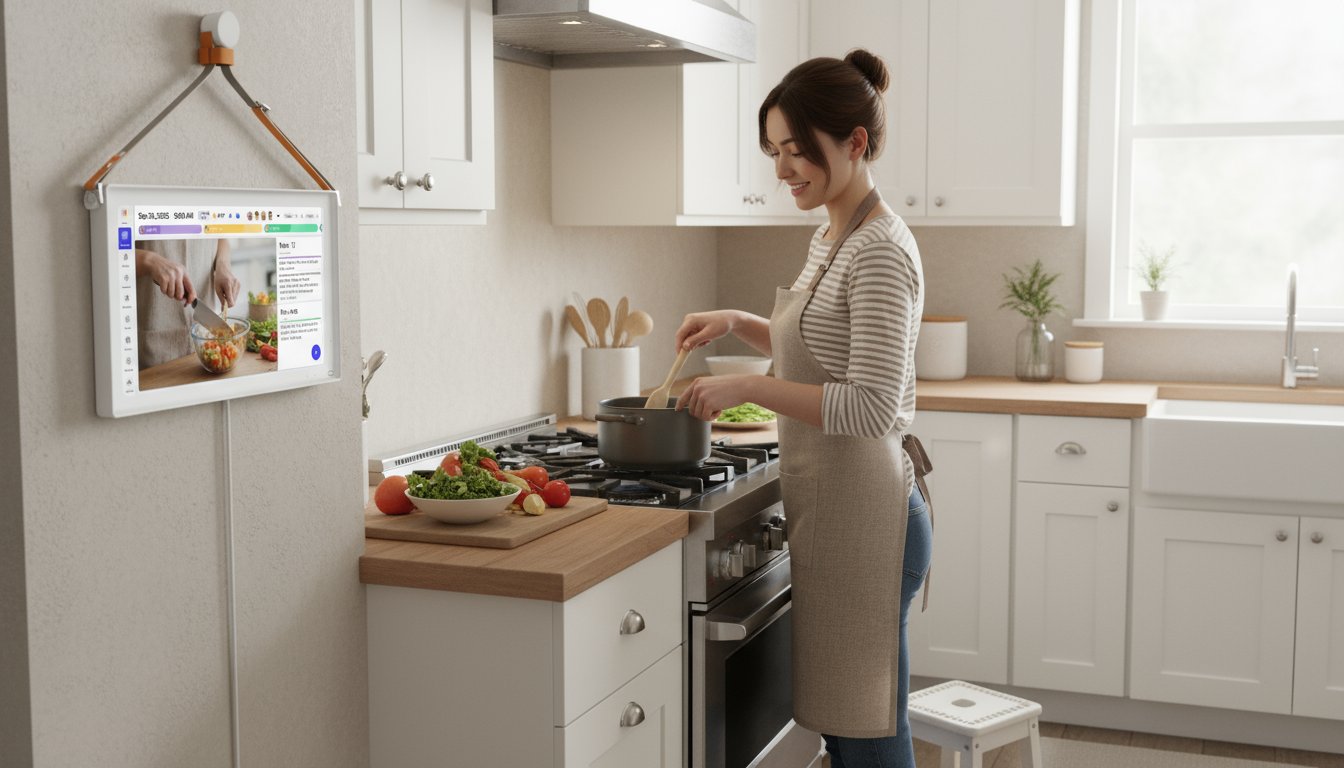
This is precisely where a digital calendar display for home makes a real difference. It’s not just another gadget; it's a solution that moves your family’s entire schedule out of individual phones and into a shared, public space. It’s the evolution of the classic kitchen calendar, but it updates itself in real-time. No more crossed-out appointments or forgotten practices.
The Shift to a Single Source of Truth
The whole point is to cut through the daily noise of "who's doing what, and when?" Instead of texting "Are you picking up the kids today?" or shouting, "Did anyone remember the dentist appointment?!", a quick glance at the display gives you the answer. This move from scattered information to a single source of truth is a game-changer for busy households.
It's no wonder the global calendar market is expected to hit USD 20.99 billion by 2035, as more families look for smarter ways to manage their time.
A central display brings the family schedule out of individual devices and into a shared, collaborative space, ensuring everyone is on the same page without needing to constantly check their phones.
This simple change fosters more independence in kids and helps distribute the organizational load more evenly among everyone in the family. It’s less about the tech itself and more about building a calmer, more connected home. For a deeper dive, check out our guide on why every mom needs a digital calendar.
Traditional vs Digital Home Calendars at a Glance
To really see the difference, let’s put the old way and the new way side-by-side.
| Feature | Traditional Methods (Paper/Whiteboard) | Digital Calendar Display |
|---|---|---|
| Updates | Manual entry; easily becomes outdated. | Automatic, real-time syncing from everyone's devices. |
| Accessibility | Only viewable in one physical location. | Visible at home; can be updated from anywhere via app. |
| Consolidation | Requires manually combining multiple schedules. | Pulls all calendars (Google, Apple, etc.) into one view. |
| Reminders | None, relies on memory. | Sends notifications and on-screen alerts. |
| Extra Features | Limited to what you can write. | Integrates chores, meal plans, to-do lists, and more. |
| Collaboration | One person is usually in charge of updating it. | Everyone can contribute from their own phone or device. |
The table makes it clear: while traditional calendars served their purpose, a digital display is built for the dynamic, interconnected lives families lead today. It actively works to keep everyone in sync, reducing friction and freeing up mental energy for what really matters.
Turning Your Wall into a Family Command Center
Picture a digital family bulletin board that automatically updates and clears itself. That’s the simplest way to think about a digital calendar display for home. At its heart, this device has one powerful goal: to give your entire family a single, always-visible source of truth for everyone's schedules. It’s designed to live where your family lives, usually right in the middle of the action, like the kitchen or entryway.
This isn't just another tablet or a spare phone slapped on the wall. These are purpose-built displays. They have large, easy-to-read screens you can see from across the room. It’s not a screen to get lost in; it's a functional part of your home's decor, built for quick glances that keep everyone in the loop, from remembering soccer practice to keeping track of dentist appointments.
The real genius lies in how it pulls everything together. A great digital calendar display can sync with your Google Calendar, your partner’s iCal, and the kids' school calendar, merging them into one unified, color-coded view. No more texting your spouse to see if they're free or juggling multiple apps to figure out the day.
The Power of a Shared View
The biggest win here is reducing the "mental load" of coordinating everything. Instead of one person having to be the official keeper of the schedule, that responsibility is shared. Everyone can see what’s going on at a glance, which helps build independence and teamwork.
By transferring the family schedule from personal phones to a shared display, you foster better collaboration. This helps eliminate repeated questions about plans and ensures everyone, including parents, kids, and the babysitter, is informed.
This simple change often has an unexpected benefit: it can actually cut down on overall screen time. Instead of pulling out a phone to check a schedule and immediately getting distracted by a dozen notifications, a quick look at the display gives you the info you need. It keeps your family aligned without pulling everyone into the digital vortex of their personal devices.
This is how a simple calendar becomes a true family hub. It’s the spot everyone goes to for answers to daily questions:
-
Who has practice tonight? A quick scan of the color-coded events has the answer.
-
What are we having for dinner this week? The meal plan is right there next to the schedule.
-
Did I finish my chores? The chore chart is visible for everyone to see and track.
In the end, a digital calendar display isn't just about showing dates. It's about creating a communication tool that smooths out daily logistics, lowers stress, and gives your family a clear, shared vision of the day, week, and month ahead. It’s the command center your busy life deserves.
What Really Makes These Calendars a Family Game-Changer
A digital calendar display for your home is so much more than a pretty screen with dates on it. The real magic is in the features working behind the scenes, specifically designed to tackle the real-world chaos of family life. These tools don't just show you what's happening; they actively help your household run smoother, taking a huge chunk of the mental load off of parents.
The absolute must-have feature is automatic calendar syncing. Think about it: no more wiping down a whiteboard or trying to remember who told you what. These displays link directly to the calendars you already use—like Google Calendar or Apple's iCal—and pull everyone’s schedules into one central, easy-to-read view. When someone adds a dentist appointment on their phone, it pops up on the family display instantly. No more double-bookings, no more missed practices.
This diagram shows the core idea perfectly: it takes all those separate, messy calendars and funnels them into one clear, unified view for the entire family.
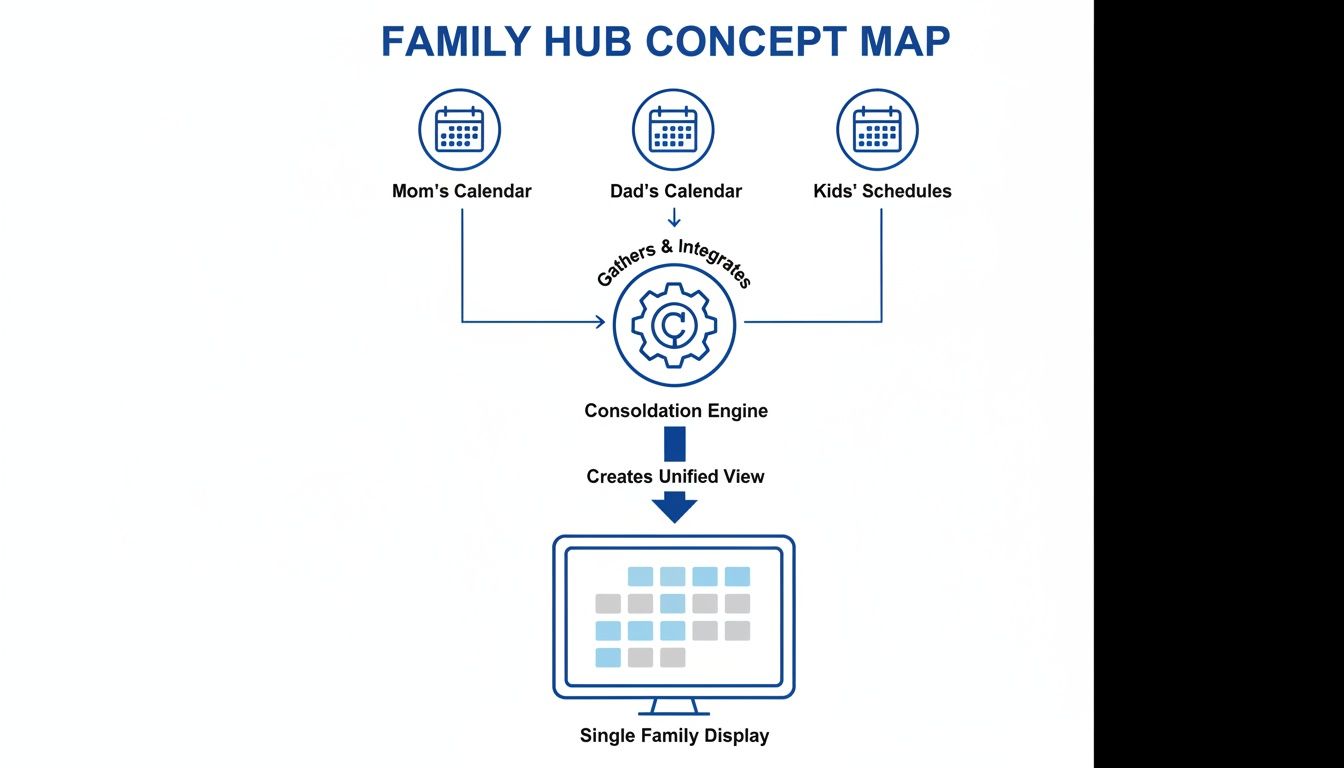
It’s all about creating a single source of truth from a bunch of scattered inputs. That alone ends a ton of confusion.
More Than Just Dates
But a great family hub goes way beyond just scheduling. The best ones include tools that help you manage all the other moving parts of family life, turning the device from a passive screen into an interactive command center.
-
Chore and Rewards Management: This is a lifesaver. You can assign daily or weekly chores, and kids can physically check them off as they finish. Many systems let you tie tasks to points or stars that add up to a reward. It's a fantastic way to build accountability without you having to nag all day.
-
Meal Planning and Grocery Lists: Forget the 5 PM scramble of figuring out dinner. You can plan meals for the week right on the display. As you add recipes, a shopping list is automatically generated and synced to a companion app on your phone, so you have it with you at the store.
-
Voice Entry and a Companion App: Life is messy and your hands are often full. Being able to say, "Hey, add milk to the grocery list," is a game-changer. A solid companion app is just as crucial, letting you manage everything—the calendar, chores, lists—from anywhere, so you're never out of the loop.
The demand for these all-in-one solutions is growing fast. The market for calendar apps, which are the engine behind these displays, hit USD 5.71 billion in 2024 and is expected to climb past USD 14 billion by 2033. It's not just about dates anymore; people want integrated tools that simplify the logistics of a busy family.
Smart Home and Connectivity
For those who want to take things a step further, look for features that integrate with your smart home. Just make sure your home network is ready for these kinds of smart home upgrades to ensure everything runs without a hitch.
A truly effective family hub doesn't just show you your schedule; it helps you manage it. By integrating chores, meals, and lists, it tackles the biggest sources of daily friction in a busy household.
When all these features come together, they create a calmer, more organized, and more connected home. If you want to dive deeper into getting your own calendars set up, check out our guide on how to sync Everblog with Google Calendar.
How to Choose the Right Calendar for Your Home
Picking out a digital calendar for your home is a big deal, and for good reason. This device isn't just another gadget; it's about to become the command center for your entire family. To find the right one, you need to think less about a long list of tech specs and more about how your family will actually live with it every single day.
It’s a lot like buying a new car. Sure, horsepower is nice, but you’re probably more concerned with whether it has enough seats for soccer practice, if it will fit in the garage, and what the long-term costs will be. We'll apply that same practical thinking here.
Display Size and Placement
First things first: where is this going to live, and can everyone actually see it? A digital calendar is pretty useless if you have to squint to read it from across the kitchen while juggling breakfast and a cup of coffee. Think about the busiest spots in your house—the goal is to place it where a quick glance feels natural, not forced.
-
Wall-Mounted vs. Countertop: Do you have the wall space for a larger, more permanent fixture that acts as a true hub? Or do you need something smaller with a stand that can sit on a counter or desk? Wall-mounted displays usually offer bigger screens, making them easier for everyone to see.
-
Clarity and Readability: Look for a screen that's high-resolution and has an anti-glare finish. You need the text to be sharp and easy to read from different angles, whether it’s in the bright morning sun or under dim evening lights.
Connectivity and Compatibility
Next, think about how this device will plug into your family's current digital life. A calendar that doesn't play nicely with the tools you already rely on will just create more headaches. The whole point is to make things easier, not to start a frustrating new tech project.
The single most important feature is effortless, two-way syncing with your existing calendars, like Google Calendar or Outlook. When you add a dentist appointment on your phone, it should pop up on the wall display instantly—and vice versa—without you having to do a thing.
Before you commit, double-check which platforms the device supports and how deep that integration really is. Some displays only offer full syncing for specific calendar providers, which can be a major problem if your family uses a mix of services. To dig deeper into this, you can learn more about how to choose a family digital calendar in our complete guide.
Key Considerations Checklist
To help you sort through the options, we’ve put together a simple checklist. Use this to think through what really matters for your family’s unique rhythm and needs.
| Consideration | Why It Matters | What to Look For |
|---|---|---|
| Display & Readability | It needs to be easily seen by everyone in the family, from any angle, at any time of day. | High-resolution, anti-glare screen; appropriate size for your space (e.g., 15" for counters, 27"+ for walls). |
| Calendar Sync | The calendar must automatically sync with the services you already use (Google, Outlook, etc.) to be effective. | Confirmed two-way sync support for your specific calendar provider(s). |
| Cost Model | The upfront price isn't the whole story. Subscriptions can add up significantly over time. | A clear breakdown of costs: one-time purchase vs. ongoing monthly/annual fees for full feature access. |
| Mounting Options | Where and how it fits into your home is crucial for daily use. | VESA-compatible for wall mounting; a stable, included stand for countertop placement. |
| Warranty & Support | This is a daily-use device. You want to know help is there if something goes wrong. | A minimum 2-year warranty and clear access to responsive customer support. |
This checklist isn't about finding a "perfect" device, but about finding the perfect fit for your home.
The True Cost of Ownership
Finally, it's essential to look beyond the initial price tag. How a company structures its pricing tells you a lot about the long-term value you can expect.
-
Subscription vs. One-Time Purchase: Be aware that many digital calendars lock their most useful features—like meal planners or chore charts—behind a recurring monthly or annual subscription. This can easily add hundreds of dollars to the total cost over the device's life. A subscription-free model, like Everblog, includes all features and future updates in a single, upfront purchase, making the value much more transparent.
-
Warranty and Customer Support: This device is going to be a workhorse for your family. A solid warranty (look for a 2-year warranty) and easily reachable customer support are non-negotiable. They offer peace of mind that your investment in a more organized family life is protected.
Integrating Your Display into Daily Family Life
A great tool is only as good as the habit you build around it. A digital calendar display isn't something you just set up and forget; it's a new rhythm for your family to learn. The real magic happens when it blends so naturally into your daily life that it becomes the one place everyone automatically checks for what’s happening.

Think of it like the kitchen counter or the family dinner table—a central spot where everyone connects. To get there, you need to create simple, repeatable moments centered around the display. That consistency is what turns it from a cool new gadget into the indispensable command center that finally puts an end to those last-minute surprises.
Establishing Family Routines
The key is creating specific times to check the calendar together. These aren’t formal, hour-long meetings. They’re quick, consistent huddles that eventually become second nature.
-
The Morning Huddle: Take five minutes over breakfast to glance at the day ahead. This simple check-in makes sure everyone knows about appointments, after-school practices, and who’s on pickup duty. It’s also incredibly empowering for kids, giving them a clear picture of their own day.
-
The Sunday Sync-Up: Set aside 15 minutes on Sunday evening to map out the upcoming week. This is your chance to add new events, confirm appointments, and assign chores. A little proactive planning here prevents that chaotic Monday morning scramble and sets a calm tone for the entire week.
When you build these routines, the mental load of managing the family schedule starts to feel lighter because it's no longer one person's job. It becomes a team effort.
The real value kicks in when the display becomes the first place everyone looks for an answer. By building habits around it, you stop the constant "what's for dinner?" and "are we going to Grandma's?" questions and create a calmer, more predictable home for everyone.
This push toward smarter scheduling is a big reason the AI Calendar market, valued at USD 15.5 billion in 2024, is expected to soar to USD 156.3 billion by 2034. Families are actively looking for tools to solve common household headaches, especially when you consider that 70% of parents report feeling stressed by managing schedules.
Real-World Family Scenarios
Beyond the daily check-ins, a digital calendar solves very specific challenges that almost every family faces. Because it’s central and always on, it becomes a powerful tool for getting everyone on the same page.
-
Co-Parenting Coordination: For families navigating co-parenting, the display is a clear, neutral source of truth. Handoff times, custody schedules, and shared appointments are laid out for everyone to see, which helps minimize misunderstandings and makes for much smoother transitions.
-
Chore and Reward Tracking: Let’s be honest, getting kids to do chores is a battle. Turning it into a game is a game-changer. Kids can see their assigned tasks, check them off when they’re done, and visually track their progress toward a reward. That sense of ownership makes them far more likely to pitch in.
By weaving these practices into your life, the display becomes much more than just a calendar. It becomes a cornerstone of your family's organizational system, building teamwork and clarity one day at a time.
Your Path to a More Organized, Connected Family
Let's be honest: juggling all the moving parts of family life is a monumental task. But you don't have to manage the chaos alone. Making the leap from scattered paper notes and conflicting phone calendars to a central digital calendar display for home isn't just an organizational upgrade—it's a complete shift in how your family operates. It creates a single, visible source of truth for everyone, turning constant questions and last-minute scrambles into calm, predictable routines.
Think about the time you'll save and the stress you'll eliminate by bringing everyone’s schedule into one shared space. It builds a genuine sense of teamwork. When the kids can see their own responsibilities and parents can finally share the mental load of planning, the whole family feels more connected. Everyone knows what’s happening, from soccer practice to dinner plans, with just a glance at the wall.
Investing in a family hub is not just about buying a new device. It’s an investment in your family’s well-being, creating the structure needed for a calmer, more organized, and more present life together.
Imagine a home where everyone is on the same page. Mornings are smoother, and you feel in control rather than overwhelmed. That clarity is genuinely achievable. By choosing a central hub like Everblog, you aren't just organizing dates; you are laying the foundation for a more harmonious home. Why not take that first step and see how it transforms your family's daily rhythm?
A Few Lingering Questions
Still wondering if a digital family calendar is right for you? It's a big decision, and it's smart to ask questions. Here are some of the most common ones we get from parents just like you.
Is This Going to Be a Pain to Set Up?
Honestly, no. Most of these displays are built for busy, non-techy families. Think of it like setting up a new smart speaker or TV. You'll mount it on the wall, connect it to your Wi-Fi, and then use an app on your phone to link your family's existing calendars, like your Google Calendar or Apple's iCal. From taking it out of the box to seeing your family's schedule live on the wall, you're usually looking at just a few minutes of work.
Am I Going to Get Hit With a Monthly Fee?
That’s a big one, and it really depends on the company you go with. Some brands hook you with a lower upfront price but then lock the best features—like chore charts or meal planning—behind a monthly or yearly subscription.
Always double-check the fine print on pricing. Other companies, like Everblog, offer a subscription-free model. That means you buy the device once, and you get all the features, now and in the future, without another bill. It's a huge factor for long-term value.
Can Everyone in the Family Actually Use It?
Yes, and that's really the whole point! These displays sync with a shared calendar that lives in the cloud. As long as your partner or older kids have access to that shared family calendar on their own phones, anything they add will pop up on the main display instantly. It’s the secret to getting everyone on the same page and finally sharing the mental load of who needs to be where and when.
Ready to bring that calm and clarity to your own family's schedule? See how the Everblog digital family wall calendar can help you organize your life, all without a subscription. Explore Everblog to learn more.


