



Your kitchen counter might look organized for about ten minutes.
Then a school flyer lands on top of the grocery list. Someone texts that practice moved. One child remembers a project due tomorrow. Another needs a ride across town. Your phone has some of it. A paper calendar has some of it. The rest lives in your head.
That’s the primary reason families start looking for a digital planner tablet. Not because they want another screen, but because they’re tired of being the screen. One parent usually becomes the walking reminder system for everyone else.
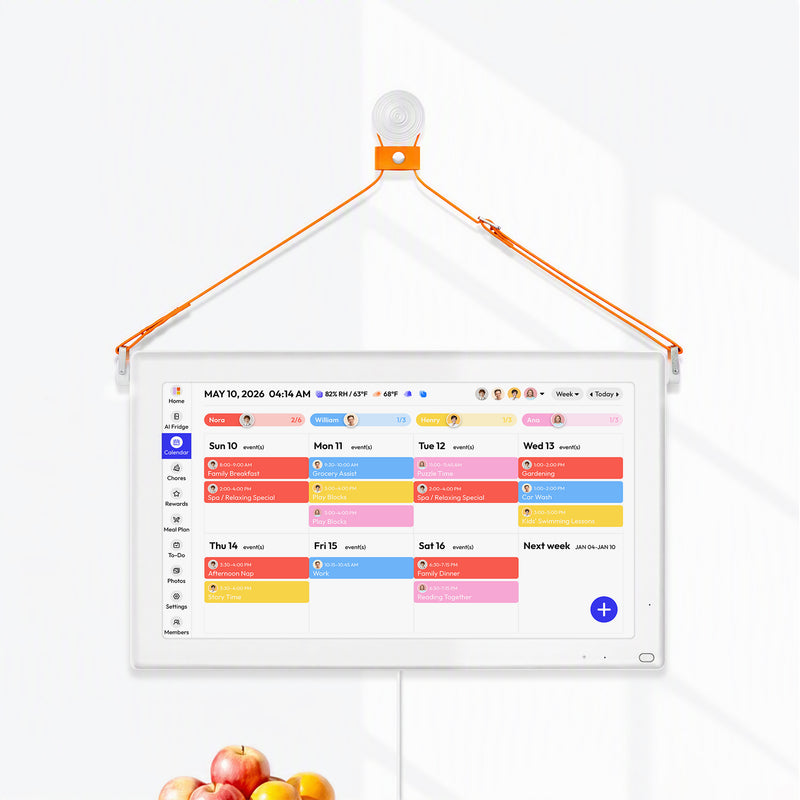
A family planner works best when it’s visible, shared, and simple enough that everyone can use it. That’s where a digital planner tablet can help. Used well, it becomes the household version of a whiteboard, calendar, checklist, and message center in one place.
What Is a Digital Planner Tablet and Why Is Everyone Talking About It
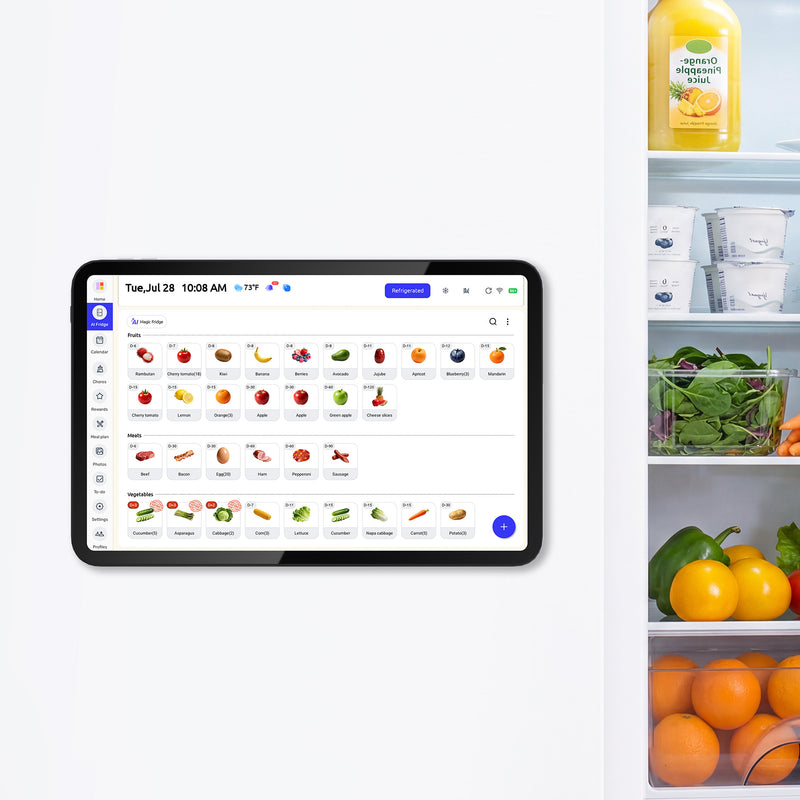
A digital planner tablet is a tablet or wall-mounted digital display used to organize schedules, tasks, notes, and routines in one shared place. Some families use a portable tablet with a stylus. Others prefer a dedicated display in the kitchen, hallway, or family room.
The important part isn’t the gadget itself. It’s the job it does.
A paper planner holds information. A family digital planner tablet helps everyone see, update, and share that information without passing around a notebook or asking, “Wait, what time is pickup?”

What it usually includes
Most family setups combine a few core functions:
- Shared calendar view so appointments, practices, school events, and work blocks live together
- Task lists for chores, errands, and one-time reminders
- Meal planning space so dinner stops being a daily surprise
- Notes area for school items, packing reminders, and weekend plans
- Sync tools so updates made by one person appear for everyone else
That last point matters most. If a planner only works for one person, it’s a personal productivity tool. Families need something closer to a household command center.
Why people are paying attention now
This isn’t a tiny niche anymore. The global Digital Planners market was valued at $2,549.73 million in 2021 and is projected to reach $7,047.01 million by 2033, growing at a CAGR of 8.841%, according to Cognitive Market Research’s digital planners market report.
That growth tells us something practical. More households are moving away from scattered paper systems and toward digital planning tools that can handle real life in motion.
Practical rule: If your family calendar only works when one person checks it, it isn’t really a family system.
What confuses people at first
Many parents hear “digital planner” and picture a student writing in GoodNotes on an iPad. That’s one version. But for families, the better question is different.
Don’t ask, “What app do I want?”
Ask, “Where will my family look?”
For some homes, the answer is a kitchen display. For others, it’s a tablet near the entryway. The right digital planner tablet is the one that turns “I forgot” into “I saw it this morning.”
Why Your Family Needs a Central Digital Hub
Most planning advice is built for one person. A student managing assignments. A professional managing meetings. A designer managing projects.
Families don’t work like that.
A family schedule changes constantly, and no one person should have to carry all of it. When one parent becomes the default keeper of dates, forms, rides, meals, and chores, the system looks functional from the outside but feels exhausting on the inside.
The problem isn’t planning. It’s visibility
A lot of families already use calendars. The issue is that the calendar often lives in the wrong place.
Phone apps are private by default. Paper calendars are public but harder to update. Group texts are fast but messy. Sticky notes are visible but unreliable.
A central digital hub solves a different problem than a personal app. It creates one shared source of truth.
That matters because family coordination breaks down in small ways:
- One child checks a paper note too late
- One parent updates a phone calendar that nobody else sees
- A co-parent remembers the event but not the equipment
- A chore gets assigned verbally and vanishes by dinner
A visible shared system reduces those little breakdowns.
Families are looking for this, even if most articles miss it
A 2025 Pew Research survey found 68% of U.S. parents struggle with family scheduling. The same research roundup notes that Google Trends data shows “family digital calendar tablet” searches are up 42% in the last year, while 75% of top articles focus on personal productivity instead of shared household needs. Those figures appear in this analysis of digital planner tablets for families.
That gap is easy to spot once you notice it. Search results talk about handwriting feel, note-taking apps, and solo workflows. Parents need help with carpool timing, meal planning, and chore follow-through.
What a shared hub changes at home
A central family hub doesn’t just store information. It changes who participates.
When the weekly plan sits in a visible place, kids can check what’s next without asking. Partners can spot conflicts early. Caregivers can add notes in the moment. Everyone has fewer reasons to depend on one person’s memory.
It's like the family refrigerator door, just smarter and less cluttered.
A strong home system doesn’t make one parent more efficient. It makes the workload more visible to everyone.
Signs your family would benefit from one
You probably need a shared digital planner setup if any of these sound familiar:
- You repeat the same reminders every day
- Your paper calendar is accurate, but nobody checks it
- Your phone calendar is accurate, but it’s invisible to the rest of the house
- Chores feel random and depend on nagging
- Meal planning happens too late to be helpful
- You manage details in your head because there’s no better place to put them
A family hub works best when it lives where life happens. Kitchen. Hallway. Mudroom. Homework zone. That’s why many parents start by studying examples of a digital family command center instead of looking only at standard personal tablets.
Digital Planner Tablet vs Paper Planners and Phone Apps
Families usually try one of three systems first. A paper wall calendar, individual phone apps, or a shared digital planner tablet.
All three can work. But they solve different problems.
Paper is simple and visible. Phones are flexible and portable. A digital planner tablet sits in the middle. It keeps the visibility of a household calendar while adding the update speed people like on their phones.

Family Organization System Comparison
| Feature | Digital Planner Tablet | Paper Wall Calendar | Individual Phone Apps |
|---|---|---|---|
| At-a-glance visibility | Easy for the household to see in one place | Strong visibility if hung in a central spot | Weak for group visibility because each person sees only their own screen |
| Editing and updates | Fast changes without crossed-out boxes | Manual erasing or rewriting | Fast edits, but often hidden from the rest of the family |
| Sharing | Built for shared viewing and collaborative use | Shared only when people stand in front of it | Depends on app setup and whether everyone accepts invites |
| Chores and routines | Can combine tasks, checklists, and daily structure | Possible, but usually separate from the calendar | Often split across multiple apps |
| Meal planning | Can live beside the calendar and shopping notes | Usually added in a small corner or separate sheet | Often disconnected from schedule context |
| Kid usability | Visual and concrete when placed in a common area | Very easy to understand | Harder for younger kids if they don’t have phones |
| Reminder style | Shared visual cues, often with optional notifications | Requires manual checking | Strong reminders, but can feel noisy or easy to ignore |
| Mess level | Clean updates | Can get cluttered over time | Digitally tidy, but mentally scattered across devices |
| Best fit | Families needing one shared planning home | Families wanting a low-tech visible system | Individuals or older teens managing their own schedules |
Where paper still wins
Paper has real strengths. It’s familiar. No one needs a login. Grandparents, babysitters, and young kids can understand it instantly.
But paper struggles when your week changes often. Reschedules, canceled practices, rotating work shifts, and co-parent updates can turn a clean board into a scribbled history of what used to be true.
If your life is steady, paper may be enough. If your calendar shifts often, paper starts to feel fragile.
Where phone apps fall short for families
Phone apps are excellent personal tools. They’re not always strong household tools.
The biggest issue is invisibility. If the system lives on a private screen, the rest of the house can’t casually absorb it. Children don’t glance at your phone on the way to breakfast. A partner doesn’t notice a calendar conflict while packing lunches unless they actively open the same app.
Phone systems also tend to sprawl. Calendar in one app. Grocery list in another. School message in email. Chores in your memory.
Phones are good at storing information. Family hubs are better at displaying it.
Why the shared screen often wins
A digital planner tablet creates a middle ground many families need:
- It’s visible like paper
- It updates quickly like an app
- It invites shared responsibility
- It can hold more than dates
That last point matters. Family organization isn’t only about time. It’s also about tasks, routines, food, expectations, and follow-through.
A good digital hub lets your family work from one board instead of six separate channels. That doesn’t remove effort. It removes friction.
Key Features Every Family Digital Planner Tablet Should Have
A family device doesn’t need every possible feature. It needs the right ones.
Many shoppers get distracted by processor specs, entertainment extras, or sleek design. For family planning, the better checklist is simple: Can everyone read it, update it, and trust it?

Start with the screen
If the screen is too small, the planner becomes another private device. Families need enough space to scan the day without squinting.
Look for these basics:
- Easy visibility from a short distance so someone walking through the kitchen can read the day
- Anti-glare finish so overhead lights and windows don’t wash out the display
- A layout that shows more than one item at once because families rarely need just one appointment
An anti-glare screen matters more than many buyers expect. In a bright kitchen, glare turns a useful hub into a screen everyone ignores.
The pen should feel natural, not fussy
Some households like typing. Others still think better when they write things down by hand. If you want handwriting support, stylus quality matters.
According to Lenovo’s guide to digital planner tablets with pen support, advanced styluses with 4,096+ pressure levels and tilt recognition mimic natural writing, and efficient palm rejection can improve workflow efficiency by 25-30% in user benchmarks during extended planning sessions. The same guide notes that anti-glare screens and 8-12 hours of battery life are important for central planning use.
If those terms sound technical, here’s the simple version:
- Pressure levels help handwriting feel smoother
- Tilt recognition makes the pen behave more like a real pen or pencil
- Palm rejection lets your hand rest on the screen without making accidental marks
For parents, that means less frustration when writing a quick list. For kids, it means the tablet feels less like a precision tool and more like paper.
Sync should be quiet and reliable
A family planner isn’t helpful if everyone has to re-enter the same event manually. Look for calendar syncing that works in the background and stays easy to manage.
Useful syncing features include:
- Multiple calendar account support
- Shared updates across caregivers
- A way to separate school, work, activities, and home items visually
- Simple import from existing calendar tools
If your family already lives in Google Calendar, it helps to review how a digital planner that syncs with Google Calendar fits into a daily household workflow before choosing hardware.
Chores, meals, and lists should live near the calendar
Many generic tablets often fall short. A family doesn’t just need a blank note-taking app. It needs planning tools that match household life.
Look for a setup that supports:
- Chore assignment and completion tracking
- Reward or motivation tools for kids
- Meal planning tied to the week
- A grocery list everyone can add to
- Recurring routines for school nights, mornings, or weekends
One example is Everblog, a 21.5-inch digital family wall calendar that brings schedules, chores, meals, notes, and media into one shared display. It includes voice entry, a Chore Manager, a Rewards Tracker, a Meal Planner, and a collaborative Grocery List, with no subscription required.
That doesn’t mean every family needs a wall-mounted model. It does show the difference between a household hub and a standard personal tablet.
Input options matter more than people think
Not everyone in your home will want to enter information the same way.
One parent may type. Another may use voice. A child may tap checkboxes. A caregiver may prefer writing directly on the screen.
That mix is healthy. The best family system reduces barriers instead of forcing one method on everyone.
Here’s a useful example of how planning interfaces can feel in daily use:
A simple checklist before you buy
Ask these questions before picking a digital planner tablet:
- Can everyone see it easily where it will live?
- Can at least two adults update it without friction?
- Does it handle more than appointments?
- Will kids understand how to use it?
- Does it support handwriting, touch, or voice in ways your family will use?
- Will it stay on and available when your day gets busy?
Buy for household behavior, not for impressive specs. The right device is the one your family will keep checking.
Setting Up Your Digital Planner for Daily Family Life
A digital planner tablet works best when it becomes part of the rhythm of the house. Not a side project. Not a weekend organizing fantasy. Just a thing your family checks and uses.
The easiest setup is to anchor it to moments that already happen every day.

The morning rush
Breakfast is usually when the day either settles or spirals.
A good family planner setup shows only what matters first:
- today’s appointments
- pickup or drop-off changes
- after-school activities
- one or two must-do reminders
Keep the morning screen clean. If everything is visible, nothing stands out.
A practical flow might look like this:
- One parent checks the schedule while coffee is brewing.
- Kids glance at their activities before getting shoes on.
- A late change gets added right away, instead of sitting in a text thread.
- Everyone leaves with the same version of the day.
That’s where a wall-style digital wall planner can be especially useful. It turns the plan into something people absorb naturally while moving through the house.
After school and chore time
At this point, many systems fail. Parents often know what needs doing, but kids don’t see it clearly until they’re being reminded for the third time.
A digital planner tablet can make chores visible without turning the whole evening into a lecture.
Try this setup:
- Assign recurring chores for each child
- Keep expectations short and specific
- Use a check-off system instead of verbal confirmation
- Add occasional one-time tasks like library books, sports gear, or pet care
One child may have “empty lunchbox, put shoes away, feed dog.” Another may have “practice instrument, set out clothes, clear table.”
The power is in the routine. When the task appears in the same place every day, kids stop depending only on reminders from you.
A shared screen can turn chores from a parent-child argument into a simple visual agreement.
Weekly meal planning
Meal planning sounds separate from scheduling, but it isn’t. Dinner affects bedtime, shopping, practice pickups, and who needs to start cooking early.
A digital family hub helps when meals are placed next to the week, not hidden in a notebook.
A simple weekly method works well:
- Choose meals while looking at the family calendar
- Put faster meals on busier days
- Add ingredients to the grocery list during planning
- Let older kids suggest one meal each week
- Keep one backup dinner option visible
That last step saves many evenings. A backup meal reduces the stress of unexpected schedule shifts.
A setup that sticks
The best system is usually the one with the fewest decisions.
Keep your planner simple at first:
- One main calendar view
- One chore area
- One meal section
- One shared notes space
Don’t build a complicated dashboard on day one. Families rarely need more structure. They need more consistency.
If a feature doesn’t help your household act on information, leave it out. Calm comes from clarity, not from adding every option.
Making the Switch to a Calmer More Organized Home
A digital planner tablet isn’t really about technology. It’s about reducing the number of things one tired adult has to remember alone.
That’s why this shift feels different from buying a normal device. You’re not adding another app to manage. You’re creating a place where family information can live in the open.
What changes first
Most families notice a few early wins:
- Fewer repeated reminders
- Less confusion about who is going where
- Clearer chore expectations
- More realistic meal planning
- Better handoff between caregivers
Those changes may sound small, but they reduce friction all day long.
What matters most over time
The deeper benefit is shared awareness.
When a child can see soccer practice, homework, and chores in one place, they start participating instead of waiting for instructions. When partners can both spot a conflict early, the mental load stops piling onto one person. When a caregiver adds a note right away, the household keeps moving without a long catch-up conversation later.
That’s what calm often looks like at home. Not perfection. Just fewer surprises and fewer preventable mix-ups.
How to make the switch without burnout
Keep the transition light.
Start with only three categories:
- Calendar
- Chores
- Meals
Use those daily for a couple of weeks. Add extras only if your family needs them. A planner should remove decisions, not create a new hobby.
The goal isn’t a prettier system. The goal is a home where fewer things fall through the cracks.
If your current setup feels scattered, a shared digital planner tablet can give your household one reliable place to land.
Answering Your Questions About Digital Planner Tablets
Parents usually have a few practical hesitations before making the switch. Those concerns are reasonable. A family system only works if it feels usable and trustworthy.
Do I need a special tablet, or can I use a regular one?
You can use a regular tablet if it supports the kind of planning setup your family needs. Some families start with a standard tablet and planning app. Others want a dedicated wall display that stays visible all day.
The key question isn’t whether the device is special. It’s whether the device is shared enough to change family behavior.
If the tablet keeps disappearing into a backpack or bedroom, it won’t function as a household hub for long.
Will my kids actually use it?
Usually, yes, if the expectations are simple.
Children respond better to a planner when it answers concrete questions:
- What’s happening today?
- What do I need to do before screen time?
- What should I bring?
- What happens after school?
Younger kids often engage well with visual checklists and repeated placement. Older kids usually respond when the planner helps them avoid last-minute surprises.
The common mistake is adding too much too fast. Start with daily visibility, not a fully customized family operating system.
Is handwriting really useful, or is typing enough?
Typing is enough for many households. Handwriting is helpful when people think better by writing or want a more paper-like experience.
A stylus can also make quick edits feel easier, especially for parents who already use paper lists. If your family likes writing directly onto schedules, the pen experience matters. If everyone prefers tapping and voice entry, it matters less.
What about subscriptions?
This depends on the device and software. Some setups require ongoing app subscriptions. Others are a one-time hardware purchase with built-in planning tools.
Before you buy, check:
- Whether core features are included
- Whether syncing costs extra
- Whether chore or meal modules are locked behind a plan
- Whether software updates are included
Families usually prefer fewer moving parts here. Ongoing fees can make a simple planning system feel heavier than it needs to.
Is it hard for non-techy adults to learn?
It shouldn’t be.
A good family planner interface should feel closer to checking a wall calendar than learning a new productivity platform. If an adult in the home needs a long tutorial just to add a school event, the setup is too complicated.
Look for large buttons, clear categories, and views that make sense at a glance.
What about privacy?
This is one of the smartest questions to ask.
A family planner may contain names, school events, routines, and household details. Before using any device or app, review its privacy and account settings carefully.
Pay attention to:
- Who can access the account
- Whether each caregiver has separate login control
- How shared data is synced
- Whether the device stays in the home or travels
- What happens if a device is lost or replaced
For many families, a home-based planning display feels more comfortable than managing everything across multiple personal phones and scattered apps. But privacy still depends on the product and how you configure it.
What if my family already has a system that sort of works?
Then don’t replace everything at once.
Keep what’s working. Move only the parts that cause the most friction. Often that means shifting the calendar and chores first, then adding meals or notes later.
A digital planner tablet works best when it supports your real household habits, not when it asks your family to become different people overnight.
If your family needs one visible place for schedules, chores, meals, and daily notes, take a look at Everblog. It’s designed as a shared household hub rather than a personal planner, which makes it a practical option for parents who want less mental clutter and more day-to-day clarity.


