





Let's be honest, family life can feel like pure chaos. Between school runs, soccer practice, doctor's appointments, and the never-ending question of "what's for dinner?", keeping everyone on the same page is a full-time job.
This is where a digital family command center comes in. Think of it less as a gadget and more as an air traffic control tower for your home. It’s a central hub that brings all the moving pieces of your family's life together, ensuring everything runs smoothly and without collisions.
What Is A Digital Family Command Center Anyway?
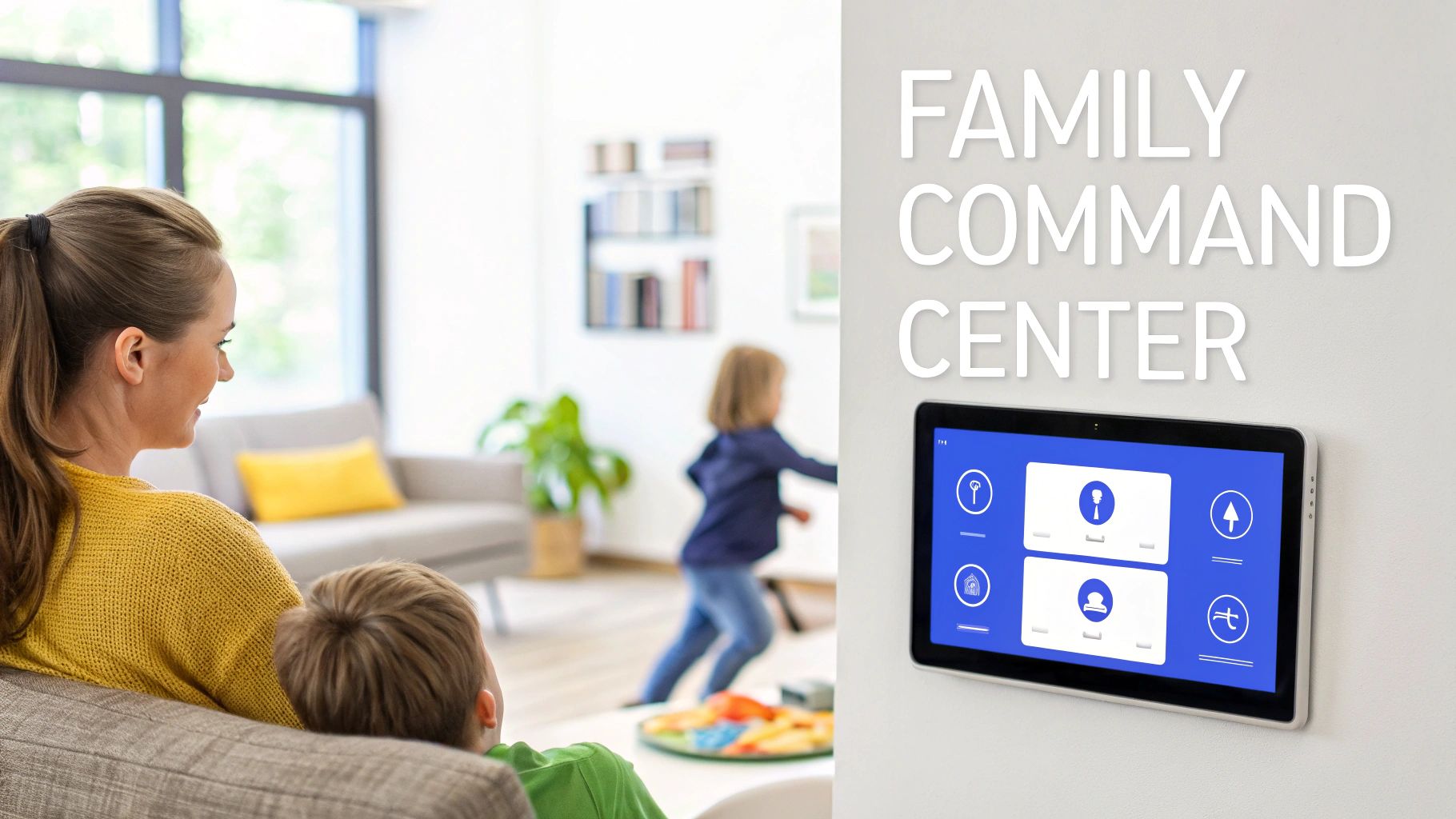
It’s time to say goodbye to the cluttered whiteboard covered in old messages, the flurry of sticky notes that lose their stick, and the constant group texts just to figure out who's picking up the kids. A digital family command center takes all that crucial information and puts it onto a single, easy-to-read screen for everyone to see.
This isn't about adding another screen to your life. It's about solving the real, everyday headaches that drain your energy. It’s designed to end the double-booked appointments, clarify who's on trash duty this week, and finally provide a single source of truth for the entire family. The result? A whole lot less stress and mental clutter.
The Core Components
So, what actually makes a digital command center tick? It’s really a combination of a few key tools working in harmony to bring order to your home. When you see how they fit together, the benefits become crystal clear.
Here's a quick look at the essential building blocks that make up an effective system.
Core Components of a Digital Family Command Center
| Component | What It Is | Examples |
|---|---|---|
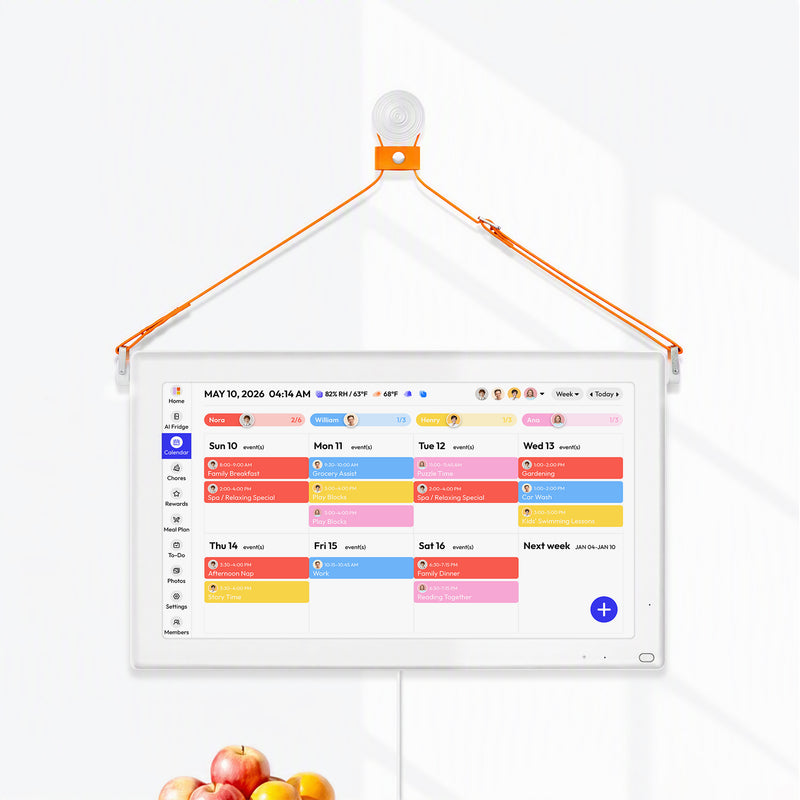
| Centralized Calendar | A shared calendar that syncs everyone's schedules, often color-coded, so you can see all events in one view. | Google Calendar, iCal, Outlook Calendar |
| Task & Chore Management | A digital to-do list where you can assign, track, and mark household chores and responsibilities as complete. | Digital chore charts, shared task lists |
| Meal Planning & Grocery Lists | A tool for planning weekly meals and automatically creating a shopping list that everyone can access and add to. | Recipe planners, shared grocery apps |
| Information Hub | A digital bulletin board for important notes, reminders, contact numbers, or even a rotating display of family photos. | Digital sticky notes, photo widgets |
Each of these pieces plays a vital role in transforming family management from a constant scramble into a calm, coordinated effort.
The whole idea is borrowed from professional operations rooms that manage massive amounts of information. It's no surprise that families using these systems report 25% better time management. In fact, when the pandemic hit in 2020, downloads for family organizer apps shot up by a staggering 300% as families desperately sought better ways to manage life at home.
For a great example of this principle in action, look at something like Apple Family Sharing, which pulls together calendars, purchases, and locations. A dedicated command center, like Everblog, takes that powerful concept and makes it a visible, always-on part of the home—fostering true teamwork and connection.
The Core Features That Actually Make a Difference
A good digital family command center is so much more than a fancy calendar stuck to your wall. Sure, seeing everyone's schedule is a start, but the real magic kicks in when a few key features work together. That's when a simple display transforms into your home's mission control, saving you time and sparing you from those daily logistical nightmares.
Think of an integrated calendar as the air traffic controller for your family. No more showing up to the parent-teacher conference only to remember your partner took the only car to a dentist appointment across town. Everyone’s schedule—from soccer practice to work meetings—is laid out in one place, making conflicts obvious at a glance.
Centralized Task and Chore Management
Beyond just knowing where everyone is supposed to be, a command center brings clarity to who is supposed to be doing what. Shared to-do lists and chore charts take household duties from a source of constant nagging and turn them into a team effort.
When you can assign tasks like "take out the recycling" or "walk the dog" with clear due dates, you build accountability for everyone. Kids can visually see their responsibilities and get that little rush of satisfaction from checking them off, which helps build independence. This system is also perfect for managing all those little recurring tasks that keep a home running. To really automate this, you can even pair your command center with one of the best recurring task apps to handle reminders for chores and bill payments.
And if you need some inspiration to get the kids on board, check out our guide on creative chore chart ideas for kids.
Dynamic Meal Planning and Grocery Lists
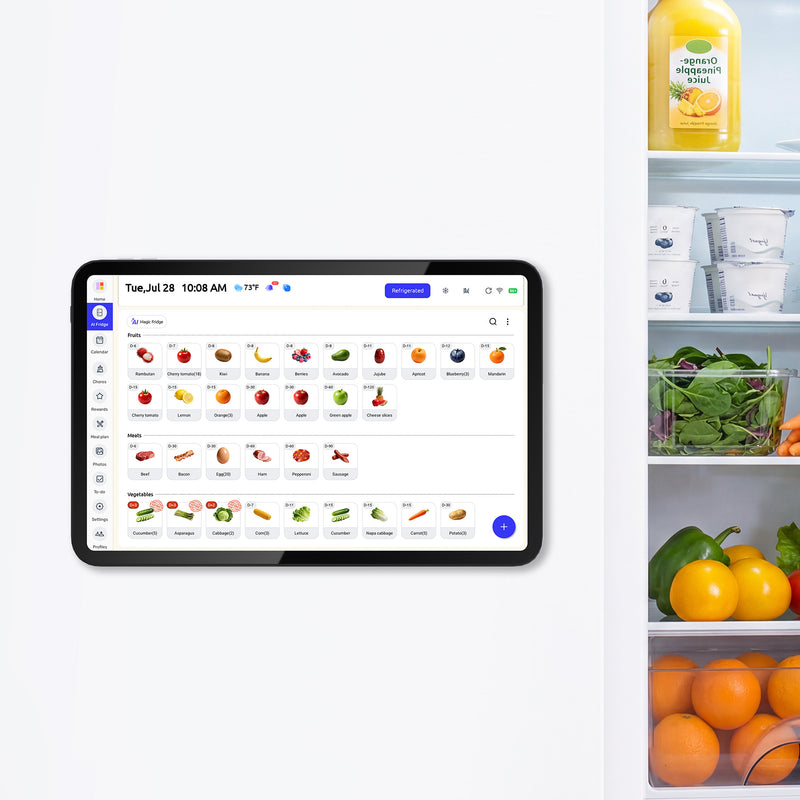
That dreaded daily question, "What's for dinner?" can finally be put to rest. A great digital command center tackles this head-on with integrated meal planning tools. You can map out your meals for the entire week, and as you add recipes, a smart grocery list automatically builds itself.
This single feature is a game-changer for a few big reasons:
- Time Savings: It puts an end to those frantic, last-minute trips to the store.
- Budget Control: It helps you stick to a plan, which cuts down on impulse buys and food waste.
- Teamwork: Anyone in the family can add items to the shared list in real-time. No more coming home with a third bottle of ketchup because nobody knew you already had two.
Digital family command centers are quickly becoming the standard for household organization, much like operations centers are for businesses. The data backs it up: families using these hubs cut down on missed appointments by 40%, often by integrating with tools like Google Calendar and Alexa. In smart homes, they can even lead to IoT energy savings of 15-20%. You can dig into more of these command center market trends to see where things are headed.
How to Build Your Own Command Center From Scratch
Ready to turn all this theory into action? Building your own digital command center isn’t some crazy tech project. It’s about making a few smart, simple choices to create a system that actually fits your family’s life. You can start small and build up, transforming that chaotic corner of your home into a hub of calm.
The first step is picking your hardware. Don't worry, this doesn't have to be a major investment. While a dedicated, wall-mounted display like Everblog gives you that seamless, always-on experience, you probably already have a device that can do the job.
- Repurpose an Old Tablet: That iPad or Android tablet collecting dust in a drawer? It’s a perfect candidate.
- Use a Smart Display: Got a Google Nest Hub or Amazon Echo Show? These can make excellent, interactive command centers.
- A Dedicated Monitor: A cheap monitor connected to a small computer can create a large, customized display for everyone to see.
Once you've picked your screen, it's time to choose the software that will bring it to life. This is the "brain" of your whole operation. You could try to piece together multiple apps, but an all-in-one solution creates a much more cohesive experience. It stops you from having to jump between different platforms for your calendar, chores, and meal plans. This is where an integrated system really shines, pulling everything into one clear view.
Your Initial Setup Checklist
Getting started should feel empowering, not overwhelming. The secret is to begin with the absolute essentials and build out from there. Focus on the core functions that will make the biggest difference in your family’s daily rhythm right away.
This flow shows how the foundational pieces of a command center work together.
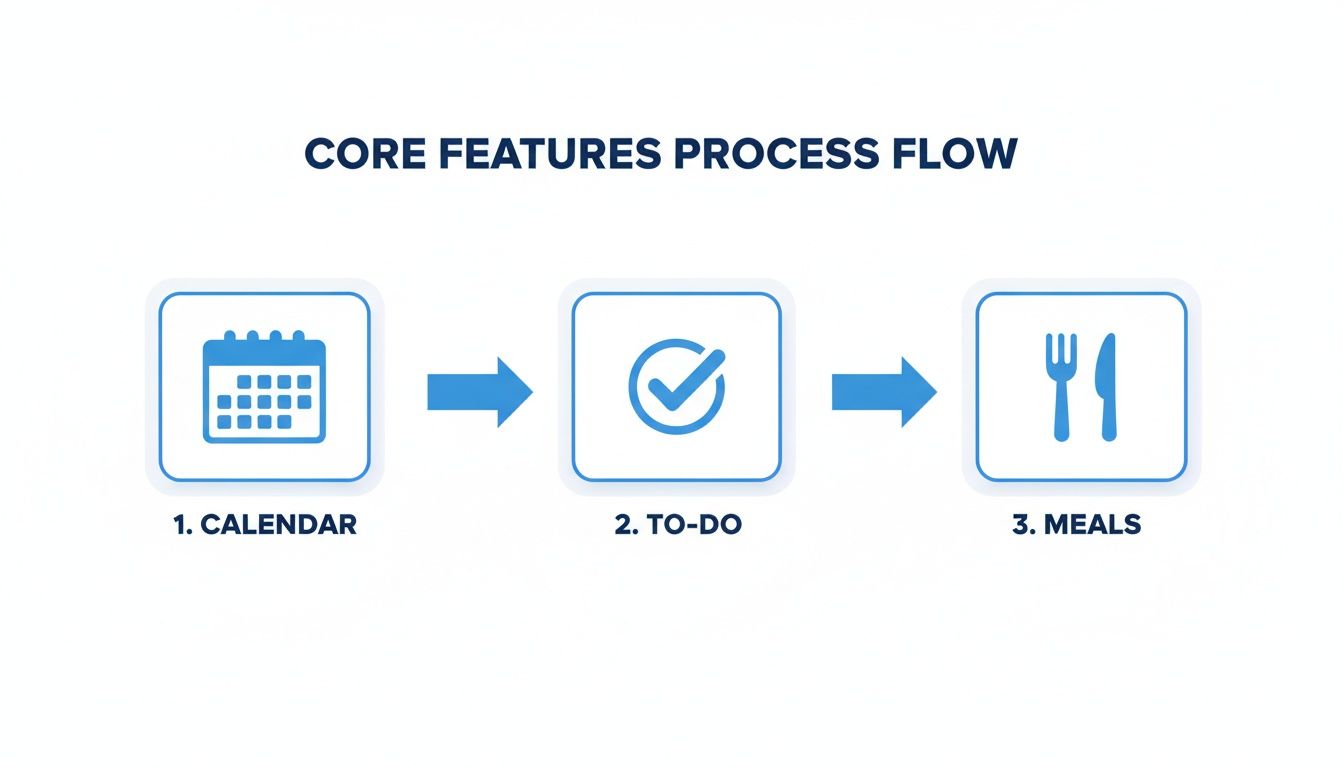
You can see how integrating calendars, to-do lists, and meal plans creates a powerful, interconnected system for managing family life.
Follow these steps to lay a solid foundation:
- Create Family Profiles: Set up an account for each family member. This is key for personalized views, color-coded calendars, and assigning tasks to specific people.
- Sync Your Primary Calendar: Connect the calendar you already live by (like Google Calendar or iCal). This instantly pulls in your existing appointments and makes the transition feel natural.
- Input Core Routines: Add the recurring events that anchor your week—think sports practices, music lessons, or that weekly family pizza night.
- Establish an Initial Chore List: Start with just a few key household tasks. Assign them to different family members to introduce the idea of shared accountability from day one.
The most successful command centers are the ones that grow with the family. Don't try to implement every single feature on the first day. Start simple, get everyone comfortable using the basic tools, and then gradually introduce more as your family gets into the groove.
By focusing on these first few steps, you create a functional hub that immediately starts cutting down on confusion and boosting communication. For more creative inspiration on what your setup could look like, check out these brilliant family command center ideas to spark your imagination.
Going Beyond Schedules with Advanced Integrations
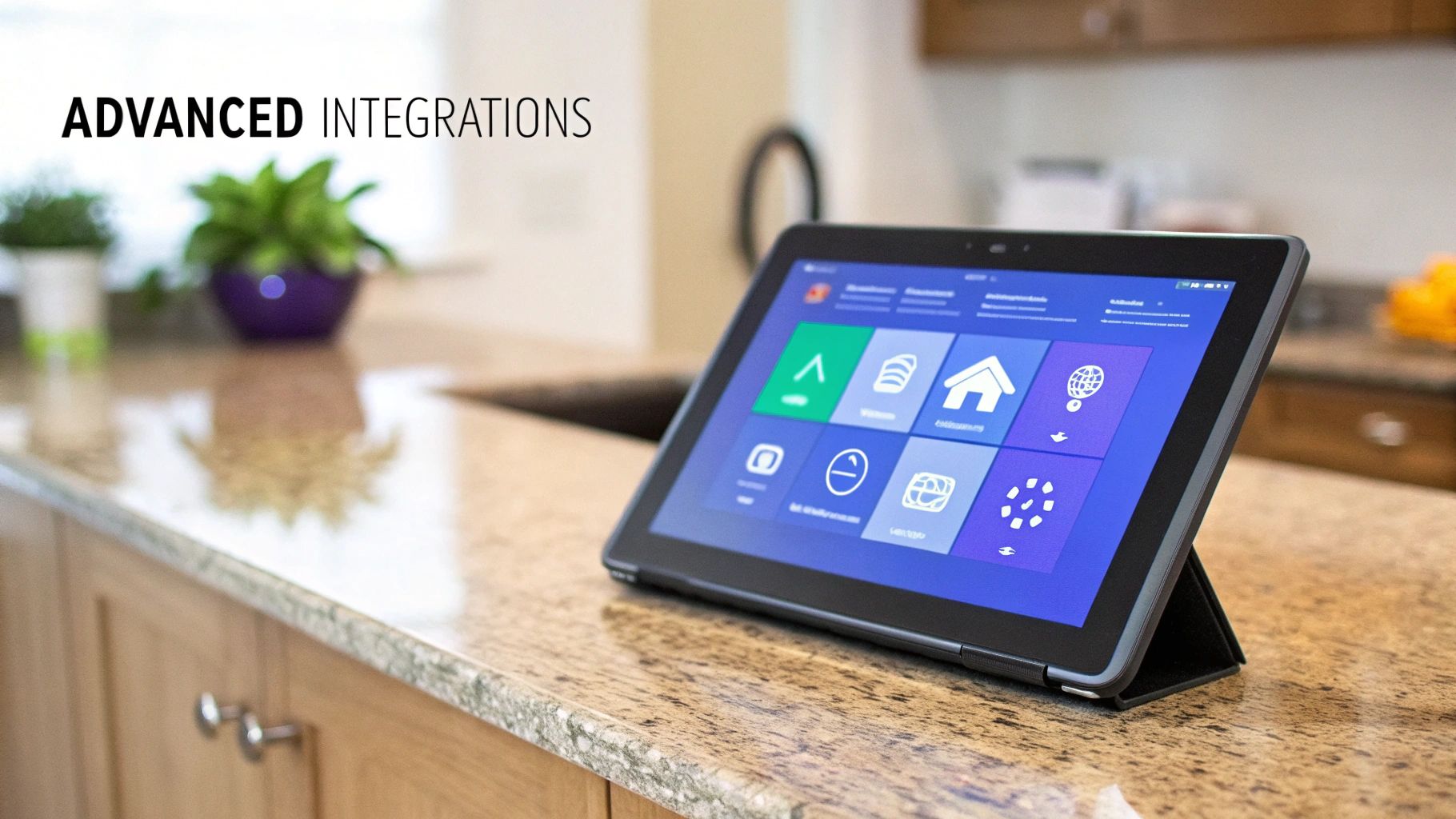
Once your family gets into a rhythm with shared calendars and to-do lists, you'll start to see just how powerful a central hub can be. But that's just scratching the surface. The real magic happens when your digital family command center integrates the deeper, more complex parts of your home life. It stops being a simple organizer and evolves into a true dashboard for your family’s well-being.
Think about turning your command center into a health and wellness hub. This is a game-changer for families managing medication schedules, chronic conditions, or caring for aging parents. You can centralize medical contacts, track prescription refills, and log symptoms—creating a single source of truth that’s easy to find, whether in a calm moment or a sudden emergency.
Your Smart Home Mission Control
Your command center can also become the brain of your smart home. Instead of juggling a dozen different apps on your phone, you can pull all the controls for your home's key functions into one intuitive interface. This adds a whole new layer of convenience and security to your daily routines.
With the right integrations, your central screen can show you:
- Live security camera feeds from the front door or backyard.
- Smart lock status, so you can check if the doors are locked with a single glance.
- Thermostat controls to adjust the temperature for the whole house.
- Smart lighting scenes to set the mood for dinner or movie night.
This consolidation turns your command center from a planning tool into an active management system for your home. You're in direct control, simplifying what used to be a mess of complex systems into a single, user-friendly dashboard the whole family can understand.
This idea of managing home health is actually inspired by professional healthcare command centers. By 2023, there were over 1 billion active fitness trackers globally, and a lot of that data is now feeding into family wellness dashboards. On top of that, an estimated 65% of households with seniors in the US and Europe use similar systems, which have been shown to reduce hospital visits by up to 30%. You can discover more insights on the growth of healthcare command centers and see how this trend is shaping home life.
Managing Family Finances Visually
Another incredibly powerful use is financial oversight. When you connect your digital family command center to budgeting apps, you get a clear, visual snapshot of your household’s financial health. It pulls money management out of confusing spreadsheets and puts it into a shared, transparent space.
For example, maybe your family is saving for a big vacation. The command center can display a progress bar showing how close you are, which gets everyone excited and motivated. It can also show spending breakdowns by category, flash reminders for upcoming bills, or track allowance for the kids—teaching them valuable money lessons in a practical, everyday way. When finances are visible, it sparks open conversations and creates shared accountability.
How to Choose the Right Tools for Your Family
Picking out the hardware and software for your digital family command center might seem like a huge job, but it doesn't have to be. The real secret is to zero in on what your family actually needs, not just the shiniest new features. The best system is always the one that everyone—from the most tech-comfortable parent to the youngest kid—can use without a second thought.
You’re aiming for a central hub that just fits into your daily life. Think about how it will work with the tools you already use every day, like your Google or Apple calendars. A platform that plays nicely with others saves you from the headache of starting your entire digital life from scratch. The right choice should bring all your schedules together, not make things more complicated.
Key Factors for Your Decision
When you start comparing options, customization is king. Every family runs differently. You need a system that lets you put what's most important front and center, whether that’s a detailed chore chart for the kids, a visual meal plan for the week, or a special spot to show off your favorite family photos.
Another non-negotiable? Accessibility across all your devices. While that big, beautiful wall display is the heart of the command center, the magic really happens when everyone can add events or check off tasks from their own phone. That's what keeps the whole system in sync and genuinely useful.
The most important thing about creating a family command center isn’t just about what it looks like but rather ensuring that you actually use it. If the system is too complex, it will quickly become an expensive wall decoration instead of a functional tool for your home.
To help you sort through the options, it's useful to weigh them against a few core criteria. This simple matrix can guide you toward a system that your family will not only use but love.
Decision Matrix for Your Command Center Software
| Consideration | Why It Matters | What to Look For |
|---|---|---|
| Ease of Use | If it's not simple, your family won't use it. | An intuitive interface, clear icons, and easy navigation for all ages. |
| Integration | It must work with your existing digital life. | Syncing with Google, Apple, or Outlook calendars. |
| Customization | It needs to adapt to your family's unique needs. | Flexible widgets, layout options, and personalized profiles. |
| Accessibility | The system must be usable from anywhere. | Companion mobile apps for iOS and Android. |
Ultimately, choosing an all-in-one platform like Everblog is the simplest way to get a future-proof experience. It cuts out the hassle of juggling different apps and subscriptions, guaranteeing that every feature works together perfectly right out of the box. You can see it in action and learn more about how the Everblog calendar simplifies daily family scheduling on our blog. This unified approach is what truly transforms a random collection of apps into a powerful, cohesive digital family command center.
What Are the Real Benefits of a Connected Home?
Sure, saving time and easing that constant mental juggle are huge wins, but the real magic of a digital family command center goes way deeper. It's not just about managing schedules—it’s about fundamentally changing how your family operates for the better. This isn't just another piece of tech; it's a tool for building a more collaborative, connected, and genuinely peaceful home.
Think of it as a launchpad for independence. When your kids can see their chores and responsibilities laid out on a central screen, they start to learn accountability without you having to nag. Giving them that visual ownership helps them feel like they're a real part of the team, building confidence and a sense of belonging.
Stronger Connections and More Real Quality Time
For you and your partner, having that shared window into each other’s day can be a game-changer for communication. The command center smooths over the friction of daily logistics—no more back-and-forth texts about who’s on pickup duty or what's for dinner. It takes the guesswork out of the equation and builds a real sense of teamwork, which frees up so much mental and emotional space.
When the background noise of running the house finally fades, what’s left is more room for actual connection. A family command center is designed to catch all that daily clutter before it takes over your home and your relationships.
Ultimately, when you automate the tedious stuff and make expectations clear for everyone, you get time back. And it's not just about finding a few extra minutes here and there. It’s about creating more chances for the good stuff—the family movie nights, the spontaneous trips to the park, and the relaxed dinners that can finally happen when your home runs on clarity instead of chaos.
Ready to take back control and build a calmer, more connected family life? The first step is way easier than you might think. An integrated platform like Everblog pulls all these pieces together on one beautiful, simple display that helps your family not just manage, but truly thrive.
Here are a few common questions we hear from families who are curious about setting up a command center but have a few reservations. Let’s tackle them head-on.
Do I Need Expensive Hardware?
Not at all. While those big, dedicated wall screens look amazing, you can build a fantastic digital family command center with the tech you probably already own.
An old iPad collecting dust, a spare Amazon Fire tablet, or even a smart display like a Google Nest Hub can make a perfect central screen. The real magic is in the software, which ties everything together and is accessible from your phone anyway.
How Do I Get My Family to Actually Use It?
This is the big one. The trick is to get everyone involved from the very beginning and make it clear how this new hub solves a problem for them.
Let the kids help set it up. They can choose color themes or customize their own profiles, which gives them a sense of ownership.
The most successful command centers become the single source of truth for the family. If it's not on the calendar, it's not happening. That consistency is what builds the habit and gets everyone looking at it.
Start by populating it with information that makes their lives easier, like the soccer practice schedule or a running list of their favorite meals for dinner. Once they see the immediate benefit, they'll start using it without you even having to ask.
Is My Family's Data Secure?
That's a completely valid and important question. When you're picking your software, look for platforms that take data privacy seriously. Any reputable service will use strong encryption to keep your family’s information protected.
A good platform also gives you control, letting you decide who in the family can see or change certain information. It’s also a great moment to teach your kids about good digital habits, like using strong, unique passwords for their accounts.
Ready to create a calmer, more connected home? Everblog brings all these features together into one beautiful, easy-to-use display that your whole family will love. Learn more about Everblog today.


