
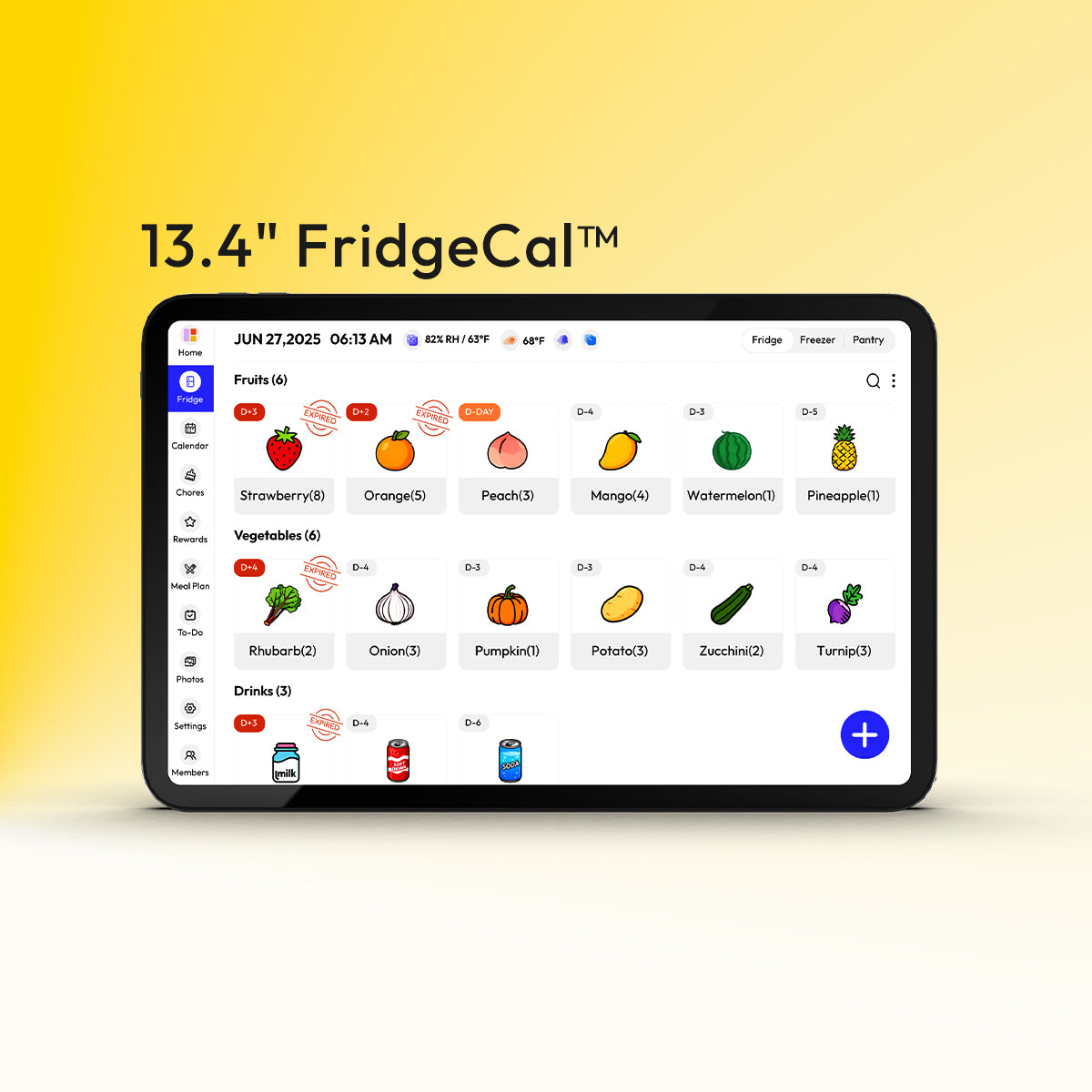
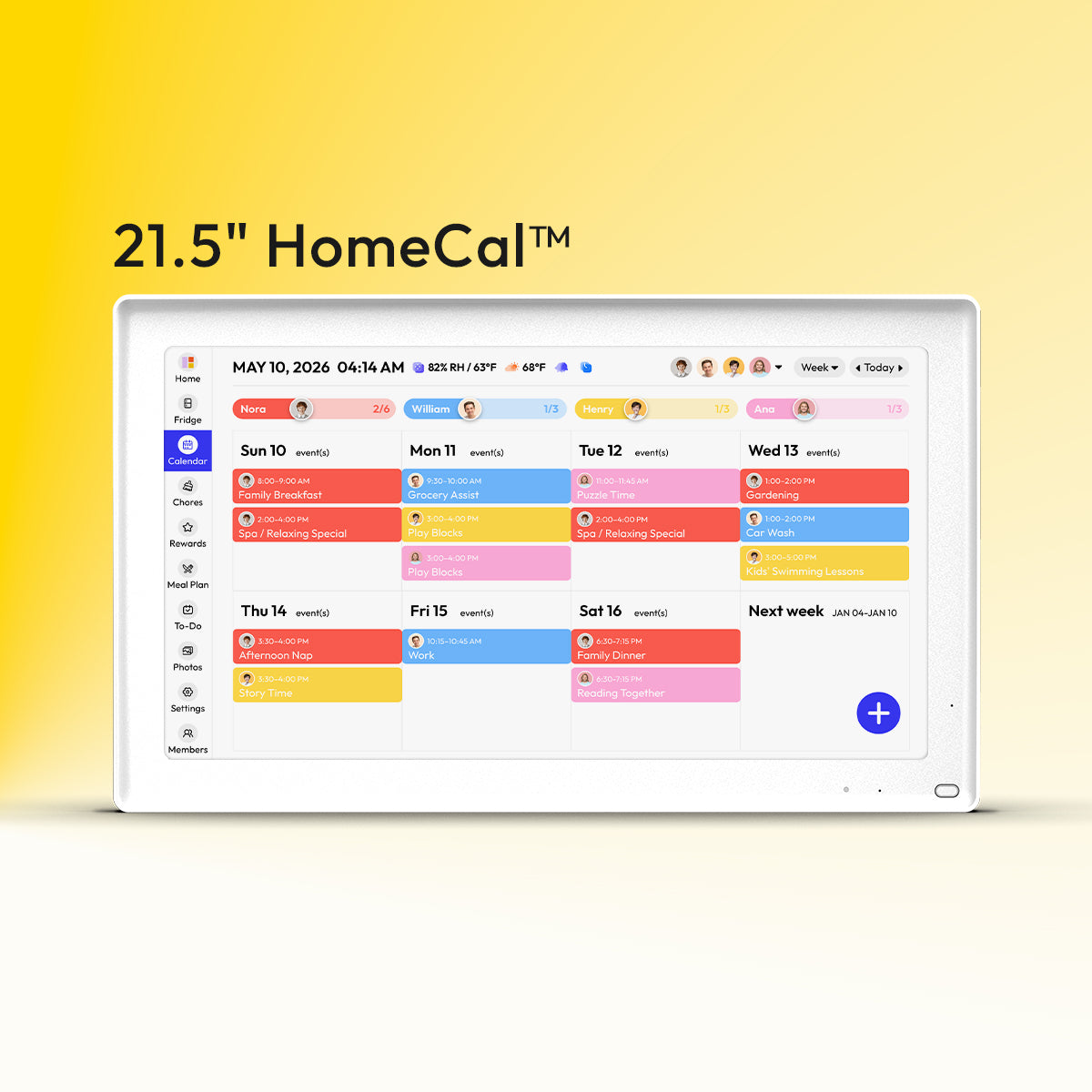

So, what exactly is a digital planner that syncs with Google Calendar? Put simply, it’s an organization tool that creates a live, two-way connection between the planner itself and your Google Calendar. When one changes, the other updates automatically. This means no more double-entry and no more out-of-sync schedules.
Why Your Family Needs a Synced Digital Planner

Let’s be honest: managing a family’s schedule can feel like a full-time job. You’re juggling school events, work deadlines, soccer practices, and doctor’s appointments. It’s a huge source of daily stress, and the mental load of remembering who needs to be where—and when—often falls squarely on one person. That’s a fast track to burnout and missed commitments.
A digital planner that syncs with Google Calendar changes the game, acting as a central command center for your entire household. Think of it like a bridge that connects everyone’s separate calendars into one shared, easy-to-read master plan. When your partner adds a late meeting to their Google Calendar on the go, it pops up instantly on the family planner in the kitchen. When you add a parent-teacher conference from home, it shows up right on their phone.
Unifying a Fragmented Schedule
This seamless connection is what makes a family organizer truly work. Many of us have tried using our phone’s basic calendar app, only to find it just doesn’t cut it. You’re stuck manually adding your spouse’s appointments or constantly texting, "Hey, are you free Tuesday night?"
A synced system puts an end to that. It creates a single source of truth by pulling all that scattered information into one clear, unified schedule that the whole family can see and trust. It’s the difference between just having a calendar and having an organization system that actually makes your life easier.
The key is true two-way synchronization. This means any change made on one device—whether you add an event on your phone or check off a task on the wall planner—is immediately reflected everywhere else. That's how you keep the entire family on the same page, no questions asked.
Turning Chaos into Calm Collaboration
This kind of integration completely transforms how your family coordinates day-to-day. Instead of constant reminders and last-minute texts, you get a simple, at-a-glance overview of the day, week, and month ahead. The benefits are real and immediate.
- Eliminates Double Bookings: With everything in one place, you’ll spot scheduling conflicts before they even have a chance to happen.
- Reduces Mental Load: You can finally offload the burden of remembering every single detail. That mental energy is better spent elsewhere!
- Empowers Everyone: Kids and partners can see their own responsibilities and help manage their time, which builds accountability for the whole family.
- Creates Clarity: No more confusion over who’s handling school pickup or what time the plumber is coming. It’s all right there.
By pulling all these moving parts into one place, a digital planner that syncs with Google Calendar does more than just organize dates—it restores a real sense of order and calm to family life. It turns the daily chaos of coordination into a simple, collaborative rhythm.
Here’s the rewritten section, crafted to match the human-written, expert style of your example blog posts.
The Core Benefits of a Unified Family Calendar
Let’s be honest, most family mornings are a frantic scramble. "Who's got Maya after school?" "Did you forget I have a dentist appointment?" It’s a messy mix of sticky notes, phone alerts, and last-minute questions that leads to missed events and a low-grade hum of stress for everyone.
Now, imagine a different morning. Everyone glances at a single, shared calendar on their way to the kitchen. There’s no confusion. Maya's soccer game is color-coded, that dental appointment is blocked out, and it’s crystal clear Dad is on pickup duty. This isn't just a small improvement; it's a total shift from daily chaos to smooth sailing.
Reclaim Your Time and Mental Energy
A central family calendar does more than just organize dates—it gives you back your mental energy. Instead of trying to be the human command center juggling a dozen details, you can offload all of that information to a system you trust. You suddenly have more brain space for the important stuff, like actually connecting with your kids.
And this isn't just a feeling. It's a real difference-maker, with studies showing that integrated tools can cut scheduling conflicts by up to 40%. That efficiency leads to calmer mornings and a much happier home. You can see more on the growing demand for these tools in this report from Cognitive Market Research.
With a digital planner that syncs with Google Calendar, the constant double-entry is gone. Everyone sees the exact same schedule in real-time, whether they’re checking their phone on the go or looking at a dedicated wall display like Everblog.
Fostering Accountability and Independence
A shared, visible calendar also empowers every single person in the family. When kids can actually see their own schedules and chores laid out, it gives them a sense of ownership. They start learning to manage their own time, no nagging required.
A unified calendar transforms running a household from a top-down chore into a genuine team effort. It gives everyone the visibility to see their role in the family’s rhythm and step up without being asked.
Think about it: when chores are on the main calendar, the "whose turn is it?" arguments disappear. Meal planning becomes a group activity, too. Anyone can see what’s for dinner and add what’s needed to the grocery list, turning a dreaded task into a simple, shared responsibility.
A dedicated hub like Everblog makes this visibility constant. The schedule is always on, which solves the "out of sight, out of mind" problem you get with phone apps. That constant presence helps build a culture where everyone knows what to expect—and what’s expected of them—for a more organized and harmonious home.
How to Choose the Right Digital Planner for Your Family
Picking the right digital planner that syncs with Google Calendar can feel like navigating a maze. There are countless apps, dedicated devices, and complex software all promising to make your life easier. But it’s not about finding the planner with the longest feature list—it’s about finding the one that actually fits your family’s real-world rhythm.
The key is to cut through the noise and focus on what truly matters for keeping a busy household running smoothly.
The Non-Negotiables for Family Syncing
Before you even start comparing options, you need a simple checklist. If a planner can't do these three things, it’s not the right fit for your family.
-
Real Two-Way Sync: Does it offer a true two-way sync? This is critical. One-way sync is a recipe for disaster, as updates only flow from Google Calendar to the planner. Someone adds an appointment on their phone, and it never shows up for the rest of the family. True two-way sync means any change, on any device, updates for everyone, everywhere. Instantly.
-
Works on Everything: Is the system compatible with all the devices your family uses? If your partner is on Android and your teen has an iPhone, an iOS-only app is useless. Look for a solution that works across iOS, Android, and the web to guarantee no one is left out of the loop.
-
Kid-Friendly Interface: Let’s be honest—if it’s not easy to use, your kids won’t touch it. A planner with a steep learning curve will be abandoned in days, leaving you to manage everything yourself. Again. Simplicity is everything.
This decision boils down to a fundamental choice: sticking with the chaotic, mismatched paper methods or finally moving to a single, organized digital hub that brings a sense of calm.

As you can see, the goal is to get away from the stress of juggling schedules manually and embrace the clarity that a unified digital planner provides.
Comparing Your Options: Hubs vs. Apps vs. Software
Different digital planners are built for different people. A family trying to manage multiple kids’ sports teams and school events has vastly different needs than a single professional organizing their work week. The biggest pain point for families is often manual data entry; a 2024 survey found that 62% of users get frustrated with this repetitive task. Finding a solution with automatic, seamless sync is the only way to avoid it.
As you evaluate what might work, it’s worth checking out the best apps for managing child sports schedules, since these often have features that can support a broader family plan. And for a deeper dive, our guide on how to choose a family digital calendar can help you narrow things down even further.
To make your decision easier, let's break down the three main types of digital planners families consider.
Digital Planner Feature Comparison for Families
This table cuts straight to the chase, comparing how each type of planner handles the features that matter most to a busy family.
| Feature | Dedicated Hub (e.g., Everblog) | Tablet App (e.g., GoodNotes) | Productivity Software (e.g., Notion) |
|---|---|---|---|
| Sync with Google Calendar | Seamless two-way sync | Often one-way or requires manual setup | Good integration, but can be complex |
| Family Visibility | Excellent (always-on display) | Poor (app must be opened) | Poor (requires logging in on a device) |
| Multi-User Support | Built for multiple family members | Designed for a single user | Possible, but setup is complicated |
| Ease of Use for Kids | High (simple, visual interface) | Medium (depends on the app) | Low (steep learning curve) |
| Overall Cost | One-time purchase, no subscription | App cost + potential subscriptions | Subscription-based, can be costly |
While apps and software have their place, the table highlights a clear problem for families: they weren’t built for you. They’re designed for individual productivity, not for shared household management.
A dedicated hub like Everblog is designed from the ground up to be a family command center. Unlike apps that live on personal devices, its purpose is to create a shared, visible focal point for household organization, solving the "out of sight, out of mind" problem once and for all.
Alright, let's get you connected. Setting up your digital planner to sync with Google Calendar sounds way more complicated than it actually is. You won't need to call in a tech-savvy nephew for this one.
We’ll break it down into three common situations so you can see just how straightforward it is to get your entire family's schedule in one place. The goal is to ditch the disconnected, out-of-date calendars and create a single source of truth for everyone.
Setting Up Your Google Calendar Sync in Three Simple Scenarios

Scenario 1: Connecting to a Dedicated Device Like Everblog
Dedicated hubs are purpose-built for this, so the setup is refreshingly simple. It’s a one-and-done process that usually takes less than five minutes.
- Head to the Settings Menu: On your Everblog device, tap into the main settings or account area. You're looking for something like “Calendar Sync” or “Connect Accounts.”
- Pick Google Calendar: You'll see icons for various calendar services. Just tap the Google Calendar logo.
- Give It the Green Light: Your device will ask you to sign in to your Google account. This uses a super-secure process where your Google password is never shared with or stored by Everblog. You're just giving it permission to view and manage your calendar events.
- Choose Which Calendars to Show: After you've signed in, you'll see a list of every calendar tied to that Google account (like "Family," "Work," or "Soccer Team"). Check the boxes for all the ones you want to see on your planner.
- Confirm and Watch the Magic: Hit "Done" or "Confirm," and that's it! Your device will instantly start pulling in all your appointments.
Seriously, it’s that easy. A dedicated digital planner that syncs with Google Calendar like Everblog is designed to be foolproof, taking the guesswork out of getting your family organized.
Scenario 2: Linking with a Third-Party Planner App
If you're using a planner app on a standard tablet (like an iPad or Android device), the steps are very similar, maybe with one small difference.
- Find the Integration Menu: Dive into the app’s settings and look for the calendar connection options.
- Sign In & Authorize: Choose Google Calendar and sign in to grant permission, just like you did in the first scenario.
- Check Sync Speed: Some apps let you choose how often they check for updates (every 15 minutes, hourly, or manually). For a calendar that’s always current, you’ll want to pick the fastest, most frequent option available.
Scenario 3: Unifying Multiple Family Calendars
What happens when everyone in the family has their own Google account? The secret is to create one central "hub" account.
First, have each person go into their Google Calendar settings and share their main calendar with a single, designated family Google account (using the "Share with specific people" option).
Once all those individual calendars are visible from that one central account, you just sync that single hub account to your digital planner using the steps from Scenario 1. It keeps everything neat and tidy under one login.
For a more detailed walkthrough, you can learn more about how Everblog makes it easy to sync with Google Calendar over on our blog.
Meet Everblog Your Family’s Central Command Center

We've talked a lot about the theory—why a shared calendar matters, what to look for, and how the tech works. But what happens when you put all those pieces together? That’s where Everblog comes in, a device we designed to be the true command center for your entire household.
Most digital tools just don't work for families because they live on individual phones, buried under other apps. Everblog tackles the classic “out of sight, out of mind” problem head-on with its massive, always-on 21.5-inch display. When you place it in a high-traffic spot like your kitchen, it becomes the unmissable hub for everyone's day.
At its heart, of course, is a digital planner that syncs with Google Calendar. But that’s just the beginning. Everblog brings together all the little things that make a family run, all in one spot.
More Than Just a Calendar
True family organization is about so much more than just appointments. It’s the chores, the "what's for dinner?" question, and celebrating the little wins along the way. Everblog was built to manage all of it.
-
Chore Manager & Rewards Tracker: You can assign chores, see what’s done, and motivate your kids with a gamified rewards system. It’s a simple way to turn daily tasks into teamwork instead of another thing to nag about.
-
Meal Planner & Grocery List: Plan your meals for the week right on the calendar. When you add a recipe, the ingredients automatically show up on a shared grocery list that anyone in the family can add to. It makes trips to the store unbelievably simple.
The best part? These aren't separate apps you have to bounce between. They’re built right in and work together. You can see the meal plan for the day right next to soccer practice and whose turn it is to take out the trash. It gives you a complete, at-a-glance picture of your family's day.
Everblog was created because we believe that managing a family shouldn't require five different apps and a paper notebook. It’s about bringing all the moving parts of your life into one shared space, creating clarity and connection for everyone.
A Smart Investment in Family Harmony
Unlike apps that drain your wallet with monthly or yearly fees, Everblog is a one-time purchase. There are no hidden costs or subscriptions waiting down the line. You get every feature—including automatic software updates that add new tools and improvements—from day one.
Think of it as a long-term investment in your family's sanity. You’re not just buying another gadget; you’re buying a calmer, more organized household. By creating a single, visible source of truth for everyone, Everblog cuts through the confusion, reduces parental stress, and empowers every member of the family to be part of the solution. It’s the ultimate tool for turning that daily chaos into dependable harmony.
Troubleshooting Common Calendar Sync Issues
Nothing is more frustrating than when your digital planner and Google Calendar stop talking to each other. You add a dentist appointment on your phone, but it never shows up on your family hub. Suddenly, you can’t trust your schedule.
But don’t panic. When a digital planner that syncs with Google Calendar hits a snag, the fix is usually surprisingly simple. Most of the time, it’s just a minor permission setting or a dropped connection that needs a quick nudge.
Quick Fixes for Common Sync Problems
Before you dive into complex settings, try these two steps first. They resolve the vast majority of sync errors in just a few seconds.
-
Force a Manual Refresh: Look for a "Sync Now" or "Refresh" button inside your planner's app or device settings. Tapping this forces it to immediately check in with Google's servers and pull any new updates. It's often the only thing needed to get everything aligned again.
-
Check Background App Permissions: Your phone or tablet is designed to save battery by preventing apps from running in the background. If your planner app’s background access is turned off, it can only sync when the app is open and on your screen. A quick trip to your device's settings to re-enable it usually solves the problem.
Think of a healthy sync as a constant, two-way conversation. If one side stops listening—like when background refresh is off—the conversation gets cut off, and crucial information gets missed.
If you’re still seeing stubborn issues like duplicated events or constant delays, you might need a more targeted approach. For a deeper dive into solving those specific headaches, check out our guide on what to do when your Google Calendar is not syncing.
A Few Common Questions About Synced Planners
Jumping into a new system for managing your family's life always brings up a few questions. We get it. Let’s walk through some of the most common ones we hear about how a digital planner that syncs with Google Calendar actually works for a busy family.
Can each family member sync their own calendar?
Yes! This is one of the most powerful features of a true family command center like Everblog. Each person can connect their own Google Calendar—whether it’s for work, school, or personal appointments.
The system then intelligently merges all of them into a single, unified display, usually with color-coding so you can see who’s doing what at a glance. Everyone gets the big picture, but you still manage your own events from your own account.
What’s the difference between one-way and two-way sync?
This is a huge one, so pay close attention. One-way sync is a one-way street: events from your Google Calendar will show up on your planner, but any changes you make on the planner won't update back to Google Calendar. It's a recipe for confusion.
Two-way sync is what you really want. Think of it as a constant, real-time conversation between your planner and Google Calendar. Add a soccer game on the planner, and it instantly appears on your phone. Delete a dentist appointment from your phone, and it vanishes from the planner. This is the only way to keep everyone on the same, up-to-the-minute page.
Is it safe to connect my Google account to a digital planner?
It’s smart to be cautious, but you can feel confident with reputable companies. They don't ask for your password. Instead, they use a secure industry-standard protocol called OAuth 2.0.
This process grants the planner permission to only manage calendar events, nothing else. It can't read your emails, access your contacts, or see any other private data. Always look for established products like Everblog that are transparent about their privacy policies and use these verified, secure methods to connect.
Ready to bring that level of clarity and calm to your own home? Everblog is the all-in-one command center that unites your family’s schedules, chores, and meal plans in one beautiful, easy-to-use display. Discover how it can transform your household.


Leave a comment
This site is protected by hCaptcha and the hCaptcha Privacy Policy and Terms of Service apply.