





It’s 5 PM. That dreaded question echoes through the house: “What’s for dinner?” For most busy families, this isn’t a simple question. It's the starting gun for the daily dinner scramble, and it's a race against time, hunger, and a complete lack of energy.
A family meal planner app is your secret weapon to finally end this chaos. It’s what brings a little bit of calm and predictability back to your kitchen.
End the Daily Dinner Scramble

Let’s be honest, the evening routine is a blur. You’re juggling work that ran late, school pickups, soccer practice, and homework help. By the time you can even think about dinner, the thought of planning and cooking a healthy meal feels downright impossible.
This is where the real struggle begins. The mental load of just deciding what to make every single night is draining. This decision fatigue usually leads to cycling through the same five meals, and soon enough, everyone is bored.
The Cycle of Mealtime Chaos
Without a plan, the stress just feeds on itself. You make a frantic, last-minute trip to the grocery store, only to get home and realize you forgot the one ingredient you actually needed—the one you scribbled on a sticky note that’s now lost forever.
This chaos usually ends in one of two ways: a thrown-together meal that nobody is excited to eat, or giving in to expensive (and not-so-healthy) takeout yet again.
This constant, reactive approach to dinner does more than just cause headaches. It eats into precious family time, replacing what could be moments of connection with frustration. One of the best ways to break this cycle for good is to master meal planning for busy families.
A family meal planner app isn't just another app on your phone. It’s a system built to help you reclaim your evenings, waste less food, and stop overspending by turning meal prep from a daily crisis into a simple, organized part of your day.
By putting your recipes, grocery lists, and family schedule all in one place, these tools give you a command center for your kitchen. Suddenly, you’re back in control and can focus on what actually matters—sitting down and enjoying a meal together.
Your Kitchen’s New Command Center

So, what exactly is a family meal planner app? Let’s cut through the jargon. Think of it as the new command center for your kitchen.
It’s a single, central hub that finally replaces that messy drawer of recipe clippings, the random grocery lists stuck to the fridge, and the constant mental gymnastics of figuring out what’s for dinner. Again.
At their heart, these apps are designed to bring order to the daily chaos of feeding a family. They’ve come a long way from being simple digital recipe boxes. Today’s best apps act more like a smart kitchen assistant, helping you find meals everyone will actually eat, organizing your week, and automating one of the most draining household chores.
To really see why so many families are making the switch, it helps to understand how a great meal planning and grocery list app truly works. This isn't just about going digital; it's about trading a time-consuming chore for a smooth, simple process.
Manual vs Digital Meal Planning at a Glance
For years, the pen-and-paper method was all we had. You’d flip through cookbooks, scribble a plan on a notepad, and then write out a grocery list by hand. It worked, but it was a massive time sink.
This table breaks down just how different the experience is with a dedicated app.
| Aspect | Traditional Method (Pen & Paper) | Family Meal Planner App |
|---|---|---|
| Recipe Access | Limited to physical cookbooks or printed pages. Hard to find things quickly. | Unlimited digital library. Import from anywhere, search instantly. |
| Grocery List | Manually written. Easy to forget items or misplace the list. | Auto-generated from your meal plan. Syncs to everyone’s phone. |
| Flexibility | Rigid. Changing one meal means redoing the plan and the list. | Super flexible. Drag and drop to reschedule; the grocery list updates automatically. |
| Food Waste | Higher risk. Easy to overbuy or forget what you have. | Reduced waste. Lists are based on exact recipe ingredients. |
| Time Spent | High. Can take hours each week just for planning and list-making. | Low. Planning an entire week can take as little as 15 minutes. |
| Stress Level | High. Constant "what's for dinner?" anxiety and last-minute store runs. | Low. The plan is set, the list is ready, and the mental load is gone. |
The difference is night and day. An app doesn’t just digitize your old process—it transforms it, saving you time and dramatically lowering the stress that comes with meal prep.
From Recipe Box to Smart Assistant
The most basic function is still managing recipes. You can import favorites from blogs, snap photos of old family recipe cards, and build your own personalized cookbook. But the real magic happens when those recipes connect to your calendar and grocery list.
When you drag a recipe onto Tuesday night, for example, the app instantly scans the ingredients and adds them to a shared shopping list. This isn’t just any list; it’s a smart list that syncs across all your family’s devices in real-time.
- No More Forgotten Items: Your partner is at the store and sees you just added milk to the list. Crisis averted.
- Less Food Waste: The list is built from exact recipe needs, so you stop buying ingredients "just in case" and only get what you'll actually use.
- Huge Time Savings: Forget manually writing lists or trying to recall every single ingredient from memory.
This shift isn't just a niche trend. The market for AI-driven meal planning apps is expected to jump from $0.83 billion in 2025 to $2.45 billion by 2030, a boom fueled by busy parents trying to manage it all.
A family meal planner app takes all the separate, stressful parts of meal prep—finding recipes, making a plan, and writing a list—and fuses them into one seamless, automated workflow. It’s not just about getting organized. It’s about reclaiming your time and your sanity.
Essential Features for a Busy Family
Choosing the right family meal planner app is a lot like picking out a new family car. It’s not just about looks; it has to be packed with features that actually make your life easier, not more complicated. Plenty of apps can save recipes, but the great ones are built for the beautiful chaos of family life.
It all starts with a flexible recipe database. This isn't just a digital folder for links. A top-tier app lets you pull recipes from your favorite blogs with a single click, snap a photo of that stained recipe card from Grandma, or type in your own creations. Once it’s in, it’s in forever—ingredients and all, ready to go.
Combine that with a drag-and-drop calendar, and you’ve got something special. You can literally see your week unfold and easily move "Taco Tuesday" to Wednesday when soccer practice gets rescheduled. The app should handle all the background adjustments for you.
Must-Have Collaborative Tools
In a family, working together is everything. The single most important feature here is a shared grocery list that syncs in real-time. When you drop a recipe into your meal plan for the week, the app should instantly generate a shopping list with every ingredient you need.
This list has to be live and editable for everyone on their own phones. You add milk from the kitchen, and your partner, who’s already at the store, sees it pop up on their screen. This one feature kills three birds with one stone: no more forgotten items, no more buying a second jar of mayo, and no more "Oh, I didn't know we needed that!" debates. To see how this transforms a grocery run, you can learn more about using a grocery list app for your family.
A truly smart list goes even further:
- Automatic Categorization: It sorts ingredients by aisle (Produce, Dairy, Pantry), so you aren't zig-zagging across the store.
- Ingredient Consolidation: If two different recipes call for onions, the list combines them into one item. Smart.
- Staples Management: It keeps a separate list for your recurring buys like coffee or paper towels that you can add to your main list with a tap.
An effective family meal planner app bridges the gap between planning and execution. It connects your recipes, your calendar, and your family's phones into one seamless system, ensuring everyone is on the same page.
Smart Filters and Customization
Your family is unique, so your meal planner should be, too. Generic apps just don't cut it. You need powerful filters and customization that adapt to your reality.
This means finding recipes based on what your family actually eats. If you've got one kid with a nut allergy and another who survives on three specific foods, the app needs to handle that. Look for these non-negotiable features:
- Dietary and Allergy Filters: The ability to quickly exclude ingredients like gluten, dairy, or nuts from your recipe searches is a must.
- Custom Tags: Create your own labels like “Kid-Approved,” “Under 30 Minutes,” or “Freezer-Friendly” to find the perfect meal in seconds.
- Serving Size Adjustments: The app should let you scale recipes up or down instantly, recalculating ingredients whether you're cooking for two or a crowd of eight.
These tools turn the app from a simple organizer into a personal assistant. It takes on the mental load of remembering everyone's needs so you can just focus on cooking meals everyone can safely enjoy.
The Real-World Benefits of Planning Ahead
Beyond just getting organized, using a meal planner app delivers real results you can actually see in your bank account and feel in your family’s well-being. It answers the big question on every parent's mind: is putting in the effort really worth it?
The answer is a definite yes.
Think about it this way: every time you walk into the grocery store without a plan, you’re practically inviting impulse buys to jump into your cart. That flashy cookie display and the two-for-one soda deal suddenly feel like great ideas. A meal planner is your financial guardrail, keeping your focus—and your money—on what you actually need.
Slashing Food Waste and Saving Money
One of the first things you'll notice is how much less food you throw away. When you have a solid plan, you buy only what your recipes call for. It’s the end of finding limp vegetables and mystery leftovers hiding in the back of the fridge.
This leads directly to big savings. When you stop tossing out unused produce and say no to those pricey impulse buys, the money simply stays in your wallet. It also puts a stop to those last-minute, budget-breaking takeout orders on nights when you’re just too tired to think.
For more tips on making your grocery budget go further, check out our guide on family meal planning on a budget.
A meal plan isn't a restriction; it's a tool for freedom. It frees you from daily decision fatigue, frees up money in your budget, and frees your family from the cycle of unhealthy convenience food.
This isn't a small thing. There's a reason the meal planning market is set to hit $577.74 million by 2026—it’s because families are seeing these real results firsthand. For blended households, sharing lists can cut grocery overspending by 15-20%. Even better, users report slashing their meal prep time by a massive 40%.
You can discover more insights about these meal planning trends and see just how much of an impact this is having on family life.
Boosting Health and Wellness
The benefits go way beyond your finances. When you plan your meals ahead of time, you naturally make more thoughtful and nutritious choices for your family.
Instead of just grabbing whatever is fastest, you can build a balanced week full of home-cooked meals made with fresh, wholesome ingredients. This proactive approach has a huge impact on your family’s health.
With diet-related health issues on the rise, having a system that encourages better eating habits is more critical than ever. In fact, many app users report a 25% better adherence to their family's dietary goals, whether that’s simply eating more veggies or managing a specific health condition. It puts you back in control of your family's nutrition, one planned meal at a time.
Why a Central Family Hub Beats a Phone App
A meal planning app on your phone is a fantastic start. It’s a huge step up from scribbled notes and forgotten recipes, bringing a real sense of order to your week. But what happens when that perfectly organized plan stays locked on your phone, invisible to the rest of the family?
That’s where a central family hub completely changes the game. While a phone app is a great personal tool, it has its limits in a busy house. It’s private, stuck on one person’s device, and makes it tough to truly share the mental load of running a household.
The Limits of a Phone-Only System
Let's be honest: a plan stuck on a phone is easy for everyone else to ignore. It gets buried under a mountain of texts, emails, and social media alerts. This creates a ton of friction.
- Out of Sight, Out of Mind: If the meal plan isn't right there in front of them, your kids won’t think to check it. Your partner might completely forget to look at the grocery list before heading home from work.
- A Single Point of Failure: The plan usually lives with one person—the primary planner. This accidentally keeps them as the default manager for every single food-related question.
- Notification Overload: For everyone else, another app pinging for attention is often just more noise in an already noisy world.
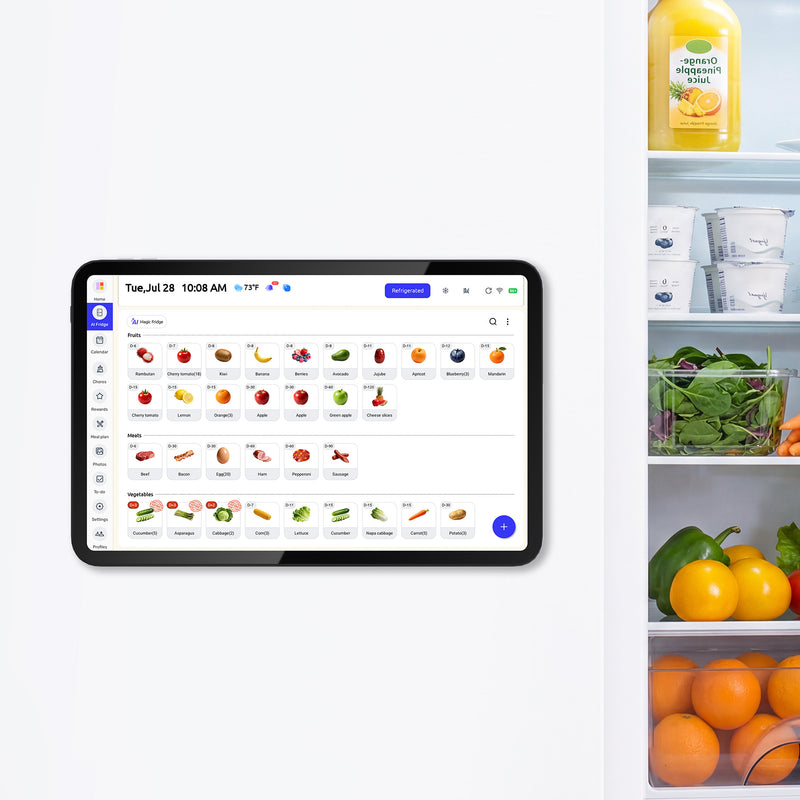
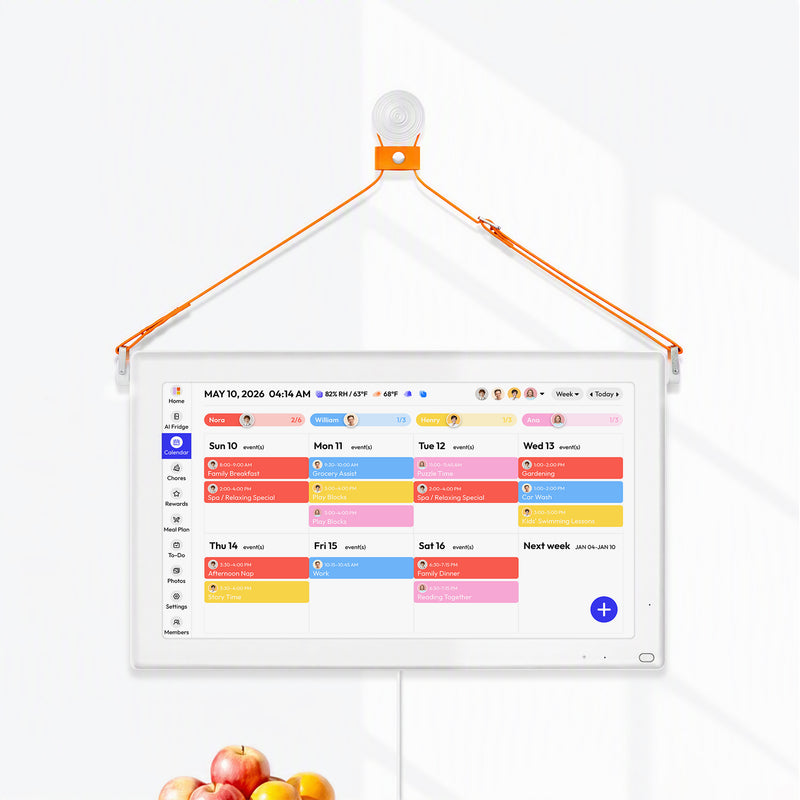
This is exactly why moving that plan to a dedicated, central display makes such a massive difference. A wall-mounted hub like Everblog turns the meal plan from a personal to-do list into a shared family resource. It becomes the one place everyone looks for "what's for dinner?"
By moving your family meal planner app to a visible, central hub, you make the plan a public resource. It’s no longer just your plan; it’s our plan.
Creating a True Family Command Center
Imagine your kids checking the display to see what's for dinner while they’re grabbing an after-school snack. Picture your partner adding milk to the shopping list with a quick voice command on their way out the door. This is how a central hub makes the meal plan real and actionable for the entire family.
The benefits aren’t just about convenience—they save families real time, money, and stress.
Just look at the powerful impact organized meal planning has on a family’s budget and schedule.
 These aren't small changes. We're talking about saving 15-20% on groceries, cutting down meal-related work by 40%, and eating 25% healthier.
For many families, especially those juggling homeschooling or co-parenting schedules, a shared hub brings everything together and strengthens connection. In fact, research shows that organized homes report 35% less stress, and families are actively seeking tools that blend meal planning with total life management. You can read the full research about this trend to see why this is becoming so popular.
This integrated approach gets rid of the constant questions and nagging, making every family member part of the solution. It’s a simple shift that can truly transform how your household runs. Learn more about how you can build a digital family command center in your own home.
Still on the Fence? Answering Your Top Meal Planner Questions
It’s totally normal to have a few lingering questions before you dive into a new system for your family. After all, the last thing you need is another complicated tool that nobody uses. Let’s tackle the most common hurdles families face so you can get started with confidence.
How Do I Get My Family to Actually Use It?
This is the big one, right? The fear that you’ll be the only one logging in, turning this into just another chore on your plate. Getting your family on board really comes down to two things: involvement and visibility.
Instead of just presenting a finished plan, make them part of the process. Try a quick, 10-minute family meeting on Sunday afternoon. Let everyone—even the kids—pick one dinner for the week. This tiny bit of input gives them a sense of ownership. Suddenly, it’s not your plan; it’s our plan.
The other secret is making the plan impossible to ignore. A plan tucked away on your phone is out of sight, out of mind. But when it’s displayed on a central family hub like Everblog, it becomes a visible part of the kitchen routine that everyone sees.
Frame it as a solution to their problems, not just yours. Say, “This means no more asking what’s for dinner,” or “Now we can make sure we get your favorite tacos this week.” The sheer convenience is what will win them over.
Can These Apps Handle Picky Eaters and Allergies?
Absolutely. In fact, this is where a good meal planning app proves its worth. The best ones are designed from the ground up to solve the tricky dietary puzzle of a modern family.
You'll want an app with strong filtering options—this is non-negotiable if you’re managing allergies or just plain pickiness. A solid app will let you:
- Exclude Specific Ingredients: Instantly hide any recipes containing nuts, dairy, gluten, or whatever else you need to avoid.
- Create Custom Tags: Make your own labels like "Kid-Approved," "Spicy-Free," or "Under-30-Minutes" to find the right meals in seconds.
- Build Individual Profiles: Some apps even let you set up profiles for each family member with their specific needs, making it simple to find meals everyone can safely eat.
Many of these tools also learn your family’s preferences over time, so the recipe suggestions only get better. It turns a frustrating chore into a simple, stress-free search.
What Is the Realistic Time Commitment Each Week?
The whole point is to save you time, not add another task to your list. Getting started will take a little bit of upfront effort, probably about 30-45 minutes for the initial setup. This is a one-time thing where you’ll plug in your family’s favorite meals, note any dietary needs, and get the hang of the app.
After that? Your weekly planning time shrinks to almost nothing. With features like saved templates, a drag-and-drop calendar, and grocery lists that generate themselves, you can knock out an entire week’s plan in just 15-20 minutes.
You get that initial time investment back almost immediately with faster grocery runs and zero "what's for dinner?" debates every single night.
Are Paid Apps Worth the Cost Compared to Free Ones?
Free apps can be fine for a basic shopping list, but they almost always miss the features that actually save a busy family time and mental energy. For most households, a paid app is a small price to pay for a whole lot of peace.
The premium versions are the ones that do the real heavy lifting for you, with features like:
- AI-Powered Meal Suggestions that learn what your family loves.
- Nutritional Data to help you keep track of health goals.
- Deep Customization for allergies and picky eaters.
- Seamless Integration with your family calendar and other tools.
Think of it as a small fee for buying back hours of your week. Better yet, a device like Everblog is a one-time purchase, not another monthly subscription. It integrates your meal plan into a visible, central hub, making it an investment in a calmer, more organized home for the long haul.
Ready to bring calm and organization to your family's mealtime routine? The Everblog digital family hub integrates your meal plan, shared grocery list, and family calendar into one beautiful, easy-to-use display. End the daily dinner scramble and create more time for connection. Learn more and get your Everblog today


