





When you boil it down, creating a family chore chart that actually works involves just three things: collaborate on the tasks, choose a format that fits your family, and implement a system with clear rules and rewards. This simple framework is what turns a boring to-do list into a powerful tool for teaching responsibility.
Building Your Chore Chart Foundation
Before you start looking at cute templates or buying sticker packs, the real work starts with a simple conversation. The best chore charts aren't rules handed down from the parents; they're team agreements. The whole point is to change the conversation from "chores you have to do" to "how we all pitch in to make our home a great place to be."
This first meeting is your secret weapon against the "I forgot" excuses and future arguments. It gets everyone on the same page from day one.
Host a Family Huddle
Get everyone together in a relaxed setting—maybe order a pizza or grab some ice cream. You want this to feel positive, not like a lecture.
Instead of just handing out a list of jobs, open up the floor. Ask your kids things like, "What does it take to keep our house running smoothly?" or "What are some jobs we can all do to help each other out?" This simple shift makes them part of the solution, not just the problem.
When you frame chores as contributions, kids start to feel a sense of ownership. A kid who helps pick their own responsibilities is way more likely to do them without you having to nag.
The goal isn't just getting tasks done. It's about fostering a mindset of shared responsibility. When everyone feels like their voice matters, the chore system becomes a source of empowerment, not a battleground.
Define What 'Done' Actually Looks Like
Let's be honest, telling a kid to "clean your room" is just asking for trouble. It’s way too vague. During your family meeting, get super specific and create clear, objective definitions for every single task.
For example, "clean your room" could be broken down into:
- Bed is made, pillows are straightened out.
- All dirty clothes are in the hamper.
- Toys and books are back on their shelves.
- Desk is wiped down with a cloth.
This kind of clarity removes all the guesswork and makes sure everyone knows exactly what's expected. You might want to post these definitions somewhere central. For some great inspiration on creating a physical spot for your chart and other family info, check out these family command center ideas.
And if you want to make sure your chart is as efficient as possible, you could even look at some professional productivity templates to help design a system that really clicks. Laying this groundwork now makes the whole process smoother and much more likely to succeed.
Choosing Your Chore Chart Format
So, what's it going to be? The classic sticker chart proudly displayed on the fridge, or a sleek app that pings everyone's phone? This can feel like a huge decision, but let's be real: the best format is the one your family will actually use. This isn't about what's trendy; it’s about finding a system that clicks with your household's rhythm.
For little ones, a physical chart is often magic. There's just something powerful for a five-year-old in the simple act of slapping a sparkly star sticker next to "Feed the Dog." It’s immediate, it's tangible, and it provides a sense of accomplishment that a tap on a screen can't always match. Plus, it’s a constant visual reminder of how they’re contributing.
On the flip side, for parents juggling a million things, digital apps can be a total lifesaver. They take some of the mental load off your plate by automating reminders, rotating tasks, and tracking who did what. No more shouting, "Did you remember to take out the recycling?" from across the house.
The Classic Paper or Whiteboard Chart
The hands-on approach is still popular, and for good reason. It’s right there in your face, super easy for young kids to grasp, and doesn't require any tech savvy to set up.
- Pros: It’s cheap, creates a central hub for the family (hello, refrigerator door!), and the physical act of checking off a box is so satisfying.
- Cons: Things can get messy fast. Pens and stickers go missing, the chart gets cluttered, and there are no automated reminders for forgetful teens (or, let's be honest, forgetful parents).
If you go this route, you can get some great structural ideas from an effective cleaning schedule template to make sure your layout is practical and easy for everyone to follow from day one.
A family meeting is always the best place to start. Getting on the same page from the beginning is your best bet for success.
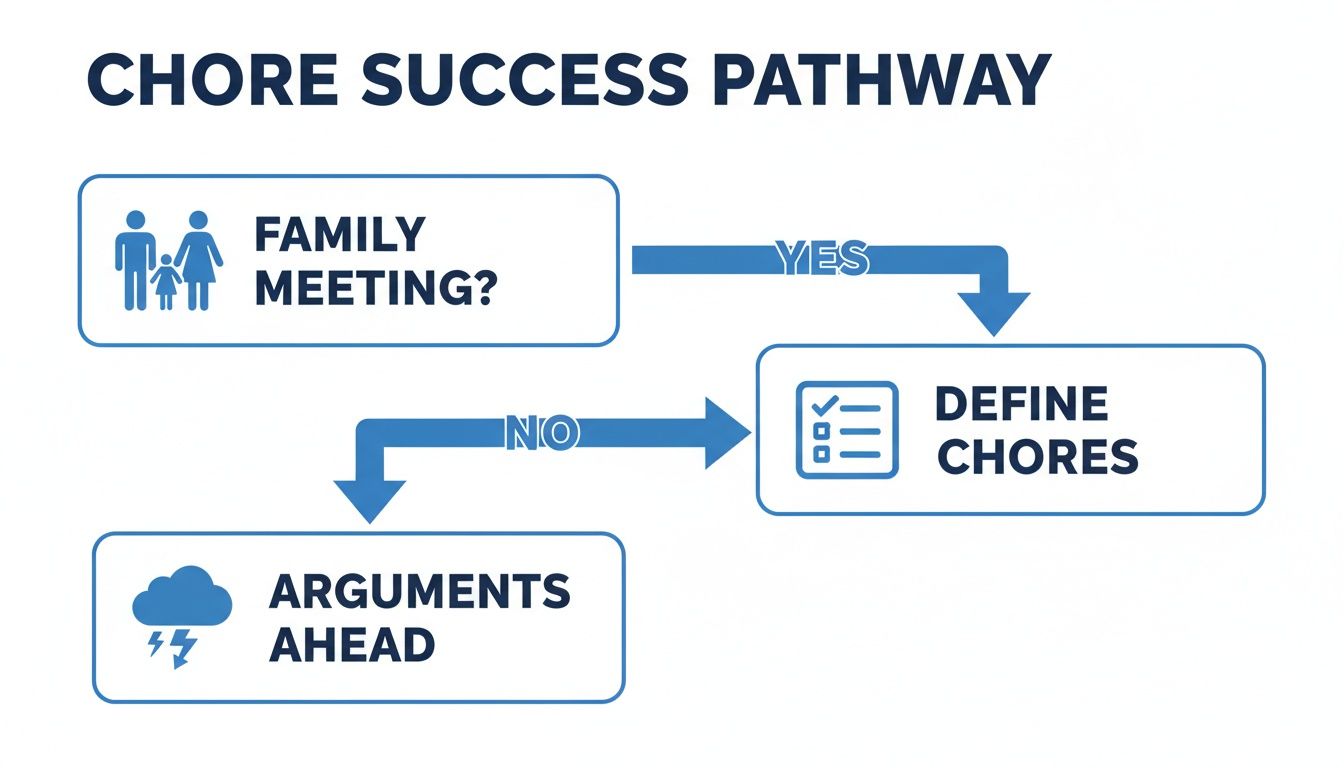
As you can see, that initial conversation is the foundation. It leads to clearly defined chores and, hopefully, a much more harmonious home.
The Modern Digital Chore App
Digital systems are built for the chaos of modern, on-the-go families. They fit right into a life already run by smartphones and shared calendars.
And the data backs this up. One study found that families using digital tools to get organized saw a 42% drop in fights over household tasks. They also reported a 37% increase in chores actually getting done compared to families sticking with paper charts. It seems those automated reminders and transparent tracking really do make a difference.
A digital format is brilliant at handling complexity. It can automatically rotate who's on dishwasher duty, send a push notification when a task is due, and keep a running tally of rewards—all without you lifting a finger.
Paper Charts vs Digital Apps A Quick Comparison
To help you decide, let's break down the key differences between the old-school paper chart and the new-school digital app. There's no single "best" choice—it all comes down to what works for your family's unique needs and lifestyle.
| Feature | Paper Charts | Digital Apps |
|---|---|---|
| Accessibility | Centralized in one location (e.g., kitchen) | Accessible anywhere via smartphone or tablet |
| Reminders | Manual; relies on family members seeing it | Automated push notifications and alerts |
| Task Management | Manual updates; can get messy or outdated | Easy to assign, rotate, and update tasks for multiple kids |
| Kid-Friendliness | Excellent for young kids (stickers, drawing) | Gamified interfaces, digital rewards, engaging for older kids |
| Tracking & Rewards | Manual tracking; simple reward systems | Automatic point/reward tracking; can link to allowance or screen time |
| Cost | Very low initial cost (paper, pens, stickers) | Often free with premium subscription options for advanced features |
Ultimately, both have their merits. A paper chart offers satisfying simplicity, while a digital app provides powerful automation to keep a busy family on track.
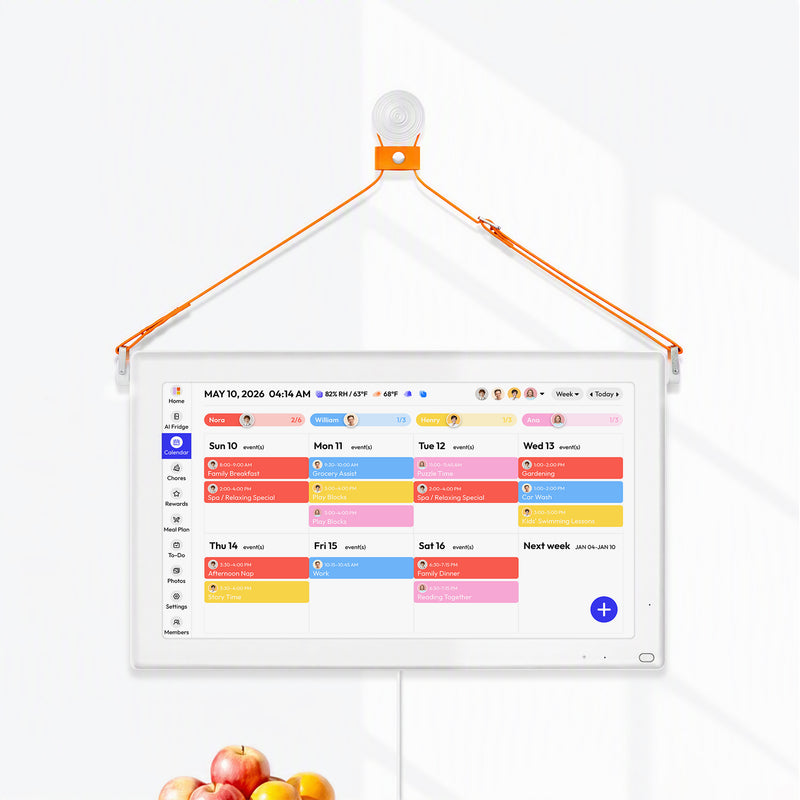
Many of these apps also plug into larger family organization systems. For example, you can see how Everblog's calendar simplifies daily family scheduling to understand how chores can be woven into your family's bigger picture.
In the end, the goal is to find a system that reduces friction and makes accountability a natural part of your family's routine, whether you're using a marker or a mobile app.
Assigning Age-Appropriate Chores That Build Skills
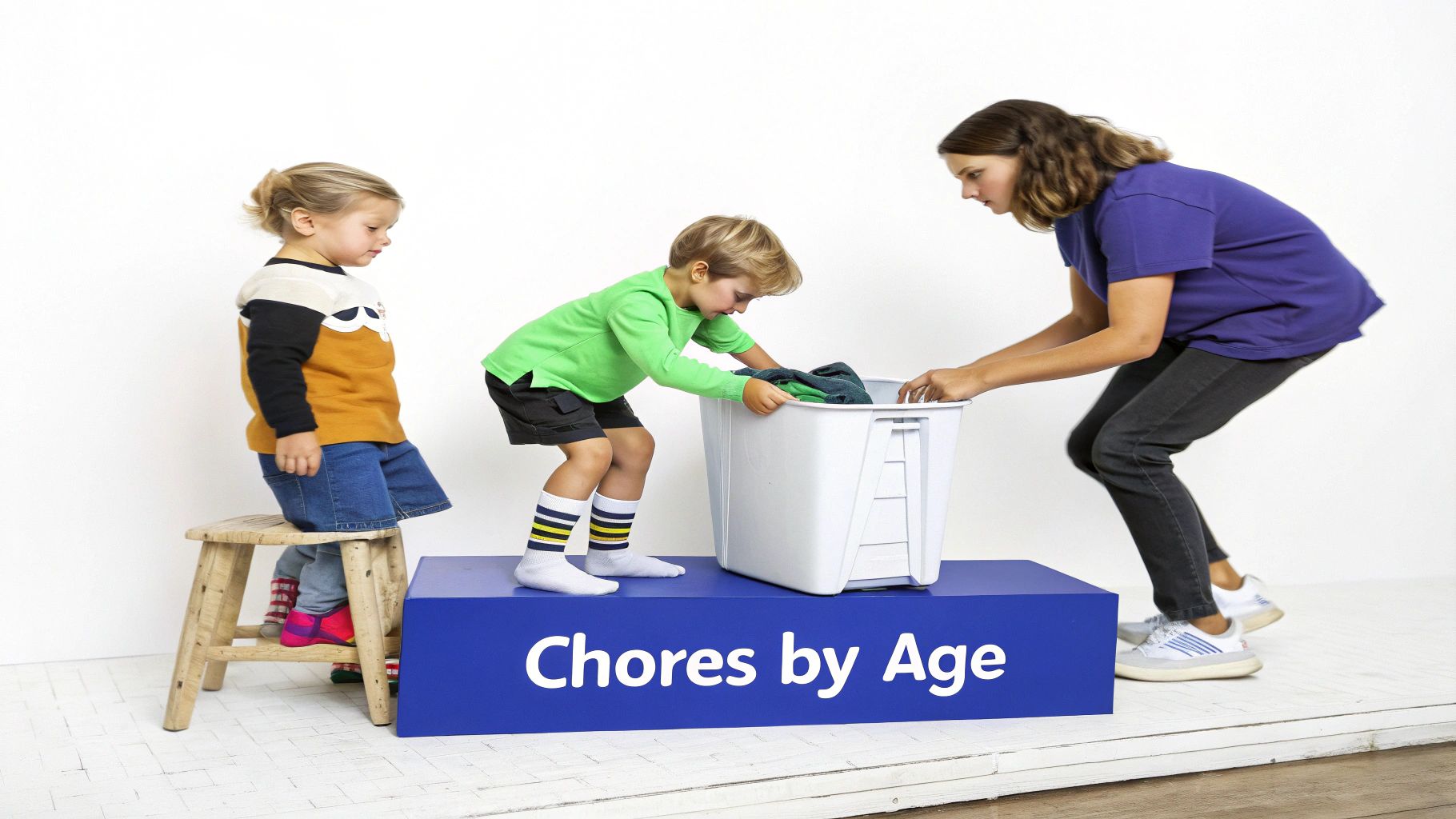
One of the quickest ways for a new chore system to fall apart is by assigning tasks that are either too hard or, frankly, too easy. The sweet spot is finding age-appropriate chores that actually help the household and build real-world skills and confidence. This is where a good chore chart really shines.
Vague instructions like "clean your room" are just an invitation for an argument. What does "clean" even mean to a seven-year-old?
Instead, break it down into specific, achievable actions that match your child’s developmental stage. For a four-year-old, this might be "put five red toys in the bin" or "match three pairs of socks." For a ten-year-old, it’s more like "empty the dishwasher and put everything away where it goes."
Matching Tasks to Milestones
Kids are far more capable than we often give them credit for, as long as the task fits their abilities. When you structure your chart this way, you're setting them up for a win, and that success is a powerful motivator.
- Preschoolers (Ages 3-5): Keep it simple. Focus on basic helping and self-care tasks. Think putting their own toys away, placing their cup by the sink, or helping feed a pet (with you right there). These little things build foundational habits.
- Early Elementary (Ages 6-8): They can handle a bit more responsibility now. Tasks like setting the table, watering plants, wiping up their own spills, and making their bed are perfect for developing motor skills and a sense of contribution.
- Upper Elementary (Ages 9-11): At this point, they can take on multi-step chores that require more focus. This is the time for loading and starting the dishwasher, taking out the trash, helping with simple meal prep, or folding their own laundry.
- Middle Schoolers & Teens (Ages 12+): Now they're ready to manage tasks that contribute to the entire household. This could mean cooking a simple meal once a week, doing their own laundry from start to finish, or being in charge of yard work like mowing or raking leaves.
The real goal here is to gradually increase responsibility over time. A chore that was once a challenge for an eight-year-old becomes a simple daily habit for a twelve-year-old, freeing them up to learn more complex skills.
Household Contributions vs. "Money" Chores
From my experience, a successful system often makes a distinction between two types of tasks.
First, you have the everyday personal responsibilities—the basic upkeep that comes with being part of a family. This is stuff like making their bed, keeping their room from becoming a biohazard, and bringing their own dishes to the sink. We treat these as unpaid contributions to the household team.
Second, you have the extra chores that go above and beyond. These are the bigger jobs like washing the car, deep cleaning a bathroom, or organizing the garage. Tying these tasks to an allowance or another reward can be a fantastic way to teach kids about work ethic and earning. If you're stuck for ideas, there are tons of chore chart ideas for kids that help break this down.
Keeping Things Fair Between Siblings
Nothing torpedoes a chore chart faster than a kid yelling, "That's not fair!" When you're assigning jobs, always consider each child’s schedule, abilities, and other commitments. A kid with three hours of soccer practice might need a lighter load on those days compared to a sibling who is home.
One of the best ways to keep things balanced is to rotate the less-desirable chores weekly or monthly. This ensures everyone takes a turn with tasks like cleaning the bathroom or scooping pet waste. Better yet, involve your kids in planning the rotation. It gives them a sense of ownership, transforming the chore chart from a list of demands into a real family teamwork plan.
We Need a Motivation and Rewards System
Let's be honest, a perfectly designed chore chart is only half the battle. If you want to keep the momentum going week after week, you need a solid motivation and rewards system.
This is where you connect the effort your kids are putting in with some real acknowledgment. It’s about way more than just paying for chores—it’s about building a structure that teaches accountability and a healthy work ethic that will stick with them for life. The goal is to create a system that actually clicks with your kids' unique personalities.
The real key is to move beyond a one-size-fits-all allowance. Sure, money is a powerful motivator for some kids, but others respond way better to experiences or special privileges. A truly great family chore chart offers a flexible rewards menu that lets kids work toward what truly excites them.
Building a Flexible Rewards Menu
Think of rewards as the positive reinforcement that keeps the whole system from falling apart. You want to offer a variety of options that speak to different ages and interests, making the effort feel genuinely worthwhile. For most families, a balanced approach works best.
You could, for example, set up a simple point-based system where each finished chore earns a certain number of points. Kids can then "cash in" these points for different rewards.
- Quick Wins: Think 30 minutes of extra screen time, getting to pick the family movie on Friday, or a special dessert after dinner.
- Bigger Goals: This could be a sleepover with a friend, a trip to the trampoline park, or earning a new book or small toy they've been eyeing.
- Long-Term Savings: For those bigger dreams like a new video game or saving up for a special summer camp, a point system is fantastic. It visually shows them how consistent, daily effort adds up over time.
This kind of model is a stealthy way to teach valuable financial literacy concepts like saving and delayed gratification. It gives kids a sense of control over their "earnings" and helps them see the direct line between work and reward.
The most effective reward systems are the ones you discuss and agree upon as a family. When kids have a say in choosing the rewards, they’re instantly more invested in the whole process and actually motivated to earn them.
Establishing Logical Consequences
Just as important as rewards are the consequences for chores that get skipped. And to be clear, this isn't about punishment—it's about teaching natural accountability. The consequences that work best are logical and directly tied to their responsibilities.
Instead of yelling, nagging, or grounding, simply tie privileges to completed tasks. This simple, firm connection helps kids internalize that responsibilities come before recreation.
For instance, a household rule might be, "The Wi-Fi password for the evening is shared once your daily chores are marked complete." See? It’s not a punishment you're handing out; it's a natural outcome that they control.
A few other real-world examples:
- Playdates can happen once Saturday morning chores are all checked off.
- The family car is available for your teen driver once their weekly tasks (like taking out the trash and recycling) are done.
When you establish these connections upfront, you sidestep so many of the emotional power struggles. The system itself becomes the "bad guy," and you get to stay in your role as a supportive coach helping them win within the rules you all agreed on. This kind of predictable structure builds a powerful sense of fairness and personal responsibility.
Getting Your New Chore System Off the Ground

Alright, you’ve put in the work. The chart is made, the tasks are assigned, and the rewards are waiting. It's go-time. These first few weeks are everything—they set the tone for whether this new routine sticks or falls flat.
Launch it with a little bit of fanfare. Frame it as an exciting new family project, not just a list of demands. You could even have a mini "launch party" with a favorite snack to kick things off. It makes the first day feel like an event to get behind, not something to dread.
Remember, the goal isn't perfection right out of the gate. It's about building consistency. Expect a few bumps as everyone finds their rhythm. How you navigate these early days will make all the difference.
Troubleshooting the Inevitable Hiccups
Even the most perfectly planned system will hit a snag or two. The initial excitement might wear off, or one of the kids might decide to test the system's limits. Being ready for these moments is half the battle.
If you see a child constantly balking at a specific task, dig in and ask why. Is it genuinely too hard for them? Does it clash with homework time? Sometimes a simple tweak is all you need to get things moving smoothly again.
And when the novelty fades? It's time to re-engage them. Maybe you introduce a cool new reward they've been asking for, or you shake things up and rotate the chores for a fresh challenge. The key is to be proactive and fix small issues before they become bad habits.
The Secret Weapon: A Weekly Check-In
Your chore chart should be a living, breathing part of your family's week, not something you set in stone and forget. The single best way to make sure it keeps working is to hold a weekly check-in meeting.
This isn't a formal affair. We're talking five or ten minutes on a Sunday night to quickly touch base on how the week went. It's the perfect time to celebrate what worked and solve problems together.
Keep the questions open-ended and collaborative:
- What parts of the chart felt really easy this week?
- Were any chores too tough or unfair?
- Do we need to adjust anything for the week ahead?
This weekly feedback loop is what transforms a chore chart from a top-down directive into a real family partnership. It gives your kids a voice and shows them their input actually matters.
This simple habit turns your chart into a dynamic tool that grows with your family. You can adjust tasks as kids get older, swap out rewards as their interests change, and reinforce the idea that everyone is a valued member of the team. Over time, you're not just building a cleaner house—you're building a stronger, more connected family.
Common Questions About Family Chore Charts
Even the most perfectly planned chore chart is going to hit a few snags. That's just life. But knowing how to navigate those common bumps in the road can mean the difference between a system that actually works and one you abandon after two weeks.
Let's walk through some of the biggest questions I hear from parents all the time. Getting ahead of these issues helps you stay consistent, which is the secret sauce to making this whole thing stick.
"What Do I Do When My Kid Just Complains All the Time?"
This is a classic. Constant complaining usually isn't about the chore itself—it's often a sign that your child feels like they have no control or that the system isn't fair. The first step? Just listen. Seriously. Try to hear them out without getting defensive.
Acknowledge what they're feeling with something simple like, "I get it, you're frustrated with emptying the dishwasher. Tell me what's bothering you about it."
A lot of the time, just bringing them into the problem-solving process can completely shift their attitude. Look at the chart together. Is the workload really balanced between siblings when you factor in their age and after-school commitments? Maybe not.
Give them a little bit of power back by offering a choice between two or three different chores for the week. If the grumbling continues after that, it's time to calmly link the task back to being part of the family team and stick to the consequences you all agreed on.
"Should I Pay My Kids for Doing Chores?"
Ah, the million-dollar question. There’s no single right answer here, but I’ve found that a hybrid model works wonders for most families. The idea is to separate everyday responsibilities from extra, "above-and-beyond" jobs.
- Unpaid Contributions: These are the non-negotiables of being part of the household. Think: making their bed, tossing dirty clothes in the hamper, or clearing their own plate. These tasks are just part of being on "Team Family."
- Paid Work: These are bigger jobs that benefit everyone in a more significant way. We're talking about washing the car, mowing the lawn, or helping with a massive garage clean-out.
This approach teaches two critical lessons at once. It builds a sense of shared responsibility for the home while also introducing the real-world concept that certain work earns money.
This balanced system helps foster a solid work ethic without creating a situation where your kids expect a handout for every helpful thing they do. Whatever you choose, just make sure the rules are crystal clear from day one.
"How Often Should We Update the Chore Chart?"
Your chore chart should be a living, breathing thing—not something you carve in stone and forget about. A chart that never changes quickly becomes boring, outdated, and totally ineffective as kids get older and schedules shift.
Plan to sit down as a family and review the chart every so often. A good rhythm is every few months or whenever a new season kicks off, like back-to-school time or the start of summer break. This is your chance to "promote" kids to more challenging tasks that fit their new skills, which can be a huge confidence-booster.
It’s also a great idea to rotate the less-popular chores on a weekly or monthly basis. This simple move prevents boredom, helps everyone learn a wider range of household skills, and cuts down on the cries of "That's not fair!" These regular check-ins keep the system working and show your kids that you actually value their input.
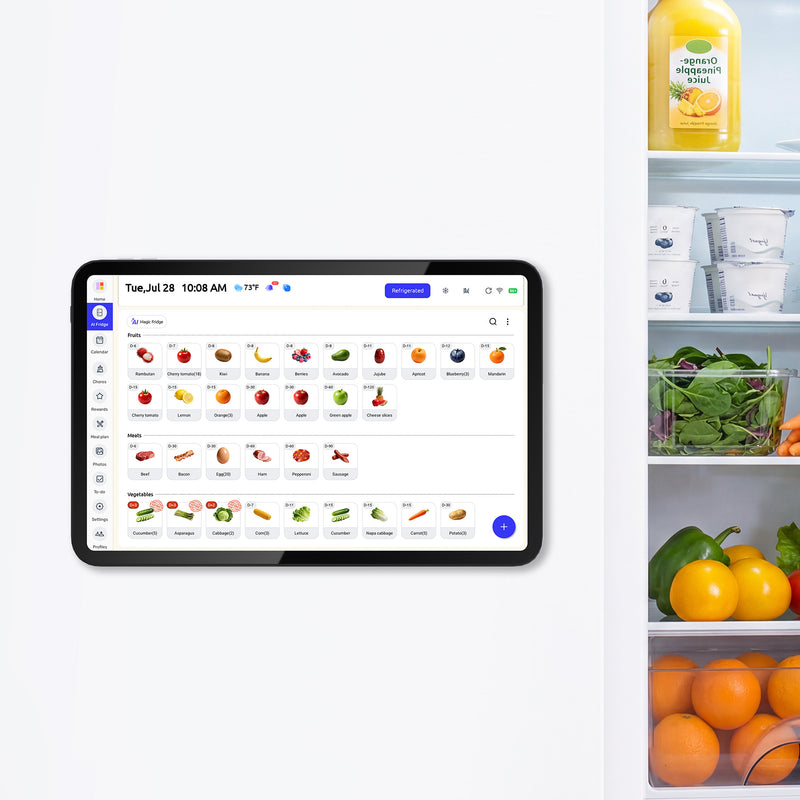
Ready to bring all your family's moving parts together in one beautiful, central hub? Everblog replaces scattered notes and confusing apps with a single smart display for your schedules, meal plans, and chore chart. Its built-in Chore Manager and Rewards Tracker make it easy to assign tasks and motivate kids, creating a calmer, more connected home. Learn more and see how Everblog can simplify your family's life.


