





A homeschool daily schedule template is your family's secret weapon for a calm, productive learning day. It’s so much more than a to-do list. Think of it as a flexible guide that helps you weave together core academics, creative projects, and that all-important downtime.
Forget about trying to replicate a rigid, bell-driven school day. The best schedules are the ones that flow with your family’s natural rhythm.
Designing A Schedule That Truly Works For You

Before you jump on Pinterest and download the first printable you see, pause for a minute. Ask yourself what you want your homeschool to feel like. Do you thrive on structure and predictability, or does your family do better with spontaneous, interest-led learning? Your answer is the foundation of your schedule.
Homeschooling has seen incredible growth, with the number of U.S. students hitting between 3.1 and 3.7 million by 2023. A lot of the popular templates that came from this boom look a lot like a 9 AM to 3 PM school day, just with more flexibility.
This planning part is so important because it saves you from the classic mistake of trying to run a public school at your kitchen table. A good routine should serve your family, not the other way around.
Finding Your Foundational Approach
The kind of structure you choose really sets the tone for your day. For some families, a detailed, minute-by-minute plan brings a sense of security. For others, a looser, flowing rhythm just feels more natural. There's no right or wrong answer—just what's right for you.
If you’re looking for a solid starting point, thinking about how an essential schedule template can organize something as simple as a book club shows you the power of having a basic framework.
The goal here is to reduce stress, not create more of it. You want to build in just enough predictability to feel grounded without losing the freedom that makes homeschooling so amazing. For a lot of parents, especially stay-at-home moms, the real win is blending learning seamlessly with daily life. We've got more ideas on that in our guide to building a stay-at-home mom daily schedule.
The best homeschool schedule isn’t the one that looks prettiest on paper. It's the one your family actually enjoys using, day in and day out.
To help you find that perfect fit, let’s look at a few popular scheduling philosophies. You need to pick the right foundation before you start plugging in subjects and activities.
Homeschool Scheduling Models At A Glance
This table breaks down some of the most common scheduling philosophies. Use it to find a model that resonates with your family's personality and goals.
| Scheduling Model | Best For | Key Feature |
|---|---|---|
| Block Scheduling | Families who thrive on routine and want dedicated time for specific subjects. | Divides the day into longer, fixed "blocks" for core subjects like math or language arts. |
| Loop Scheduling | Families who need flexibility and want to cover many subjects without a rigid daily timetable. | Creates a list of subjects (e.g., art, history, science) that you "loop" through, doing the next one on the list each day. |
Ultimately, choosing a model like Block Scheduling or Loop Scheduling gives you a starting point. You can always tweak it, combine ideas, or create something totally unique to your family as you go.
The Building Blocks Of A Successful Schedule
A great homeschool schedule isn't just a timetable—it's the rhythm of your day. Think of it less like a rigid to-do list and more like a recipe for a balanced, happy home. The key ingredients? Core academics, creative exploration, physical movement, and that all-important downtime.
If you skip one of these, you'll feel it. Too much focus on academics leads to burnout, while not enough structure can feel chaotic. The goal is to create a flow that works with your family’s natural energy, not against it.
Prioritizing Core Academic Subjects
Let's be real: timing is everything when it comes to the tough stuff. Most kids (and adults!) have the most brainpower in the morning. That’s your golden window for subjects that need serious concentration, like math, writing, or a heavy reading lesson.
Trying to save the "hard" subjects for the afternoon is a classic mistake. By then, everyone's energy has tanked, and you're more likely to face frustration and glazed-over eyes. Get the heavy lifting done early, and the rest of the day feels like a downhill coast.
A simple morning block might look something like this:
- 9:00 AM - 9:45 AM: Math or some kind of problem-solving.
- 10:00 AM - 10:45 AM: Language arts (reading, writing, etc.).
This approach lets you check off the biggest academic boxes before that midday slump even thinks about showing up.
Weaving In Creativity And Movement
After a good stretch of focused work, brains need a break. This is the perfect time to switch gears and get hands-on with creative projects or get bodies moving. These aren’t just fun extras; they’re essential for keeping kids engaged and preventing mental fatigue.
Think about activities that fire up different parts of the brain. Maybe it’s a messy science experiment in the kitchen, a pottery session with air-dry clay, or just a quick music lesson. It’s a welcome change from sitting still with a book or worksheet.
And don't forget physical activity. A walk around the block, a bike ride, or even just 20 minutes of free-for-all in the backyard is non-negotiable for burning off that cooped-up energy.
The real magic of a homeschool schedule lies in its balance. It acknowledges that deep learning requires periods of intense focus followed by periods of rest, play, and creative expression.
Integrating Life Skills And Downtime
One of the best parts of homeschooling is how easily you can blend learning with real life. Your schedule should absolutely make room for practical life skills. This doesn't have to be a formal lesson—it can be as simple as having your child help you make lunch, learn to sort laundry, or take charge of a small part of the grocery list.
These everyday moments are powerful. They teach responsibility and practical skills in a way that feels completely natural.
The pandemic actually taught us a lot about this. Many families found that a morning focused on core academics (like language arts at 8:30 AM and math at 10 AM), followed by an afternoon of projects and P.E., was incredibly effective. This setup often totals just four to six hours—covering everything without the exhaustion. You can find more data on these homeschooling trends on Brighterly.com.
Finally, and this is a big one, don't forget to schedule nothing. Unstructured downtime—where kids can read for fun, build with LEGOs, or just be bored—is where imagination and independence are born. An over-scheduled kid is a stressed-out kid, so make sure your template has plenty of white space for them to just be.
Tailoring Your Template For Different Age Groups
Let's be honest: a one-size-fits-all homeschool schedule just doesn't work. The playful, discovery-based rhythm that a six-year-old thrives on would feel completely suffocating to a teenager deep in college prep. The real magic happens when you adapt your template to match their developmental stage, attention span, and budding independence.
When you honor these differences, your daily plan stops being a chore and becomes a powerful tool that supports your child’s natural growth. For the little ones, this means short, sweet bursts of activity. For older kids, it means gradually handing over the reins.
Preschool And Early Elementary: The Playful Years
For the little learners in your life (think ages 4-7), learning is play. They are one and the same. Your schedule should absolutely reflect this with short, engaging activity blocks of about 15-20 minutes that capture their curiosity without causing a meltdown. Trust me, a rigid, subject-heavy timetable is a recipe for frustration for everyone involved.
Instead, think in terms of a gentle, predictable rhythm. Maybe you start the day with a cozy "Morning Basket" filled with a great read-aloud story and a simple hands-on activity. From there, you could flow into outdoor play, a quick math game with colorful blocks, and then some unstructured time to build a magnificent Lego castle.
A few things to keep in mind for this age group:
- Keep it short and sweet. You'll get so much more out of them with short, focused activities versus long, drawn-out lessons.
- Lead with play. Frame learning through games, art, and pure exploration. It's far more effective.
- Build in tons of movement. Young kids need to wiggle, jump, and run to stay focused and happy. Don't fight it—plan for it!
Elementary And Middle School: The Independence Bridge
As kids hit the elementary and middle school years (ages 8-13), they're ready for a bit more structure and responsibility. This is the golden opportunity to introduce more independent work and start building those foundational time management skills. Your homeschool schedule can evolve from a loose rhythm to a more defined—yet still flexible—block schedule.
You could dedicate a morning block to core subjects like math and language arts, where they can start working through assignments on their own. The afternoon can then open up for "loop subjects" like history, science experiments, or art projects that you tackle together. This is also the perfect age to start weaving household responsibilities into their daily routine. For some great tips, check out our guide on creating effective chore chart ideas for kids.
The infographic below gives you a great visual for how to structure a balanced homeschool day, breaking down how time can be allocated across different types of activities.
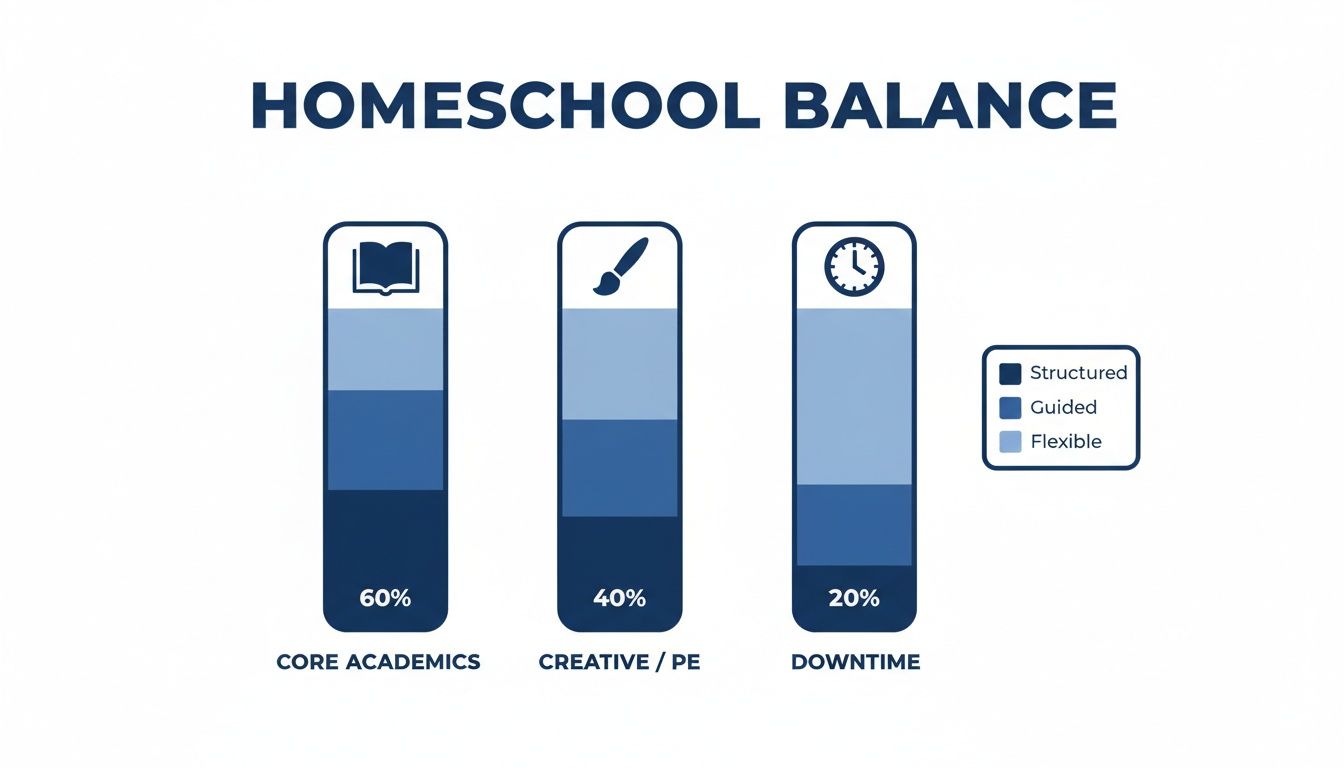
It really highlights that sweet spot between structured academic work, creative outlets, and the unstructured free time that is so vital for preventing burnout and letting kids just be kids.
To give you a clearer idea, here’s how time blocks might look across different age groups.
Sample Time Blocks By Age Group
| Age Group | Core Subject Time | Creative/Elective Time | Physical Activity | Breaks/Free Play |
|---|---|---|---|---|
| Preschool (4-5) | 30-45 mins | 45-60 mins | 60+ mins | 90+ mins |
| Early Elem (6-8) | 60-90 mins | 45-60 mins | 60 mins | 60+ mins |
| Upper Elem (9-11) | 90-120 mins | 60 mins | 45-60 mins | 45-60 mins |
| Middle (12-14) | 2.5-3.5 hours | 60-90 mins | 45 mins | 45 mins |
Remember, these are just starting points. The most important thing is to observe your own kids and adjust until you find a rhythm that feels right for your family.
High School: The Self-Directed Learner
By the time high school rolls around, the game changes completely. The goal shifts from direct instruction to fostering real-world independence and preparing your teen for life after graduation. Your role naturally evolves from teacher to academic mentor. The schedule template should now be a tool that they manage, with you there to guide them.
At this stage, teaching them how to manage their time is just as important as teaching them algebra. Time-blocking and weekly planning become essential life skills.
Make it a habit to sit down with your teen at the start of each week. Together, you can map out their assignments, dedicated study time, extracurriculars, and social commitments. Empower them to block out their own days, which teaches them how to prioritize deadlines and juggle complex subjects. This kind of ownership is incredible preparation for the demands of college or the workforce, where self-discipline is everything.
Mastering Flexibility And Adapting Your Schedule
Let's get one thing straight: the perfect homeschool daily schedule template doesn't exist. The best one is a living, breathing document that bends with the beautiful chaos of family life.
It has to make room for sick days, a sudden thunderstorm that demands to be watched, or that rabbit hole of curiosity about ancient Egypt sparked by a library book.
Holding on too tightly to a rigid, minute-by-minute plan is the fastest way I’ve seen homeschool parents burn out. The secret to a successful schedule is building it on the idea of resilience. It anticipates that things will go off-track and already has a plan for getting back to a gentle rhythm without any stress or guilt.
Think of it less as a strict timetable and more as a flexible framework. The real goal isn't to follow rules that make everyone feel like they’re failing when life happens. It’s to create a predictable flow that provides comfort and structure for your kids.
Ground Your Day With Anchor Points
A powerful strategy for striking this balance is to establish anchor points throughout your day. These are your non-negotiables, the handful of activities that create a familiar structure while everything else remains fluid. Your anchors can be simple but they have to be consistent.
For many families I've worked with, these anchors often include:
- Morning Basket: A cozy, gentle start to the day with a shared read-aloud or a simple hands-on activity.
- Lunch Together: A dedicated time to reconnect and take a screen-free break from lessons.
- Quiet Reading Time: A 30-minute block after lunch where everyone, including you, reads independently.
- Evening Tidy-Up: A quick 10-minute reset to clear the clutter and prepare for the next day.
These anchors act like guideposts. If a morning math lesson gets totally derailed by a spontaneous nature walk (which happens!), you know that lunch is the anchor that will bring everyone back together and reset the day. The in-between times are where the magic of flexibility lives.
"A daily rhythm offers a guiding structure for their days without the rigidity of a strict schedule... It’s about knowing what generally comes next, creating a sense of predictability and peace for both parents and children, without the stress of falling behind."
The Weekly Review And Small Adjustments
Your schedule isn't meant to be set in stone. It should evolve as your kids grow and your family’s needs change. One of the most effective habits you can build is a simple 15-minute weekly review.
Every Friday afternoon, take a moment to ask yourself a few simple questions:
- What part of our schedule felt joyful and easy this week?
- Where did we consistently feel rushed or frustrated?
- Is there an activity we can shift to a different time to improve our flow?
This little ritual empowers you to make small, impactful tweaks. Maybe you realize math is causing tears at 11 AM and would be better tackled first thing in the morning with fresh brains. Or perhaps you notice the afternoons feel way too crammed.
Recent demographic shifts have driven demand for highly customizable daily schedule templates. A popular structure allocates two hours to core subjects, an hour for a lunch break, and one to two hours for electives, totaling under six hours for better focus. This time efficiency is a key reason 60% of parents view homeschooling more favorably post-pandemic. You can see more insights about these homeschooling trends from Homeschool Planet.
By regularly reviewing your routine, you can ensure your homeschool daily schedule template truly serves your family’s unique needs, not the other way around.
Using Digital Tools To Streamline Your Schedule
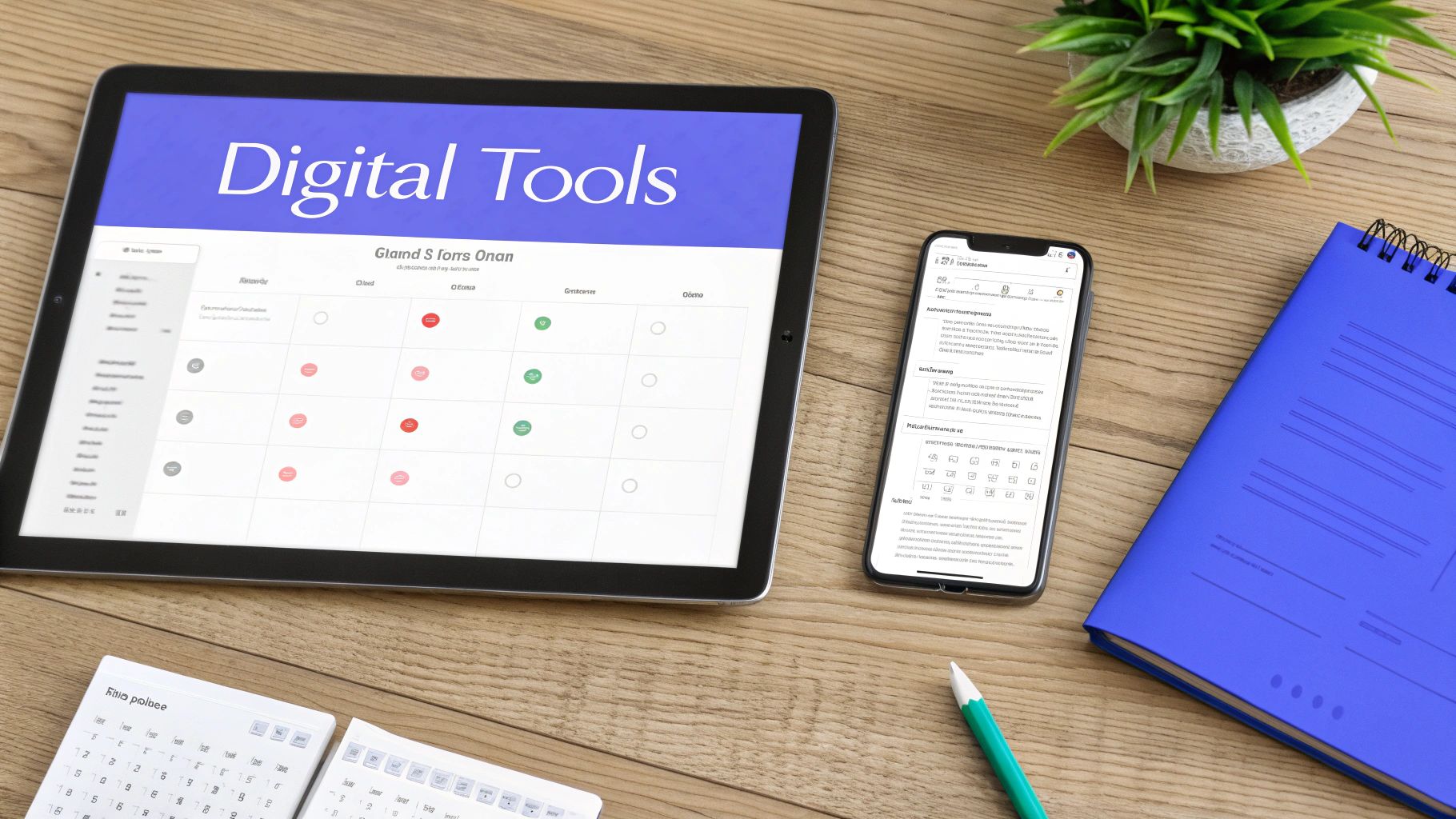
A paper schedule template is a fantastic starting point. It gives you that tangible, reassuring structure. But when you pair it with the right digital tools, that static guide transforms into a dynamic, responsive command center for your entire family.
This is where smart organization really shines.
A great digital platform does more than just display your plan—it helps you manage it. Think of it as a personal assistant that handles reminders, syncs everyone’s calendars, and just generally reduces the mental load of juggling a dozen different things. You end up spending less time managing the schedule and more time enjoying the actual learning moments.
By connecting your daily learning goals with household management in one place, you create a seamless rhythm that reduces friction and boosts family cooperation.
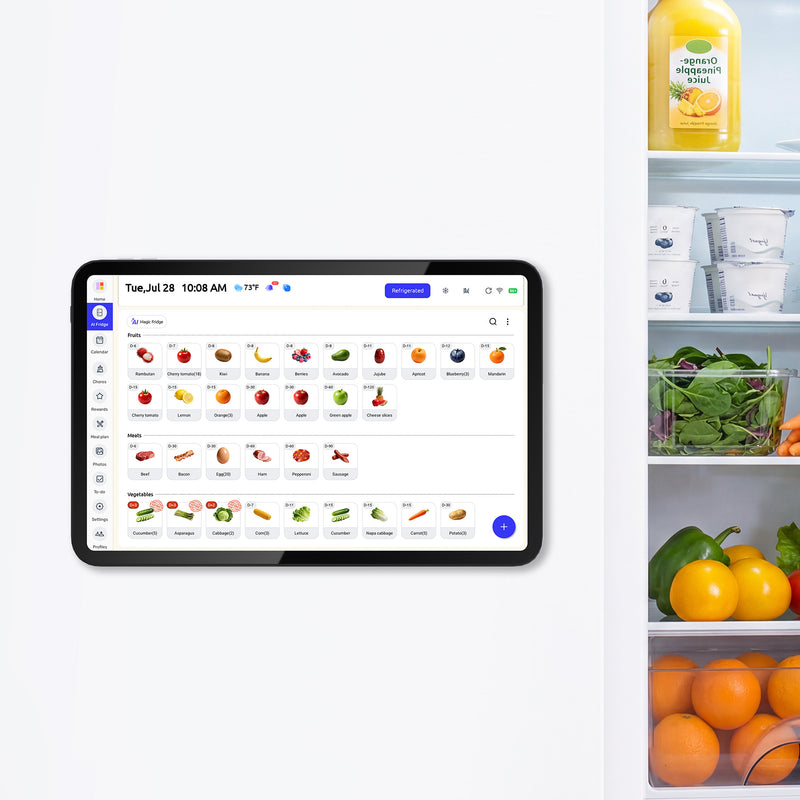
Everblog's features were designed specifically to make this happen, tying lessons, chores, and family life together on one central hub.
Sync Your Schedule With Your Family Calendar
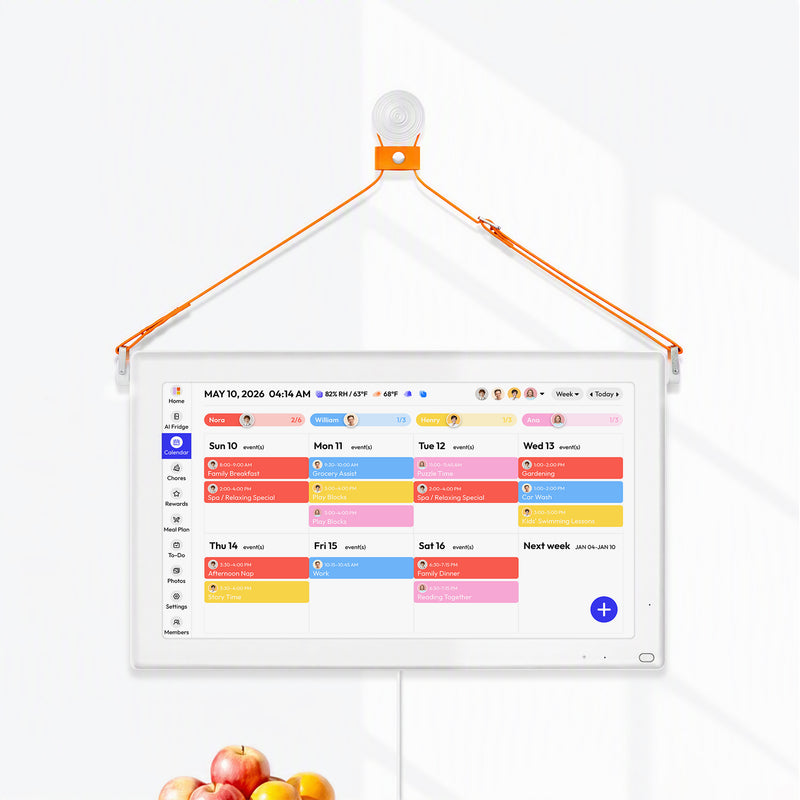
The most powerful first step is to bring your time blocks into a shared digital calendar. Instead of just penciling in "Math 9 AM," you can create recurring events with built-in alerts. A 15-minute heads-up before a science experiment is often just enough time to gather supplies without throwing the whole day off track.
Having a synced calendar means everyone—from older kids managing their own time to a co-parent who needs to stay in the loop—has instant visibility. It’s a total game-changer. For a deeper dive, check out our guide on how the Everblog calendar simplifies daily family scheduling.
Weave In Chores and Meal Planning
The best homeschool schedules blend academics with practical life skills. Everblog's chore manager is perfect for this. You can assign tasks that pop up right when they make sense. For example, a "tidy up art supplies" task can automatically appear right after your scheduled creative block ends. It’s a natural, contextual way to teach responsibility.
Likewise, linking your meal planner completely eliminates that frantic "what's for lunch?" scramble. When you plan meals for the week, you can prep ingredients ahead of time, turning lunchtime into a smooth transition instead of a chaotic interruption.
Capture Ideas With Voice Entry
Inspiration rarely follows a schedule. A brilliant question about constellations might pop up during a history lesson, or you might suddenly remember you need more paint while you're in the middle of a read-aloud.
Voice entry lets anyone in the family add a task, a reminder, or a grocery item to the list without derailing the moment. It’s a beautifully simple feature that makes your entire system responsive, capturing those fleeting ideas before they vanish.
To get the most out of your setup, you can also explore some of the best educational technology tools for teachers to supplement your curriculum. By combining a solid template with smart, integrated tools, you’re not just planning a day—you’re creating an organized environment where learning can truly flourish.
Common Questions About Homeschool Schedules
Jumping into homeschooling brings up a ton of questions. Even when you’ve found the perfect homeschool daily schedule template, you’re going to hit moments where you’re just not sure what to do next. Let's walk through some of the most common worries I hear from parents and give you some real-world advice to get your family into a comfortable rhythm.
One of the biggest fears is getting "behind." But here’s the secret: homeschooling is incredibly efficient. You aren't trying to manage a classroom of 25 kids, so you can accomplish so much more in a fraction of the time.
The beauty of a daily rhythm lies in its adaptability. It acknowledges that no two days are exactly alike... Instead of causing frustration when things don’t go as planned, a rhythm provides the freedom to shift activities around as needed.
This flexibility is your superpower. It lets you build a schedule that actually serves your family instead of feeling like a strict set of rules you're always failing to follow.
How Long Should Our Homeschool Day Be?
There’s no magic number here. The right amount of time really depends on your child’s age, how long they can focus, and what your state legally requires.
A good rule of thumb to start with is:
- Kindergarten: 1-2 hours of structured learning.
- Early Elementary: 2-3 hours.
- Upper Elementary & Middle School: 3-5 hours.
- High School: 4-6 hours, depending on their course load.
Keep in mind, that’s just the focused learning time. The rest of the day can be filled with free play, chores, reading, and just exploring their interests—which are all a huge part of their education. The goal is genuine understanding, not just logging hours on a timesheet.
What If My Child Resists The Schedule?
Resistance is almost always feedback, not defiance. Think of it as a signal that something in the routine isn't working for them. Before you lay down the law, try to figure out what's really going on. Is the work too hard? Not interesting enough? Are they getting enough breaks to move their bodies?
One of the best things you can do is involve your child in the planning. Giving them some control over their day—like letting them pick the order of two subjects or choose the afternoon activity—can make all the difference. Use their resistance as a clue to tweak the schedule together.
How Do I Schedule For Multiple Kids?
Ah, the classic homeschool puzzle! The trick is to combine where you can and separate where you must. You don't have to run three different one-room schoolhouses from your kitchen table.
Try starting your day with a group subject that everyone can enjoy, like history, art, or a family read-aloud. Then, you can stagger your one-on-one time. While you’re working with your first-grader on phonics, your fourth-grader can be doing their independent math work, and your middle-schooler can be researching a history project. A good template will have rotating blocks for one-on-one instruction, independent work, and group activities. It takes some practice, but you’ll find a flow that works.
Ready to bring your schedule to life and get the whole family in sync? The Everblog digital calendar combines your homeschool plan, chores, meals, and more into one beautiful, easy-to-use display. Say goodbye to scattered sticky notes and hello to a calmer, more organized home. Explore how Everblog can transform your family’s daily rhythm.


