






Your fridge is probably hiding food you forgot you bought, and that forgetfulness costs real money. With a smart touchscreen calendar, you can finally stop buying things you already have at home. It works by tracking your grocery inventory right in the kitchen, syncing your family schedule with meal planning, and alerting you when items run low — so you only buy what you actually need. Families using this approach can significantly reduce grocery spending while reducing the need to over-plan elaborate meals or rely on takeout.
Tip #1: Track What's in Your Fridge and Stay Under Budget

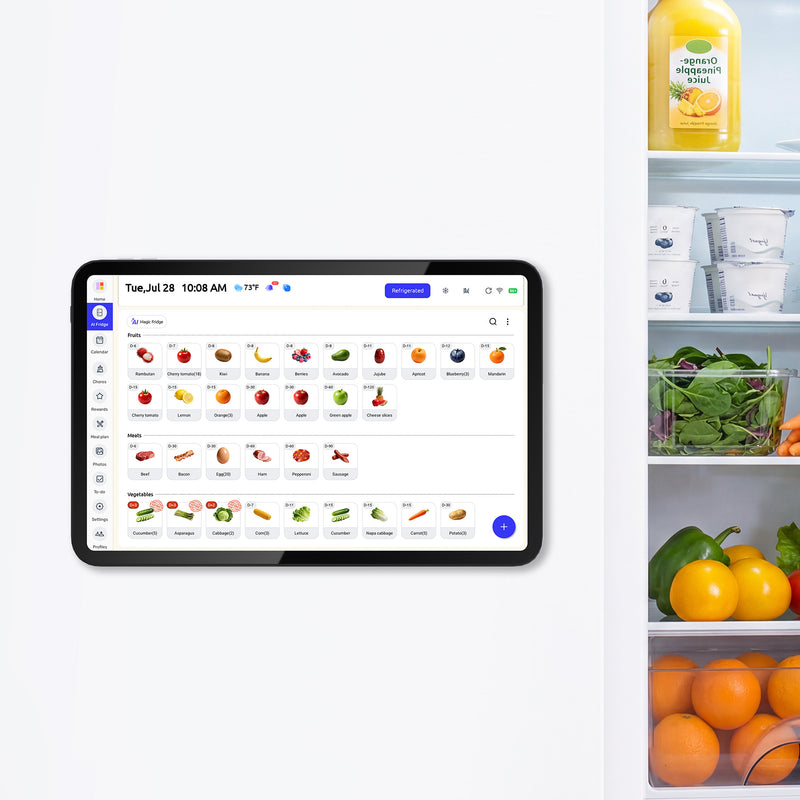
The Everblog FridgeCal Calendar mounts directly on your fridge door with a magnetic attachment, putting a built-in Smart Fridge Manager right where your kitchen life happens — making it easy to track everything you buy. Ever wonder where all your grocery money actually goes? When you're juggling receipts, mental notes about what's in the pantry, and trying to remember if you're over budget this month, it's nearly impossible to stay on top of things.
Add What You Buy in a Minute
Using daily family calendar habits to log what you buy takes maybe 30 seconds after each shopping trip. When you get home and put the groceries away, just tap through the categories right on the magnetic fridge calendar — fruits, vegetables, bread, proteins — and add what you bought. Do this consistently, and you'll finally know exactly what you're spending and what you have at home!
See Where Your Money's Actually Going
Want to know if you're buying too many snacks or not enough vegetables? The visual breakdown shows you what's really in your fridge:
- How much is fruits and veggies versus packaged foods.
- Whether proteins or snacks are taking up most of your budget.
- Easy-to-read overview that helps you make healthier, cheaper choices — right before you write your shopping list.
When you can see exactly where your grocery money is going — right there on your fridge door — it's a lot easier to make smarter choices before you spend another dollar. A quick tap when you get home is all it takes to stay on budget and stop the guessing game for good.
Tip #2: Avoid Buying Things Twice
The biggest grocery shopping frustration? Not knowing what your family already bought or used. When your inventory lives on a smart touchscreen calendar stuck to your fridge door with a magnetic mount, everyone sees the same list every time they walk into the kitchen — no more guessing, no more duplicates.
Check Your Fridge From Anywhere
Pull up your complete fridge inventory on your phone while shopping — the same list that's on your kitchen fridge calendar at home. Everything's organized by shelf and category, so you know exactly what you have. No more buying a second bottle of something that's already sitting on your kitchen counter.
Everyone Updates in Real Time
With the Family Calendar App, everyone stays synced across all devices. Here's how it works in real life:
- Partner finishes the orange juice? They add it to the list instantly from their phone.
- Kid grabs the last granola bar? They can update it right away.
- Dad picks up milk on his way home? It's instantly removed from the shared list.
- All changes sync in real time, so the whole family sees the same list.
No more texting "What do we need from the store?" Everyone knows exactly what's needed and what's already been bought.
Get Smart Reminders
Because the Everblog FridgeCal Calendar is a smart touchscreen calendar mounted magnetically right on your fridge, those low-stock alerts are impossible to miss — you see them every time you reach for something in the kitchen, not buried in an app you forgot to check. Set it once, and you'll get gentle reminders before items expire, helping you reduce waste and keep meals safe and fresh.
Tip #3: Use What You Have: Meal Planning That Saves Money
How many times have you stared into a packed fridge at 5 PM with no idea what to make for dinner? Then by the time you figure something out, that bag of spinach in the back has already gone bad. Meal planning shouldn't feel like another chore—it should actually help you use what you've got.
Cook What Needs Using Up First

The Everblog FridgeCal Calendar tracks expiration dates for everything in your fridge and gives you a heads-up two days before food goes bad — so you can use what you have before it goes to waste. That means you can plan Tuesday's stir-fry around the vegetables that need using, or make smoothies before those berries turn mushy.
Plan Around What You Already Own
Why buy more groceries when you've got plenty of food at home? Plan dinners around what's already in your fridge by glancing at the smart touchscreen magnetic fridge calendar on your way into the kitchen — your full inventory is right there on the screen before you even open the door. You can see exactly what proteins, vegetables, and pantry staples you have, then build your meals from there instead of creating a shopping list first.
Keep Meal Planning Simple and Realistic
Here's how to stop overcomplicating your meal planning and actually stick to your plan:
- Don't plan seven elaborate home-cooked meals if your week is packed—be honest about your schedule.
- Build in one or two "leftover nights" or simple meals when things get hectic.
- Use the meal planner to map out which nights need quick prep versus when you have time to cook.
- Let your family see the meal plan so everyone knows what's coming and can help prep.
Make Meal Prep Less Stressful
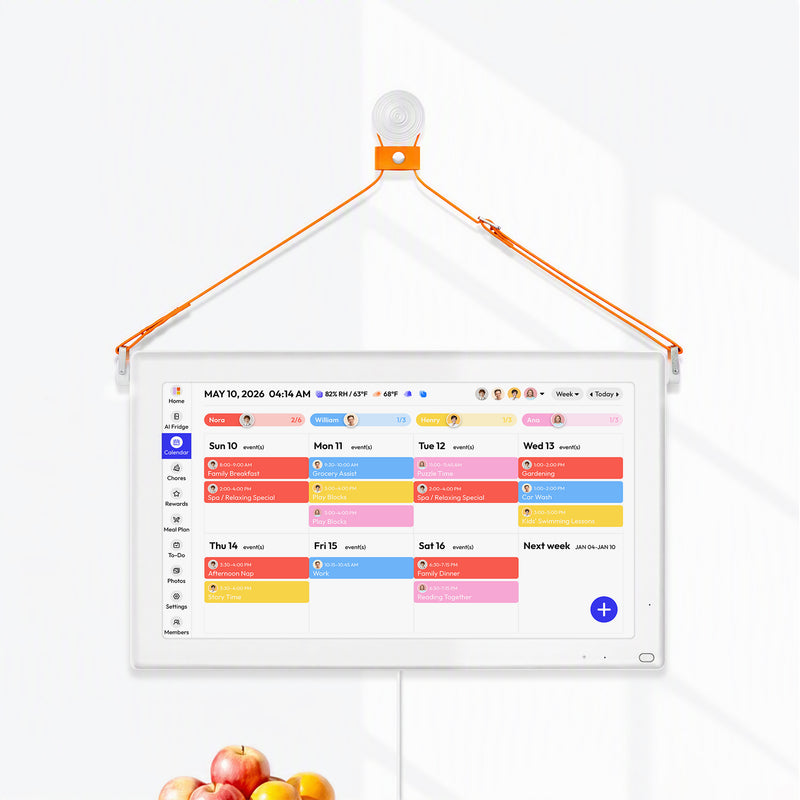
When your meal plan lives on the same digital calendar as your family's schedule, you can plan smarter. Got soccer practice until 7 PM on Wednesday? That's a crockpot or 15-minute meal night. Home all Saturday afternoon? Perfect time for batch cooking or trying that new recipe. Having your meal plan on a calendar that features Calendar Auto-Sync with Google or Outlook means less daily decision-making and more time actually enjoying dinner together.
Tip #4: Cut Down on Unnecessary Grocery Trips
Ever notice how "just running to the store real quick" somehow costs you $50 and an hour of your day? The more times you step into a grocery store each week, the more money walks out with you—and most of it wasn't even on your list.
Plan One or Two Big Shops Per Week
Set up your shopping days—maybe Sunday for the big haul and Wednesday for fresh produce—and stick to them. When you know exactly when you're shopping, your family can add items to Custom Lists throughout the week — straight from the fridge calendar in the kitchen, the moment something runs out. That way your list is ready before you go, and you're not buying things twice or forgetting things and making extra trips.
Fewer Trips Mean Way Less Impulse Buying
Here's the thing about consolidating trips: you save time AND money. Those "quick stops" for one item always turn into grabbing snacks, drinks, or whatever's on the end cap display. When you limit yourself to planned shopping days, you:
- Avoid impulse purchases that can significantly increase your grocery bill
- Save gas and time from multiple weekly trips
- Stick to your actual shopping list instead of wandering the aisles
- Have more free time for things that actually matter
Tip #5: Save Money by Eating at Home More Often
Cooking at home more often is one of the biggest ways to cut your food budget.
How Much Are You Really Spending on Takeout?

Here's an eye-opener: start tracking what you spend eating out versus cooking at home for just one week. You'll probably be shocked! Most families don't realize how fast restaurant meals drain their budget until they actually see the numbers.
Here's a rough comparison (costs vary by location and preferences):
| Meal Type | Restaurant Cost | Home Cooked Cost | Savings Per Meal |
|---|---|---|---|
| Family dinner (4 people) | $50-80 | $12-25 | $30-60 |
| Pizza night | $30-50 | $8-15 | $20-35 |
| Breakfast out | $35-50 | $5-12 | $25-40 |
Add it up over a month and those savings can really pile up—enough to make a difference in your family budget!
Start Small and Build the Habit
You don't need to go from takeout every night to home-cooked gourmet meals overnight. That's not realistic, and you'll just burn out. Instead, focus on building sustainable habits:
- Start where you are. Ordering out five nights a week? Aim for cooking three nights instead. Small wins count!
- Keep it simple. Rotisserie chicken, bagged salad, and microwaved sweet potatoes? That's a home-cooked meal and it took 10 minutes. No judgment here.
- Plan for your reality. Don't schedule elaborate meals on your busiest nights. Save quick-prep options for hectic days and save involved recipes for when you actually have time.
- Prep when you've got energy. Chop all your vegetables on Sunday while watching TV, or throw ingredients in the slow cooker before work. Future you will be grateful.
Make It Easy to Say Yes to Home Cooking
The key to cooking more at home is removing the friction. A fridge calendar in your kitchen does exactly that — when the meal plan and your full inventory are on the screen right in front of you, you're way less likely to give up and order takeout at 6 PM just because you couldn't figure out what to make.
- Cook with what you already have instead of thinking you need special ingredients.
- Get the kids involved. Yeah, they'll make a mess, but they're more likely to eat food they helped make—plus they're learning life skills!
- Embrace "good enough." A simple pasta with jarred sauce and frozen veggies is still cheaper and often healthier than ordering delivery.
- Keep backup options ready. Stock easy staples like pasta, rice, canned beans, and frozen proteins for nights when plans fall apart.
Every meal you cook at home instead of ordering out puts money back in your pocket. You don't have to be perfect—even swapping two or three restaurant meals for home cooking each week can save your family $200-400 per month. That's real money you can use for things that matter more than Wednesday night takeout you barely remember eating.
Take Control of Your Family's Food Budget Right Now
Track your spending for just one month and watch the savings pile up. Families often find they're spending considerably less on groceries by reducing food waste and cooking at home more often. The Everblog FridgeCal Calendar is a smart touchscreen magnetic fridge calendar that puts the Smart Fridge Manager, Custom Lists, and an integrated Meal Planner right where your family already looks a dozen times a day — no app-switching, no searching, just everything in one place on your fridge door. Start using what you've got, cook at home more often, and see the difference in your budget!
FAQs
Q1: What is the best touch screen wall calendar?
The Everblog FridgeCal Calendar is one of the strongest options available. It combines a family scheduling calendar, Smart Fridge Manager, built-in Meal Planner, and Custom Lists in one device — all synced in real time across your family's phones. It auto-syncs with Google Calendar and Outlook, supports color-coded family members, and includes interactive chore charts for kids. For families who want grocery management and scheduling in one place, it delivers more practical value than a standard digital wall calendar.
Q2: How do you put the Everblog FridgeCal Calendar on the fridge?
The Everblog FridgeCal Calendar is designed to mount directly on your refrigerator using strong magnetic attachment — no drilling or tools required. Simply position the device on a flat section of your fridge door, and the magnetic mount holds it securely in place. It stays accessible at eye level in your kitchen, making it easy for the whole family to check the schedule, update grocery lists, or log new items the moment they get home.
Q3: Do smart fridges have calendars?
Some do, but not reliably. Certain high-end smart fridges — like select Samsung Family Hub models — include a built-in calendar screen on the door. However, these are expensive appliances, and their calendar features are often limited compared to a dedicated device. A standalone smart touchscreen calendar like the Everblog FridgeCal Calendar gives you more control: you can mount it on any fridge, update it independently of your appliance, and replace or upgrade it without buying a whole new refrigerator.
Q4: Why are refrigerators not magnetic anymore?
Not all refrigerators have lost their magnetism, but many modern models — particularly stainless steel fridges — use a specific steel alloy that is non-ferromagnetic, meaning magnets do not stick to the surface. French door and built-in refrigerators are especially likely to have this issue.
Q5: Do any digital calendars stick to a fridge?
Yes. The Everblog FridgeCal Calendar is designed to mount directly on your fridge door using a magnetic mount — no drilling or tools needed. It stays at eye level in your kitchen, where your family already gathers, making it easy to check schedules, update grocery lists, and log items on the spot.
Q6: Does the Everblog FridgeCal Calendar have meal planning?
Yes. The Everblog FridgeCal Calendar includes a built-in Meal Planner. It tracks expiration dates, flags items going bad soon, and lets you plan meals around what you already have. You can map out the week, match meals to your schedule, and share the plan with the whole family from one screen.
Q7: Which digital fridge calendars are the best for families?
The Everblog FridgeCal Calendar is built specifically for family use. It combines a shared family schedule, Smart Fridge Manager, Meal Planner, and Custom Lists on one screen. It syncs with Google Calendar and Outlook, supports color-coded profiles for each family member, and includes a kids' chore chart. Everything a family needs for grocery management, meal planning, and scheduling lives in one place.


