


You're probably here because one screen in the house isn't enough anymore.
One child wants a show in the playroom. Someone else needs the living room TV for a game. You want a recipe video in the kitchen without balancing your phone against a fruit bowl. And when the weather's nice, a backyard movie sounds better than everyone crowding the couch again.
That's where a smart portable TV starts to make sense. But this category gets marketed in a confusing way. Some models are cordless screens you can move around easily. Others are closer to small TVs on rolling stands that shift from room to room but still feel like furniture. For families, that difference matters more than the app list on the box.
What Is a Smart Portable TV Really
A smart portable TV is best understood as a hybrid device. It isn't just a tiny television, and it isn't just a giant tablet. It sits in the middle.
A regular TV usually lives in one spot. A tablet travels easily, but it's built for one person looking at a smaller screen. A smart portable TV tries to combine the useful parts of both. It gives you a screen large enough for shared viewing, built-in streaming apps, wireless connection, and in many cases a battery so you're not tied to the wall.
That's why many parents look at one and think, “Oh, this is basically a family screen I can move.”
The idea makes sense because TVs have always been central to home life. The television became a near-universal household item long before it got smart, jumping from 9% ownership in 1950 to 95.5% by 1970, and by 2021 TVs were still more common in U.S. homes than computers or smartphones, according to the U.S. Census Bureau's history of television ownership. What's changed is not whether families want a shared screen. It's where they want to use it.

Think tablet brain, TV body
The easiest mental model is this:
- A TV side gives you a bigger screen, better speakers, and room-friendly viewing.
- A smart device side gives you apps, Wi-Fi, Bluetooth, touch on some models, and a familiar streaming experience.
- A portable side means you can move it where family life is happening instead of building the day around one fixed room.
A smart portable TV works best when it follows your family's routine, not the other way around.
If you've used a home smart display before, the idea will feel familiar. This guide to what a smart display is and how it works helps show why families like screens that mix utility and entertainment in one place.
Where people get confused
The biggest confusion is the word portable.
Some parents hear “portable” and picture something like a tablet with a kickstand. In reality, many products in this category are larger, heavier, and built for moving around the house rather than carrying in a tote bag. They're portable in the sense that they're not bolted to the wall. That doesn't always mean they're easy to grab with one hand while you also carry laundry and answer a child's question about missing cleats.
So when you shop, don't ask only, “Does it stream Netflix?” Ask, “Can I use this in the places my family needs it?”
Essential Features Your Family Will Actually Use
Specs can get noisy fast. For family use, a few features matter a lot more than the rest.
Screen size and resolution
A well-designed smart portable TV often uses a 22–32 inch 1080p panel, because that size gives you clear close-up viewing without pushing power use too high. Some models in this range offer over 3 to 6 hours of unplugged runtime, which is why 1080p remains such a practical choice for portable screens, as noted on the Skyworth portable display product page.
In plain English, that means this size works well on a kitchen counter, in a bedroom corner, or near a patio chair without feeling either tiny or oversized.
If you're buying for family sharing, this is the sweet spot:
- Smaller screens feel more personal, like a tablet replacement.
- Larger screens can be great, but they're harder to move and often less battery-friendly.
Battery life means more than battery claims
Battery life sounds simple, but it's where many parents get disappointed.
A portable screen isn't automatically a practical one. If the battery only gets you through part of a movie, or if brightness drops so much that outdoor viewing becomes frustrating, the device becomes a “move it near an outlet” screen instead of a free-moving one.
Practical rule: Check whether the brand states runtime in normal use, not just that a battery exists.
For family life, battery matters most in these moments:
- Kitchen use: You don't want a cord crossing a walkway.
- Patio use: Outlets are often in awkward places.
- Kids' spaces: Fewer cables usually means fewer things to trip over or tug on.
Ports and wireless connections
This is the difference between “nice streaming screen” and “useful household screen.”
Look for:
- HDMI: Lets you connect a game console, streaming stick, or laptop.
- USB or USB-C: Helpful for accessories, local media, or charging support on some setups.
- Wi-Fi and Bluetooth: Needed for app streaming, wireless headphones, remotes, and speakers.
A lot of families end up using a portable TV in more ways than expected. It starts with cartoons and quickly becomes a workout screen, homework helper, video-call display, or recipe station. If your household already likes flexible screens for photos and shared content, this roundup of the best digital frame options is useful context for thinking about screens that do more than one job.
Smart software matters more than fancy wording
You don't need the most technical operating system description. You need one that does three things well:
- Runs the apps your family already uses
- Feels simple enough that everyone can use it
- Remembers logins and settings without constant fuss
That last one matters more than brands admit. Parents don't want another device that needs a mini troubleshooting session every Saturday night.
From Kitchen Helper to Backyard Movie Night
A smart portable TV proves its value in ordinary moments, not in product photos.
One of the most useful setups is the kitchen. You can pull up a recipe video at eye level while cooking, keep a child occupied with a familiar show during dinner prep, or stream music without passing a phone around with messy hands.

The rooms where it earns its keep
In a playroom, the benefit is less about novelty and more about traffic control. The main TV stays free, and kids get a screen big enough for shared watching without everyone hunching over a tablet.
In a bedroom, a portable TV can be a temporary solution instead of a permanent fixture. That matters if you don't want to mount another screen on the wall but still want flexibility for sick days, quiet time, or weekend cartoons.
Here are a few family situations where it fits naturally:
- Morning routine support: Stream weather, music, or a quick school video while everyone gets ready.
- Homework overflow: Use it as a larger screen for educational apps or a connected laptop.
- Game night helper: Display trivia, karaoke lyrics, or a scoreboard where everyone can see it.
- Vacation rental companion: Bring one screen that feels familiar without relying on whatever TV setup is already there.
Outdoor use sounds great. Then reality steps in.
Backyard movie night is the dream use case, but portability claims need a reality check in such situations.
If the screen is easy to roll but awkward to lift, or if glare makes daytime viewing difficult, you'll use it differently than the ad suggests. For many families, the patio win is less “camping gadget” and more “simple evening screen that doesn't require rearranging the living room.”
This quick video gives a feel for how families think about the category in real life:
If you'd hesitate to move it while holding a drink in one hand and opening a door with the other, it's not grab-and-go. It's movable.
That's not a bad thing. It just changes the buying decision. Some families need cordless freedom. Others just need one screen that can rotate between the kitchen, playroom, and patio without turning into a home project.
Portable TV vs a Tablet or Small TV
When parents compare options, the key question isn't which device is “best.” It's which one fits the way your family watches together.
A smart portable TV fills a middle space that neither a tablet nor a small standard TV handles especially well.

Quick comparison
| Device | Best at | Main compromise |
|---|---|---|
| Smart portable TV | Shared viewing in different rooms | Can be bulkier than “portable” suggests |
| Tablet | Personal use and easy carrying | Smaller screen, lighter audio |
| Small TV | Traditional viewing in one spot | Usually needs constant power |
The strongest portable models act more like compact Android tablets on stands than traditional TVs, combining touch input, Wi-Fi, Bluetooth, app stores, and TV-style inputs like HDMI, which lets them work as a streaming hub, secondary monitor, and interactive screen in one device, as discussed in this product review video.
When a tablet is enough
If one child is watching alone in the car or on a couch corner, a tablet may be the simpler tool. It's lighter, easier to hand off, and already familiar.
That's especially true if you're already building a tablet setup with accessories like an ipad keyboard, because then the device can pull double duty for schoolwork, writing, and entertainment.
But tablets break down for family viewing. Two or three people quickly run into the same problems:
- the screen feels cramped
- the sound is thin
- someone always blocks the view
- battery use jumps when brightness goes up
When a small TV is enough
A small TV still makes sense if the screen will live in one room most of the time. Guest room, office, basement. Done.
But if you want a screen to float through the house, a regular small TV often turns into a cord problem. You're hunting outlets, dealing with stand stability, and moving something that was never really meant to move much.
A tablet is personal. A small TV is stationary. A smart portable TV is communal and flexible.
That middle ground is why the category exists.
How to Pick the Perfect Smart Portable TV
You finish dinner, carry the screen into the kitchen for cleanup music, then realize it needs an outlet. Later, you want it on the patio for a movie, but the base is awkward, the battery is limited, and suddenly “portable” feels a lot less simple than the box made it sound.
That is the right place to start.
For families, portability is not one feature. It is a mix of weight, battery life, stand design, and how often you plan to move the screen. Some models are easy to carry from room to room. Others are better described as re-positionable furniture. They can move, but usually with planning, both hands, and a clear path.
Start with your home, not the product page
A smart portable TV should fit your routine the way a good stroller fits your neighborhood. A lightweight travel stroller and a big jogging stroller are both “mobile,” but they solve very different problems.
Ask yourself how this screen will move in real life.
- Mostly stays put, with occasional moves? A larger wheeled model can work well.
- Moved by hand several times a day? Weight and grip matter more than screen size.
- Used in spots without easy outlets? Battery life moves near the top of your list.
- Used around kids, pets, or busy walkways? A stable stand matters more than a sleek one.
Some families need grab-and-go. Some need roll-it-to-the-other-side-of-the-room. Those are not the same thing, and treating them as the same often leads to regret.
A review of wheeled portable TV designs shows this clearly. A rolling base can be helpful inside the house, but it does not mean the TV is easy to lift, carry outside, or use away from power.
The buying filters that matter most
Screen size and clarity
Pick the screen for the job, not for bragging rights.
If the TV will sit on a kitchen counter, nightstand, or playroom shelf, a moderate-size display is usually easier to live with. Menus stay readable, subtitles are comfortable, and the screen does not take over the whole space. A larger screen can sound appealing, but it also adds weight and makes the TV harder to move through doorways or store between uses.
Real-world mobility
This is the filter many parents miss.
Ask the boring questions first, because they are the ones that decide whether the TV gets used or ignored.
- Can one adult move it without feeling careful or tense?
- Does it fit through your narrowest doorway or around a hallway corner?
- Is the stand steady if a child bumps the side?
- Will you end up leaving it plugged in most of the time?
If the honest answer is, “we'll roll it a few feet and leave it there,” that is fine. You are not choosing wrong. You are choosing a movable home screen, not a grab-and-go device.
Battery and power habits
Battery claims need context. A listed runtime may sound generous until brightness goes up outdoors, volume increases, or streaming runs for a full movie.
For backyard use, car trips, or rental stays, it helps to plan your internet setup at the same time as your power setup. Guides to SwiftNet Wifi solutions can help you think through portable internet before a family movie night turns into a buffering lesson.
Connections and household flexibility
Streaming apps are only part of the story. Many families end up wanting HDMI for a game console, USB for media files, or Bluetooth for headphones after bedtime.
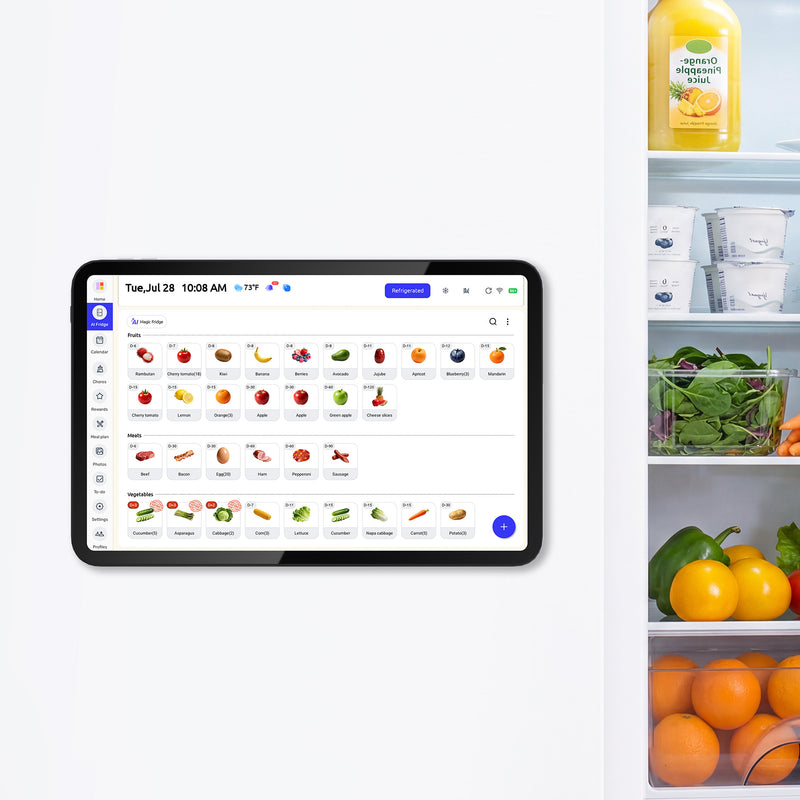
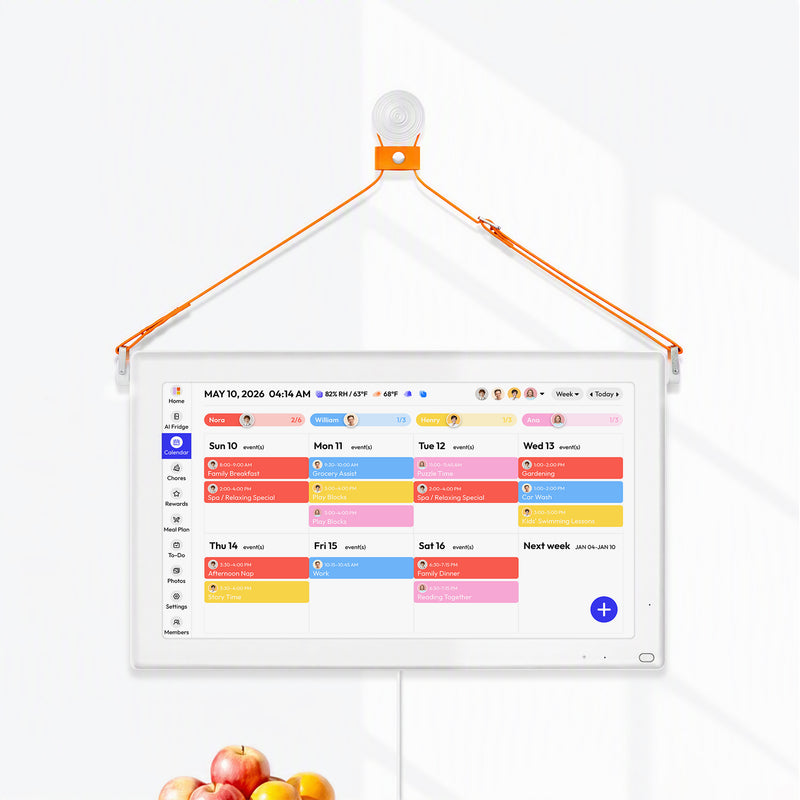
Some shared household displays also blend family organization with media features. Everblog is one example in that broader category, combining planning tools and screen-based household use. If your goal includes both entertainment and home coordination, that type of setup may be worth comparing alongside TV-first models.
Ease of use
The best choice is often the one nobody has to explain twice.
A tired parent should be able to open the home screen quickly. A grandparent should be able to find volume without hunting. An older child should be able to switch inputs without turning it into a family troubleshooting session. Small frustrations add up fast with a device that moves around the house.
A short shopping checklist

- Check the stand: Stable wins over stylish.
- Check the battery claim: Focus on whether it covers your usual use, not just the label.
- Check the route: Make sure it can move where your family will use it.
- Check the ports: HDMI and USB give you more options later.
- Check the setup footprint: A base that looks neat online can feel bulky in a real room.
- Check cable management: If it will spend time plugged in, ways to hide TV cords cleanly and safely can make the setup easier to live with.
Buying shortcut: Judge portability by what happens between rooms, not by the marketing photo. If your family can move it where you want it, power it easily, and park it safely, it is portable enough for your home.
Your First Five Minutes Setup and Tips
Setting up a smart portable TV is usually straightforward because the modern smart TV experience has been mainstream for years. The phrase “smart TV” appeared around 2007, and by the 2020s an estimated 88% of U.S. homes had an internet-connected TV, according to this history of smart connected TV. So the setup flow will feel familiar if you've used any streaming device before.
Start with these steps
- Charge it first if it has a built-in battery.
- Connect to Wi-Fi before signing into apps.
- Pair the remote if prompted during startup.
- Log into your main services first, such as the ones your family uses most.
- Test one show and one connected feature, like casting or HDMI input.
If you plan to use your TV in a backyard, rental, or travel setting, a guide to SwiftNet Wifi solutions can help you think through portable internet options before buffering becomes the mood-killer of the evening.
Quick fixes parents actually use
- Video keeps buffering: Move closer to your router or lower streaming quality.
- App feels stuck: Fully close it and reopen rather than tapping repeatedly.
- Remote won't respond: Re-pair it before assuming the TV is faulty.
- Setup looks messy: Hiding cords makes a bigger difference than people expect, especially with rolling or countertop setups. These tips for how to hide TV cords are helpful if your “portable” setup still spends a lot of time in one place.
Keep your checklist simple: screen size, real portability, battery habits, ports, and easy software. Get those right, and the rest tends to fall into place.
If you're building a home that needs both flexible entertainment and better family coordination, Everblog is worth a look. It's a shared digital family display designed for schedules, chores, meals, and media, which can make it a practical companion for busy households that want fewer scattered screens and more visibility in one place.


