


ADHD-friendly meal planning works best when it removes tiny daily choices before they pile up. A short meal rotation, a visible kitchen plan, and schedule-matched dinners can turn “What’s for dinner?” into one calm household routine.
Does dinner feel harder than it should because every choice leads to another choice: what to cook, what’s thawed, who will eat it, whether you have the ingredients, and whether takeout would be easier? A practical planning system can reduce the daily scramble by deciding the most repetitive food choices ahead of time and making them visible where the family already gathers. You’ll get a simple way to plan meals without turning your kitchen into a second job.
Why ADHD Makes Meal Planning Feel So Heavy
ADHD often makes meal planning difficult not because a person “doesn’t care,” but because meals contain many hidden steps. Choosing a recipe, checking ingredients, estimating prep time, remembering preferences, making a grocery list, thawing food, and starting at the right time are separate executive-function demands.

Food choice is also unusually decision-heavy. A 2025 narrative review in Nutrients describes everyday eating as a high-frequency decision context involving what to eat, when to eat, how much to eat, whether to cook, and how to prepare food; it also notes that repeated or effortful decisions can reduce decision quality over time through decision fatigue. For an ADHD household, that can show up as skipping the plan, defaulting to packaged food, buying duplicate groceries, or ordering takeout even when there is food in the fridge.
The goal is not a perfect meal plan. The goal is fewer open loops. When the plan answers the same questions in advance, the kitchen becomes calmer because fewer decisions are waiting at 5:30 PM.
What “Eliminating Micro-Decisions” Means
Micro-decisions are the small choices that seem harmless on their own but become exhausting in sequence. Dinner might begin with “chicken or pasta?” but quickly becomes “Which chicken recipe, with what side, from which store, cooked by whom, and will the kids eat it before soccer?”
Meal planning reduces that load by turning repeated choices into defaults. A meal plan can be as simple as deciding dinners in advance so shopping and cooking follow a clear path; this definition appears consistently in family-budget planning advice, where meal planning is framed as deciding meals before the week begins to reduce last-minute stress and guide grocery buying.
For ADHD families, the best defaults are visible, repeatable, and forgiving. That might mean pasta every Wednesday, breakfast-for-dinner on busy nights, frozen stir-fry ingredients always stocked, or a “no-cook” dinner after therapy appointments. The plan should carry the memory work so one parent’s brain does not have to.

The ADHD-Friendly Meal Planning System
Start With the Hardest Meal, Not the Whole Week
Trying to plan breakfast, lunch, dinner, snacks, school lunches, and grocery inventory at once can overload the system before it starts. Begin with the meal that causes the most friction. For many families, that is dinner.
A helpful first step is to identify which meals or times of day are hardest, then choose whether weekly or monthly planning fits your life; meal planning can be weekly, monthly, prep-ahead, same-day cooking, or a mix depending on the household. If weeknights are the problem, do not start by reorganizing every pantry shelf. Start by choosing five dinners.
A real-world example: if Monday has tutoring, Tuesday has swim, Wednesday is open, Thursday runs late, and Friday is family movie night, the plan might be rotisserie chicken bowls, tacos, a new recipe, freezer soup, and homemade pizza. The schedule decides the meal difficulty, not your mood at the end of the day.
Build an 8-to-12 Meal Rotation
An ADHD-friendly rotation is not boring; it is protective. It narrows the field so you are choosing from familiar meals instead of the entire internet.
One health care article describes meal fatigue as the point where planning, shopping, and cooking feel overwhelming rather than enjoyable, and recommends a short rotation of 8 to 12 go-to meals the household already likes. That range is useful because it creates variety without requiring constant novelty.
A strong rotation includes meals that match different energy levels. One meal should be almost automatic, like pasta with jarred sauce and frozen vegetables. One should use pantry staples, like bean quesadillas. One should feel fresh but easy, like sheet-pan chicken. One should be child-participation friendly, like a baked potato bar. One should be a rescue meal for the night when everything slips.
Planning Choice |
Why It Helps ADHD Brains |
Possible Drawback |
8-to-12 meal rotation |
Reduces recipe searching and grocery uncertainty |
Can feel repetitive without small variations |
Theme nights |
Gives each day a built-in direction |
Too rigid if every theme becomes mandatory |
Visible fridge plan |
Keeps the plan out of one person’s head |
Needs regular updating to stay useful |
Batch cooking |
Lowers effort on busy nights |
Requires a block of prep time upfront |
Shared grocery list |
Prevents duplicate or forgotten purchases |
Works only if the family uses it consistently |

Match Meals to the Calendar
A meal plan fails quickly when it ignores the family schedule. The most beautiful recipe is the wrong recipe if it lands on a night with sports pickup, homework stress, and a late work call.
Digital and paper planning advice point to the same principle: plan meals alongside the calendar so dinner matches the day’s demands. A calendar-based approach puts quick, easy meals on busy days and builds grocery lists after checking what is already in the pantry and fridge.
For a family with ADHD in the mix, this matters because transition points are expensive. If Wednesday is the one calmer night, that is the night for a new recipe or chopping vegetables for Thursday. If Thursday is always late, Thursday gets leftovers, slow-cooker food, or sandwiches without apology.
Use a Visible Kitchen Hub
A plan that lives only inside an app can disappear from household awareness. A plan that lives only in one parent’s mind can become a reason for resentment. The kitchen is often the best command center because everyone passes through it.
A visible fridge or wall calendar helps children and adults independently check what is happening, and a shared household calendar can teach preparation, time management, and family participation. For ADHD meal planning, visibility is not decoration. It is an executive-function support.
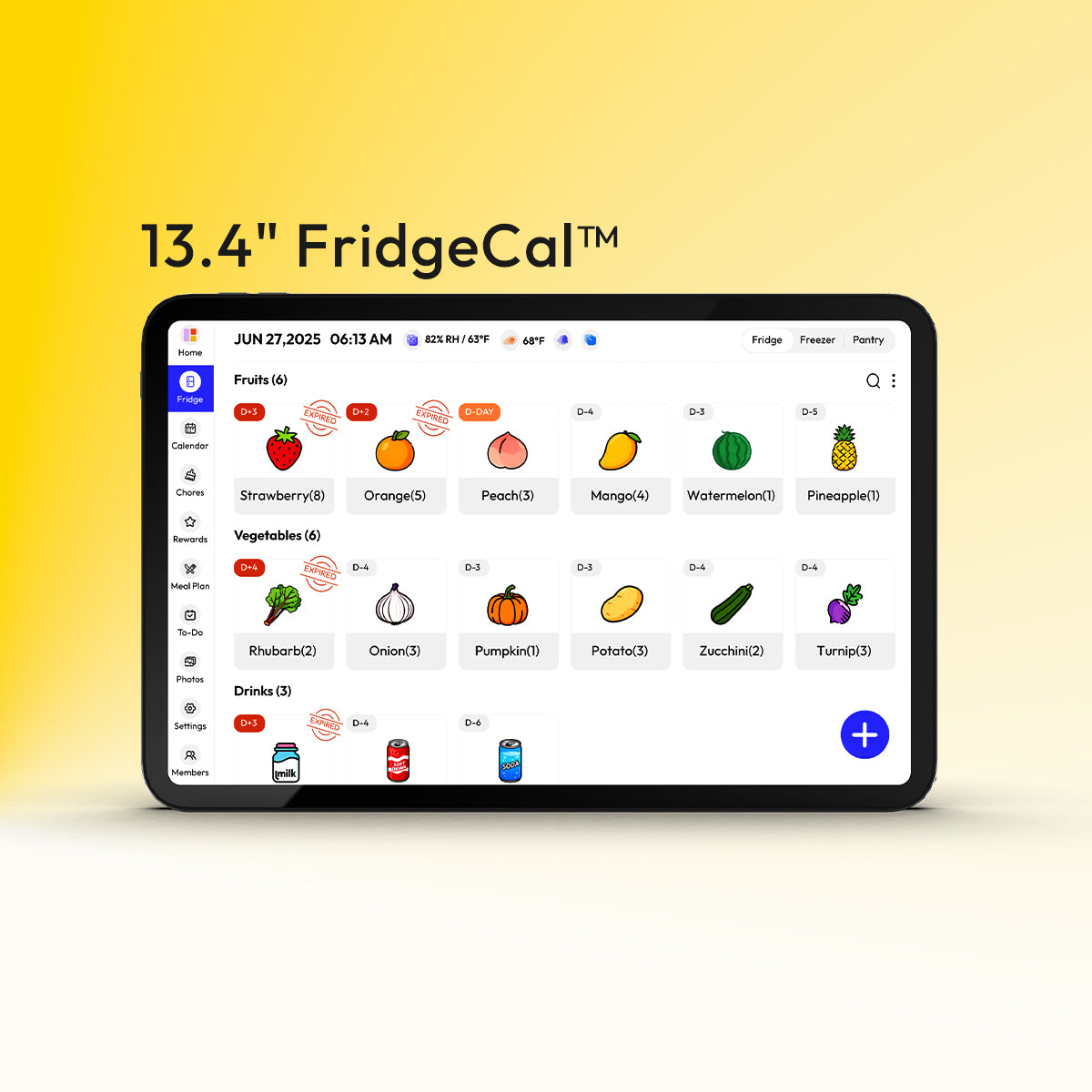
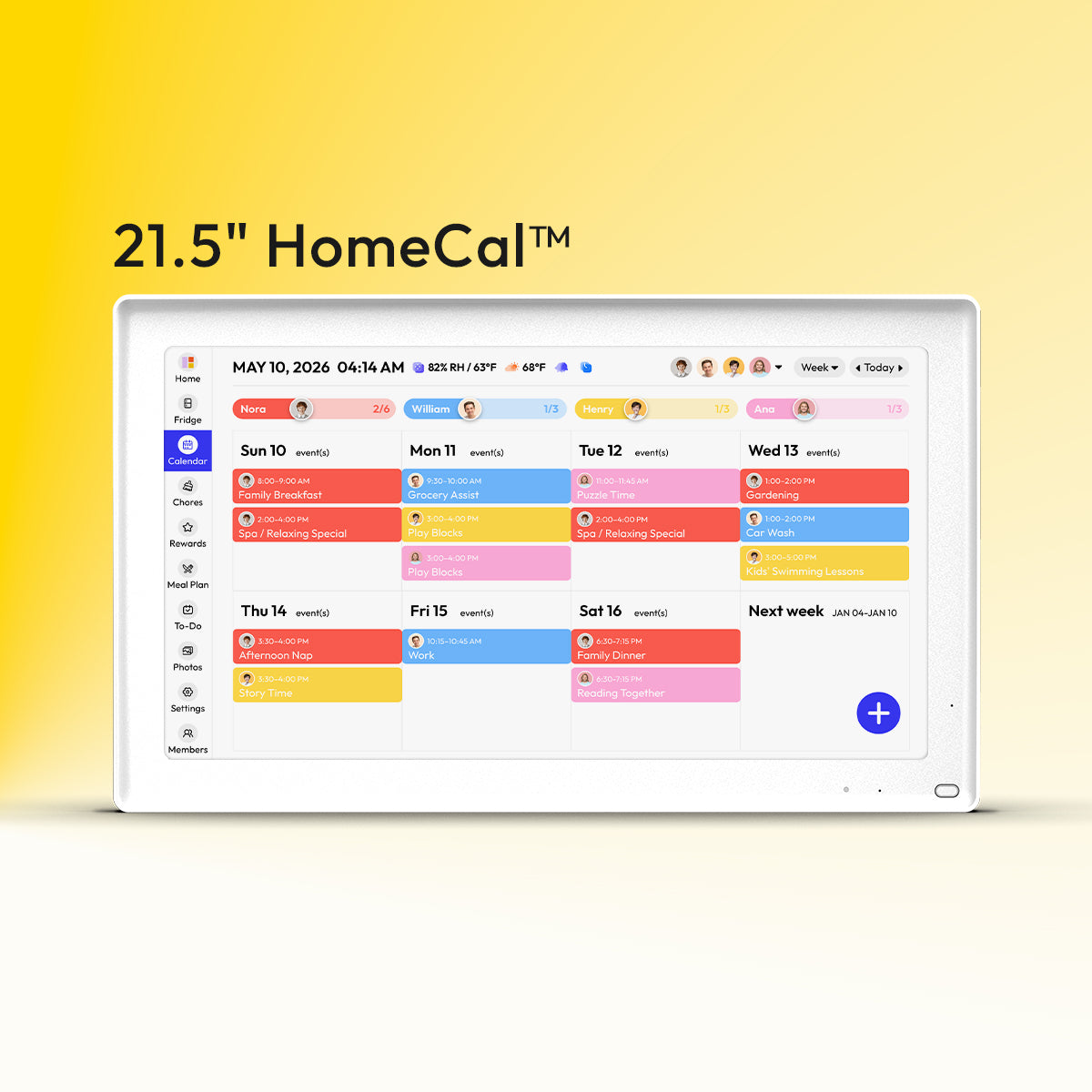
A smart digital fridge calendar can go further by showing meals, appointments, reminders, weather, and shopping lists in one place. Shared calendar app advice also notes that family calendar tools can centralize schedules, reminders, chores, and sometimes meal planning, which helps reduce misunderstandings and last-minute scrambles.
The practical setup is simple: put dinner on the same display as the day’s activities. If the calendar says “Soccer 5:00 PM,” the meal line might say “Freezer chili, thaw AM.” That one reminder prevents the common ADHD trap of having a plan but missing the prep window.

Paper, App, or Digital Fridge Calendar?
There is no single best tool. The best tool is the one your household will actually see and update.
Paper planners and fridge pads are simple, low-cost, and easy for children to read. Their limits are that they do not sync, they can get messy, and they depend on someone rewriting the plan. Product pages for fridge-based meal planners frame them as visible tools for reducing household overwhelm, with one fridge meal plan pad designed specifically to keep meal planning in a central kitchen location.
Apps are useful when grocery lists, recipes, and schedules need to sync across phones. Their weakness is visibility. If nobody opens the app at dinner time, the plan may as well be invisible.
A digital fridge calendar combines shared visibility with syncing. It is especially useful when one parent shops, another cooks, and kids need to know what to expect. The tradeoff is cost, setup, and screen management. For many ADHD households, the investment makes sense only if the display reduces repeated questions and keeps grocery needs, meal plans, and reminders in one place.
A Calm Weekly Workflow That Takes Less Mental Energy
Choose one planning window each week, ideally tied to an existing routine. Sunday afternoon works for many families, but any predictable time is fine. The habit matters more than the day.
Start by checking the calendar. Mark late nights, early mornings, appointments, practices, and nights when cooking is unrealistic. Then assign meals by energy level. Put the easiest meals on the hardest days. Add one flexible meal that can move if plans change. Add one leftover or takeout night on purpose so it does not feel like failure.
Next, check the fridge, freezer, and pantry before choosing recipes. This reduces duplicate purchases and food waste. Calendar-based meal planning advice recommends checking what you already have and choosing recipes with overlapping ingredients so grocery trips become more efficient and less expensive through a clear grocery list.
Finally, write the plan where everyone can see it. Keep entries short: “Tacos,” “Chicken rice bowls,” “Leftovers,” “Breakfast dinner,” “Pizza night.” Add prep reminders only where they matter, such as “thaw beef” or “start rice 5:00 PM.” Too much detail turns the plan into visual noise.
Nutrition Without Perfection Pressure
ADHD-friendly meal planning should support health without turning every dinner into a nutrition exam. A balanced plate can be built from simple defaults: a protein, a grain or starchy food, a fruit or vegetable, and a fat or sauce that makes the meal enjoyable.
Wellness advice highlights balance across fruits, vegetables, whole grains, protein, dairy or alternatives, and healthy fats, while also recommending an 80/20 approach that leaves room for flexibility in healthy choices. That flexibility matters. A rigid plan often breaks after one hard day; a humane plan absorbs real life.
For example, tacos can become a balanced default with tortillas, beans or meat, shredded lettuce, salsa, cheese, and fruit on the side. Pasta night can include frozen vegetables and chicken sausage. Breakfast-for-dinner can include eggs, toast, berries, and yogurt. These are not glamorous meals, but they are clear, repeatable, and family-friendly.
When Meal Planning Still Feels Overwhelming
If planning still feels impossible, shrink the task. Plan only three dinners. Repeat the same breakfast. Keep two freezer meals available. Use pre-cut vegetables, frozen rice, rotisserie chicken, canned beans, or simple sauces. These are supports, not shortcuts to feel guilty about.
Practical meal supports such as frozen vegetables, pre-cut produce, rotisserie chicken, and simple sauces can make balanced meals easier when food choices feel overwhelming, especially when combined with batch cooking and loose weekly routines. For ADHD families, convenience can be the bridge between intention and dinner on the table.
If food decisions create ongoing anxiety, guilt, restriction, or conflict, it may be time to involve a registered dietitian, therapist, or health care provider. Meal planning should reduce stress, not become another measure of worth.
FAQ
How many meals should an ADHD-friendly plan include?
Start with three to five dinners for the week and an 8-to-12 meal rotation overall. That gives enough structure to reduce decision fatigue while leaving room for schedule changes, leftovers, and real family moods.
Should kids help choose meals?
Yes, but within limits. Instead of asking, “What do you want for dinner this week?” offer two acceptable choices, such as tacos or pasta. This gives children ownership without handing them an overwhelming open-ended decision.
Is a digital fridge calendar better than a phone app?
It can be, especially when the problem is visibility. A phone app works well for the person who checks it, while a fridge display helps the whole household see the same plan without unlocking a device.
A Gentler Way to Feed the Family
ADHD meal planning works when it removes pressure, not when it demands perfection. Put the plan where the family can see it, repeat meals without guilt, match dinner to the day’s energy, and let the system answer the small questions before they become too loud.


