


A wall display can turn budgeting from a private spreadsheet into a calm, shared family habit. When goals are visible every day, impulse spending becomes easier to pause, discuss, and redirect toward what your household actually wants.
Ever notice how a quick “we deserve takeout” or an unplanned online order feels harmless until the month suddenly feels tight? A simple visual goal, updated weekly on a family wall display, can make the tradeoff testable: everyone sees whether today’s spending supports the beach trip, emergency fund, debt payoff, or holiday plan. Here is how to set up a practical system that lowers money tension and helps the whole household make better choices together.
What Impulse Spending Really Costs a Family
Impulse spending is unplanned spending driven by emotion, convenience, stress, fatigue, or a sense of missing out. In family life, it rarely looks dramatic. It often shows up as extra snacks during errands, a toy added to the cart, a subscription no one uses, or another delivery meal after a packed school night.

The problem is not that every spontaneous purchase is wrong. The problem is that impulse spending is usually invisible until it has already crowded out something more meaningful. A $28 takeout lunch twice a week becomes about $224 over four weeks. That could cover a chunk of a sports registration fee, a birthday party budget, a holiday sinking fund, or several weeks of groceries.
Expense tracking helps because it shows where money is actually going, not where the family hoped it was going. Consumer guidance frames expense tracking as a realistic habit for households managing competing pressures, which matters because most families do not need a perfect finance system; they need a repeatable one.
Why Visual Goals Work Better Than Private Budgets
A private budget on one parent’s phone can be technically correct and still fail the family. If only one person sees the plan, that person becomes the reminder, the gatekeeper, and sometimes the “bad guy.” A wall display changes the emotional setup. The goal is no longer hidden in an app; it becomes part of the home environment.
Visual goal tracking turns an abstract target into something the family can see moving. For example, if your family wants to save $1,500 for a summer beach trip, divide the display into 15 progress blocks worth $100 each. When the family saves $300, three blocks fill in. When an unplanned $45 purchase happens, the choice becomes less shame-based and more concrete: was that purchase worth almost half a block?

Visual progress tools are commonly used in fundraising because they create transparency and motivation; fundraising research notes that adding a goal tracker to a fundraising page can increase donations by up to 35%. A family budget is not a fundraiser, but the same practical lesson applies: people respond better when progress is visible, specific, and easy to update.
Wall Display vs. Budgeting App: What Each Does Best
Budgeting apps are useful for categorizing transactions, linking accounts, projecting cash flow, and tracking debt or savings goals. A wall display is useful for shared attention. It puts the family’s current priorities where everyone can see them during normal routines: breakfast, homework, packing lunches, and Sunday planning.
Tool |
Best For |
Family Limitation |
Budgeting app |
Detailed tracking, bank syncing, reports, categories |
Often private to one adult and easy for kids to ignore |
Spreadsheet |
Custom control, manual accuracy, flexible categories |
Requires discipline and frequent updates |
Wall display |
Shared visibility, reminders, family buy-in, goal progress |
Needs simple inputs and a regular review habit |
Separate savings account |
Clear money separation by goal |
Does not explain the goal visually to children |
A strong household system often combines these tools. Financial planning advice recommends separate savings accounts for financial goals because separation makes it harder to accidentally spend money meant for something else. The wall display then becomes the family-facing side of that separation: one screen showing “Vacation Fund: $600 of $1,500” or “Emergency Fund: $900 of $2,000.”
How to Set Up a Budget Wall Display Without Overcomplicating It
Start with one shared goal. Not six. One. Choose something the whole household can understand, such as paying off a credit card, building a $1,000 starter emergency fund, saving for back-to-school costs, or funding a family weekend away. The goal should have a target amount, a deadline, and a reason that feels real.
Next, create three simple display areas. One area shows upcoming money dates, such as paydays, bill due dates, insurance renewals, and subscription renewals. One area shows the visual goal tracker. One area shows the weekly spending guardrail, such as “Eating out: $60 left this week” or “Fun money: $35 left until Friday.”

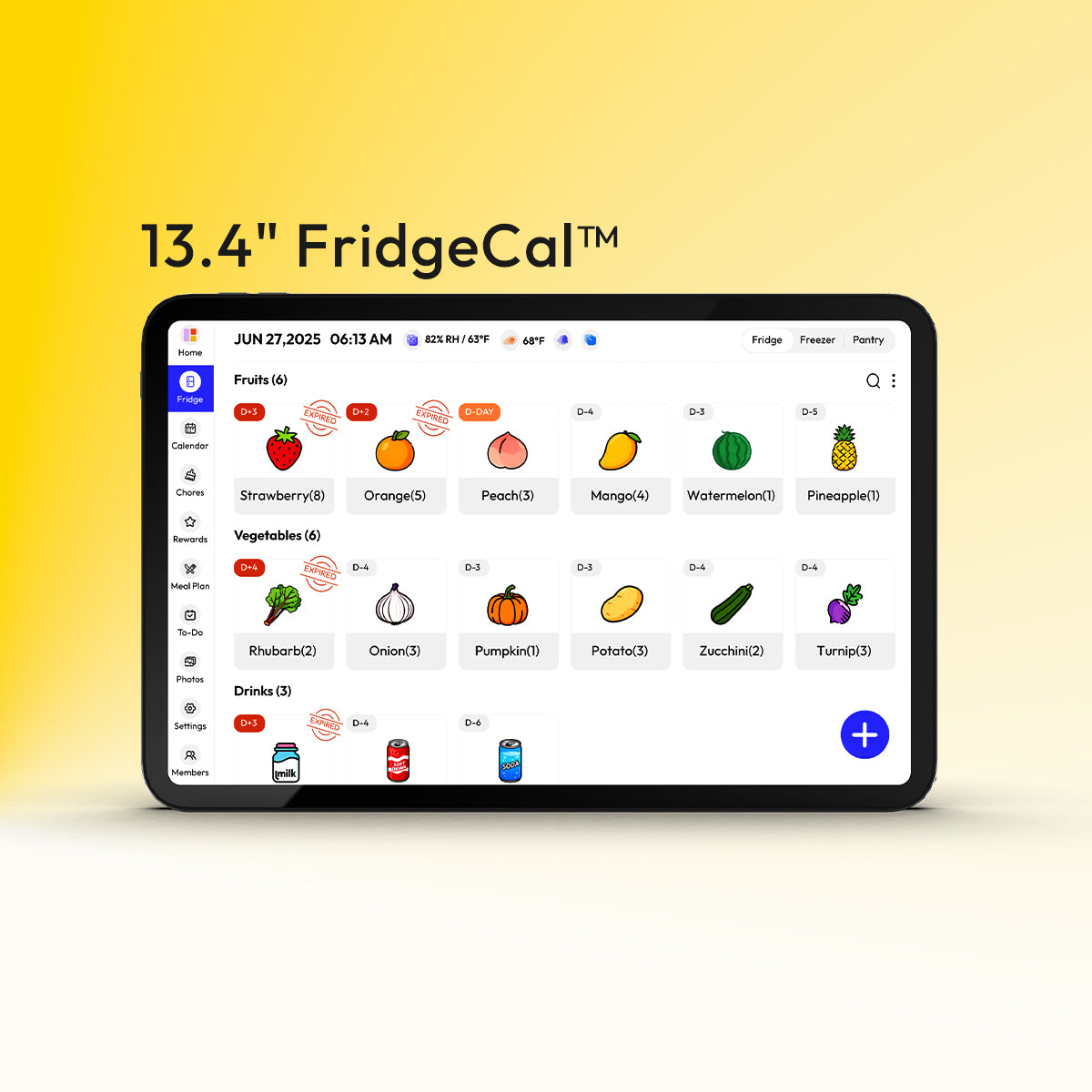
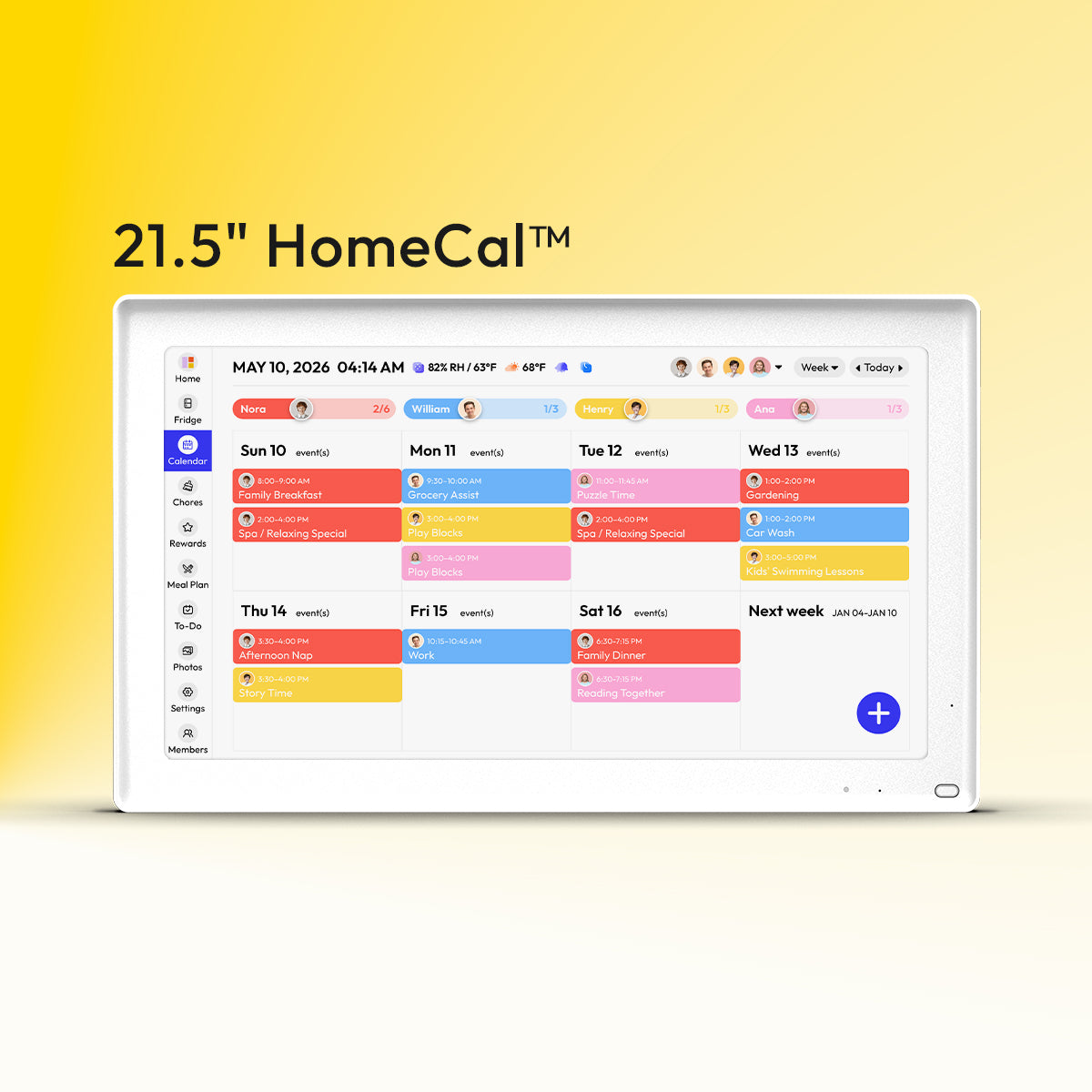
A digital family calendar works well here because the same screen can already hold schedules, chores, reminders, meal plans, and lists. A shared family dashboard can serve as a central place for schedules, grocery lists, dinner planning, and to-dos, which is the kind of household visibility that helps money habits feel connected to daily life instead of separate from it.
If you use a smart calendar product, keep the money view simple. An auto-synced calendar can pull plans from multiple devices into one household view. The budgeting layer does not need to expose sensitive account details. It only needs to show the next bill, the current goal, and the weekly spending boundary.
What to Show and What to Keep Private
A wall display should reduce stress, not turn personal finance into public surveillance. Show categories and progress, not full account numbers, full balances, or private transactions that could embarrass someone. A good display might say “Credit Card Payoff: $1,200 left” or “Grocery Budget: $145 left this week.” It does not need to show where every adult bought coffee or which child needed a school fee.
For bill reminders, use safe labels such as “Electric bill due Friday” or “Car insurance auto-pay Monday.” If you include account identifiers, use only partial details, such as a bank name and last four digits, and avoid full card or account numbers. This keeps the screen useful without making the kitchen feel like a finance office.
Security matters more when budgeting apps connect to bank accounts. Credit counseling guidance notes that digital finance tools can support smarter money management, but families should still choose tools carefully and understand what information is being shared. For many households, the safest pattern is to keep detailed transaction data in a banking or budgeting app and show only summarized goals on the wall display.
Turning Impulse Moments Into Family Conversations
The best use of a visual goal is not scolding. It is pausing. When someone asks for an unplanned purchase, point to the display and make the tradeoff concrete. “We can do that, and it will move the vacation goal back by about $30. Do we still want it?” That question gives children a real decision without shaming them for wanting something.

For younger kids, use simple visuals: filled bars, stars, jars, or blocks. For tweens and teens, add more ownership. Let them update the progress tracker, compare prices, or suggest a lower-cost alternative. If a teen wants a $90 hoodie, the wall display can help them weigh it against a shared goal or their own savings category.
This is where a wall display quietly supports connection. Reviews of shared planning tools often highlight school, work, sports, chores, meals, and routines, and note that digital family calendars are often chosen based on visibility, reminders, work-calendar integration, and household needs. Budgeting belongs in that same rhythm because money decisions often follow schedule pressure. A meal plan on the display can prevent last-minute takeout. A bill reminder can prevent a late fee. A visible goal can make a quick purchase feel less automatic.
A Weekly Budget Check-In That Takes 10 Minutes
Pick one calm time each week, such as Sunday evening after dinner. Open the budgeting app or bank account privately, then update the wall display with only the numbers the family needs. Adjust the goal progress, check upcoming bills, and set the weekly spending guardrail.
A simple check-in might sound like this: “We saved $75 this week, so the emergency fund is now at $675. The electric bill is due Thursday. We have $80 for eating out and entertainment until next Sunday.” That is enough. The goal is not a lecture; it is shared orientation.
Budgeting methods can support this rhythm. The 50/30/20 budget divides income into needs, wants, and savings or debt repayment, while zero-based budgeting assigns every dollar a purpose. The best method is the one a household can actually maintain, especially when budgeting strategies vary in how much tracking they require. For a busy family, the wall display can show the simplified view while the app or spreadsheet holds the detail.
Pros and Cons of Budgeting on a Wall Display
A wall display’s biggest advantage is shared visibility. It reduces the burden on one adult to remember every bill, explain every “no,” and keep every goal alive. It also helps children learn that money is connected to choices, timing, and values.
The main downside is privacy. A screen in a shared space should never show sensitive account information, debt details a parent is not ready to discuss, or transaction-level spending that could create blame. Another limitation is accuracy. A display is only as useful as its update habit. If the numbers are stale, the family will stop trusting it.
Cost is also worth considering. Dedicated digital calendars can be helpful, but they are not required. Some families can use an old tablet, a smart display, or a shared calendar app on an existing screen. Budgeting app comparisons often emphasize that a spending plan should stay accessible and support accountability, while methods such as zero-based budgeting work best when people stay engaged with the plan. The same is true for a wall display: the habit matters more than the hardware.
A Practical Family Setup You Can Copy
For a two-parent household with two school-age children, a useful display might show a monthly calendar, a weekly meal plan, a grocery list, and one money goal. The money goal could be “Holiday Travel Fund: $420 of $1,200.” Under that, the display might show “Next bill: Internet, Friday” and “Eating out left this week: $50.”

When the family skips a $38 delivery order and makes pasta at home, update the tracker by moving that $38 into the travel fund. The point is not that pasta is morally better than delivery. The point is that the children see the connection: one ordinary decision moved the family closer to something they care about.
Over time, that repeated visual loop builds a calmer money culture. Impulse spending does not disappear, but it becomes less automatic. Goals stop living in one adult’s head and start living in the shared space of the home.
FAQ
Should kids see the family budget?
Kids do not need to see every detail, but they benefit from seeing age-appropriate goals and tradeoffs. Show simple categories, progress, and shared priorities. Keep income, full debt details, and sensitive account information private unless you have a clear reason to discuss them.
Is a wall display better than a budgeting app?
It is better for family visibility, but not for detailed tracking. Use the app for transactions, categories, and reports. Use the wall display for shared goals, upcoming bills, weekly limits, and reminders.
What if my family ignores the display?
Make it smaller and more relevant. One goal, one upcoming bill, and one weekly spending limit is enough to start. If the display helps answer everyday questions like “Can we order pizza?” or “When is the bill due?” it will earn attention naturally.
A family budget works best when it feels like a shared map, not a courtroom. Put the goal where everyone can see it, keep the numbers simple, and let small daily choices point the household toward something better than another forgettable impulse buy.


