


If your mornings feel like a daily collision between urgency and resistance, you are not failing your child, and your child is not failing you. For many families, getting an ADHD kid out of bed, into clothes, and out the door asks for exactly the skills that are hardest to access when someone is sleepy: starting tasks, shifting attention, tracking time, tolerating frustration, and moving through boring steps in order.
That is why “just try harder” rarely works. A better frame is this: your child may need more support with activation, not more pressure. What many parents call “morning dopamine” is really a practical mix of wake-up cues, novelty, movement, connection, and immediate payoff. The goal is not to create a perfect routine. It is to make the next step easier to start.
Why mornings can hit ADHD kids so hard
Morning routines pile a lot of executive-function demands into a short period of time. ADHD support strategies often focus on consistent routines, limited choices, short instructions, breaking tasks into smaller steps, and using rewards or praise because those supports reduce the mental load of getting started (CDC guidance for parents, AAP parent guidance).
Sleep can be part of the problem too. Sleep difficulties are common in kids with ADHD, and those difficulties can show up as trouble falling asleep, morning fatigue, and excessive daytime sleepiness, which can make waking up feel like dragging a body and brain through wet cement (review in World Journal of Clinical Pediatrics).

So if your child seems impossible to rouse, melts down over socks, or gets stuck halfway through getting dressed, that does not automatically mean they are oppositional. It may mean the routine needs more scaffolding.
Start the routine the night before
Morning success often begins in the evening. If your child uses up all their energy on decisions before school even starts, save that energy.
Options that often help:
- Lay out the full outfit the night before, including socks, shoes, and anything easy to forget.
- Pack the backpack, water bottle, lunch, and sports gear before bedtime.
- Put essential items in one “launch zone” near the door.
- Decide on hot-button issues the night before, not during the 7:20 AM rush.
These ideas line up with ADHD routine guidance that recommends preparing ahead, using checklists, and agreeing on recurring conflict points before morning starts (CHADD morning routine tips).
A useful test is simple: if a step can be done at 8:00 PM, it probably should not be left for 7:00 AM.
Reduce friction in the first five minutes
Some kids wake up best with calm; others need stimulation. Think less about the “right” routine and more about the right activation level for your child.
You might try:
- Opening blinds right away
- Turning on one specific upbeat song
- Offering a warm washcloth, back rub, or quick cuddle
- Walking to the bathroom together instead of calling from another room
- Starting with movement, like ten wall pushes or a hallway stomp
The point is not to make morning entertaining enough to compete with avoidance forever. The point is to help the brain cross the gap between asleep and engaged.
If your child freezes when faced with a full routine, do not start with “Get ready for school.” Start with one tiny action: “Feet on the floor.” Then: “Bathroom.” Then: “Shirt.”
Use visual steps instead of repeated verbal reminders
Verbal reminders disappear fast, especially when a child is under stress or half awake. External supports tend to work better than more talking.
Try a short visual routine with only the essential steps, such as:
- Bathroom
- Get dressed
- Breakfast
- Brush teeth
- Shoes and backpack
- Out the door
This matches ADHD guidance that recommends written lists, predictable routines, and clear structure rather than relying on memory in the moment (AAP guidance on structuring home life). CHADD also recommends checklists and even photos of what “ready” looks like for school mornings (CHADD school morning routine tips).
For some kids, a photo works better than a checklist. A picture of the finished outcome can reduce arguing and make the target concrete: shoes on, hair done, backpack zipped.
Cut choices down to two
Too many decisions can turn a basic morning into a negotiation marathon. ADHD behavior guidance commonly recommends limiting choices to only a few options so the child does not get overwhelmed (CDC parent strategies).
Instead of:
- “What do you want to wear?”
Try:
- “Blue shirt or green shirt?”
Instead of:
- “Can you get ready?”
Try:
- “Teeth first or shirt first?”
That small shift preserves autonomy without dumping decision fatigue on a tired brain.
Make the payoff immediate
A lot of morning tasks are low-interest and delayed-reward. Kids with ADHD often do better when effort connects to something immediate and visible. That is one reason realistic goals, praise, and rewards are standard behavior supports (CDC parent strategies).
That does not have to mean bribing your child with something huge. It can look like:
- A sticker after the full routine
- Five minutes of music during breakfast
- A small point system tied to a weekly reward
- Specific praise right after the hard part: “You got dressed before I reminded you again. That took real effort.”

What helps most is speed and clarity. The reward should show up close to the behavior, especially while the routine is still new.
Work backward from departure time
Many families underestimate how long mornings actually take. CHADD recommends starting with the leave time, working backward, timing tasks, and building in a 10-minute cushion (CHADD morning routine tips).
That matters because some kids are not resisting as much as they are being asked to do too much too fast.
A gentler schedule often works better than an aspirational one. If getting dressed really takes 12 minutes, write down 12 minutes. If transitions always eat time, plan for that. Buffer is not laziness. Buffer is realism.
Timers can help too, but only if they guide rather than threaten. Many kids respond better to a neutral cue like “two-minute warning” than to an adult voice that sounds increasingly panicked.
Keep your language short and calm
Under stress, children process less language, not more. ADHD behavior guidance recommends clear, brief directions rather than long explanations in the moment (CDC parent strategies).
Useful morning phrases sound like:
- “Socks on.”
- “Next is teeth.”
- “Backpack, then shoes.”
- “You can do hard things. I’m here.”
Less useful:
- lectures
- stacked instructions
- questions that are really commands
- arguments about fairness at 7:12 AM
If your child is melting down, regulation comes before reasoning. A calmer adult nervous system is often part of the intervention, even when that feels very unfair to the adult.
Put the family plan where everyone can see it
When one parent is carrying the whole morning in their head, the routine gets fragile fast. Shared visibility can lower the mental load for everyone.
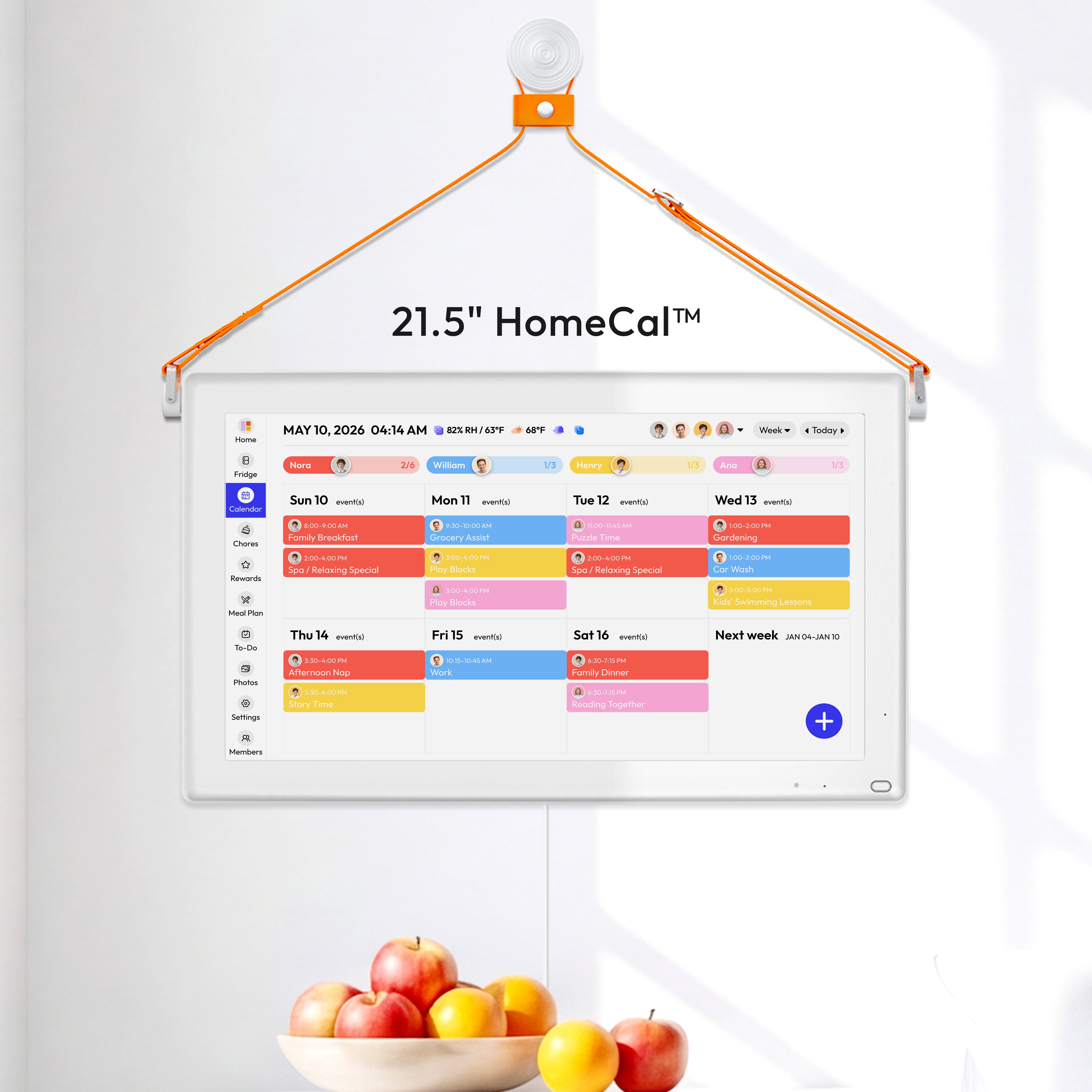
AAP guidance notes that a family calendar can be essential when life involves appointments, school tasks, and multiple moving parts (HealthyChildren). For families merging multiple schedules, a tool like the Everblog 21.5" Digital Calendar can put shared plans, chores, and color-coded routines in one visible spot instead of leaving one adult to be the reminder system.
That kind of support will not solve ADHD by itself. But it can remove avoidable confusion, which matters.
If mornings stay brutal, look below the surface
Sometimes the routine is not the only issue. It is worth checking for patterns if mornings suddenly get much worse or never improve despite solid supports.
Possible clues include:
- loud snoring or restless sleep
- chronic trouble falling asleep
- a child who seems exhausted no matter how early bedtime starts
- sharp changes after a medication change
- anxiety, school avoidance, or sensory distress showing up as “won’t get dressed”

Sleep problems can overlap with ADHD, and other conditions such as anxiety, depression, sleep problems, or learning differences can also look like ADHD or make it harder to manage (CDC diagnostic overview). If your child takes ADHD medication, it can also help to track whether symptoms or side effects shift at different times of day and review that pattern with the prescribing clinician (AAP medication routines guidance).
If you are doing all the “right” things and mornings still feel impossible, that is useful information, not evidence that you are missing some secret parenting trick.
A gentler goal
You do not need a Pinterest morning. You need a routine your family can survive without everyone starting the day in shame.
Sometimes progress looks like this:
- fewer reminders
- one less argument
- clothes on before breakfast
- leaving five minutes late instead of 20
- a child who feels helped instead of hounded
That counts.
For ADHD kids, the most effective morning routines are usually not stricter. They are more visible, more predictable, more immediate, and more forgiving. If you can make the first step easier, the rest of the routine often follows.
Important Note
The insights and strategies shared here are intended for support and educational purposes only. They do not constitute professional medical advice, clinical diagnosis, or psychological treatment. Neurodiversity and complex family dynamics require personalized care; if you or a family member are experiencing significant challenges, please consult with a licensed healthcare professional or a certified counselor to receive support tailored to your specific situation.
References
- CDC: Treatment of ADHD
- CDC: Is it ADHD?
- HealthyChildren.org: Simplifying, Organizing, and Structuring the Home Environment
- HealthyChildren.org: ADHD Medication Daily Routines
- CHADD: Morning and Evening Routines
- CHADD: Tips for Creating a School Morning Routine
- Sleep disturbances in children and adolescents with ADHD: A narrative review


