


Most separated families benefit from using a co-parenting app as the official record and a wall calendar as the in-home visibility tool. If your schedule is simple and conflict is low, one well-managed system may be enough.
For many separated families, the best answer is yes: use a co-parenting app as the official record and a wall calendar as the household visibility tool. If your situation is very low-conflict and simple, one well-run system can be enough, but most families benefit when each tool does a different job.
Is your week falling apart because the soccer pickup changed, the dentist reminder stayed in one parent’s text thread, and your child is asking which house they’re sleeping in tonight? Families usually feel the biggest relief when schedule changes are recorded in one shared place and also visible in daily life, so fewer details stay trapped in memory or messages. You’ll leave with a clear way to decide whether you need one system or two, plus how to set them up without adding more stress.
What each tool is actually for
A co-parenting app is a shared digital system built for separated or divorced parents to manage schedules, communication, expenses, and records in one place. Features such as shared calendars and documented communication matter because they do more than show events; they create a time-stamped history of what was planned, what changed, and who responded.
Digital co-parenting app interface with calendar and messaging features
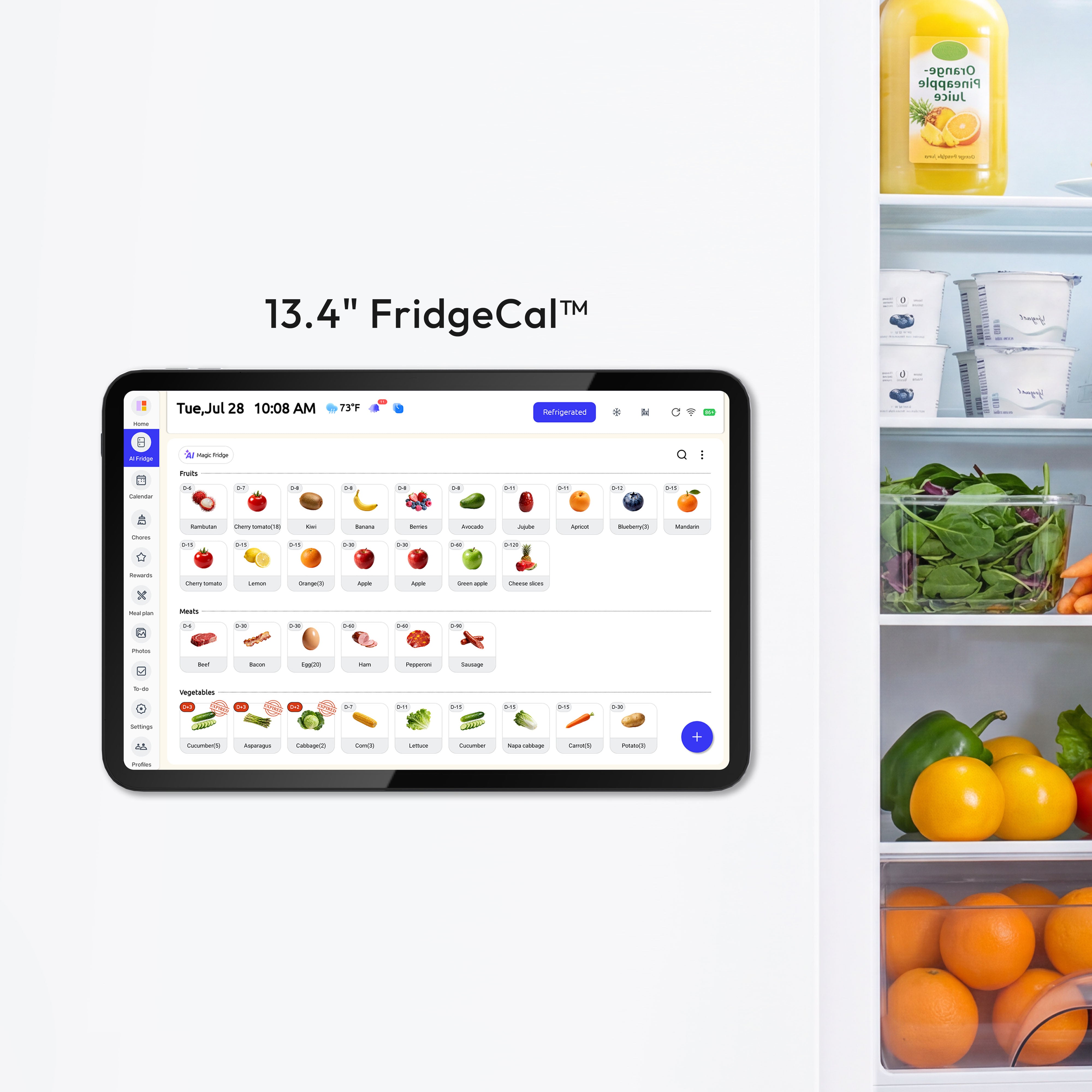
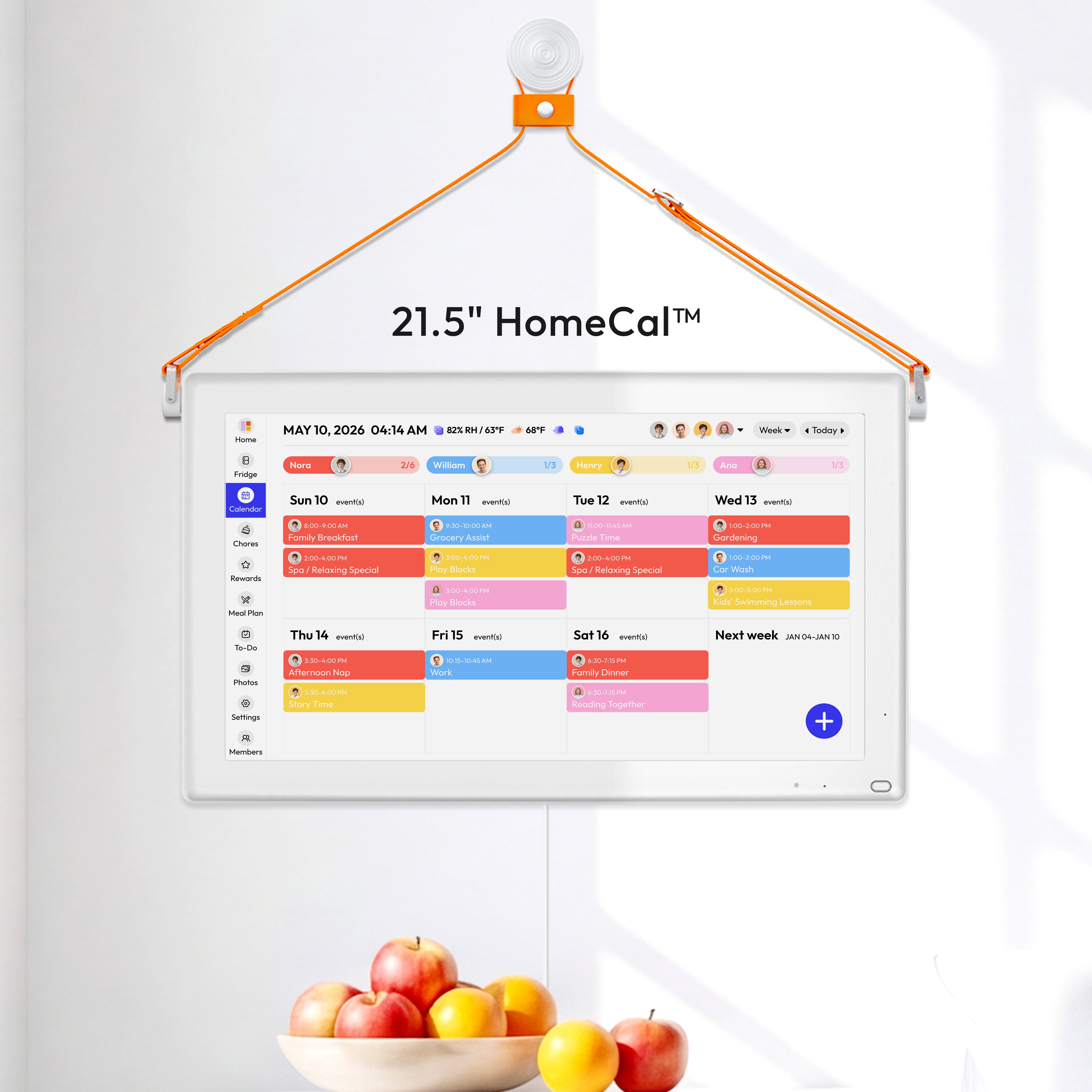
A wall calendar serves a different purpose. In real family life, it is the glanceable household view: the thing a child sees before school, a grandparent checks before offering help, or a parent uses while packing for the next handoff. Whether that calendar is a paper calendar, a magnetic planner, or a smart digital fridge display, its strength is visibility, not recordkeeping.

That difference is why many families get stuck when they try to force one tool to do both jobs. A co-parenting app is strong at documentation, remote access, and structured communication. A wall calendar is strong at reducing the “Wait, what’s happening today?” feeling inside the home.
When a co-parenting app is non-negotiable
If parents live in separate households, a wall calendar alone usually breaks down fast. It cannot push real-time updates, log swap requests, preserve message history, or track who agreed to a change. That is why fewer scheduling misunderstandings between parents matter more than a calendar on one kitchen wall.
This matters even more when conflict is moderate or high. Several sources converge on the same point: structured, documented communication helps keep children out of the middle and lowers the chance that routine logistics turn into bigger disputes. Legal and parenting sources also note that some apps are especially useful when parents need records that cannot easily be changed, and courts may review those records in some cases. In plain terms, if you have ongoing disagreements about pickups, reimbursements, holiday schedules, or tone of communication, a wall calendar is not enough protection for either parent.

The most common practical example is the schedule trade. One parent asks to swap Thursday for Saturday because of a work trip. In a co-parenting app, that request can be logged, answered, and stored with the updated schedule. On a wall calendar, someone still has to remember to rewrite it, photograph it, or text about it, which recreates the same confusion the tool was supposed to solve.
When a wall calendar still earns its place
Even the best app can become invisible if nobody opens it until a notification arrives. A visible family calendar reduces that friction. Notes on family organization tools consistently emphasize shared visibility, color-coding, and a single place to see what is happening next. A shared family calendar with real-time syncing helps coordination, but inside the home, a wall display adds a calm reminder layer that children and caregivers can absorb without logging in.
This is especially helpful in blended or busy households where the co-parent is not the only person involved. A child may need to know “Dad pickup after practice,” a babysitter may need the early-dismissal time, and a grandparent may need to confirm the drop-off address. A wall calendar turns those details into part of the household rhythm instead of private app knowledge.

There is another reason this matters: digital parenting guidance on intentional family technology routines points families toward intentional tech use, not more scattered screen checking. A smart fridge calendar or central wall display can support that goal by making plans visible in a shared space instead of requiring every update to live on a child’s or parent’s cell phone.
Do you need both? The simplest decision test
If your co-parenting relationship is high-conflict, long-distance, legally sensitive, or constantly changing, you probably need both. The app becomes the official system of record, and the wall calendar becomes the in-home dashboard. That split tends to lower stress because nobody has to guess which tool is final.
If your relationship is low-conflict and your schedule is stable, one tool can work. Some families do fine with a single shared digital calendar or family organizer, especially when they mostly need reminders and basic coordination. But even then, a visible wall calendar often helps children feel oriented between two homes.
Here is the practical difference:
Need |
Co-Parenting App |
Wall Calendar |
Time-stamped communication |
Strong |
Weak |
Custody swaps and change requests |
Strong |
Weak |
Court-friendly documentation |
Strong |
Weak |
Easy for kids to glance at |
Limited |
Strong |
Visibility for caregivers in the home |
Limited |
Strong |
Works across two households instantly |
Strong |
Weak unless mirrored |
Daily calm and routine cues |
Moderate |
Strong |
The best setup for most families
The smoothest setup is not duplicating everything by hand forever. It is making the app the source of truth and the wall calendar the filtered household view. In practice, that means custody exchanges, school events, medical appointments, activities, and travel go into the app first. Then the home calendar shows the events that affect the child’s daily routine in that house.
This matters because not every system shares information the way parents expect. Some tools distinguish between sharing a calendar template and sharing the actual events inside it, which means parents can think they shared a calendar when they really shared only the structure. That kind of detail is exactly why the official record should stay in one clearly defined app, while the wall calendar stays simple and readable.
The families who handle this best usually agree on naming rules early. A calendar entry like “Emma - Ortho - 3:30 PM - Bring insurance card” is much easier to trust than “appointment.” The same goes for holidays. Several co-parenting sources point out that holidays create more confusion than normal weeks, so entering them far in advance prevents last-minute friction.

Pros and cons without the sales pitch
A co-parenting app brings structure, accountability, and remote access. It can also cost money, require setup time, and feel formal if your relationship is amicable. Some apps add privacy questions, subscription confusion, or learning-curve issues, and not all sharing features are as intuitive as families expect.
A wall calendar brings calm, visibility, and routine. It is easier for kids and caregivers to use, and it supports the “everyone knows the plan” feeling that reduces mental load. But by itself, it is weak at documentation, weak across two homes, and easy to let drift out of date if nobody owns the updates.
That is why using both is not overkill when each tool has a clear role. It becomes overkill only when parents enter the same information in multiple places without rules.
How to keep two systems from becoming double work
The workable rule is simple: update once, display twice when needed. Put the official event in the co-parenting app, then let the wall calendar mirror only what the household needs to act on this week. If your digital wall calendar can sync with a shared calendar and your co-parenting app supports that workflow, even better; if not, keep the wall view intentionally lighter.
A weekly 10-minute review is usually enough. Check exchanges, school items, activity gear, and anything unusual for the next seven days. If older kids are involved, let them help read the calendar so transitions between homes feel more predictable and less mysterious.
The right question is not whether one tool is better. It is whether your family needs both a shared record and a shared visual rhythm. In many co-parenting homes, that small distinction is what turns scheduling from a source of tension into something steady enough to support the people who matter most.


