




Work travel goes more smoothly when your family has a shared, visible plan and you rely on short, predictable check-ins instead of constant texting.
You can stay involved in home life during work travel by making the family schedule visible, predictable, and shared before you leave, then using short, reliable check-ins instead of constant texting. The goal is not to manage everything from the airport. It is to keep your family connected and informed without adding more mental load.
Are you halfway through a work trip when your cell phone lights up with “Who’s picking up Emma?” and “What time is the dentist again?” Families usually do better when the schedule lives in a shared, visible system instead of one person’s memory, and that practical shift can cut repeated questions and last-minute scrambling. You will leave with a simple way to set up the calendar, decide what to share, and stay emotionally present even when you are 1,000 miles away.

Why work travel disrupts family life so quickly
A work trip rarely creates brand-new problems. It exposes weak points that were already there: scattered school emails, one parent carrying the schedule in their head, and too many details living in texts or paper notes. Research on family scheduling across multiple tools shows that families rarely use only one scheduling method, which is why handoffs often break down rather than the first moment an event is entered.
That matters even more when one adult is away. Travel changes pickup plans, bedtime support, meals, and the emotional rhythm of the house. A family system works best when it is not just a calendar of dates and times, but an actionable plan that shows who is going, who is driving, what needs to be packed, and what can move if the day goes sideways. That broader view reflects how real households organize family life, not how idealized systems tend to describe it.
What “staying involved” actually means
Staying involved does not mean staying on call every minute. It means the family at home can move through the day with less friction, and you still know enough to support, encourage, and make decisions when needed.
In practical terms, involvement has three parts: everyone can see the same plan, the at-home adult does not have to re-explain or reconstruct it all day, and your communication from the road adds calm rather than more interruptions. That approach aligns with research on adaptation under stress, which suggests family relationships are shaped less by disruption itself and more by how people protect connection and balance.
Build a travel-ready shared system before you leave
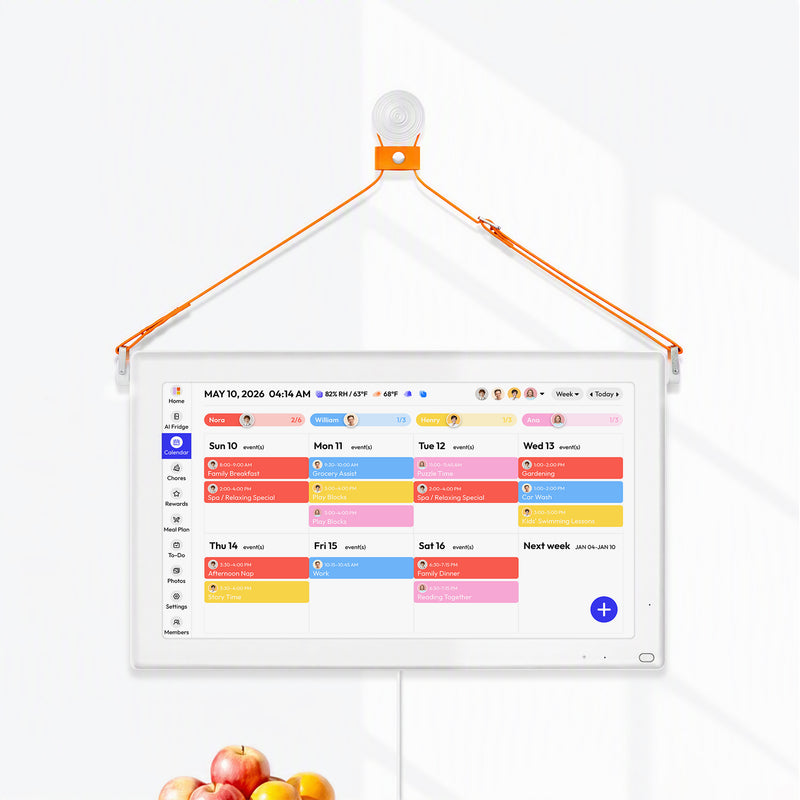
A central family calendar is simply one shared place where the household can see and update plans. That can be a phone-based calendar, a wall display, or a hybrid setup. What matters most is not the fanciest software. It is whether the family reliably checks it before the day starts and again as plans change, a point reinforced by both calendar systems for working-parent families and home-organization research.
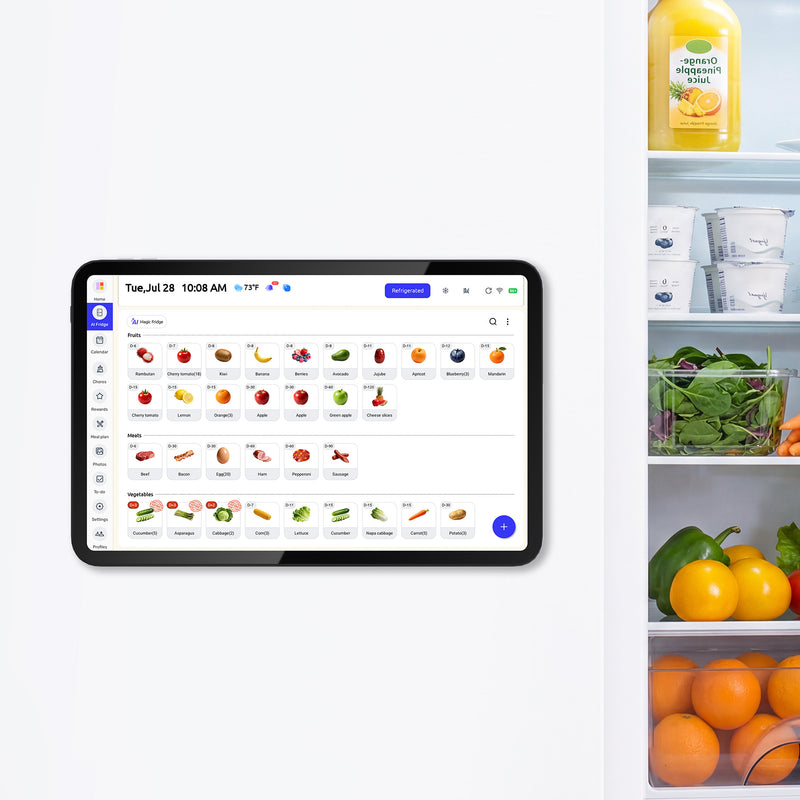
For families dealing with work travel, the strongest simple setup is usually one shared digital calendar synced to individual calendars, plus one visible home display in a high-traffic area. If your partner already checks a phone calendar consistently, a shared app may be enough. If children, grandparents, babysitters, or a spouse tend not to check apps, a visible screen near the kitchen or family entry point often works better because the plan is seen passively, not only when someone remembers to open it. Shared-area placement for digital calendars is one of the clearest predictors of whether a digital wall calendar actually helps.

What each event should include
A useful event needs more than “soccer, 5:30 PM.” Families tend to function better when the entry also shows who is attending, who is driving, where it is, what to bring, and whether anyone needs to leave work early. That level of detail is especially valuable when one parent is traveling because it reduces the need for clarification in the middle of the day.
A real-world example looks like this: “Noah soccer game, Field 3, 5:30 PM, Dad driving, shin guards and water bottle, leave by 4:50 PM.” That single line prevents four separate texts later.
Why reminders matter more during travel weeks
Reminders are not just for forgetfulness. They reduce context switching when the at-home adult is juggling work, kids, and household tasks alone. Shared calendars and recurring reminders work best when there is an early prompt and a leave-now prompt, especially for school pickups, medications, and evening activities.
One helpful pattern is an hour-before reminder for preparation and a second reminder at departure time. During travel weeks, that small adjustment can protect the whole evening from one missed transition.
Choose the right visibility tool for your household
Different tools solve different problems. The best one depends on where confusion happens in your home.
System |
Best for |
Main advantage |
Main drawback |
Shared phone calendar |
Couples who already live in their phones |
Fast syncing and easy updates from anywhere |
Easy for others to ignore |
Wall display or smart fridge calendar |
Families with kids, caregivers, or a partner who needs at-a-glance visibility |
Everyone sees the same plan in one place |
Higher upfront cost and fixed placement |
Voice assistant reminders |
Quick prompts and routine support |
Hands-free reminders and check-ins |
Limited for full family scheduling |
A visible family hub often helps with work travel because it turns “What’s happening tonight?” into a self-serve question. Independent reviews of digital wall calendars and smart displays consistently point to that at-a-glance benefit, whether the device is a dedicated calendar or a broader smart display with calendar support.
That said, a wall display is not magic. Some families find it transformative because children and partners finally see the plan without asking. Others discover it adds little if everyone already checks their own phone calendars reliably. That mixed result also appears in user experience notes on digital calendar displays. Visibility helps, but habits still matter.
Protect privacy when your travel plans are on display
A shared display is useful for logistics, but it is not the right place for every detail. Privacy guidance for shared family smart displays suggests keeping sensitive work, medical, legal, financial, and exact travel details off the public screen.
For a work trip, that means the home display can show “Mom travel day” or “Dad out of town” if the family needs that context, but it should not broadcast every flight number, hotel, or empty-house window to anyone who walks through the kitchen. If you use a smart display or digital fridge hub, do a simple sightline check from the hallway and front entry. If a guest can read the details from 10 ft away, the entry is too specific.
A good compromise is to keep logistics visible and specifics private. Your family needs to know who is available for dinner, pickup, and bedtime. They do not need every confidential work detail in the shared household view.
Stay connected from the road without becoming the remote household manager
Once the system is in place, the best communication style is usually short and predictable. A brief morning message can confirm the day’s pressure points, and a short evening check-in can handle changes for tomorrow. That is usually more calming than a stream of scattered texts.
This is also where mental load matters. Advice on family organization increasingly points out that sharing tasks is not the same as sharing management. If the parent at home still has to ask where the cleats are, what time to leave, and whether the permission slip was signed, the load has not really been shared. A better handoff means the calendar, reminders, and supplies are ready before departure, and the at-home adult has enough ownership to run the plan without constant supervision.

If children are old enough to read, let them check the display or family calendar themselves each night. If they are younger, symbols, simple labels, and a visible next-day routine can still help them feel prepared. That creates a small but meaningful sense of stability while you are away.
A calm home life still counts as involvement
The most useful work-travel habit is not more messaging. It is a home system that keeps everyone oriented when plans shift. When the schedule is visible, reminders are built in, and sensitive details stay private, your family gets more than organization. They get a steadier week, and you get to come home to connection instead of cleanup.


