




A master meal list turns dinner from a nightly debate into a calmer weekly rhythm: choose from 20 family-approved meals, rotate them with your calendar, and shop from the plan.
Does 5:30 PM feel like the moment everyone gets hungry, tired, and suddenly opinionated about dinner? A top-20 meal list gives you a specific, reusable set of choices, so weekly planning can become a 10- to 30-minute household reset instead of a daily scramble. You’ll learn how to build the list, rotate it without boredom, and display it where the whole family can follow along.
What Is a Master Meal List?
A master meal list is one organized collection of meals your household already likes and will realistically eat again. It is not a fantasy recipe binder, a complicated diet plan, or a month of brand-new dinners. It is the short list you return to when the week is full, the kids have activities, and nobody has the energy to search for inspiration.
For most families, 20 meals is the sweet spot because it gives enough variety without creating too many decisions. If you cook five dinners at home each week, 20 meals can cover about four weeks before repeating. If your household uses leftovers, takeout, or a self-serve night once or twice a week, the same list can stretch even longer.
Meal planning works best when it fits your actual schedule, not an idealized life. Meal planning means deciding meals for a set period before the week begins, which can reduce last-minute takeout, save time, and give you more control over ingredients and portions.
Why 20 Favorites Reduce Family Stress
The real benefit of a master list is not just organization. It lowers the emotional temperature around dinner. When meals are chosen from a shared list, the question changes from “What should I make?” to “Which familiar meal fits Tuesday?”
That difference matters. Busy schedules are one reason families drift toward fast food or takeout, while meal prep can support healthier eating, save money, and reduce stress around last-minute food decisions. A master list also protects the main planner from carrying every food preference in their head.
The family connection piece is just as practical. The American Heart Association notes that family mealtime does not have to be dinner only, and eating together three to five times per week can still support meaningful benefits for children and teens. A rotating list helps you find those shared meals without making every night feel like a production.
How to Choose Your Top 20
Start by collecting the meals your family already accepts. Think about the dinners that disappear without complaints, the breakfasts-for-dinner that rescue hard days, the slow cooker meals that make sports nights possible, and the simple “everyone can assemble their own plate” options like tacos, baked potatoes, rice bowls, or salad bar.

Then sort them by usefulness, not by cuisine alone. A good top-20 list should include quick meals, low-cost meals, make-ahead meals, leftover-friendly meals, and meals someone besides the main planner can cook. If a teenager can make quesadillas, a partner can handle pasta night, or a grandparent can reheat soup safely, that meal belongs on the list because it spreads the work.
A balanced top-20 list might look like this:
Meal Type |
Example Favorites |
Why It Helps |
Fast weeknight meals |
Turkey tacos, omelets, pesto pasta |
Useful on activity nights |
Batch-friendly meals |
Chili, soup, baked ziti |
Creates planned leftovers |
Flexible meals |
Rice bowls, baked potato bar, pizza night |
Adapts to picky eaters |
Budget anchors |
Beans and rice, lentil soup, pasta bake |
Keeps grocery costs steady |
Family rituals |
Friday pizza, Sunday roast, pancake dinner |
Builds predictability and comfort |
The point is not to make every meal nutritionally perfect. The point is to build a repeatable foundation. Once that foundation exists, you can improve it gently by adding vegetables, using whole grains, stretching proteins, or swapping in a healthier side.
Build the Rotation Around Your Real Calendar
A rotation works when it respects your week. Monday might need a 20-minute skillet meal. Wednesday might be leftover night because practice ends late. Sunday might be the day for a roast, soup, or casserole that gives you a head start.
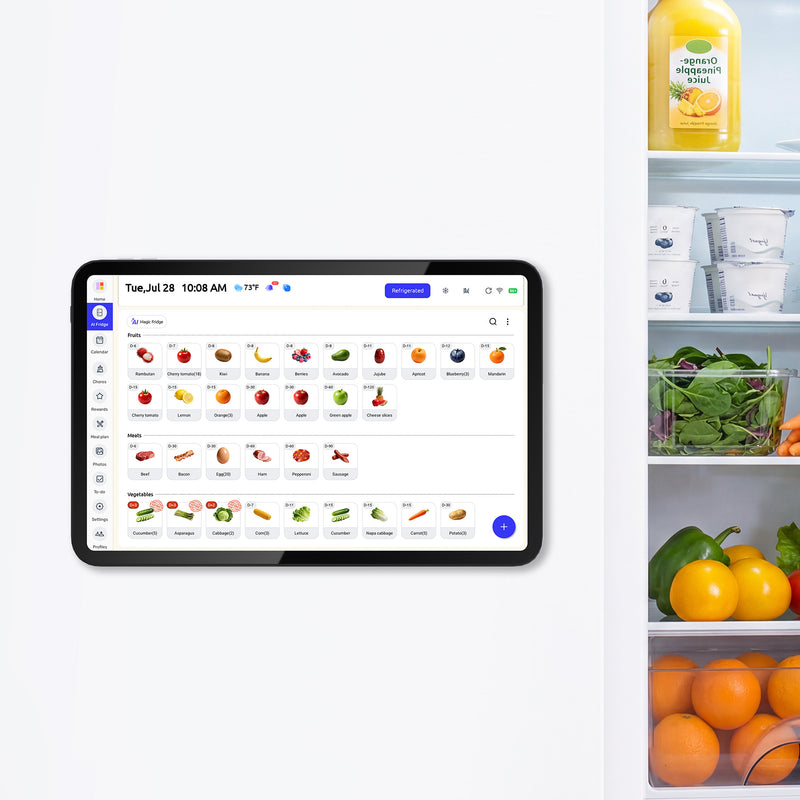
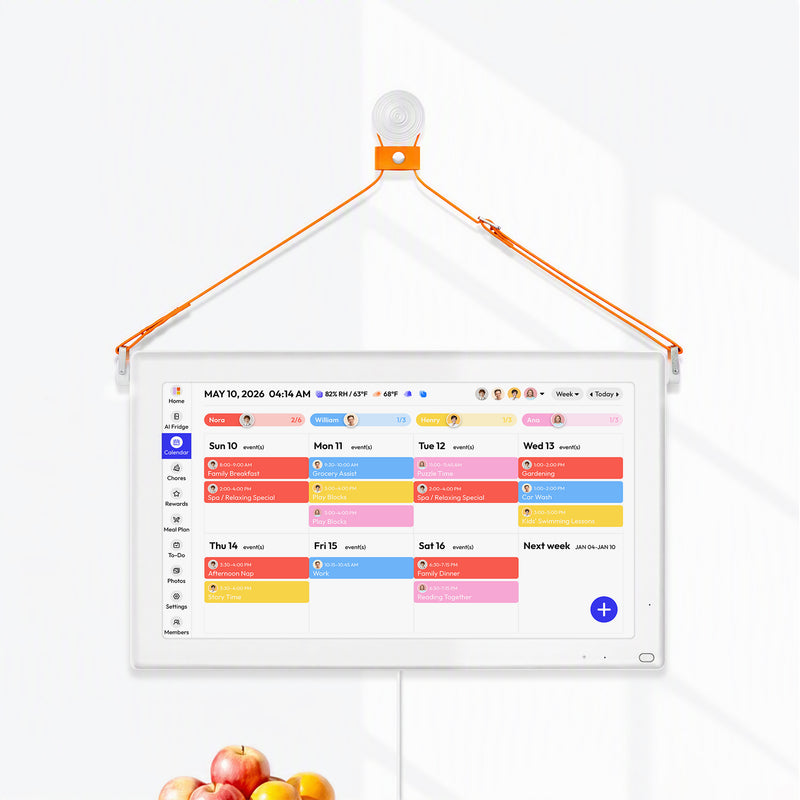
A useful rhythm is to pair meal difficulty with household energy. Reviewing the upcoming week before choosing meals helps match busier days with quick recipes and calmer days with meals that take more time. This is where a smart digital fridge calendar or shared kitchen display earns its place: the meal plan sits beside activities, appointments, chores, and grocery reminders, so dinner is planned in context.
For example, if Tuesday has soccer at 6:00 PM, the plan might show slow cooker chicken tacos. Wednesday could become leftover taco bowls with rice and frozen corn. Thursday, when everyone is home earlier, could be salmon, roasted potatoes, and salad. One cooking effort now supports two nights, and the visible plan keeps everyone from asking the same question repeatedly.

Use Themes Without Getting Stuck
Theme nights are helpful because they narrow choices without forcing the same recipe every week. Taco Tuesday can mean beef tacos one week, bean tostadas the next, and chicken taco salads the week after. Pasta night can rotate between marinara, pesto, baked pasta, and pasta with leftover chicken and broccoli.
Families often do better with broad categories than rigid menus. Theme nights can reduce decision fatigue while still leaving room for seasonal ingredients, grocery sales, and whatever is already in the fridge. This is the quiet advantage of a top-20 list: it gives you structure without locking you into repetition.
A simple four-week cycle might use five favorites per week, plus one leftover night and one flexible night. After four weeks, repeat the cycle, but change one recipe that feels tired. Over time, the list stays useful instead of becoming another abandoned system.
Connect the List to Groceries and Leftovers
A master meal list becomes much more powerful when it is tied to shopping. Before you plan, check the refrigerator, freezer, and pantry. If you already have tortillas, shredded cheese, and frozen ground turkey, tacos or quesadillas should move up the list. If you have half a bag of spinach and cooked rice, bowls or fried rice may prevent waste.
A family meal plan should lead directly into a grocery list. Grocery planning is more efficient when families take inventory first, plan around the week’s schedule, use ingredients across multiple meals, and organize shopping lists by store section. This is also where a digital fridge calendar can help: one shared list reduces duplicate purchases and makes it easier for another adult to shop without a long explanation.
Leftovers deserve a planned spot, not a guilty afterthought. If Monday’s chili becomes Wednesday’s chili baked potatoes, you have reduced cooking time, protected the budget, and made a busy night easier. If roast chicken becomes soup, wraps, or pasta later in the week, one meal supports several moments of calm.
Paper, App, or Smart Fridge Calendar?
The best tool is the one your family will actually look at. A notebook works if one person plans and cooks. A magnetic fridge board works well when kids need to see dinner at a glance. A smart digital fridge calendar or kitchen display is especially useful when meals need to sit beside schedules, chores, reminders, and grocery lists.

Digital wall calendars and fridge-based planners are popular because the kitchen is the natural command center for many homes, but the tool matters less than visibility. If the plan is hidden in one person’s phone, the mental load often stays with that person. If the plan is visible, family members can thaw meat, start rice, set the table, or adjust expectations before dinner.
Smart tools can also help families with different needs. A shared calendar can show one meal with small notes, such as “leave sauce on the side” or “use dairy-free cheese.” It can also store recurring favorites so next week’s plan starts from what already works.
Pros and Cons of a Top-20 Rotation
A top-20 rotation saves mental energy, speeds up grocery planning, reduces food waste, and makes it easier for children and partners to participate. It also makes budgeting more predictable because the same core ingredients appear regularly.
The downside is meal fatigue if the list never changes. Some families also overfill the list with aspirational recipes that take too long for weeknights. The fix is simple: keep the core list practical, then leave one flexible slot for a new recipe, takeout, a holiday meal, or a seasonal favorite.
Family dinners work best when they are realistic and flexible, not perfect. A snack together after practice, a weekend breakfast, or a simple soup night can still count as connection.
Refresh the List Without Starting Over
Plan to refresh your master list two or three times a year. Spring and summer may call for grilled chicken, big salads, wraps, and oven-free meals. Fall and winter may make soups, casseroles, roasted vegetables, and slow cooker meals feel more natural.
During each refresh, remove meals nobody is excited about anymore. Add recipes that worked well. Mark the fastest meals clearly. Note which meals freeze well, which ones use pantry staples, and which ones a child or partner can prepare.
You can also use AI or recipe apps carefully, especially when you are stuck with random ingredients. Generative AI meal planning can suggest meals based on preferences, schedules, dietary needs, and leftovers, but your family’s tested top-20 list should remain the anchor. New ideas are helpful; proven meals are what keep Tuesday night steady.
A Calm Starting Point
Choose 20 meals your family already eats, put them where everyone can see them, and rotate five into next week’s calendar. Add one leftover night, one flexible night, and a grocery list built from what you already have. Dinner will not become effortless, but it can become lighter, more predictable, and more shared.


