







Co-parenting works best when both homes share one clear schedule, one shared rule language, and one calm way to handle changes. The goal is not perfect agreement; it is reliable predictability for your child.
Is Sunday night turning into a scramble over backpacks, pickup times, homework folders, and who said what last Tuesday? A simple system that combines a shared digital calendar with a visible home calendar can reduce missed handoffs, repeated texts, and child confusion within the first few weeks of use. Here is how to build a two-household rhythm that feels calmer, fairer, and easier for everyone to follow.
What Co-Parenting Schedule Syncing Really Means
Co-parenting schedule syncing means both households use the same source of truth for custody time, school events, appointments, activities, expenses, and routine changes. A co-parenting app usually centralizes custody calendars, messages, documents, expenses, and child-related logistics so parents are not relying on scattered texts or memory.

A family calendar, by contrast, is often broader and more everyday. A shared calendar can hold school pickup, soccer practice, dentist appointments, grocery needs, and household tasks in one accessible place. For low-conflict co-parents, that may be enough. For high-conflict or court-involved families, a dedicated co-parenting platform with message records and expense documentation is usually the safer choice.
The practical test is simple: if your child asks, “Where am I sleeping tonight?” or “Who is picking me up?” both homes should be able to answer from the same calendar, not from a chain of old messages.
Why Two Homes Need One Planning System
Children do better when routines feel predictable, especially around transitions. A visible household calendar helps turn abstract plans into something a child can see, while a digital calendar keeps parents aligned when plans change during work, school, or travel. A digital family wall calendar is useful because it creates a public, persistent schedule in a high-traffic area instead of leaving one parent to carry the full mental load.
In practice, this often looks like a co-parenting app for parent-to-parent records and a fridge or wall calendar for the child-facing daily rhythm. For example, the app may show that Parent A has Monday and Tuesday, Parent B has Wednesday and Thursday, and weekends alternate. The fridge calendar can show the same pattern with colors, names, or simple icons so a child can check it before school.
This matters most during busy weeks. A child may have a school concert on Thursday, a therapy appointment on Friday, and a birthday party during the other parent’s weekend. Without a shared system, each item becomes a separate negotiation. With a shared system, the conversation becomes calmer because the facts are already visible.

Choosing the Right Tool for Your Co-Parenting Situation
The best tool depends less on features and more on the emotional temperature between households. A cooperative pair of parents may thrive with a simple family organizer. A tense relationship needs structure, records, and less room for interpretation.
Co-parenting situation |
Better fit |
Why it helps |
Low-conflict, flexible, mostly cooperative |
Shared family calendar |
Keeps events, lists, and tasks visible without adding legal complexity |
Moderate conflict or frequent misunderstandings |
Co-parenting app with calendar, messages, and expense tracking |
Creates a clearer record of decisions and reduces repeated arguments |
High-conflict, court-involved, or disputed expenses |
Dedicated documented platform |
Preserves messages, requests, expenses, and schedule changes in one structured place |
Child struggles with transitions |
Visible fridge, wall, or smart display calendar |
Helps the child preview where they will be and what comes next |
A dedicated platform such as a co-parenting documentation tool emphasizes accountable co-parenting through documented messaging, shared calendars, expense tracking, and an information bank for important child details. That level of structure can feel excessive for amicable parents, but it is often calming when every exchange has the potential to become a disagreement.
For families that mainly need coordination, a general family organizer can offer shared calendars, lists, and household organization tools without positioning itself as a legal documentation system. That makes it a practical fit when both parents already communicate respectfully and simply need fewer missed details.
The Fridge Calendar Still Matters
A magnetic or smart fridge calendar is not old-fashioned; it solves a different problem than a phone. A magnetic fridge calendar turns the refrigerator into a visible family command center for appointments, school events, work schedules, grocery notes, and activities.
The advantage is instant visibility. No one has to unlock a cell phone, remember a password, or open the right app. A child walking through the kitchen can see “Mom pickup,” “Dad dinner,” “library book due,” or “pack cleats” without asking the same question five times.
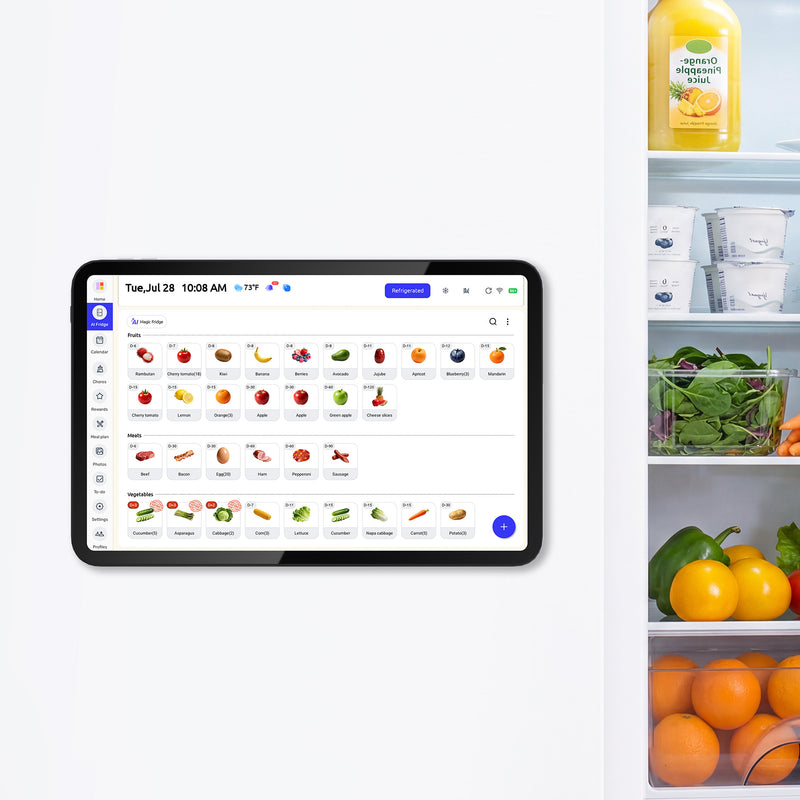
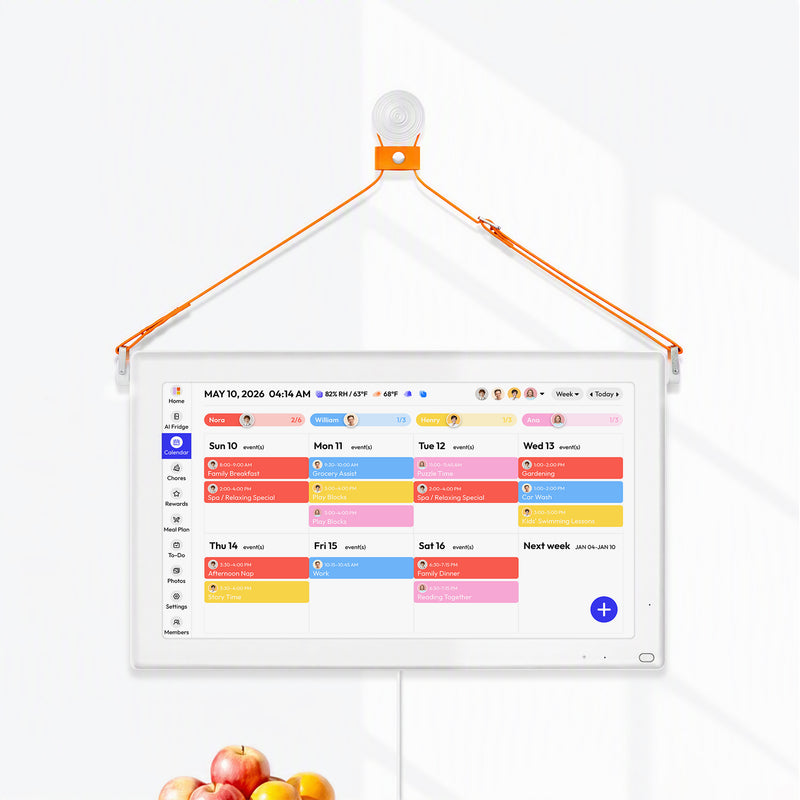
A smart fridge calendar goes further by syncing digital calendars onto a visible screen. An always-visible schedule can combine calendar syncing, color-coded family profiles, chores, meal planning, grocery tracking, and companion app access. For two-household families, that means a parent can update a pickup time from work while the home display reflects the change for the child and caregiver.

The tradeoff is complexity. A dry-erase fridge calendar is inexpensive, visible, and easy for young children to understand. A smart display is better when schedules change often, multiple caregivers need access, or one household already uses digital calendars heavily. The right answer is the one both homes will actually maintain.
How to Set Shared Rules Without Starting New Arguments
Rules across two homes do not need to be identical in every detail, but they should be consistent where inconsistency creates stress for the child. Bedtime, homework expectations, screen-time boundaries, medication routines, school-night packing, and exchange-day responsibilities are the first places to align.
A calm rule system starts with shared language. Instead of “your dad lets you stay up too late” or “your mom is too strict,” use child-centered wording such as “School nights are for sleep, homework, and getting ready for tomorrow.” This removes blame and gives the child a stable reason behind the rule.
Put the most important rules into the same shared system as the schedule. A co-parenting app can hold agreements, documents, and messages, while a fridge calendar can show the child-facing version. For example, Friday might say “Pack backpack, charger, medication, cleats.” The parent record can include more detail, but the child sees a simple checklist.
When parents disagree, separate values from logistics. One home may allow dessert more often, while both homes can still agree that homework is finished before gaming on school nights. The goal is not to erase household differences. The goal is to protect the child from having to manage adult inconsistency.
Handling Schedule Changes Without Chaos
Schedule changes are where many co-parenting systems break down. The calmer approach is to create a change rule before anyone needs it. A shared calendar app should be evaluated for shared access, color coding, reminders, syncing, task support, and privacy controls because those features directly affect whether updates are seen in time.
A practical change rule might sound like this: calendar changes go into the app first, then both parents confirm there, and only urgent same-day details are sent by text. If grandparents or babysitters help with transportation, they receive view access only where appropriate. If an expense is connected to the change, such as a camp fee or urgent prescription, it is logged with the event rather than discussed later from memory.
For example, if a soccer practice moves from 5:30 PM to 6:15 PM, the parent who receives the notice updates the shared calendar immediately, tags the child, and adds “bring shin guards.” The other parent checks the same source instead of waiting for a separate message. The fridge calendar or smart display then becomes the child’s reminder to pack correctly.

Pros and Cons of Co-Parenting Apps and Smart Calendars
Co-parenting technology can reduce stress, but it is not magic. The strongest benefit is clarity. The biggest risk is choosing a system that is too complicated for the parents to use consistently.
Tool |
Pros |
Cons |
Dedicated co-parenting app |
Strong records, shared custody calendar, expense tracking, document storage |
May cost more, can feel formal, requires both parents to use it properly |
General family calendar app |
Simple, familiar, useful for low-conflict families |
Usually weaker legal documentation and fewer custody-specific tools |
Magnetic fridge calendar |
Highly visible, child-friendly, no login needed |
Must be updated manually and may not help across homes |
Smart fridge or wall calendar |
Visible plus synced, helpful for caregivers and busy households |
Higher cost, setup time, privacy settings matter |
Legal and therapy-focused sources often point to the same pattern: when conflict is high, documentation matters. A court-approved co-parenting app can preserve communication, schedules, expenses, and documents in ways that ordinary texts may not. When conflict is low, a lighter shared organizer may feel more natural and less adversarial.
A Weekly Rhythm That Keeps Both Homes Aligned
The most reliable systems are simple enough to repeat. Choose one weekly review time, often Sunday evening, and keep it short. Each parent checks the custody schedule, school events, activities, medical appointments, transportation, meal needs, and any supplies moving between homes.
At the kitchen calendar, the review should feel child-friendly. Ask what the child sees coming up, what they need to pack, and whether anything feels confusing. This helps children build time awareness without making them responsible for adult coordination.
For co-parents, the review should be factual and brief. Confirm exchange times, transportation, school deadlines, and expenses. If a topic is emotional or unresolved, keep it out of the calendar and move it to the agreed communication channel. The schedule should remain a calm source of truth, not a battleground.
Privacy, Access, and Boundaries
Two-household planning involves sensitive information: medical details, school records, addresses, payment history, and sometimes legal agreements. A co-parenting platform that stores messages, expenses, schedules, and child information can be useful, but parents still need strong passwords, careful sharing permissions, and clear decisions about who can view what.
Children should see what helps them feel secure, not every adult detail. A child-facing fridge calendar can show “Dad pickup at 4:00 PM” and “doctor after school” without showing reimbursement disputes or legal notes. Grandparents, babysitters, and stepparents may need selected access, but not necessarily full access to every message or document.
This boundary is especially important when emotions are high. The child’s calendar should answer the child’s questions. The adult record should protect clarity and accountability between parents.
FAQ
Should both homes use the exact same calendar setup?
Not always. Both homes need the same shared source of truth, but the display can differ. One home may use a smart fridge calendar, while the other uses the same synced app on a cell phone and a dry-erase calendar for the child.
What if one parent refuses to use the app?
Start with the least confrontational shared habit: put all child-related events in one calendar and send change requests through one written channel. If custody orders or disputes are involved, ask a qualified family law professional how communication tools should be handled in your situation.
How much detail should children see?
Children should see where they will be, who is picking them up, what they need to bring, and what routines are coming. They do not need to see adult conflict, payment disputes, or legal strategy.
A Calmer Two-Home System
Co-parenting harmony is built from small reliable habits: one shared calendar, one respectful communication channel, one visible child-friendly schedule, and a few rules that travel between homes. When the system is clear, children stop carrying uncertainty, and parents spend less energy repairing preventable confusion.


