



Reward charts can help with ADHD, but mostly when they are short-term, specific, and consistent. They usually fall flat when goals are vague, feedback is delayed, or adults cannot follow through reliably.
If your day feels like one long cycle of reminders, frustration, and guilt, that reaction makes sense. Many families get better traction when they focus on one behavior at a time and use quick, visible wins, like daily stars that build toward a weekly reward. You can use that same approach to reduce conflict and build steadier follow-through without expecting perfection.
Why Reward Charts Help Some ADHD Brains
Fast feedback matters more than perfect plans
Many caregivers report progress when they use reward charts as visual trackers for tasks and behaviors, because the feedback is immediate and concrete. For ADHD, “later” consequences often lose motivational power, so a short loop can be more effective than a long lecture or a delayed penalty. ADHD guidelines support parent training and consistent reinforcement as part of behavioral management in ADHD management. Evidence strength: guideline-supported, with mixed-to-moderate certainty from small, heterogeneous trials in parent training for ADHD.

Daily wins can support emotional regulation
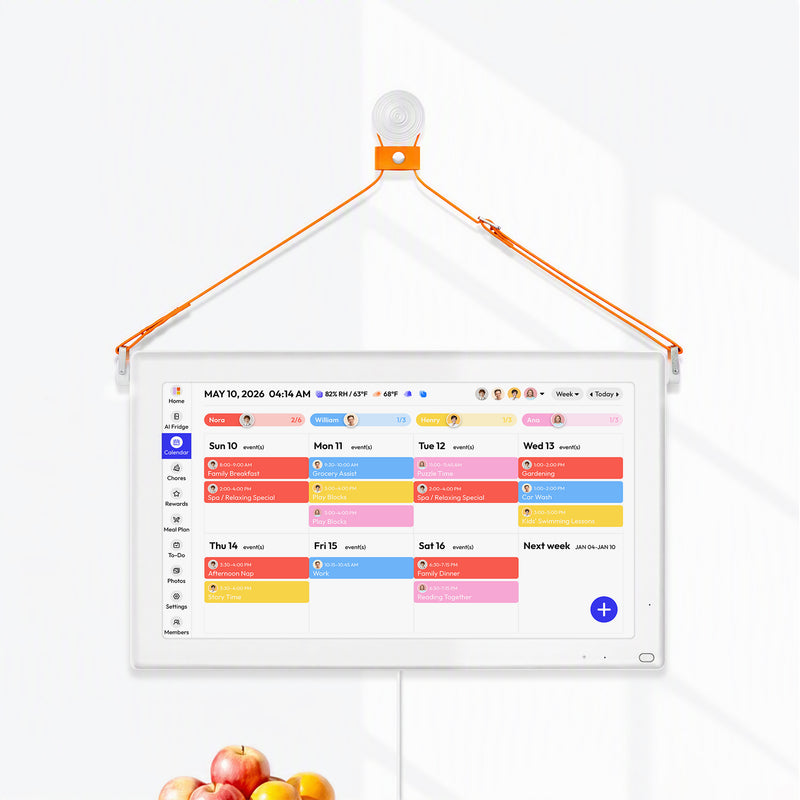
A daily-plus-weekly reward structure with a visible Star Chart gives children a way to recover after a rough moment and still succeed that day. That reduces the all-or-nothing feeling that can quickly turn into shutdown or arguing.
Clear criteria lower conflict
Behavior systems improve when charts use explicit criteria and regular checks, not vague expectations like “be good.” A child is more likely to engage when success is concrete: “start homework within 5 minutes,” “put shoes by the door,” or “use a calm voice during dinner.”
The Design Rule: One Target, One Loop, One Review Rhythm
Start with one target behavior
Most chart setups work better when you pick one behavior first and define reward criteria upfront. One target keeps the plan doable for both the child and the adult, which protects consistency in the first week.
Make instructions observable and repeatable
Home strategies for ADHD improve when adults use clear rules, one-step directions, and concept-checking, such as asking the child to repeat the instruction back. This reduces misunderstandings that often look like “noncompliance” but are really working-memory overload.

Use thresholds that are easy to verify
In other chart-driven safety systems, minimum pass/fail thresholds are measured directly, and the same principle helps behavior charts. If adults can answer “yes/no” quickly, feedback stays immediate and arguments stay smaller.
Picking Rewards That Motivate Without Feeling Like Bribes
Match reward timing to effort timing
Many families do best with small immediate rewards plus larger delayed rewards, for example a daily sticker and a weekly privilege. A practical benchmark from the notes is five stars in a row for a meaningful reward.
Use points when preferences change often
A token economy chart that converts points into chosen rewards can prevent power struggles over “the one prize.” This flexibility helps when motivation shifts week to week.
Protect connection while holding limits
Caregiver guidance warns that deals, bribes, accusatory language, and physical punishment usually backfire in ADHD behavior management. Rewards work better as structured reinforcement inside clear boundaries, not as last-minute bargaining during conflict.
Common Reasons Charts Stall (and How to Reset)
Too many goals create quick burnout
Chart plans lose momentum when monitoring and consistency are irregular, especially if several behaviors are tracked at once. A reset often means reducing scope to one target for 1-2 weeks.
Environment still drives behavior
Home plans are stronger when routine, planned breaks, and visual prompts support attention throughout the day. A chart cannot compensate for constant schedule changes, unclear instructions, or no transition time.

Single-factor fixes are rarely enough
Complex systems research shows raising one signal can produce mixed effects without the full context, and behavior plans follow a similar pattern. A chart helps most when paired with structure, skill coaching, and calm correction routines.
Practical Next Steps
Build a 7-day starter loop
A strong first week usually includes co-creating the chart, introducing purpose, and setting a review routine. You can try this sequence:
- Choose one behavior with a clear yes/no definition.
- Pick one immediate reward and one weekly reward.
- Decide when feedback is given (right away, every time).
- Review results daily at the same time (for example, after dinner at 7:00 PM).
2-4 Week Test Template: Record 1-2 weeks of baseline data before starting, choose one target behavior with a concrete pass/fail threshold, run the chart for 2-4 weeks, and log daily repeated prompt count, task-start latency, and conflict duration; set a review date in advance to decide whether to keep, simplify, or adjust thresholds. This baseline-to-follow-up structure aligns with outcome tracking in parent training interventions for ADHD, with evidence certainty limited by small and heterogeneous studies.
Keep correction calm and predictable
Behavior guidance recommends immediate feedback with a “1,2,3” warning count before Time-Out. Clinical recommendations support parent training in behavior management. The specific “1,2,3” sequence is best treated as a practical routine with indirect evidence rather than a uniquely validated ADHD protocol (evidence certainty: limited) in parent training for ADHD. This keeps consequences understandable while protecting dignity.
Track signs of progress that matter at home
You can judge progress by practical signals: fewer repeated prompts, faster task start, shorter conflicts, and easier transitions. If conflict rises for two straight weeks, simplify the target, lower the reward threshold briefly, and restart with a shorter loop.
When to Seek Professional Help
If there is no meaningful improvement after 2-4 weeks of consistent use, behavior is worsening, school functioning drops sharply, or family conflict continues to escalate, move from home-only management to a clinical evaluation under AAP guideline updates.

If there is any self-harm behavior, threats of self-harm, or credible risk of harm to others, seek urgent same-day professional or emergency support and do not wait for the next chart review, consistent with safety-first pathways in ADHD diagnosis and management.
Start with your pediatrician, then involve a child psychologist or psychiatrist and school counselor as needed; bring your baseline notes, behavior frequency counts, and the strategies already tried, plus parent and teacher reports and rating-scale records used in clinical ADHD evaluation.
Important Note
The insights and strategies shared here are intended for support and educational purposes only. They do not constitute professional medical advice, clinical diagnosis, or psychological treatment. Neurodiversity and complex family dynamics require personalized care; if you or a family member are experiencing significant challenges, please consult with a licensed healthcare professional or a certified counselor to receive support tailored to your specific situation.
References


