
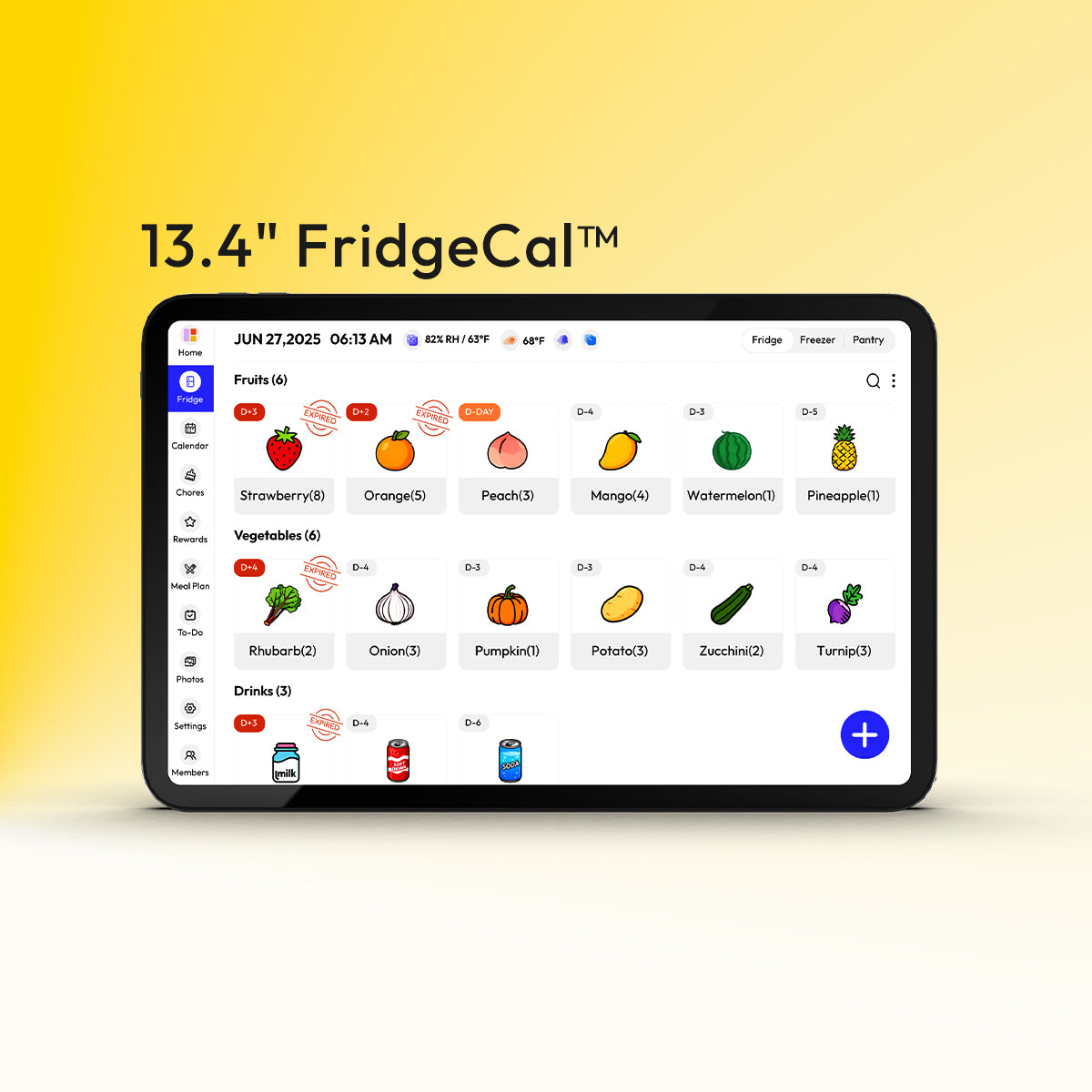
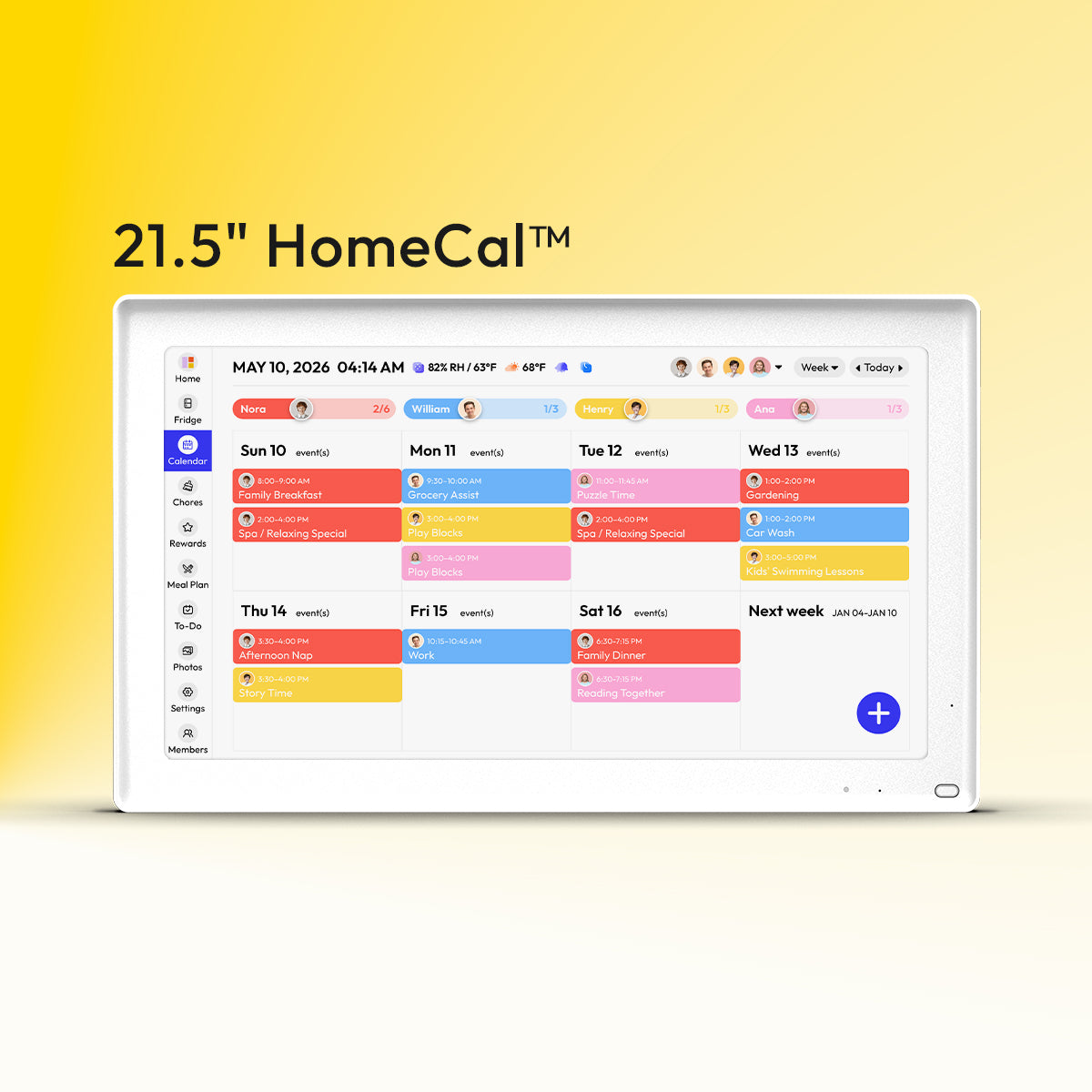


A Family OS works when your home has clear owners, repeatable workflows, and short review loops. The point is stability, not perfection.
If your week feels like a chain of missed handoffs, duplicate errands, and “I thought you were handling that,” the problem is usually system design, not effort. Homes that shift from memory-based coordination to shared routines usually see less daily friction within a few weeksand fewer preventable mistakes. You’ll get a practical framework here to set up, test, and improve your household operating system over 90 days.
Method note: timeline and effort claims marked as practice observations are author implementation observations from small, real-household rollouts (not randomized studies), so they are directional rather than universal benchmarks. To test transferability in your home, run a two-week before/after log with the same measures each week: missed handoffs, duplicate errands, weekly planning time, and conflict-repair time.
Evidence legend:marks implementation patterns seen in real households (for example, early coordination gains in the first few weeks). (Authority standard) marks safety limits that should not be relaxed, including 40°F refrigerator / 0°F freezer targets and emergency food discard thresholds. Use authority standards as non-negotiable limits, then adapt the operating workflow to your household context.
Why Family OS Is Growing in 2026
From memory to shared operations
Family life got more complex faster than most home systems did: two working parents, school logistics, elder care, health tasks, and digital overload all compete for the same attention. A Family OS is a response to that load, using structure so people do less mental juggling.

The core four-step safety model for households is Clean, Separate, Cook, Chill, which is a useful pattern beyond food: define standards, separate risks, execute with checks, and close loops quickly. That same logic applies to calendars, chores, budgeting, and co-parenting handoffs.
The U.S. estimate of 48 million foodborne illnesses a year shows why household operations cannot be treated as “informal admin.” A modern Family OS is really risk management plus coordination management, built for real life rather than ideal routines.
Design the Household Operating Model
Roles, cadence, and decision rights
Start with a simple household org chart: who owns meals, calendar, laundry, bills, maintenance, school paperwork, and health admin. Ownership should be explicit, visible, and reviewed quarterly so tasks do not silently fall between people.
Run a fixed cadence: a 15-minute weekly planning meeting, a 90-second daily check-in, and a 45-minute monthly decision meeting for bigger issues. Keep each meeting scoped to one purpose so “status talk” does not consume decision time.
Track five dials each week: trust, repair speed after conflict, buffer margin (time/money/slack), coordination load, and drift rate. If trust and buffers are both dropping while coordination load rises, pause optimization and do system repair first.
Choose a Stack People Will Actually Use
One shared brain, minimal switching
Use tools only if they meet four tests: cross-platform access, shared visibility, task entry in under 5 seconds, and low maintenance burden. If a system needs constant cleanup, adoption will collapse even if features look strong.
Low-friction defaults from meal planning, shopping, and budgeting materials can carry most households before adding more technology.
- Entry level: paper checklist + fridge labels; weekly time cost is usually about 10-15 minutes; likely benefit is immediate shared visibility at near-zero cost; migration trigger is two consecutive weeks of missed handoffs.
- Stable level: shared calendar + simple task list; weekly time cost is usually about 15-30 minutes; likely benefit is fewer duplicate errands and pickup misses; migration trigger is two consecutive weeks of unresolved conflicts between calendar and tasks.
- Advanced level: cross-platform sync + automations; weekly time cost is usually about 30-45 minutes including upkeep; likely benefit is lower reminder overhead for complex households; migration trigger is repeated failures in multi-adult or multi-location coordination despite stable-level use.
Method note: the weekly time-cost bands above are practice observations from implementation work, not population averages. Applicability is strongest when a household uses one shared calendar/task system consistently for at least two weeks. Replication template: compare baseline week vs week two on missed handoffs, duplicate errands, planning minutes, and conflict-repair minutes.
A practical baseline is one shared calendar, one shared task board, one shopping list, one meal plan, and one document vault. In a typical two-parent, two-kid home, this removes repeated “who’s doing pickup?” loops and reduces duplicate purchases.
A visible a company can still outperform app-heavy setups for quick household awareness, especially for kids and guests. Digital-first is fine, but physical visibility is often the fastest path to compliance.
Turn Food Safety Into Standard Operating Procedures
Non-negotiable cold-chain rules
A refrigerator at 40°F or below and freezer at 0°F or below should be treated as a weekly KPI, verified with appliance thermometers . This single control reduces both waste and microbial risk.

Most date labels are quality signals, not safety deadlines, with infant formula as the key exception; pair that with FIFO, shallow labeled leftover containers, and a hard 3-4 day fridge limit. Also enforce the 2-hour rule for perishables, or 1 hour when ambient temperature is above 90°F .
Some foods need special SOPs: vacuum-sealed proteins and vegetables still require refrigeration, and niche items (for example, lightly smoked seafood or homemade garlic-in-oil) should follow product-specific or extension handling guidance for storage and acidification steps . These are exactly the high-risk edge cases a Family OS should automate with reminders.
High-Risk Items SOP Table
High-risk item |
Storage condition |
Label fields |
Threshold breach action |
Escalation path |
Lightly smoked seafood (ready-to-eat) |
Keep refrigerated at 40°F or below |
Opened date, package use-by date |
If chilled control is lost and time/temperature is unknown, discard |
Follow package-specific handling; formulations vary by product, so defer to label instructions and extension guidance where available |
Homemade garlic-in-oil mixtures |
Refrigerate at 40°F or below immediately |
Prep date, planned discard date |
If left out more than 2 hours (1 hour above 90°F), discard |
Acidification/storage controls are process-dependent; use extension/process-authority guidance before longer storage |
Vacuum-sealed meats or vegetables |
Refrigerate at 40°F or below or freeze at 0°F or below |
Pack date, opened date, use-by date |
If outage or warm exposure exceeds safe limits, discard |
Product instructions control shelf life after opening; treat label directions as stricter limits |
Opened deli meats |
Refrigerate at 40°F or below |
Opened date, package use-by date |
If left out more than 2 hours (1 hour above 90°F), discard |
Keep package-specific use-by limits as the controlling rule |
Cooked rice |
Refrigerate promptly at 40°F or below in shallow containers |
Cooked date, reheated date |
If left out more than 2 hours (1 hour above 90°F), discard |
If timing is uncertain, discard rather than reheat-and-guess |
Cut melons |
Keep refrigerated at 40°F or below; keep for 7 or fewer days |
Cut date, day-7 discard date |
If left out more than 2 hours (1 hour above 90°F), discard |
Event service should use cold holding and short exposure windows |
Add Event and Emergency Playbooks
Cookouts, outages, and baby-food timelines
Outdoor meals need strict controls because the 40°F-140°F danger zone accelerates bacterial growth. Use separate coolers for drinks and food, keep raw proteins isolated, and discard perishables after 2 hours outside or 1 hour above 90°F .
Power-loss rules should be prewritten in your household playbook: refrigerated perishables are generally unsafe after 4 hours without power, and freezer duration depends on fullness and door opening frequency. Uncertainty on time/temperature is a discard decision, not a debate.
Food Safety Quick Card
A) Weekly fridge/freezer check
- Prepare: place appliance thermometers in both compartments using refrigerator thermometer guidance.
- Execute: record readings once per week at the same time .
- Judge: if fridge is above 40°F or freezer is above 0°F, treat it as a high-risk threshold. Act: if exposure time is unknown, discard high-risk perishables; for warm conditions, apply the 2-hour/1-hour perishables rule.
B) Outage timeline
- If power just went out: keep doors closed and use shelf-stable foods first.
- If outage reaches 4 hours: move priority perishables to a cooler with ice or ice packs; if cooling cannot be maintained, discard perishable foods per FDA outage guidance.
- If freezer stayed closed: food is typically safe about 48 hours when full and about 24 hours when half full under USDA power-outage guidance .
- If time or temperature cannot be verified: discard, then use low-cost backups such as cooler borrowing, neighborhood ice runs, or local community support resources.
Baby feeding should run on clear storage windows: strained fruits and vegetables keep 2-3 days in the fridge and 6-8 months in the freezer, while strained meats/eggs and homemade baby foods have shorter limits. Treat these as default timers in your meal workflow.
Run the System in 2-Week Sprints
90-day rollout plan
Use a 90-day setup horizon. Weeks 1-2: define roles, pick tools, and write your core SOPs. Weeks 3-4: run your first household council and stabilize weekly cadence. Month 2: fix bottlenecks and remove duplicate tools. Month 3: lock review rhythms and permissions.
Operate in 2-week household sprints with one sprint goal (for example, “no missed handoffs this week”). End each sprint with a 20-minute retrospective: what worked, what failed, what to change next sprint, and who owns each action.
Method note: treat sprint results as local operational evidence, not universal benchmarks. Keep a simple before/after log for the same four measures each sprint: missed handoffs, duplicate errands, planning time, and conflict-repair time.
Keep the bar realistic: one high-friction problem at a time, one owner per action, one due date per decision. Family OS fails when teams try to transform everything at once, or when no one owns follow-through.
Practical Next Steps
The fastest win is not more tools; it is shared visibility plus short operating rhythms. Build your system so it still works on busy weeks, sick weeks, and travel weeks.
If your current setup already works, keep it simple. If coordination is failing repeatedly, move to an integrated Family OS model and review it like a living system, not a one-time setup.
- Pick one high-friction domain first: scheduling, meals, or chores.
- Assign one clear owner for each recurring household function.
- Set weekly planning (15 minutes), daily check-in (90 seconds), monthly decisions (45 minutes).
- Standardize food safety: 40°F fridge, 0°F freezer, 2-hour/1-hour perishables rule.
- Create two playbooks now: power outage and outdoor meal safety.
- Run two 2-week sprints, then keep only what improved stability.
Important Note
The planning templates and organizational systems provided here are intended as adaptable blueprints. Every family’s needs, dietary requirements, and physical capabilities are different. We recommend tailoring these schedules to your specific health needs and household dynamics. Results from productivity or meal-planning systems may vary, and consistency remains the responsibility of the individual user.
Applicability and Limits
Low-cost adaptation options from SNAP-Ed planning resources and MA SNAP-ED healthy meal planning can be used to simplify this framework by household type.
- Single adult household: use one weekly reset, one paper checklist, and cook-once/use-twice leftovers; do-not-overbuild caution: avoid running more than one calendar and one task list.
- Dual-earner household with children: use one shared pickup/meal calendar, a short nightly handoff, and labeled lunch/snack bins; do-not-overbuild caution: only add tools after two consecutive weeks of missed critical handoffs.
- Multigenerational or large family: assign zone owners (meals, laundry, health admin), keep one visible wall board, and maintain one approved shopping list; do-not-overbuild caution: do not require every member to use the same app.
- Low-resource household: start with paper labels, phone alarms, and a cooler/ice outage backup; do-not-overbuild caution: delay paid tools until the basic paper flow works consistently for at least two weeks.
References
- FoodSafety.gov: Keep Food Safe
- FDA: Safe Food Handling
- FDA: Refrigerator Thermometers
- Virginia Cooperative Extension: Food Storage Guidelines
- Oregon State Extension: Refrigeration Guidelines
- FDA: Outdoor Food Safety
- FoodSafety.gov: Baby Food Storage
- Everblog Fridge Calendar
Threshold-to-Source Index
- 40°F refrigerator and 0°F freezer targets: FDA chill quick tips
- Perishables refrigerated within 2 hours, or within 1 hour above 90°F: FDA Food Safety at Home
- Refrigerated food safety window during outage (about 4 hours with doors closed): FoodSafety.gov power outage chart
- Freezer window during outage (about 48 hours full, 24 hours half full, doors closed): FoodSafety.gov power outage chart
Further Reading to Add
- Public health food safety lane: CDC emergency food safety, FDA outage and flood safety, and USDA power-outage preparedness.
- Behavior-change adherence science lane: add peer-reviewed reviews on routine adherence, household checklist compliance, and implementation-intention methods.
- Household time-use economics lane: add authoritative time-use datasets and analyses to validate maintenance-burden assumptions.


