




Kids learn healthy screen habits faster when screens are scheduled like family tools, not handed out like default entertainment.
If your child asks for a tablet the moment they walk in the door, you are not dealing with a “bad habit” so much as a missing system. Many families now report a wide gap between ideal and actual use, with real-world routines getting crowded by autoplay and on-demand access. You can close that gap with a clear home operating plan that connects screen rules to your shared calendar, chores, and meal workflow.

Build One Family Operating System for Screens
Set non-negotiables first
Current guidance from screen-smart parenting shows the most durable approach is a custom Family Media Plan, not random daily arguments [Practice Tip]. Start with 3-5 fixed anchors: no screens at meals, no screens 60 minutes before bed, no bedroom screens overnight, and chores or homework before leisure screens.
Use this evidence key throughout: [Practice Tip] (practical household workflow), [Expert Consensus/Guideline] (professional policy/guideline), [Observational Study] (association-level evidence), [Systematic Review] (pooled evidence across studies).
AAP policy emphasizes individualized family media plans that protect sleep, development, and family functioning [Expert Consensus/Guideline] digital ecosystem recommendations.
A one-page Family Media Plan is easier to run when anchors are written in plain language and posted where everyone can see them.
Copy/Paste Family Media Plan (One Page)
Family members: ____________________
Week of: ____________________
Non-negotiables (3-5 anchors)
Screen-free zones
Bedtime cutoff (all recreational screens off)
- Weeknights: __________
- Weekends: __________
- Device charging spot outside bedrooms: __________
Weekday windows (after priorities are done)
- Morning: __________
- After school: __________
- Evening: __________
Review cadence
- Daily 7:30 PM check-in: Yes / No
- Weekly family review day/time: __________
- One rule to adjust next week: ____________________
Copy/Paste Family Media Plan (Quick Weekly + Quotas)
Person |
Weekday leisure quota |
Weekend leisure quota |
Problem-time rule |
Child 1 |
______ min/day |
______ min/day |
No leisure screens during: __________ |
Child 2 |
______ min/day |
______ min/day |
No leisure screens during: __________ |
Teen |
______ min/day |
______ min/day |
No leisure screens during: __________ |
Parent(s) |
______ min/day |
______ min/day |
Model rule during: __________ |
Family buy-in improves when kids help shape the rules, especially around problem times and fairness. Keep the rule set practical: time limits, screen-free zones, and digital manners like no phone use during conversations.
Tie rules to the day, not to mood
The quality-context-displacement model works best when it sits inside predictable blocks: morning setup, after-school reset, and evening wind-down. In practice, that means “no screens until ready” in the morning, a defined after-school window after priorities, and a hard evening cutoff before sleep.

Use a Fast Tool-vs-Toy Decision Filter
Run a 30-second check before saying yes
A practical 30-second check asks four questions: Is it age-appropriate? Is it interactive or passive? Is it easy to stop? Does it displace sleep, movement, meals, or connection? This reduces negotiations because both parent and child use the same rubric every time.
Current pediatric guidance emphasizes quality, context, and conversation, which fits a short repeatable check.
30-Second Yes/No Card (Printable)
Mark Yes only when the answer supports healthy use.
- Is it age-appropriate?
- Is it interactive or passive?
- Is it easy to stop?
- Does it displace sleep, movement, meals, or connection?
Scoring rule:
- 3-4 Yes: Treat as a tool (schedule it).
- 0-2 Yes: Treat as a toy/limit item (short container, or no for now).
Consistent parent language and predictable routines fit pediatric ecosystem guidance [Expert Consensus/Guideline] digital ecosystem recommendations.
Copy/Paste Scripts by Age
- Ages 3-5: “Screen time is at ___ on the family board. You can choose blocks or drawing until then. When the timer rings, we stop together.” [Practice Tip]
- Ages 6-12: “Let’s run the card: age-fit, interactive, easy stop, and no conflict with sleep/meals/movement. If it passes, you can use your posted window; if not, pick one offline option now.” [Practice Tip]
- Teens: “This is a ‘not now,’ not ‘never.’ Keep social/video for the next posted slot so sleep and tomorrow’s plan stay intact.” [Practice Tip]
Example judgment: “20 minutes of math practice before dinner” can score 4/4 Yes (tool), while “autoplay shorts at 8:30 PM” may score 1/4 Yes (toy/limit item) [Practice Tip].
Health coverage summaries on parental limits and outcomes reinforce that “how” matters as much as “how long,” especially when media becomes an emotional crutch or disrupts routines. A useful family rule is: if stopping is hard and transitions regularly melt down, treat that content as toy-like and shorten or remove it.
Budget by function, not just minutes
A digital well-being approach is to track three buckets each week: green (learning/creating), yellow (communication), and red (passive entertainment). Your target is not zero red; it is steadily increasing green and yellow so red naturally shrinks.
Screen use |
Tool signal |
Toy signal |
Family action |
Homework app |
Builds a skill, easy stop |
Avoids school task |
Keep in schedule |
Video call with grandparents |
Strengthens connection |
None |
Encourage |
Recipe video before cooking |
Leads to hands-on task |
Endless browsing |
Use with time cap |
Autoplay short-form feed |
Passive loop, hard stop |
Frequent meltdowns |
Move to short container |
Because type of screen time moderates outcomes, a weekly tracker that logs function and stop-difficulty is more actionable than minutes alone.
Day |
Child |
App/content |
Bucket color |
Duration |
Stop difficulty (1-5) |
Next-week adjustment |
Mon |
Maya (9) |
Math practice app |
Green |
25 min |
1 |
Keep after snack before outdoor play |
Tue |
||||||
Wed |
||||||
Thu |
||||||
Fri |
||||||
Sat |
||||||
Sun |
Protect Sleep, Meals, and Movement Before Counting Minutes
Age-by-Age Risk and Limits
WHO provides explicit under-5 sedentary screen thresholds within a 24-hour movement and sleep framework [Expert Consensus/Guideline] children under 5 years of age.
AAP policy supports age-stratified planning that prioritizes development, sleep, and family functioning [Expert Consensus/Guideline] digital ecosystem recommendations.
Recent pooled evidence links higher screen time with poorer sleep outcomes, with particular adolescent vulnerability [Systematic Review] screen time and sleep outcomes.
Age band |
Main risks |
Recommended limits/context |
Observable threshold |
0-2 years |
Sleep displacement; reduced caregiver interaction opportunities |
Under WHO guidance: no sedentary screen time at age 1 and below; at age 2, no more than 1 hour/day (less is better); prioritize responsive interaction and co-use when screens are used [Expert Consensus/Guideline] |
Bedtime/routine disruption after screen exposure or repeated distress at stop time |
3-5 years |
Bedtime delay, stop-difficulty, less active play |
Keep sedentary screen time to no more than 1 hour/day (less is better), avoid the final 60 minutes before bed, favor interactive/co-viewed content [Expert Consensus/Guideline] |
Bedtime slips or transition conflict on multiple days per week |
6-12 years |
Displacement of school tasks, movement, and family routines |
Use fixed windows after priorities, apply tool-vs-toy filter, keep bedrooms screen-free overnight [Expert Consensus/Guideline] |
Repeated missed homework/activities or persistent sleep loss linked to screen use |
Adolescents |
Delayed sleep timing, insomnia symptoms, daytime impairment |
Protect a nightly wind-down (no recreational screens in final 60 minutes), charge devices outside bedrooms, review content and social-pressure patterns [Systematic Review][Expert Consensus/Guideline] |
Daytime sleepiness, mood decline, or school-function drop that tracks with night use |
In preschool populations, pooled evidence also links excessive screen use to poorer sleep and related behavioral/cognitive concerns [Systematic Review] preschool population systematic review.
Sleep is the first boundary
Research summaries in digital detox guidance connect higher screen exposure with weaker language and attention outcomes in younger children, and with lower test performance in older kids when use exceeds key thresholds [Practice Tip].
Systematic review evidence links longer screen time with short sleep, delayed bedtime, insomnia symptoms, and difficulty initiating sleep [Systematic Review] screen time and sleep outcomes.
Use a firm household curfew: no recreational screens in the last 60 minutes before bed, and no devices charging in bedrooms. This boundary aligns with pediatric policy focused on sleep and family functioning [Expert Consensus/Guideline] digital ecosystem recommendations.
Meal routines are a screen boundary and a planning advantage
A family media plan structure works better when mealtimes are screen-free by default and device use is moved to pre-meal planning. Use screens to choose recipes, build grocery lists, and assign prep tasks, then park devices during the meal itself.

A hands-on kitchen learning model turns dinner prep into language, sequencing, and confidence practice. In home organization terms, the kitchen becomes a “tool zone”: devices support planning, then real-world action takes over.
Fill Offline Time With Visible, High-Value Replacements
Replace passive loops with practical life blocks
A Montessori-style routine recommends observing family patterns for 1-2 weeks, then scheduling repeatable blocks: practical tasks, focused work cycles, and daily outdoor time. This helps children see what to do instead of just hearing “no.”
Predictable timing from structured screen routines reduces shutdown conflict because children trust when access returns. Use a visual timer and consistent transition script so endings feel expected, not sudden.
Connect chores and meals to competence
Skill-building cooking alternatives work best when tasks are age-matched and concrete: wash produce, tear lettuce, stir, measure, set placemats, clear dishes. This builds the same regulation muscles kids need to leave screens without a fight.
Run a 14-Day Rollout With Your Calendar Hub
Days 1-7: Audit and structure
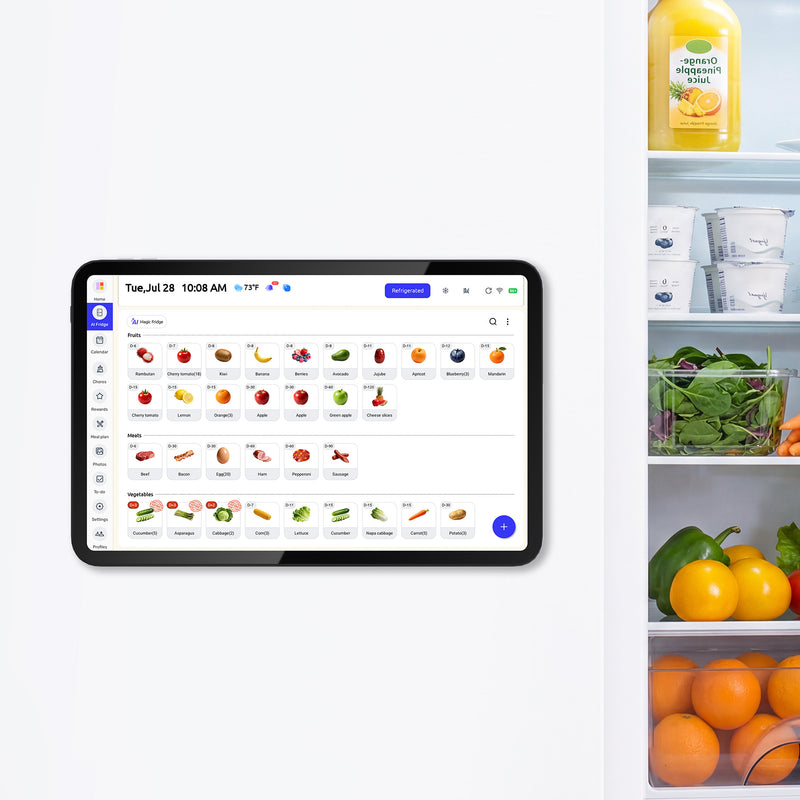
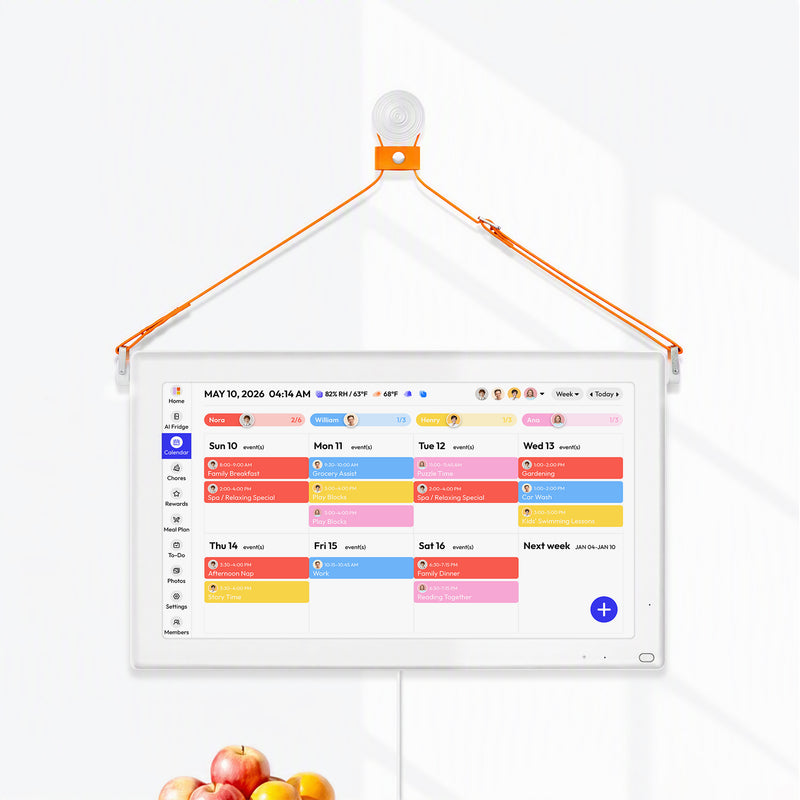
A shared-home a company is effective for families handling many recurring commitments, because everyone can see “who goes where” at a glance. Set one source of truth with color rules, reminders, and a daily review at 7:30 PM near your kitchen or entry hub.
Consistent and predictable media routines make transitions easier, so keep the hub visual and in the same left-to-right order each day.
Hub Layout Example (left to right on one wall/board)
- Today’s non-negotiables card (3-5 anchors).
- After-school sequence strip (snack -> homework/chores -> screen window -> offline block).
- 30-second Yes/No card.
- Screen windows with start/stop times and timer location.
- “Done today / prep tomorrow” checklist.
Age fit matters when choosing media and routines, including age-inappropriate content.
- Ages 4-6: Child asks for cartoons before dinner; parent points to the hub sequence, runs the 30-second card, and moves screen access to the posted post-meal window.
- Ages 7-11: Child wants gaming right after school; parent checks homework/chores block first, then allows a pre-set container if the game passes the 30-second card.
- Ages 12-15: Teen asks for social scrolling at night; parent uses the bedtime cutoff on the hub and shifts social use to the next day’s communication window.
Use that same hub for meals and chores: add after-school task blocks, dinner prep roles, and fixed entertainment containers. Keep setup simple and visible so children can predict when screens are available.
Days 8-14: Taper and lock boundaries
Behavioral design from screen-time boundaries shows environment beats willpower. Turn off autoplay and nonessential notifications, pre-schedule blocked windows, and remove high-friction apps from the home screen during school-night routines.
Transition tactics from the Family Media Plan method make shutdowns smoother: give a 10-minute warning, then a 2-minute warning, use a visible timer, and stop at natural breakpoints. If conflict spikes, run a short reset (reduced access plus strong offline replacements), then reintroduce fixed windows.
4-Step Conflict Reset (if-then flow)
- If warning time starts conflict, give one calm repeat of the posted stop time and point to the current hub window.
- If resistance continues, offer one bounded choice: stop now and switch to a planned offline block, or finish at one natural breakpoint within 2 minutes.
- If escalation continues, pause screens for a short reset and move to a regulation activity (walk, shower, snack, breathing, or chore).
- If calm returns, restart only at the next posted calendar window and rerun the 30-second card before new content.
Practical Next Steps
Families using routine-first screen planning usually see faster progress when they protect sleep, movement, and connection before debating exact minute totals [Practice Tip]. This priority order matches pediatric policy that emphasizes sleep, development, and family functioning in media planning [Expert Consensus/Guideline] digital ecosystem recommendations. The core goal is consistency: children should be able to predict screen start and stop times without constant negotiation.
A customized family media agreement should be reviewed every few months as kids mature, schedules change, and new apps appear. Treat it like your family calendar: a living system that gets tuned, not a one-time contract.
Action Checklist
- Run a 7-day screen audit by child: time, type, and hardest transition points.
- Pick 3-5 non-negotiable anchors and post them near your calendar hub.
- Build a 3-block weekday plan: morning, after-school, evening.
- Create two fixed entertainment containers and one weekend flex container.
- Add three offline replacements per child tied to chores, meals, or outdoor time.
- Start a nightly 7:30 PM family review and a 10-minute Sunday sync.
Adaptations and Exceptions
Because every family is different, use the same framework with tailored defaults when routines are complex.
Common barrier |
Practical alternative |
How to log and review |
Single-parent or shift-work schedule |
Set only one fixed anchor for each time block (morning, after school, bedtime) and keep the rest flexible. |
Mark which anchor held and which failed each day; adjust only one rule at the weekly review. |
Shared device across siblings |
Assign device windows by child and purpose (school, communication, entertainment) on the hub. |
Record conflicts and missed handoffs; revise window order, not the whole plan. |
Unpredictable transport/activities |
Use “first available 30-minute container” instead of a fixed clock time for leisure media. |
Track whether container happened before or after priorities; correct next day. |
Special learning, developmental, or health needs |
Use shorter blocks, more transition warnings, and co-view/co-play for regulation and comprehension. |
Log triggers, supports used, and recovery time; bring patterns to clinician visits. |
If full implementation fails, use a gradual rollout:
- Week 1: enforce only sleep and meal anchors.
- Week 2: add one after-school screen window.
- Week 3: add the 30-second card and weekly bucket tracker.
AAP policy highlights protecting development, sleep, and family functioning in the full digital ecosystem, so involve care teams early when problems persist under home rules digital ecosystem recommendations.
Early escalation is appropriate when media use is disrupting child or family functioning [Expert Consensus/Guideline] digital ecosystem recommendations.
Consult sooner if...
- The same sleep, school, mood, or behavior concerns persist for 2 weeks or more despite consistent plan use and logging.
- Daily functioning is clearly impaired (repeated missed schoolwork, chronic bedtime delay, withdrawal from meals or normal activities).
- Safety risk appears (self-harm content exposure, exploitation risk, risky contacts, or severe aggression during device removal).
- You are unsure whether signs are media-related or reflect a sleep, developmental, attention, or mental health condition.
Seek professional help when:
- Sleep disruption, school problems, or daily functioning issues continue despite your plan.
- Screen conflict regularly escalates to severe distress or unsafe behavior.
- You suspect anxiety, depression, attention, developmental, or learning concerns are interacting with media use.
- Online experiences include bullying, sexual exploitation risk, self-harm content, or repeated contact with strangers.
A practical pediatric guidance approach is to keep a short exception log for two weeks, then review patterns and next adjustments.
This guide is non-clinical and cannot diagnose sleep, developmental, learning, or mental health conditions; individualized assessment by a pediatric, developmental, or sleep specialist is needed when concerns persist, functioning declines, or safety risks are present.
2-Week Exception Log (quick format)
Date |
Exception (what rule changed) |
Why it changed |
Outcome (sleep/meals/mood/school) |
Next-step adjustment |
Important Note
The planning templates and organizational systems provided here are intended as adaptable blueprints. Every family’s needs, dietary requirements, and physical capabilities are different. We recommend tailoring these schedules to your specific health needs and household dynamics. Results from productivity or meal-planning systems may vary, and consistency remains the responsibility of the individual user.
References
- The 2026 Family Media Plan
- Parent Guide: Family Media Plan
- Digital Detox for Kids
- Screen-Free Daily Routine
- Cooking Activities for Kids
- Complete Guide to Screen Time
- Manage Screen Time With Kids
- Good Screen Time Practical Guide
- Digital Well-Being at Home
- Why Parents Should Limit Screen Time
- Digital Wall Calendar for Families
- Screen-Time Boundaries


