




A taped old iPad can work as a short-term display, but it is usually a poor long-term family calendar because battery stress and maintenance pile up quickly.
If your kitchen iPad runs warm, drops battery health fast, or randomly stops charging, that “quick wall calendar” setup is already costing you time. iPad batteries are designed to retain about 80% of original capacity after 1,000 full charge cycles in Apple’s iPad battery guidance, and constant high charge plus heat speeds up chemical aging. You’ll get a clear decision framework here: when reuse is still worth it, and when dedicated hardware is the better choice.

Quick Verdict and Best Use Cases
Best-for recommendations
For most families, taping an old iPad to the wall is the wrong default because it combines high battery stress with high maintenance. It is usually acceptable only as a temporary test setup, not a “set it and forget it” household system.
- Tape-only old iPad: best for a short pilot (weeks, not years).
- Old iPad + proper mount + managed charging: best for budget-focused users willing to do monthly maintenance.
- Dedicated calendar display: best for low-maintenance households that want reliability over DIY tinkering.
How this review was evaluated
This assessment uses practical criteria: battery wear risk, heat exposure, charging reliability, cable/serviceability, software longevity, and total cost over time. Rule-based upkeep is more reliable when you use explicit safety thresholds instead of guesswork.
A limitation: this is a real-world decision analysis, not a lab cycle-life test under controlled thermal chambers.
Observation scope and conditions: this review uses qualitative household wall-setup observations rather than an instrumented dataset. The device count, exact model-year mix, battery-health percentages, and cycle counts were not formally logged, so these findings are directional. The scenarios discussed are typical indoor setups with always-plugged USB power or scheduled smart-plug charging. For reproducible self-checks, use iPad battery usage and health steps, and where cycle count is available (iPhone 15 and later), use Settings > Battery > Battery Health.
Why Battery Chemistry Makes Tape Jobs Age Fast
Always-plugged operation is not “free”
Modern iPads prevent classic overcharging, but 24/7 wall use still keeps the battery near high state of charge for long periods. That high-charge dwell time increases chemical aging, especially on older batteries that already have reduced capacity headroom.
Heat is the multiplier
Apple’s battery guidance is clear on temperature sensitivity: ideal use is roughly 62–72°F, and prolonged operation above 95°F can permanently shorten battery lifespan. Kitchen and entryway installs are often near ovens, sunlight, HVAC vents, or poor airflow zones, which makes taped installs particularly vulnerable.

What aging looks like in daily use
You usually see gradual failures first: slower app launches, lower screen brightness under load, reduced speaker output, and inconsistent charge behavior. In wall-calendar use, that becomes family friction: missed reminders, reboot loops, and the display being “down” exactly when everyone needs it.
The Maintenance Work Most Families Underestimate
Power design is an ongoing maintenance choice
A wall tablet needs a deliberate power path. Common options include hidden USB power, in-wall mains-to-USB modules, or PoE with a converter. Each can work, but each adds service points: cable bends, connector wear, adapter failure, and troubleshooting after outages.
Cleaning and connector care are not optional
Wall-mounted tablets collect grease, dust, and humidity faster than desk devices. Safe care means shutdown before cleaning, a soft slightly damp lint-free cloth, and no liquid pushed into ports. Repeated cable bending at one point is a known failure pattern, so cable routing and strain relief matter.
Swelling risk is a real safety boundary
Battery swelling is cumulative damage, often linked to heat and prolonged high-charge stress. Warning signs include lifted screen edges, back bulge, wobble on a flat surface, or unusual odor. If any sign appears, stop using and charging the device immediately.

- Disconnect from power only if it is safe to do so.
- Move the device to a stable, nonflammable surface away from combustible materials.
- Do not puncture, crush, bend, or pry open the battery/device.
- Keep people away from the device and monitor from a safe distance.
- Document the condition with photos for service or disposal intake.
- Route the device to official service support or follow local hazardous waste disposal procedures. If you see smoke, hear hissing, or feel rapidly escalating heat, leave the immediate area and call emergency services; battery incidents can escalate to smoke or flame and serious injury.
For long non-use periods, store at about 50% charge and powered off; this is far safer than leaving an old iPad drained or plugged in continuously.
Side-by-Side Option Comparison
Three realistic paths
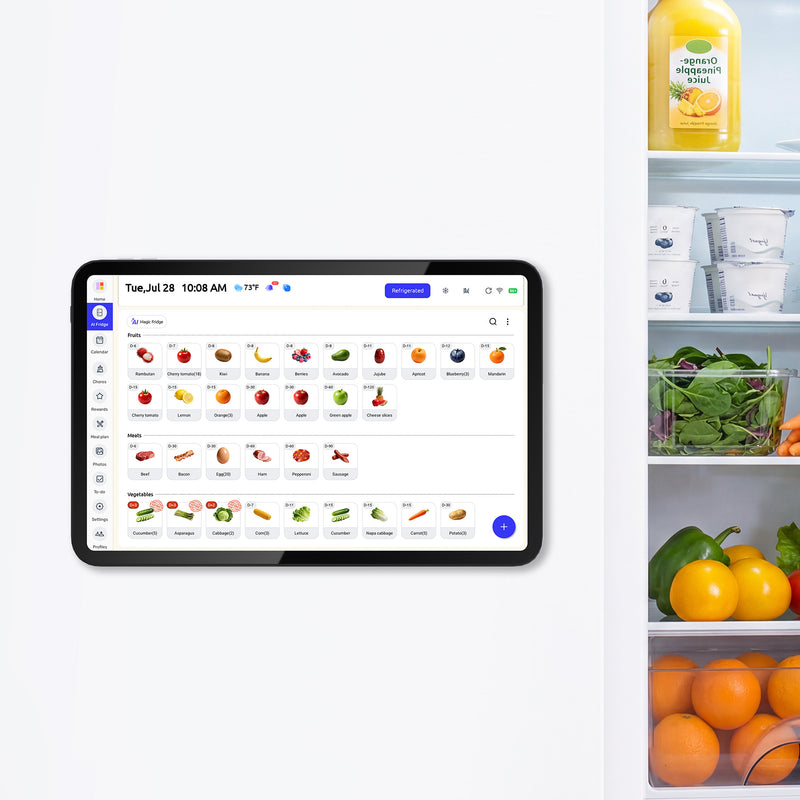
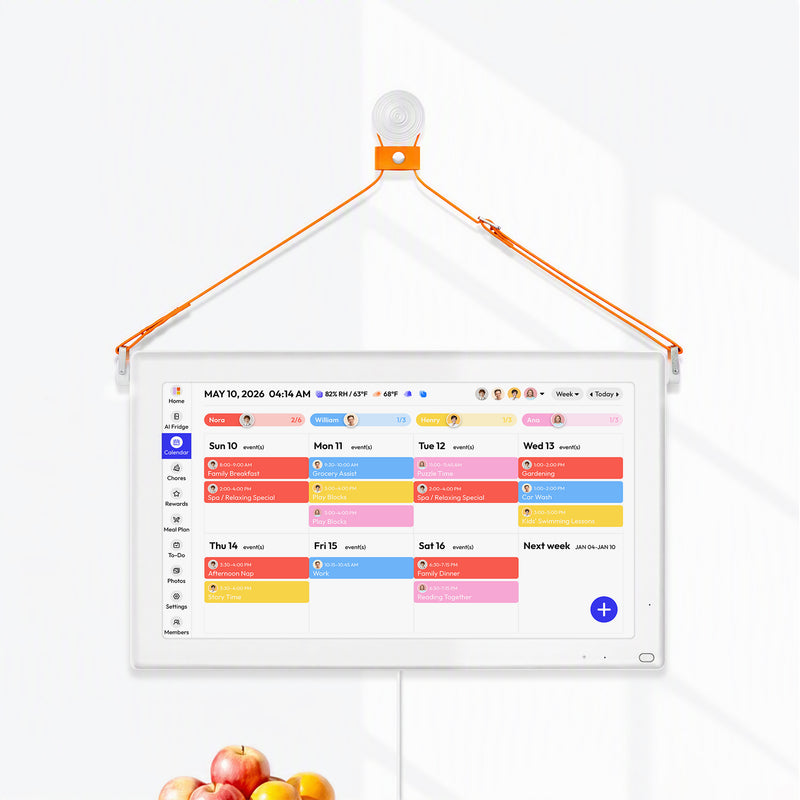
The market now includes dedicated digital calendar products, including a company and a company, so “old iPad or nothing” is no longer true. The better decision is matching maintenance tolerance to the system type.
Option |
Typical upfront cost |
Battery stress risk |
Ongoing maintenance |
Software/feature longevity |
Best for |
Taped old iPad, always plugged |
20 |
High |
High |
Low to medium (legacy app limits) |
Short trial only |
Old iPad + wall kit + charge management |
About $102 kit plus power parts |
Medium |
Medium |
Medium |
Budget users who will maintain monthly |
Dedicated calendar display |
About 320 |
Low to medium (often fixed-power design) |
Low to medium |
High |
Families prioritizing reliability |
The value-for-money pivot is time. DIY reuse can look cheap upfront, but if you include troubleshooting, cable replacement, battery decline, and occasional downtime, dedicated displays become competitive faster than most people expect.

If You Still Reuse an Old iPad, Set It Up Like This
Installation rules that actually reduce failure
A reused iPad can still be a reasonable bridge solution if you manage charge and heat instead of running full-time at 100%. The biggest improvement is controlled power delivery, not better tape or a nicer frame.
- Keep battery between roughly 20% and 80% when practical, not pinned at 100% all day.
- Use a smart plug schedule so charging happens in windows, not continuously.
- Keep ambient temperature below 95°F and away from direct sun or cooking heat.
- Use certified chargers/cables sized for the iPad’s power draw.
- Inspect monthly for connector wear, cable damage, and swelling signs.
- If unused for months, power down and store near 50% charge.
Edge cases to plan for
Power outages and router resets are common failure moments in wall setups. Test recovery: auto-wake behavior, app relaunch, Wi‑Fi reconnect, and whether the calendar remains readable without manual intervention. If the household needs guaranteed visibility every day, this test often reveals whether the DIY route is acceptable.
FAQ
Q: Is keeping an old iPad plugged in 24/7 always unsafe?
A: Not always, but it is usually higher-risk for battery wear, especially on older cells and in warm locations. Managed charging and better airflow reduce risk significantly.
Q: Can I just replace the battery later and ignore this now?
A: You can, but battery service cost, downtime, and repeat labor often erase the “free hardware” advantage of a taped setup.
Q: What is the minimum maintenance schedule for a wall-mounted old iPad?
A: Do a monthly check for heat, cable condition, charging behavior, and any swelling signs; do a quarterly deep clean and power-recovery test.
Final Takeaway
A taped old iPad is a decent prototype, not a durable family calendar system. If you want the lowest upfront spend, reuse the iPad but add charge scheduling, heat control, and monthly checks. If you want low-friction daily reliability, a purpose-built calendar display is usually the better long-term choice.
Purchasing Disclaimer
Our reviews and comparisons are based on technical specifications and market research available at the time of writing. Product features, stock availability, and pricing are subject to change by the manufacturer or retailer without notice. This content is intended to assist your decision-making process, but final purchase choices and the resulting product performance remain the responsibility of the consumer. We recommend verifying current data with the vendor before purchase.
References
- Food Safety Charts
- Everblog 21.5-inch Calendar
- Everblog 13.4-inch FridgeCal Calendar
- Apple iPad battery guidance — Apple Support, Apple Inc. Last updated: not listed on page. Accessed: March 16, 2026. Direct quote: “iPad batteries are designed to retain 80 percent of their original capacity at 1000 complete charge cycles.”
- Apple iPhone battery temperature guidance — Apple Support, Apple Inc. Last updated: not listed on page. Accessed: March 16, 2026.
- CPSC battery fire safety warning — U.S. Consumer Product Safety Commission. Product safety warning date: November 24, 2025. Accessed: March 16, 2026.


