





Three-year-olds can safely help in the kitchen when tasks are small, supervised, and set up for success. Pouring, mixing, and tearing build independence, coordination, focus, and a calmer family rhythm around meals.
Is your preschooler pulling at your leg while you’re trying to get dinner on the table? A small tray with a child-sized pitcher, a bowl, and lettuce to tear can turn that restless moment into real help, giving your child a repeatable job they can practice today and use again at snack time tomorrow. You’ll get practical setup steps, safety boundaries, and realistic expectations for making kitchen chores feel peaceful instead of messy and stressful.
Why Kitchen Chores Fit a Montessori Home
Montessori-inspired kitchen work is not about turning a 3-year-old into a miniature chef. It is about giving a young child real, useful work that matches their size, attention span, and developing hands. At this age, “helping” often takes longer than doing it yourself, but the payoff is meaningful: your child learns that they belong in the daily life of the family.
A child-centered kitchen routine supports independence when tools are accessible, expectations are clear, and adults allow practice without rushing. Practical kitchen participation can strengthen fine motor skills, sequencing, sensory exploration, language, and confidence, especially when children are invited into real food preparation with safe tools and close supervision.
For a 3-year-old, the best kitchen chores are short and visible. Pouring water into cups, stirring muffin batter, and tearing lettuce for a salad all have a clear beginning, middle, and end. That structure matters because young children are still learning how to organize actions in order. Organization skills help children follow directions, plan steps, and stay with a task across daily life and school.

What “Prepared Environment” Means in a Family Kitchen
A prepared environment simply means the kitchen is arranged so your child can participate without constant correction. For a 3-year-old, that usually means a stable step stool or learning tower, a low drawer or shelf for child-safe dishes, a small pitcher, a mixing bowl, a spoon or whisk, a sponge, a towel, and a place to put wet cloths when the task is done.
This does not require a full child-sized kitchen. Families in apartments or small homes can use one low drawer, one tray, and one basket of tools. The key is consistency. When the pitcher, towel, and bowl always live in the same place, your child spends less energy searching and more energy participating. Montessori household guidance often emphasizes child-sized tools, supplies within reach, and materials gathered in one basket or tray so the child can complete household chores with less adult rescue.
In practice, a “pouring tray” might hold a 4 fl oz pitcher, two small cups, and a folded towel. A “mixing tray” might hold a bowl, spoon, pre-measured dry ingredients, and a damp cloth. A “tearing tray” might hold washed lettuce leaves, a small bowl for edible pieces, and a scrap bowl. The tray creates a visual boundary, which helps contain both the work and the mess.

Pouring: Control, Confidence, and Calm Repetition
Pouring is the act of transferring liquid or dry material from one container to another with control. For a 3-year-old, it is a whole-body lesson: the child grips, lifts, aims, tips, watches the result, and learns when to stop. Water gives immediate feedback because the child can see whether the cup is empty, half-full, full, or overflowing.
Start with dry pouring if spills are a major stress point in your home. Use large, edible items such as O-shaped cereal or dry pasta, then move to rice only if your child no longer mouths materials and can follow boundaries. When your child is ready for water, offer less than you think you need. A pitcher filled with 2 fl oz of water gives plenty of practice without turning the floor into a cleanup project.
Toddler pouring activities support hand-eye coordination because children adjust the angle and aim based on what they see, and water pouring also encourages gripping, lifting, tipping, and controlled movement. In a family kitchen, that might look like your child pouring water into their own cup at lunch while you keep one hand near the pitcher, not on it, unless help is needed.
The main advantage of pouring is that it builds independence quickly. Your child can use the same movement to pour milk into cereal, water a plant, or fill a pet bowl with supervision. The drawback is obvious: pouring spills. The solution is not to avoid the task, but to make cleanup part of the lesson. Keep a sponge within reach and calmly say, “Water spilled. Let’s wipe.” Over time, the spill becomes less dramatic because your child knows what happens next.

Mixing: Strength, Sequencing, and Shared Meal Prep
Mixing is a kitchen chore where a child combines ingredients using a spoon, whisk, or hands. It builds coordination, grip strength, patience, and early sequencing. A 3-year-old can stir pancake batter, mix yogurt with fruit, toss a small salad, combine muffin ingredients, or knead a small piece of dough.
The most peaceful version starts before your child joins you. Pre-measure ingredients into small bowls, then invite your child to add and stir. This keeps the task focused on participation rather than waiting while you search for the baking powder. Montessori kitchen guidance often uses this kind of scaffolding: adults simplify the work, model slowly, and let children take over the manageable part.
A real example is banana muffin prep. You mash the banana slightly, then your child finishes mashing with a fork. You pour flour into a bowl, then your child stirs five slow circles. You add the wet ingredients, then your child mixes again. The finished batter may be uneven, but the child has practiced order, force, and contribution.
The benefit of mixing is that it feels meaningful. Children often become more interested in tasting food they helped prepare, especially familiar foods with one small variation. The downside is that mixing can escalate into splashing, over-stirring, or grabbing ingredients. Keep the bowl large, offer small amounts, and use calm, concrete language: “Spoon stays in the bowl,” “Slow circles,” and “Now we stop.”
Tearing: A Perfect First Food-Prep Chore
Tearing is one of the most underrated kitchen chores for 3-year-olds. It requires no blade, no heat, and no exact measurement. A child can tear lettuce, spinach, herbs, soft bread, tortillas, or paper napkins for the table. The movement strengthens fingers and hands while letting your child contribute to an actual family meal.
For salad night, place washed lettuce on a towel and show your child how to tear one leaf into bite-size pieces. Use a bowl for the finished pieces and a second bowl for stems or scraps. If your child tears pieces too large, serve them anyway when safe, or quietly resize a few later. The goal is not restaurant-level salad; the goal is useful participation.

A Montessori kitchen setup often begins with simple, no-bake foods such as fruits, vegetables, greens, cereal, toast, and easy snacks, and a child-accessible workspace helps children prepare and clean up real food with supervision. Tearing fits beautifully because it is sensory-rich without being complicated.
The advantage is low risk and high success. The disadvantage is that some children may shred food into tiny bits or lose interest quickly. Keep the amount small. Three lettuce leaves are enough for a first job. A child who finishes wanting more is more likely to return happily next time.
How to Set Up a Calm Chore Routine
A calm kitchen chore routine begins with one task, not a full cooking session. Choose the part of the meal where your child can genuinely help and where you can tolerate a slower pace. If dinner is already late and everyone is hungry, choose tearing lettuce or pouring water, not cracking eggs or measuring flour.
The environment should make the next step obvious. Put only the needed tools on the tray. Keep towels nearby. Use containers that fit small hands. A 3-year-old does better with a small pitcher refilled twice than with one heavy pitcher filled to the top. Sensory-rich pouring and mixing setups can engage children’s thinking and may have a soothing effect when they are supervised, developmentally appropriate, and paired with nearby cleanup materials.
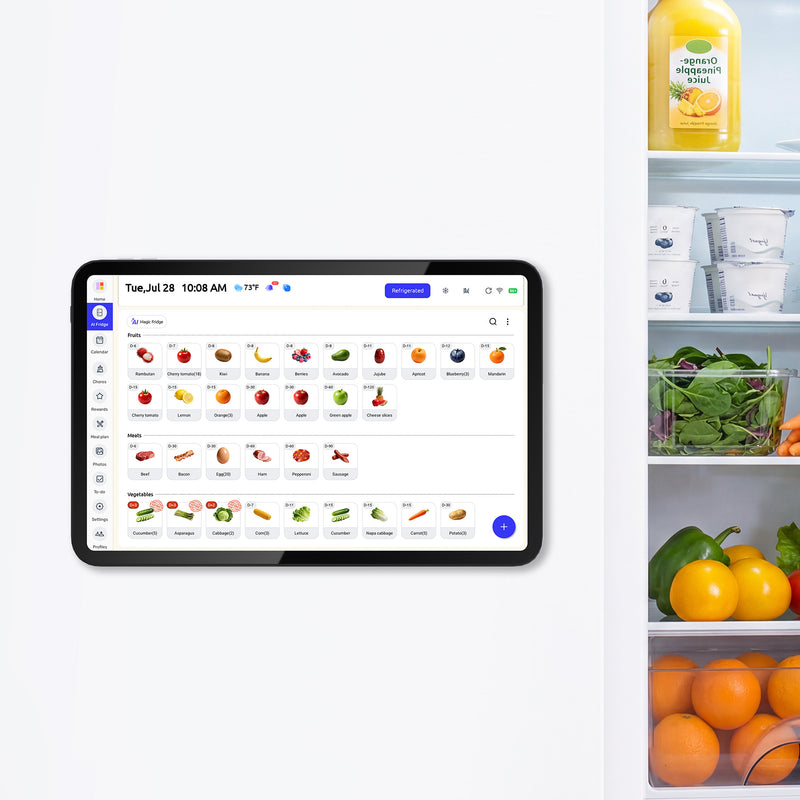
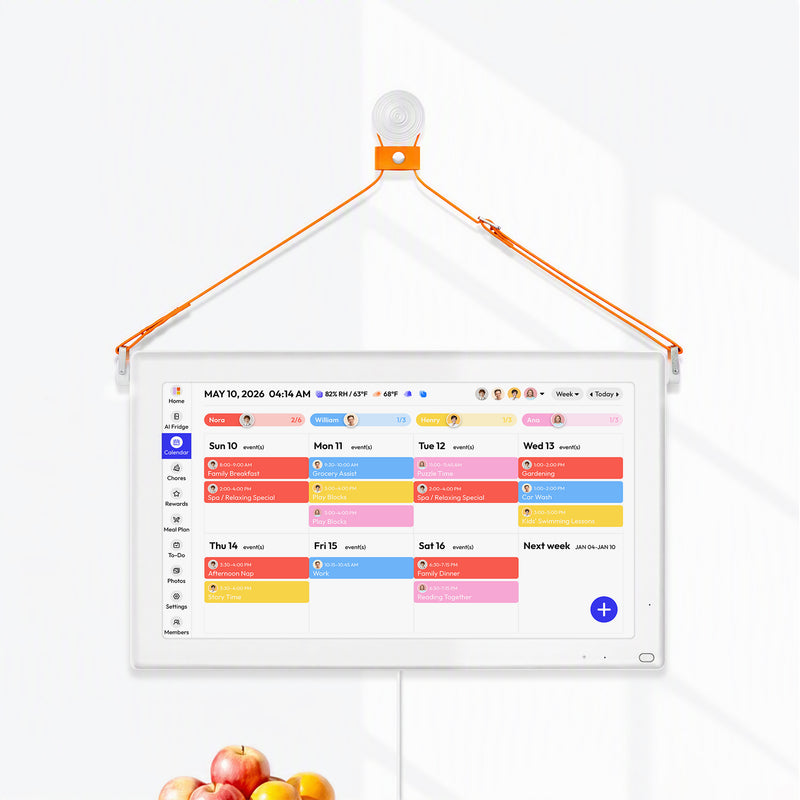
A fridge calendar or family command center can help by making the routine predictable. You might assign “pour water” to Monday breakfast, “tear lettuce” to taco night, and “mix yogurt” to Saturday snack. The point is not to schedule every minute; it is to make helping part of the household rhythm so your child knows, “This is my work.”
Chore |
Best First Material |
Parent Role |
Real-Life Use |
Pouring |
2 fl oz water or dry cereal |
Fill lightly and supervise |
Pouring water at meals |
Mixing |
Yogurt, batter, or dough |
Pre-measure and model slowly |
Helping with breakfast or baking |
Tearing |
Lettuce, herbs, or soft bread |
Wash food and set bowls nearby |
Preparing salad, tacos, or snacks |
Safety and Hygiene Without Hovering
Three-year-olds need active supervision in the kitchen. That means you are nearby, watching, and ready to step in around water, glass, heat, sharp tools, and choking hazards. It does not mean correcting every imperfect motion.
Handwashing should happen before and after food handling. Use child-safe utensils, keep knives and heat out of reach unless you are directly guiding an age-appropriate task, and place yourself between your child and the stove when cooking is happening. Clear kitchen safety rules, handwashing, supervision, and child-safe tools are central to safe participation in cooking with kids.
Glassware deserves a thoughtful note. Many Montessori homes use real glass because it teaches careful handling and gives honest feedback if something breaks. That can work well for some families, but it is not required for every child or every season of life. If your child is tired, impulsive, or working over tile, a small stainless steel pitcher or sturdy cup may be the calmer choice. Respect for real materials matters, but so does the emotional climate of the kitchen.
Pros and Cons of Montessori-Inspired Kitchen Chores
The biggest benefit is connection. A 3-year-old who pours water or tears lettuce is not being entertained off to the side; they are participating in family life. These chores also build motor control, attention, vocabulary, confidence, and early responsibility. Children practice words like full, empty, wet, dry, stir, tear, slow, stop, more, and enough in a context they can see and touch.

Another benefit is that chores can reduce power struggles over time. When children have predictable ways to help, they often feel less need to grab, interrupt, or climb into unsafe spaces. Home routines and getting organized can help children know where things belong and what comes next, which supports smoother family routines.
The cons are real. Kitchen help is slower. Spills happen. Food may look uneven. Some days your child will be interested for two minutes and then wander away. Montessori-inspired chores work best when adults measure success by participation, not polish. If the salad is torn, the water is mostly in the cup, and your child helped wipe the spill, the lesson worked.
When to Pause or Simplify
Pause if your child is throwing tools, repeatedly mouthing unsafe materials, climbing toward heat, or becoming too frustrated to continue. Simplifying is not failure. It is responsive parenting.
A child who dumps water instead of pouring may need a smaller amount, a wider bowl, or a dry transfer activity. A child who stirs wildly may need a heavier bowl, thicker mixture, or a hand-over-hand demonstration for one slow circle. A child who tears lettuce into crumbs may need larger leaves and a shorter turn. The practical question is always, “What would make this one step easier to succeed at today?”
FAQ
How long should a 3-year-old kitchen chore last?
Most successful kitchen chores at this age last about three to ten minutes. End while your child is still regulated if you can. A short, peaceful task repeated often teaches more than a long session that ends in tears.
Should I reward my child for helping?
Praise effort and contribution, but avoid turning every chore into a prize system. A warm “You poured water for the table” or “You helped make our salad” connects the work to family belonging.
What if my child refuses?
Invite, demonstrate, and leave the door open. Forced chores can quickly become a power struggle. Many children return when they see the task is real, manageable, and not pressured.
A Peaceful Kitchen Starts Small
Pouring, mixing, and tearing are small chores, but they carry a big message: you are capable, you are needed, and you belong here. Start with one tray, one task, and one calm cleanup routine, then let your child’s confidence grow through repetition.


