







A visual calendar can turn a new event from a vague worry into a predictable story your child can see, rehearse, and revisit. The goal is not a perfect schedule; it is a calmer bridge between “I don’t know what will happen” and “I know what comes next.”
Is your child asking the same question about tomorrow’s dentist visit, birthday party, school concert, or holiday gathering over and over? When families put the event, the steps, the people, and the “what if plans change” cue in one visible place, children get a specific way to prepare instead of relying on repeated verbal reassurance. You’ll learn how to use a smart fridge calendar, wall calendar, or shared digital calendar as a simple social story system for new events.
What a Visual Calendar Social Story Is
A visual calendar social story blends two familiar supports. A family calendar keeps household commitments in one shared place, while a social story explains a specific situation in a clear, reassuring sequence. Together, they help a child understand not only when something is happening, but what the experience may feel like, who will be there, what they can do, and how the family will move through it.

A family calendar works best when it becomes the household’s shared hub for school obligations, appointments, activities, pickups, drop-offs, and family events. A visual calendar social story adds emotional preparation to that same system. Instead of writing only “dentist, 3:30 PM,” you might show “drive to dentist,” “wait in lobby,” “sit in chair,” “open mouth,” “choose sticker,” and “go home.”
A visual schedule can show what activity comes next and help reduce uncertainty during transitions. That makes it especially useful before unfamiliar events, when a child’s stress often comes from the blank spaces between “we’re going” and “it’s over.”
Why New Events Feel Bigger Than They Look
Adults often see a new event as one calendar block. Children may experience it as dozens of unknowns. Where will we park? Will it be loud? Who will talk to me? Can I bring my stuffed animal? What if the plan changes? A visual calendar gives those questions a place to land.
For neurodivergent children, anxious children, and children who simply need more preparation, visual schedules can increase predictability, support smoother transitions, improve communication, and build independence. The same principle helps the whole household. When the plan is visible, fewer details live inside one parent’s head, and fewer reminders have to be repeated at high-stress moments.
Social stories are helpful because they focus on one specific situation rather than trying to address every worry at once. A child nervous about a baseball game may need separate mini-stories for arriving, crowds, snacks, bathrooms, and leaving early if needed. That kind of preparation is practical, not overprotective; it gives the child usable information before their nervous system is already overloaded.

Choosing the Right Calendar Format
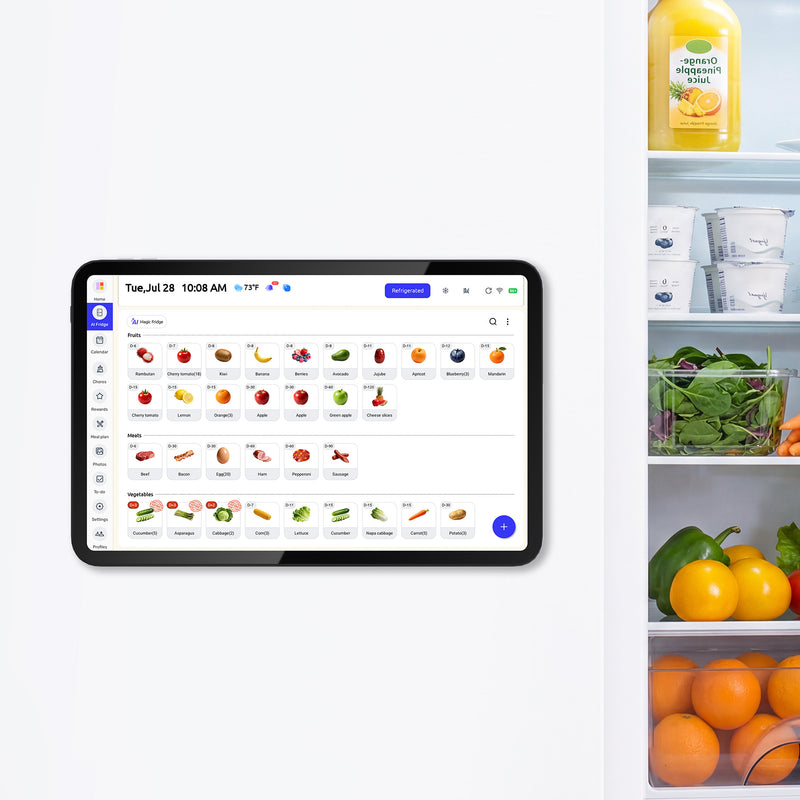
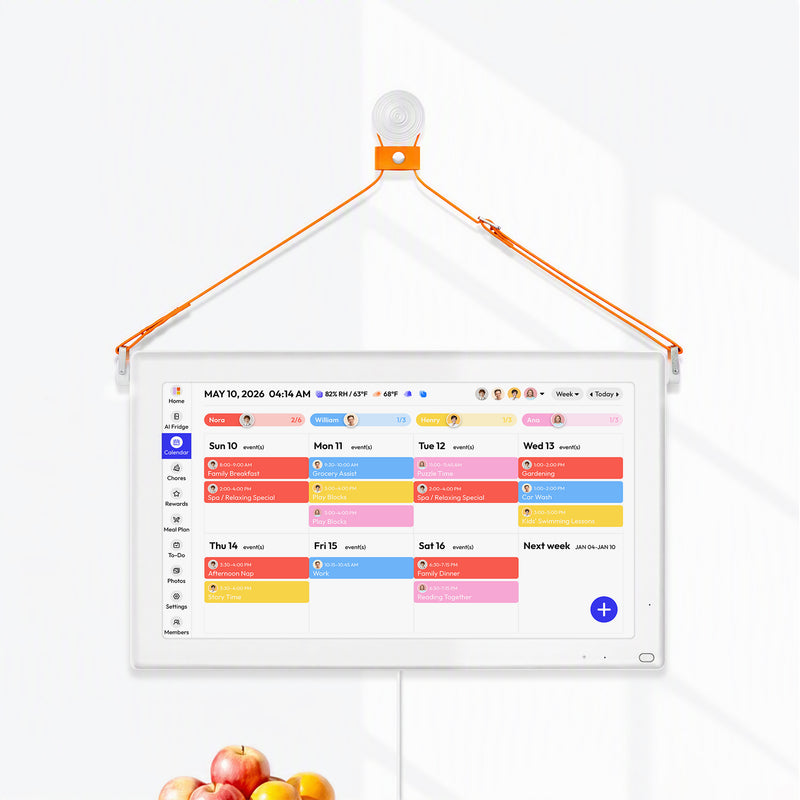
There is no single best calendar for every home. The best format is the one your family will actually check, update, and understand during a busy week. A smart fridge calendar can work well because it is visible in a high-traffic place, while a shared app helps caregivers update plans from work, school pickup, or the carpool line.
Format |
Best For |
Watch-Out |
Smart fridge calendar |
Families who need a central, always-visible hub |
Can become cluttered if every small detail appears at once |
Wall calendar |
Younger children who benefit from a physical reference point |
Harder to update when caregivers are away from home |
Shared digital app |
Families coordinating across phones and households |
Less useful if children never see it directly |
Printed visual story |
One-time events like surgery, a trip, or the first day of school |
Easy to misplace unless attached to the main calendar |
A shared family schedule can help keep family schedules and lists in one place when different caregivers need the same information. A smart household display can also bring events, chores, dinner plans, routines, and countdowns into one household view. The advantage is visibility; the risk is overloading the screen. For social story use, the event should be easy to spot at a glance.
How to Build a Visual Calendar Story for a New Event
Start With One Event
Choose one upcoming event that is causing repeated questions, avoidance, sleep trouble, clinginess, or big feelings. The best first example is specific and soon, such as “Ava’s first swimming lesson on Saturday at 10:00 AM,” not a broad category like “being brave in public.”
A strong social story focuses on one situation, uses positive language, and explains who, what, when, where, and why. On a calendar, that means the main event should be expanded into a short sequence. For a school concert, the story might show dinner at 5:30 PM, shoes on at 6:15 PM, drive to school at 6:30 PM, sit with family at 6:45 PM, listen to music at 7:00 PM, clap, say goodbye, and go home.

Add Real Photos When You Can
Real photos often work better than generic icons because they answer concrete questions. A photo of the actual school entrance, dentist chair, coach, costume, or birthday house can make the story feel less imaginary. If real photos are not available, simple icons or clear words are still useful.
Keep each image calm and uncluttered. One photo should mean one idea. If the calendar screen shows the dentist, the waiting room, a toothbrush, a timer, and a toy all inside one tiny square, the support becomes harder to read. It is usually better to open the event and show the steps inside the event details or in a linked visual story.
Use Gentle “I Can” Language
Social stories should not sound like a lecture. A child preparing for a haircut may need to hear, “I may feel the cape on my neck,” “The scissors may make snipping sounds,” and “I can hold my toy while I sit.” That is more useful than “I will behave at the salon.”
The best language is honest, specific, and reassuring. If something might be loud, say it may be loud. If waiting may happen, include waiting. If leaving early is possible, include the plan. Children often trust the story more when it does not pretend everything will feel easy.
Show the Ending
Many families forget the final step, but children often need to know when the event is truly done. Add a clear ending such as “back in the car,” “home for pajamas,” “call Grandma,” or “choose a snack.” This matters because an unfamiliar event can feel endless when the child cannot picture the finish line.
For example, a vaccine appointment story can end with “bandage on,” “walk to car,” and “watch one show at home.” The reward does not need to be large. The point is closure, not bribery.
Making It Work on a Smart Fridge Calendar
A smart fridge calendar is especially useful because it meets the family in the kitchen, where many transitions already happen. Breakfast becomes a natural time to preview the day. Dinner becomes a low-pressure time to preview tomorrow. The screen can show the event, while the parent adds the calm narration.
A practical setup is to create the event on the shared family calendar, assign the child’s color, add the location, and attach or type the social story steps inside the event notes. If the device supports lists or routines, create a short event routine with the same sequence. For example, “pack headphones,” “bring water bottle,” “drive to auditorium,” “find seats,” “clap,” and “go home” can sit beside the calendar block.

A visible calendar also helps reduce the “one parent holds everything” problem. When the event includes the time, transportation, supplies, and emotional preparation, another caregiver can step in without asking for a verbal download. That is good organization, and it is also good family care.
Pros and Cons
The biggest advantage of visual calendar social stories is predictability. They make time visible, break unfamiliar events into smaller pieces, and give children a shared script with their caregivers. They can also reduce repeated questioning because the answer is no longer only spoken; it is available to point to, review, and update.
The tradeoff is setup time. A thoughtful story takes a few minutes, and it can be tempting to build a beautiful system that is too complicated to maintain. Another risk is overpromising. If the calendar says the party ends at 4:00 PM but pickup might run late, write “around 4:00 PM” or add a waiting step. Accuracy matters because trust is part of the tool.
Visual calendars are supportive, but they are not a cure-all. A child with intense anxiety, trauma responses, communication challenges, or frequent meltdowns may also need help from a pediatrician, therapist, school team, or other qualified professional. The calendar is one practical support within a wider care plan.
How Often to Review the Story
Review the visual story before the event, but not only at the last minute. A calm review the night before and again earlier in the day is usually more helpful than trying to explain everything while everyone is putting on shoes.
For a Saturday birthday party, you might preview it Friday after dinner, Saturday morning at breakfast, and once more before leaving. Each review can be short. Point to the event, name the steps, answer one or two questions, and end with the reassuring final step. If the child starts using the calendar independently, let that independence grow. The goal is shared confidence, not constant adult narration.
If the event is recurring, update the story after the first time. Ask what was missing, what was surprising, and what helped. A swimming lesson story might need “shower after class” added. A church service story might need “music may be loud” or “we can sit near the aisle.” Small edits make the next story more trustworthy.
Preparing for Changes Without Creating Panic
Plans change, and children deserve a way to understand that without feeling tricked. Add a simple change cue to the calendar, such as a question mark icon, a “maybe” label, or a backup plan note. For example, “If it rains, soccer may move inside,” gives the child a second path instead of a broken promise.
This is where visual calendars and social stories work especially well together. The calendar shows that change is part of the plan, while the story explains what the child can do next. A calm phrase such as “If the plan changes, I can check the calendar and ask what comes next” gives the family a shared response.
FAQ
Should every event become a social story?
No. Save detailed visual stories for new, stressful, confusing, or high-transition events. Ordinary routines can stay as simple calendar entries unless your child needs more support.
What age is this for?
Visual calendar stories can help preschoolers, school-age children, teens, and even adults who benefit from concrete preparation. Younger children may need photos and simple phrases, while older children may prefer written steps, privacy, and control over how much detail appears on the shared screen.
What if my child keeps asking questions anyway?
Repeated questions do not mean the calendar failed. They often mean the child is seeking reassurance. Gently point back to the visual story, answer briefly, and keep your tone steady. After the event, update the story if the same question revealed a missing detail.
A Calmer Way to Meet the Next New Thing
A visual calendar social story gives your family a shared map before emotions run high. Put the event where everyone can see it, break it into honest steps, include the ending, and leave room for change. New experiences may still feel big, but they no longer have to feel invisible.


