

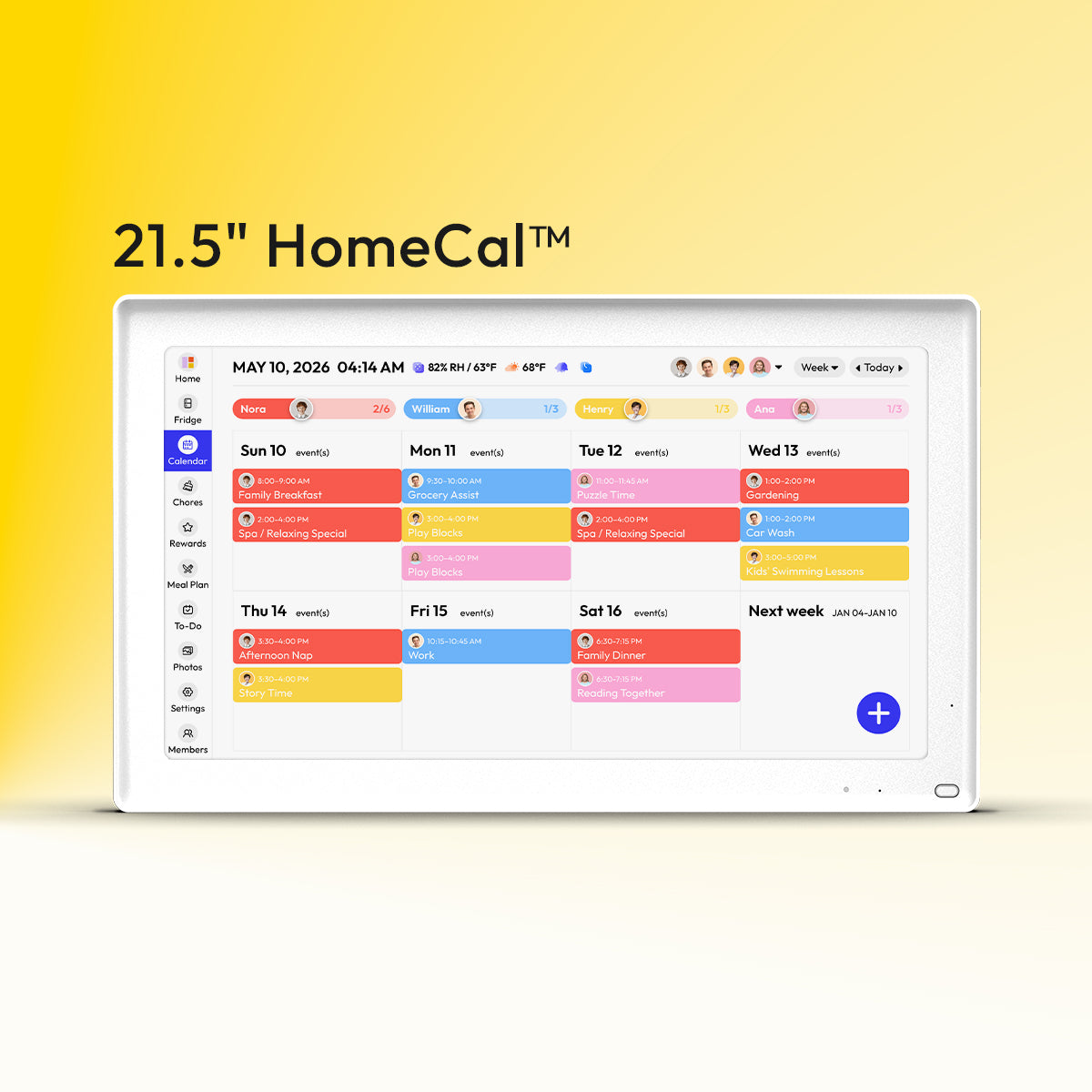


Kids handle schedule changes better when the new plan is visible, simple, and repeated in the same place. Busy families can make this easier by using one shared digital calendar, one visible home command center, and a short daily check-in routine.
Ever had a child ask “Who’s picking me up?” five minutes after you already explained it twice? That usually means the plan is living in too many places: one parent’s text thread, another parent’s work calendar, a school email, and someone’s memory. A clear family planning system gives kids one place to look, one way to hear changes, and fewer chances to feel surprised.
Why Schedule Changes Feel Harder When the Plan Is Invisible
A schedule change is not just a new time on a calendar. For a child, it can mean a different pickup person, a rushed dinner, a missed backpack item, or a change in who is home after school. For adults, the mental work is often bigger than the event itself: remembering the change, telling the right people, updating the meal plan, adjusting chores, and checking transportation.

That pressure is common, not a personal failure. One family calendar review notes that modern households often juggle work, school, sports, playdates, medical visits, family events, and social plans in overlapping blocks, and it cites that 82% of parents struggle to track events. When the plan is scattered, kids often get the information late or hear it in pieces.
What Often Breaks
The problem is usually not that families “need to be more organized.” It is that the household system depends on one adult holding too many details at once. Hidden planning causes missed handoffs when information stays in one person’s head, phone, inbox, or paper pile, while a visible family plan gives everyone a shared place to check.
A child may remember “soccer moved,” but not the new field, the earlier leave time, or the fact that cleats need to be by the door. A co-parent may know there is a dentist appointment, but not that the school pickup has to happen 20 minutes earlier. Those small gaps are where repeated questions, late starts, and frustration tend to grow.
Build One Source of Truth for the Family Schedule
The most useful family calendar is not the prettiest one. It is the one your household will actually check. A shared digital calendar can centralize events, send reminders, sync across devices, and update everyone when one entry changes, which is why family calendar apps often focus on shared calendars, task lists, reminders, notifications, grocery lists, chore tracking, and calendar syncing.

For kids, “one source of truth” means the answer should not depend on catching a parent at the right moment. The new plan should appear in the same shared calendar, on the same kitchen board, or in the same family planning area every time. That consistency matters more than having a perfect app setup.
What to Put in Each Calendar Entry
A useful schedule-change entry should answer the questions a child or caregiver would actually ask. Include the event, new time, leave time, pickup person, location, item to bring, and what happens next.
For example, instead of writing:
“Soccer changed”
Write:
“Soccer practice: 5:30 PM, leave at 5:00 PM, Dad drives, Field 3, bring cleats and water bottle, dinner after.”
That small amount of detail helps kids act with less adult prompting. It also helps another adult step in without needing a long explanation.
Use Color and Categories Carefully
Color coding can help kids scan quickly, especially when each person has a color or each type of task has one clear category. A shared calendar comparison describes options such as a platform for color-coded shared scheduling, a platform for basic reminders, a platform for family lists and meal planning, and a platform for AI and messaging integrations, showing that common calendar features can support different household styles.
Keep the color system simple. If every activity has its own color, children may stop noticing the difference. A workable setup might be blue for school, green for sports, yellow for appointments, and red only for changes that affect pickup, drop-off, or departure time.
Pair the Digital Calendar With a Visible Command Center
A digital calendar helps with updates and reminders. A visible command center helps with daily follow-through. Many families need both because kids may not have regular phone access, younger children may need visual cues, and adults often need a quick glance while leaving the house.
A command center works best when the plan is visible, easy to update, and shared by the household, especially when it shows the task, next action, owner, and timing. The strongest setup usually includes a 7- to 14-day view, an action-paper area, a meal zone, and a launch pad for tomorrow’s items, with the main calendar at adult eye level and the board center around 57 to 60 inches from the floor. For example, a wall-mounted calendar screen such as the Everblog 21.5" Digital Calendar can show plans, tasks, chores, and events in one place when the calendar itself is part of the command center.

Where to Put It
Choose a place your family already passes several times a day. Good spots include the kitchen, garage entry, mudroom, hallway, or the area where backpacks, shoes, and keys collect. The point is not decoration. The point is that the plan shows up before the family is already late.
For example, a child leaving for school should be able to see: “Grandma pickup today,” “Library book due,” and “Pack soccer shoes.” A parent should be able to see: “Chicken moved to Thursday,” “Order gift by Friday,” and “Permission slip in folder.”
What to Make Visible
Make the change visible in plain words. Children do not always connect a calendar edit with what they need to do differently.
Useful command center zones include:
- A today/tomorrow schedule with pickup and drop-off changes
- A meal plan area showing dinner swaps or takeout nights
- A chore board with owner, task, and due time
- A launch pad for backpacks, sports gear, forms, library books, and medications if applicable
- A small “changed today” area for last-minute updates
This is especially helpful for children who struggle with transitions, attention, or working memory. Executive function is the brain’s planning and follow-through system. A visible plan does not diagnose or treat ADHD, but it can reduce how much a child has to hold in memory at once.
Create a Simple Routine for Telling Kids About Changes
A schedule tool only works if the family has a habit around it. Communication has two different jobs: connection and coordination. Connection is the caring check-in; coordination is the practical exchange about schedules, errands, meals, responsibilities, and events, and families can reduce misunderstandings when they coordinate beforehand.
For busy families, the routine should be short enough to survive real life. A 15-minute meeting may work on Sunday, but it probably will not happen every weekday morning. Aim for tiny repeatable moments: a morning glance, an after-school reset, and an evening check.
A Three-Touch Routine
Use three quick check-ins to keep kids informed without repeating yourself all day.
Morning check, 1 to 2 minutes: Point to the board or shared calendar and name only what changed. “Today Grandma picks you up, not Mom. Soccer is still at 5:30 PM, but we leave at 5:00 PM.”
After-school reset, 3 to 5 minutes: Check backpacks, forms, snacks, chores, and activity gear. This is where the calendar becomes action.
Evening check, 3 minutes: Confirm tomorrow’s pickup, clothing, lunch, dinner plan, and anything that needs to go by the door.
A command center source recommends short maintenance routines very close to this pattern: a 1- to 2-minute morning check, 3- to 5-minute after-school drop, 3-minute evening check, and a weekly reset. The value is not the exact timing; it is making the plan visible before the household is under pressure.

Make Changes Age-Appropriate Without Over-Explaining
Children need enough information to know what happens next. They do not always need the adult backstory. A preschooler may need, “Dad is picking you up after snack.” A middle schooler may need, “Practice moved to 6:00 PM, so do homework before dinner.” A teen may need the calendar entry, a reminder, and a clear expectation about transportation.
The goal is to reduce uncertainty without turning every change into a family meeting. When working parents already spend hours coordinating schedules, adding more verbal explanation can create more work instead of less. One source cites that working parents spend 8.5 hours per week coordinating schedules, which makes a reusable system more realistic than repeating every detail by memory.
Use the Same Script
A simple script keeps the tone steady:
“The plan changed. Here is what is different. Here is what stays the same. Here is what you need to do next.”
Example:
“The plan changed. Aunt Maya is picking you up instead of Dad. School ends at the same time. You need to bring your art project and wait by the front office.”
That script is especially useful for children who get anxious when plans shift. It gives them a small structure they can learn to expect.
Avoid Making One Person the Family Help Desk
When one parent becomes the only source of schedule truth, everyone may end up depending on that person’s memory. That can create friction even in caring households. The fix is not blame. The fix is moving the information into a shared place where adults and kids can check it.
For co-parenting households, keep the system focused on logistics: time, place, pickup person, items, and handoff notes. Avoid using the calendar as a place to argue or document conflict. This is communication guidance, not legal advice for custody arrangements.
Connect Calendar Changes to Meals, Chores, and Handoffs
A changed activity often changes the whole evening. If basketball moves from 4:30 PM to 6:00 PM, dinner may need to shift, a younger sibling may need a different ride, and chores may need a new deadline. A good family planning system connects the event to the household tasks around it.
Digital tools can help if everyone checks them, and a printed monthly calendar on the fridge can support family members who do better with paper. A communication routine source notes that shared digital calendars can help families sync schedules, but they work only if everyone uses and checks them, while a printed monthly calendar may help people who avoid digital tools.
A Practical Example
Say a school concert moves from Thursday at 7:00 PM to Wednesday at 6:30 PM.
Update the shared calendar:
“School concert: Wednesday, 6:30 PM, arrive 6:10 PM, Mom drives, black shirt, dinner early.”
Update the command center:
“Wednesday dinner: sandwiches at 5:15 PM.”
Update chores:
“Trash moves to after school.”
Update launch pad:
“Black shirt, music folder, water bottle by door.”
That is the difference between “the concert changed” and “the household knows what to do.”
Quick Action Checklist for the Next Schedule Change
Use this checklist the next time a practice, appointment, pickup, meal, or school event moves.
- Choose one main calendar where the official family schedule lives.
- Edit the event with the new time, leave time, driver, location, and items to bring.
- Add one visible note to the home command center or fridge calendar.
- Tell kids what changed, what stayed the same, and what they need to do next.
- Adjust the meal plan, chore board, and launch pad if the change affects the evening.
- Do one quick evening check so tomorrow’s plan is not rebuilt in the morning.
FAQ
Q: How do I keep kids informed without reminding them all day?
A: Put the answer somewhere they can check on their own, then use the same short script each time. For example: “The plan changed. Grandma picks up today. Soccer gear goes by the door.” If they ask again, walk them back to the calendar or command center instead of becoming the only reminder system.
Q: Should we use a digital calendar, a paper calendar, or both?
A: Many busy families do best with both. Use the digital calendar for shared updates, notifications, and syncing between adults. Use the paper calendar or command center for children, quick glances, meal changes, chores, and items that need to leave the house.
Q: What if my child has ADHD or struggles with transitions?
A: Keep the plan visible, concrete, and broken into the next action. Instead of “Get ready for practice,” try “Put on cleats, fill water bottle, backpack by door at 5:00 PM.” These supports can make planning easier, but they are not treatment or a diagnosis. If a child’s stress or behavior around schedule changes is intense or persistent, it may be worth discussing with a pediatrician, school counselor, or qualified clinician.
Practical Next Steps
Start smaller than you think. Pick one shared calendar, one visible planning spot, and one daily check-in. Do not rebuild the whole household system in a weekend.
The most useful question is: “Where will everyone look when the plan changes?” Once your family has a clear answer, schedule changes become less about chasing people down and more about updating the shared plan.
Disclaimer
This article is for household planning education only. It is not a substitute for mental health care, medical advice, legal advice, or crisis support. If safety, custody orders, or a diagnosed condition are involved, work with the appropriate licensed professional.
References


