


Put every end-of-term event, deadline, meal, ride, and school paper into one shared system today. The goal is not a perfect family calendar; it is fewer missed handoffs, fewer duplicate errands, and less scrambling before the weekend.
Does your week include a spring concert, final projects, class parties, sports playoffs, teacher gifts, library books, and one permission slip hiding under a backpack? A simple shared calendar plus one visible home planning spot can give every adult and kid the same picture of the week in about 20 minutes. This guide shows you what to put where, what to stop tracking, and how to steady the last stretch of the term.
Start With Today’s Calendar Sweep
Gather the loose pieces first
Before you reorganize anything, collect the information that is already floating around. Open school emails, activity apps, text threads, backpack folders, class newsletters, and the family group chat. Put the next 14 days into one shared digital calendar: concerts, exams, project due dates, early dismissals, field trips, sports events, after-school practices, dress-up days, and anything that requires a ride.

Use plain event names. “Maya band concert, arrive 6:15 PM” is better than “school thing.” Add the location, who is driving, what needs to be brought, and the true deadline. If a permission slip is due Friday but the backpack must be packed Thursday night, put the Thursday night action on the calendar too.
Use triage, not a full life reset
Today, sort each item into one of three groups: must happen, can be simplified, or can be skipped. Must happen might include exams, graduation practice, school device returns, medical forms, and the final orchestra concert. Simplified might mean store-bought cupcakes instead of homemade, one teacher gift from the whole family instead of three separate errands, or a repeat dinner on concert night.
Stop doing the fourth category: “keep it in your head.” End-of-term weeks are too packed for memory to be the system. A shared family planning hub works best when calendars, meals, chores, school paperwork, grocery lists, and reminders are not scattered across counters, apps, and texts.
Make one person the editor, not the owner
One adult should clean up the calendar language this week, but that person should not become the family’s reminder service. Give every adult access to edit. Older kids and teens can add events, check practice times, or claim a dinner request.
For younger kids, the shared digital calendar still helps the adults. The child-facing version can be simpler: “concert tonight,” “library books,” “gym shoes,” or “bring signed form.” That visible version belongs in the home command center, not buried on a phone.
Decide What Goes Digital and What Stays Visible
Use the digital calendar for anything that changes
Put changing information in the shared digital calendar. That includes event times, exam schedules, ride assignments, sports practices, meal plans, grocery needs, reminders, and last-minute updates from school. Digital works well because one change can reach both parents, a grandparent helper, a sitter, or an older child with a phone.
Color coding can help, but keep it simple. Try one color per child, one color for whole-family events, and one color for parent-only tasks. If the calendar looks like a craft project, people stop reading it.
Use the command center for what must be seen or touched
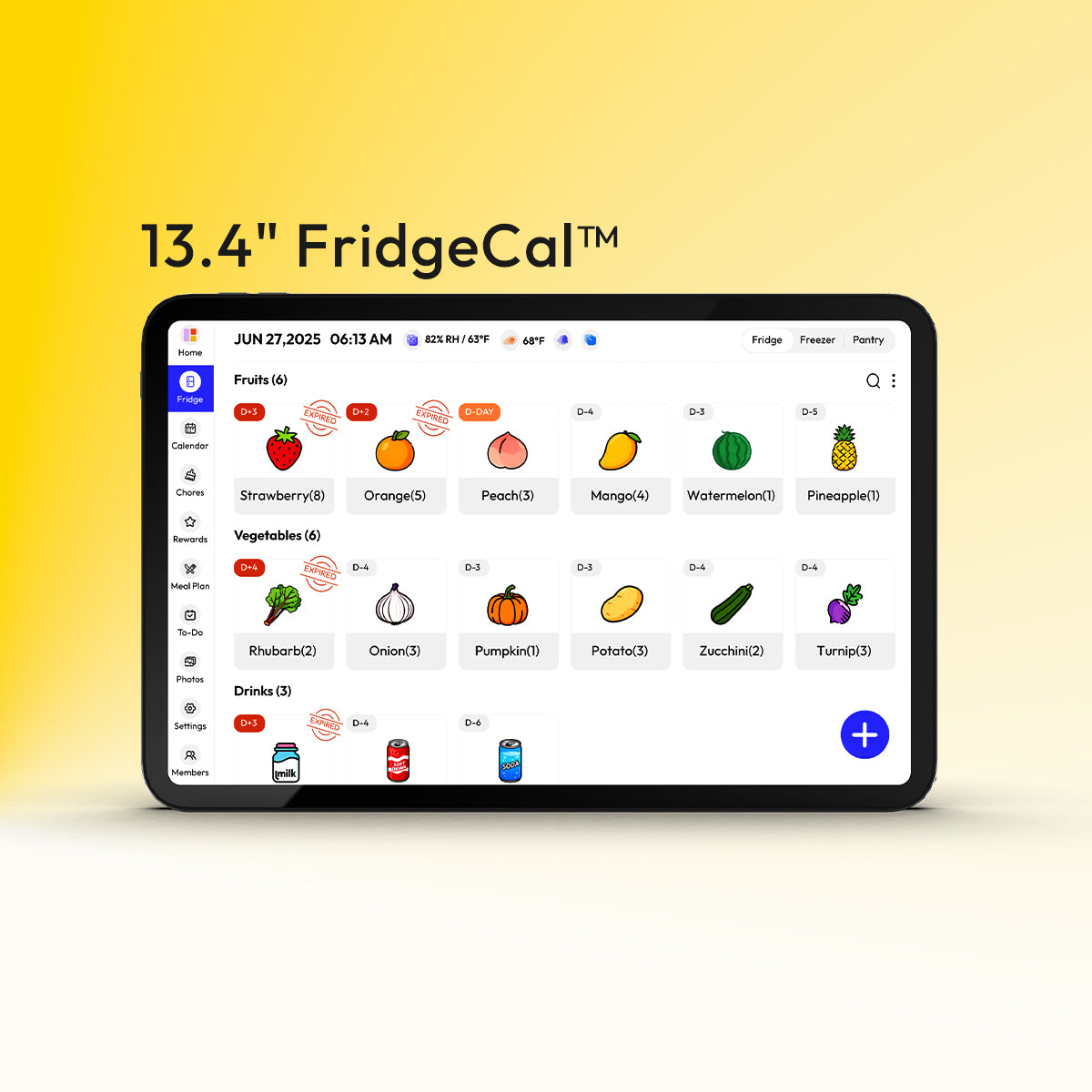
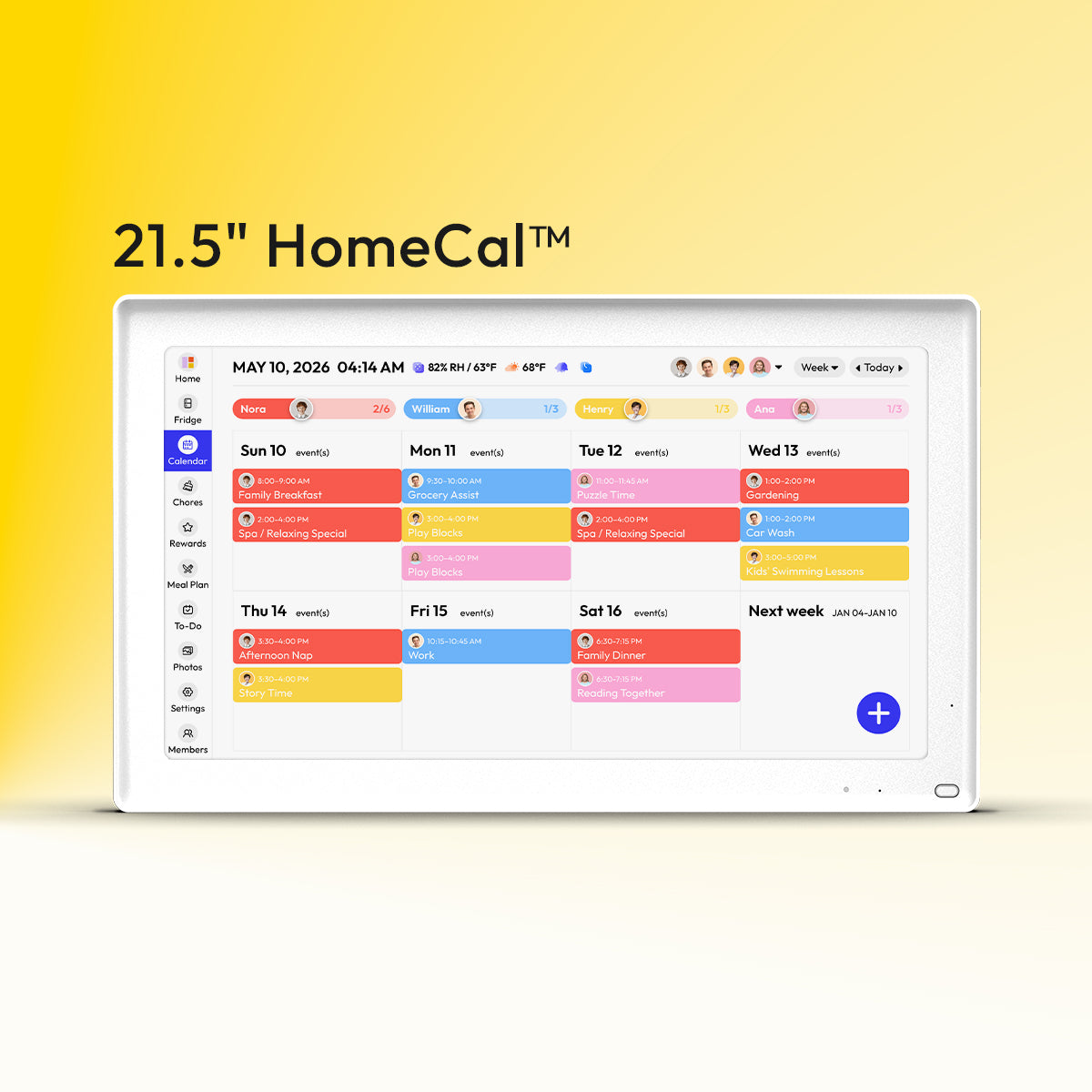
A physical command center is for the items that need eyes, hands, or a backpack. Use it for permission slips, “needs signature” papers, library books, return envelopes, teacher gift supplies, lunch notes, sports uniforms, and short-term reminders. A visible family planning spot can reduce repeated questions, missed practices, duplicate grocery runs, unsigned forms, and forgotten dinner plans because the information is where people already pass. Families who want the shared calendar in a fixed household spot could use a wall-mounted digital calendar, such as the Everblog 21.5" Digital Calendar, to show events, tasks, and chores on one screen.

Good locations are boring and useful: the refrigerator front, kitchen edge, mudroom, garage entry, hallway, or laundry area. If you mount a calendar or digital display, place the adult reading zone around 57 to 60 inches from the floor. Put child-facing hooks, bins, or chore cards lower, around 42 to 48 inches, so kids can use them without help.
Keep the system small for two weeks
Do not build a twelve-part command center during the busiest school week of the term. Start with one family calendar, one paper inbox, one weekly meal list, and one row of “ready to go” items. Add more only after the system survives a real week.
Check practical details before mounting anything. Avoid glare, sink splash, stove grease, steam, and crowded door swings. If you use a plugged-in family display, keep it within about 3 to 6 ft of an outlet and away from spill zones.
Map the End-of-Term Week Before It Runs You
Build a Sunday-to-Saturday view
Before the weekend, make a one-page view of the coming week. Include each day’s school events, deadline actions, rides, dinner plan, chore pinch points, and bedtime pressure. This is not a pretty planner page; it is a traffic map for the household.
A useful format looks like this:
Day |
School and Activities |
Deadline Action |
Dinner |
Ride Owner |
Monday |
Soccer practice 5:30 PM |
Sign field trip form |
Tacos |
Dad |
Tuesday |
Choir concert 6:30 PM |
Pack black shoes |
Slow-cooker chicken |
Mom |
Wednesday |
Math review packet due |
Charge school laptop |
Leftovers |
Carpool |
Thursday |
Class party supplies due |
Buy napkins and fruit |
Pasta |
Dad |
Friday |
Final library return |
Return books by 8:00 AM |
Pizza night |
Mom |
This table can live on a wall, a digital display, or both. The key is that the family sees the same week.
Add the hidden work
End-of-term events come with invisible tasks. A concert is not just the concert. It may include washing the shirt, finding black pants, checking arrival time, planning dinner, arranging parking, charging the cell phone, and getting a younger sibling through homework before leaving.

Put those steps on the calendar before the event. “Find concert clothes” belongs two nights earlier. “Pack water bottle and snack” belongs the morning of the event. “Leave at 5:45 PM” belongs on the shared calendar because arrival times are where many families lose their margin.
Protect the high-stress hour
Most missed handoffs happen between school pickup and bedtime. That is when dinner, homework, rides, laundry, sports gear, school emails, and tired kids all pile up. Choose one high-stress hour and simplify it on purpose.
For example, on concert night, dinner should not require chopping, a grocery stop, and five pans. Make it sandwiches, reheated soup, a slow-cooker meal, or a frozen backup. End-of-term planning is easier when the calendar includes food and chores, not just events.
Coordinate Meals, Chores, and Rides Around the Calendar
Plan meals around the hard nights
Meal planning is not separate from end-of-term deadlines. It is what keeps the evening from falling apart when two people need rides and one child needs poster board. Advance meal planning helps families build better grocery lists, keep ingredients at home, and reduce last-minute decision-making, especially when using a shared meal calendar.

Pick three dinner types for this week: fast, hands-off, and backup. Fast might be quesadillas, eggs and toast, pasta, or rotisserie chicken. Hands-off might be a slow-cooker meal or pre-assembled casserole. Backup might be frozen pizza, soup, or breakfast for dinner.
Let kids add one meal, not negotiate every night
If you have picky eaters or teens who want input, give them a structured lane. A family meal planning organization describes a shared calendar approach where each family member adds a favorite meal to an open day on a paper or online calendar. That gives children some control without turning every dinner into a debate.
For a family under pressure, try this: each person gets one dinner pick for the next two weeks, and the adults place those meals on workable nights. Mac and cheese goes on the late-practice night. A dinner that needs more cooking waits for Sunday.
Assign chores by deadline, not by fairness speeches
End-of-term chores should be tied to the week’s real needs. Instead of “everyone help more,” use named jobs: Sam packs library books by Thursday night, Ava moves uniforms to the laundry by Tuesday, Dad buys party fruit by Wednesday, Mom uploads the teacher gift payment by Friday.
Visible chore lists work best when they are short. Use checkboxes for this week only. A child does not need to see every household task; they need to see the three tasks that keep tomorrow from getting messy.
Stop Overcomplicating the Plan
Drop duplicate systems
If the soccer schedule lives in one app, the school calendar lives in an email, the meal plan lives on a sticky note, and ride changes live in text messages, the family is not really using a system. It is using a collection of hiding places. This week, choose one shared digital calendar as the source of truth.
That does not mean every tool disappears. The activity app can still exist, but the final family decision goes into the shared calendar. If practice changes from 5:00 PM to 5:45 PM, the calendar gets updated. If one parent agrees to drive, the event title or notes say so.
Stop making the command center too decorative
A family command center should answer practical questions fast: What is happening today? What needs to leave the house? What needs a signature? What are we eating? Who is driving?
Skip extra baskets, labels, bins, and boards if they do not answer those questions. A simple setup can be one calendar, one paper inbox, one “return to school” folder, one meal list, and hooks or bins for event gear. The best system is the one your family actually checks at 7:20 AM.
Stop treating every event like a special project
Not every end-of-term event needs a custom plan. Reuse decisions. Same dinner before every evening event. Same bag by the door for concerts and ceremonies. Same gift card process for teacher gifts. Same reminder time for permission slips.
Schools that build strong family engagement pay attention to schedule, transportation, daylight, food, and timing; one school example found that a 4:00 to 6:00 PM window worked well for large family gatherings while saving serious student-specific conversations for separate meetings, as described by an education platform. Families can borrow that idea at home: match the plan to the real conditions, not the ideal version of the week.
This Week’s End-of-Term Reset Checklist
Use this checklist today or before the weekend. It should take about 20 to 30 minutes if one adult gathers the information and another checks the gaps.
- Open school emails, activity apps, paper folders, and family texts for the next 14 days.
- Put every event, deadline, ride, meal need, and “bring this” item into one shared digital calendar.
- Create one visible home spot for the week’s calendar, paper inbox, return-to-school items, and dinner list.
- Choose three easy dinners for the hardest nights and add them to the calendar.
- Assign each ride, supply run, signature, and return item to one named person.
- Set reminders for the action date, not just the event date.
- Remove or skip one optional task that is adding stress without adding much value.
After the checklist, do a 30- to 60-second daily scan. Ask: What is happening tomorrow? What needs to leave the house? What food or ride is not settled yet? A short daily scan and a weekly reset are enough for many families to catch the small problems before they become last-minute scrambles.
FAQ
Q: What should go in the shared digital calendar?
A: Put anything that changes, involves timing, or needs another person to know. That includes school events, exams, project deadlines, practices, rides, appointments, reminders, dinner plans, supply runs, and “leave the house by” times. Add notes for location, parking, dress code, materials, and the person responsible.
Q: What should stay in the physical family command center?
A: Keep physical items where people can see and grab them. Use the command center for permission slips, checks, library books, uniforms, teacher gifts, lunch forms, coupons, and papers that need signatures. The digital calendar tells the family what is happening; the command center holds what must move with someone.
Q: How do we keep older kids involved without nagging?
A: Give them a visible role and a digital reminder. A teen can add practice changes, choose one meal, pack required clothes, or check the command center before bed. Keep the task concrete: “Put your concert shoes by the door by 8:30 PM” works better than “be responsible.”
Practical Next Steps
Tonight, do the 14-day sweep and get the obvious deadlines into one shared calendar. Before the weekend, set up one visible command center with a paper inbox, a weekly view, a dinner list, and a place for things that need to leave the house.
Keep the plan plain. Use digital tools for changing schedules and reminders. Use the home command center for papers, gear, and daily visibility. Stop tracking the same detail in five places, and let the family work from one shared picture of the week.


