



Revenge bedtime procrastination is easier to interrupt when your home offers visible, low-friction cues before your phone takes over. A shared family calendar, a simple evening reset, and a clear bedtime signal can turn “one more scroll” into a calmer handoff to sleep.
Are you finally alone at 10:45 PM, standing in the kitchen with the lights low, promising yourself five minutes on your phone before it becomes 12:20 AM? Families can reduce that nightly slide by moving decisions out of willpower and into visible routines, such as a 30- to 60-minute wind-down reminder and a shared evening checklist. The goal is to use visual cues, family calendars, and household routines to protect rest without making bedtime feel like another chore.
What Revenge Bedtime Procrastination Means
Revenge bedtime procrastination is the habit of delaying sleep to reclaim personal time after a day that felt crowded, stressful, or controlled by other people’s needs. The revenge bedtime procrastination pattern often shows up as doomscrolling, watching one more episode, online shopping, or reading long after you feel tired and know tomorrow will be harder.

The “revenge” part is not dramatic; it is emotional. A parent who has packed lunches, answered work messages, managed school forms, and handled bedtime may feel that late night is the only unscheduled space left. The problem is that the borrowed time usually comes from tomorrow’s patience, focus, and energy.
In real family organization work, this habit rarely improves through self-criticism. It improves when the household reduces decision clutter earlier in the evening. If the morning backpacks are already by the door, tomorrow’s calendar is visible, and the kitchen has a closing routine, the phone has less emotional work to do.
Why Visual Cues Work Better Than Willpower
Willpower is weakest when you are tired, and revenge bedtime procrastination happens exactly at that point. Visual cues help because they make the next right action obvious before your brain starts negotiating. A phone alarm can be ignored, but a family display that shows “tomorrow starts at 6:45 AM,” a dimmed kitchen, and a charging station outside the bedroom create a stronger environmental nudge.
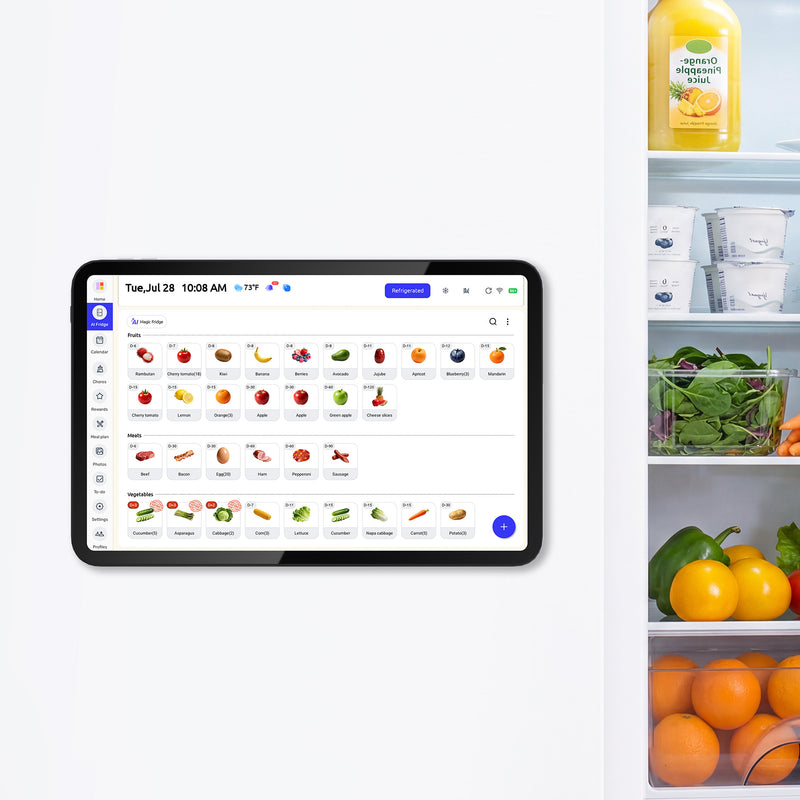
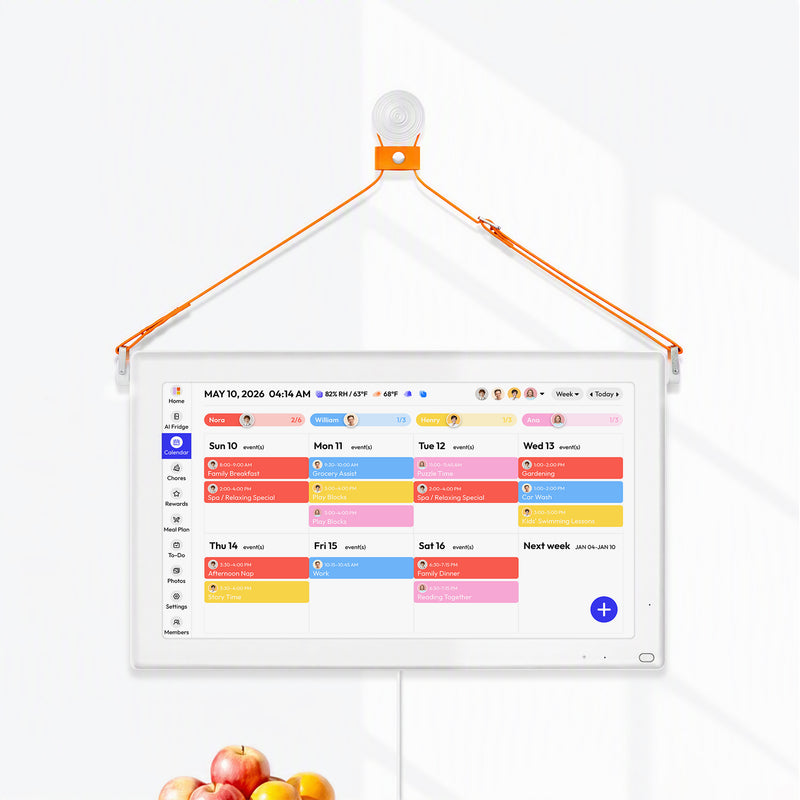
A digital wall calendar can work as a shared household planning hub because it keeps schedules, reminders, tasks, and family responsibilities in one visible place. For bedtime, that visibility matters most between dinner and lights-out. When everyone can see tomorrow’s pickup time, practice gear, lunch plan, and morning reminder, fewer worries follow one parent into bed.
A simple example is a kitchen display that shifts at 9:15 PM from “family schedule” to “closing routine.” It might show tomorrow’s first event, the lunch status, the dishwasher cue, and a bedtime target. The cue is not there to control anyone; it is there to lower the mental load enough that rest feels allowed.

Build a Fridge-Side Sleep Cue System
The best visual system is small enough to repeat on a hard night. Start with one anchor location, ideally the refrigerator, kitchen counter, or family command center. That is where families naturally pass after dinner, snacks, homework, and lunch packing, so the cue appears before the bedroom scroll begins.
A shared calendar helps centralize family schedules and planning tasks, which is useful when bedtime procrastination is fueled by the feeling that tomorrow is still unresolved. Put the next day’s first three household commitments where they can be seen: wake-up time, school or work departure, and the one item that would cause stress if forgotten. This turns vague worry into a concrete plan.
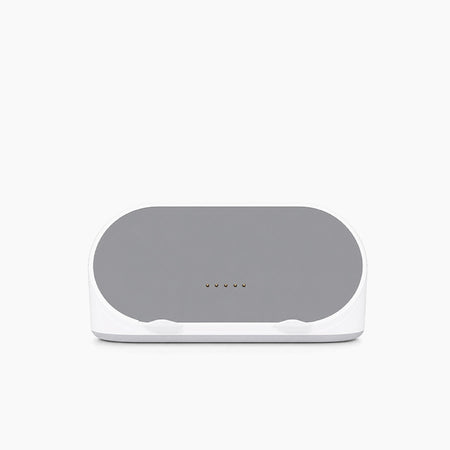
Then add a visible “phone parking” cue. It can be a small tray near the calendar, a charger on the kitchen counter, or a labeled family charging shelf. The point is not perfection. The point is creating a physical ending to the scroll. When the phone goes there at 9:30 PM, the evening has a clear boundary.

Finally, make the cue family-friendly. A child can check off “backpack,” a partner can mark “coffee set,” and a teen can add “permission slip.” Shared responsibility prevents one person from becoming the human reminder app.
Choosing the Right Family Calendar Tool
A smart fridge calendar or family display is not automatically better than an app. The right tool is the one your household will actually use at 8:45 PM when everyone is tired. For some families, that means a wall-mounted touchscreen. For others, it means a shared app and a paper note by the charger.
Option |
Best fit |
Bedtime benefit |
Tradeoff |
Shared calendar app |
Families who coordinate on phones |
Easy updates from anywhere |
Less visible when phones become the problem |
Smart display |
Busy households with visual learners |
Keeps tomorrow visible without opening a cell phone |
Higher cost and possible subscriptions |
Simple fridge cue |
Families starting small |
Fast, cheap, and low pressure |
Requires manual updates |
One smart family calendar brings events, chores, dinner plans, tasks, checklists, and family schedules into one touchscreen display. That can be helpful when revenge bedtime procrastination is tied to unfinished household planning, because the display makes the “done for tonight” line visible.
A broader family organizer can combine shared schedules, grocery lists, dinner planning, to-dos, and location features. That setup may support families with older kids, recurring errands, or multiple caregivers, though more features can also mean more setup work.
The main benefit of digital family systems is shared visibility. The downside is that any tool can become another thing to manage. If a calendar takes more effort than it saves, simplify it until it only answers the bedtime question: “Are we ready enough for tomorrow?”
A Calm Evening Flow That Stops the Scroll
Think of bedtime as a household transition, not an individual failure of discipline. About an hour before bed, use a visible cue to close the day. The kitchen lights get softer, the calendar shows tomorrow, and the phone moves to its parking spot. If you need personal time, choose something that has a natural ending, like a chapter, a short podcast episode, a shower, or stretching.
The most useful change is moving some “me time” earlier. Even 10 quiet minutes after dinner can reduce the pressure to steal 90 minutes at midnight. For parents, that might mean one adult handles the first part of cleanup while the other takes a short reset, then they switch. The goal is not equal timing every night; it is making personal time visible and legitimate before exhaustion hits.

A family display can also show a short closing ritual. For example, at 8:45 PM it shows “lunches, backpacks, calendar check.” At 9:15 PM it shifts to “phones charge, lights low, bedroom quiet.” At 9:45 PM it shows only tomorrow’s first event and a calming cue. The less text, the better.
Pros and Cons of Using Visual Cues
Visual cues are practical because they reduce memory work. They also help children participate, which can lower the invisible planning load often carried by one parent. A shared display can make bedtime feel less like nagging and more like the house moving into rest mode together.
The drawback is that cues lose power when there are too many of them. A screen crowded with chores, meals, sports, errands, and reminders can become visual noise. Start with bedtime-specific cues, then add more only if they reduce stress.
There is also a privacy consideration. A kitchen display should not expose sensitive work meetings, medical appointments, or co-parenting details to every visitor. Use privacy settings where available, or keep sensitive items on personal calendars while showing only the family-level cue.
When Revenge Bedtime Procrastination Needs More Support
If late-night scrolling is occasional, environmental cues may be enough. If it is tied to anxiety, dread about tomorrow, depression, ADHD, insomnia, or chronic burnout, the sleep habit may need more support than a calendar can provide. In that case, the visual system still helps, but it should sit alongside professional care, better workload boundaries, and a more realistic daytime schedule.
The clearest warning sign is repeated morning regret without the ability to change the pattern. If you often feel exhausted, irritable, unable to focus, or unsafe driving because you slept too little, treat sleep as a health priority rather than a productivity preference.
FAQ
Should the phone stay out of the bedroom?
For many families, yes. Keeping the phone at a kitchen charging station removes the easiest path back into scrolling. If you use your phone as an alarm, a small bedside alarm clock is usually a calmer substitute.
What if nighttime is truly my only personal time?
Do not erase it; protect it earlier and make it bounded. A visible 20-minute personal-time block after dinner is more restorative than an accidental 90-minute scroll after midnight.
Do kids need to follow the same visual routine?
They do not need the same bedtime, but they benefit from the same rhythm. When children see tomorrow’s plan, pack what they need, and mark one task complete, the household carries less stress into the night.
Rest becomes easier when the home stops asking one tired person to remember everything. Put tomorrow where everyone can see it, give the phone a place to land, and let the evening close before the scroll begins.


