




Relationship Rescue: Scheduling When One Partner Has ADHD and the Other Is Type A
You do not need perfect compatibility to stop scheduling fights; you need a shared system both of you can trust.
Does this sound familiar: one of you wants next week locked in by Sunday night, while the other is still sorting out tomorrow morning? That push-pull can feel like control to one partner and constant failure to the other. A time-boxed 14-day reset from a structured relationship framework gives you a practical starting point, and this guide will help you build a version that works in real life.
Start With Shared Responsibility, Not Blame
Name the pattern together
A seven-step relationship framework published in reprint form on September 19, 2001, frames repair as a shared responsibility, not a one-sided fix. That matters in ADHD/Type A pairings, because “you’re too rigid” and “you’re too unreliable” quickly become identity attacks instead of problem-solving.

Define failures as behaviors, not character
A corrective-action model works better than “try harder” promises when routines break. Translate conflict into observable misses: “no calendar invite,” “late confirmation,” or “task had no owner.” Once the miss is concrete, the repair becomes doable.
Build a Two-Speed Calendar Both Brains Can Trust
Set non-negotiable anchors
Clear temperature thresholds and verification habits reduce risk because they remove guessing, and scheduling works the same way. Pick 3 to 5 fixed anchors (for example: 7:00 AM wake-up, 5:30 PM pickup, 8:30 PM wind-down) and assign a clear owner for each.

Protect flexibility with boundaries
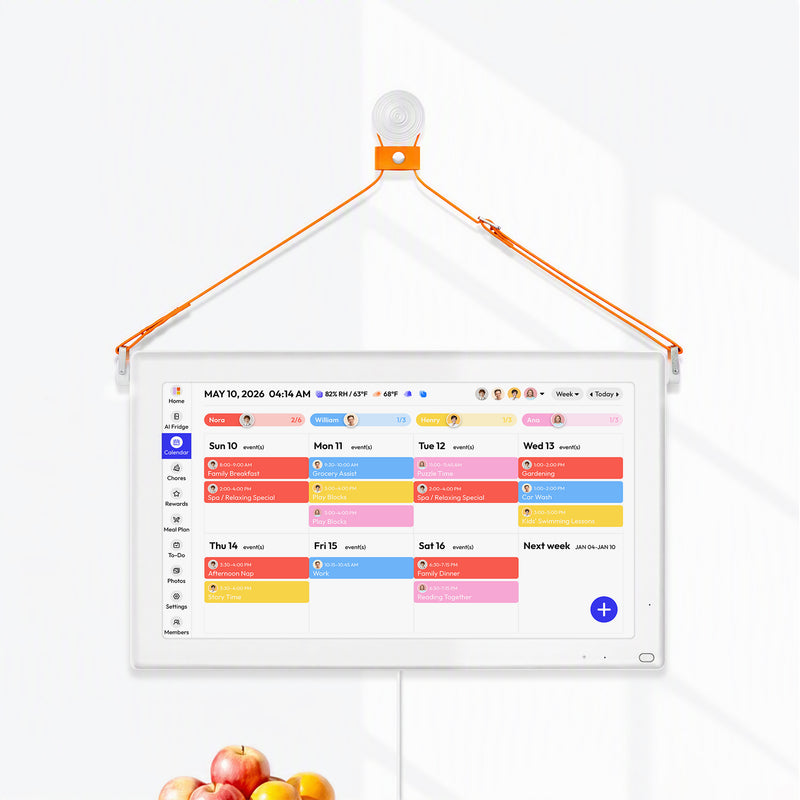
Concrete time ranges by category are easier to follow than vague intentions, and couples can borrow that logic. Keep anchor blocks fixed, but allow flex blocks to move within a 60- to 90-minute window. If a flex block changes, update the shared calendar within 15 minutes.
Run a 14-Day Scheduling Reset
Treat this as a pilot, not forever
A 14-day practice model is long enough to reveal patterns but short enough to sustain effort. Try a daily 10-minute check-in at 8:30 PM, plus a 30-minute weekly planning session every Sunday at 4:00 PM.
Use clear “keep, move, or drop” thresholds
Specific keep/discard rules reduce ambiguity under stress, and schedules benefit from the same clarity. If a plan is unconfirmed by 7:00 PM the night before, move it to tentative; if still unconfirmed by 9:00 AM day-of, reassign or drop it. This protects the Type A partner from uncertainty and the ADHD partner from last-minute panic.

Use Low-Heat Communication in High-Stress Moments
Keep scripts short and concrete
When pressure rises, problems can escalate quickly, so short scripts help prevent spirals. Examples: “I’m not saying no; I need 20 minutes,” or “I need a yes/no by 6:00 PM.”
Define your own danger zone
A danger-zone concept is a useful metaphor for relationship timing: not enough structure and too much rigidity can both create conflict. Choose 2 to 3 trigger signals (for example: three unanswered planning texts, or two missed handoffs in one week) that automatically trigger a repair conversation.
Repair with one forward-looking question
Use one prompt when conflict starts: “What would make tomorrow 10% easier for both of us?” This keeps you out of courtroom mode and back in teamwork mode.
Plan for Misses Before They Happen
Write a miss protocol in advance
Predefined deviation-response steps outperform improvisation during stressful moments. Create a one-page protocol: who alerts, by what time, and what backup activates automatically.

Use “outage mode” on overloaded days
Emergency disruption rules prioritize essentials first, and couples can do the same. On hard days, protect high-impact tasks (child care, transportation, medication, key bills) and consciously defer lower-impact tasks.
Example in practice
If pickup is missed at 5:00 PM, backup starts once, one factual text is sent, and you do a 10-minute repair at 8:30 PM: what failed, what changes tomorrow, and who owns each step.
Practical Next Steps
Pick 3 fixed anchors tonight and put them in one shared calendar.
Set two flex windows for tomorrow with a 60- to 90-minute move range.
Start a 14-day reset with a daily 10-minute check-in.
Add two trigger signals that automatically start repair mode.
Write a one-page miss protocol and keep it visible.
Important Note
The insights and strategies shared here are intended for support and educational purposes only. They do not constitute professional medical advice, clinical diagnosis, or psychological treatment. Neurodiversity and complex family dynamics require personalized care; if you or a family member are experiencing significant challenges, please consult with a licensed healthcare professional or a certified counselor to receive support tailored to your specific situation.
References
Relationship Rescue product listing (https://campusstore.miamioh.edu/relationship-rescue-sevenstep-strategy/bk/9780786885985)
FDA cold food safety basics (https://www.fda.gov/food/buy-store-serve-safe-food/refrigerator-thermometers-cold-facts-about-food-safety)
FoodSafety.gov cold storage chart (https://www.foodsafety.gov/food-safety-charts/cold-food-storage-charts)
FoodSafety.gov refrigerated food guidance (https://www.foodsafety.gov/print/pdf/node/16?id=refrigerated-food)
FSIS stabilization guideline (Appendix B) (https://www.fsis.usda.gov/sites/default/files/import/Compliance-Guideline-Stabilization-Appendix-B.pdf)
FSIS danger zone redirect link (http://www.google.com/url?esrc=s&q=&rct=j&sa=U&url=http%3A%2F%2Fwww.fsis.usda.gov%2Ffood-safety%2Fsafe-food-handling-and-preparation%2Ffood-safety-basics%2Fdanger-zone-40f-140f&usg=AOvVaw2JD3EmUmNS3ruV4U-CxWCO&ved=2ahUKEwiOg8XOiIOTAxUXRaQEHcZXC9sQFnoECAgQAg)
FSIS outage safety redirect link (http://www.google.com/url?esrc=s&q=&rct=j&sa=U&url=http%3A%2F%2Fwww.fsis.usda.gov%2Ffood-safety%2Fsafe-food-handling-and-preparation%2Ffood-safety-basics%2Fkeeping-food-safe-during&usg=AOvVaw2NIBMJFH-Sp8TSktY_Vzya&ved=2ahUKEwiOg8XOiIOTAxUXRaQEHcZXC9sQFnoECAsQAg)


