


Shift work nurses stay connected to family schedules by using one shared system that separates fixed commitments from flexible plans, protects sleep like a nonnegotiable appointment, and gives the whole household one visible source of truth.
Does your family calendar seem to fall apart the moment a night shift runs late, a school event moves, or you finally get home too tired to answer three texts and a group chat? The households that handle this best usually do not work harder at planning. They use one calmer system that can absorb change without losing sleep, meals, or handoff details. You can build that kind of system with a few practical calendar rules that fit real nursing life.
Why Shift Work Breaks Ordinary Family Planning
Shared calendars work best when health tasks and, and that matters even more for nurses because work hours often change the entire household rhythm. A school pickup, a medication refill, a grocery run, and a post-call sleep block all compete for the same family attention. When those items live in different apps, sticky notes, and text threads, someone ends up guessing.

Nursing schedules also create a predictable strain on energy, not just on time. Long and night shifts can disrupt sleep, eating, alertness, and social routines, so a nurse may technically have four days off and still not feel available in the same way every hour of those days. That is why a family schedule for a nurse cannot be built around the assumption that every open block is usable time.
A more useful definition of family schedule connection is simple: everyone knows what is fixed, what might move, who is on point, and when the nurse is actually off duty versus recovering. That sounds basic, but it prevents the most common household conflict, which is treating recovery time as spare time.
The Calendar Setup That Usually Works Best
Define One Family Command Center
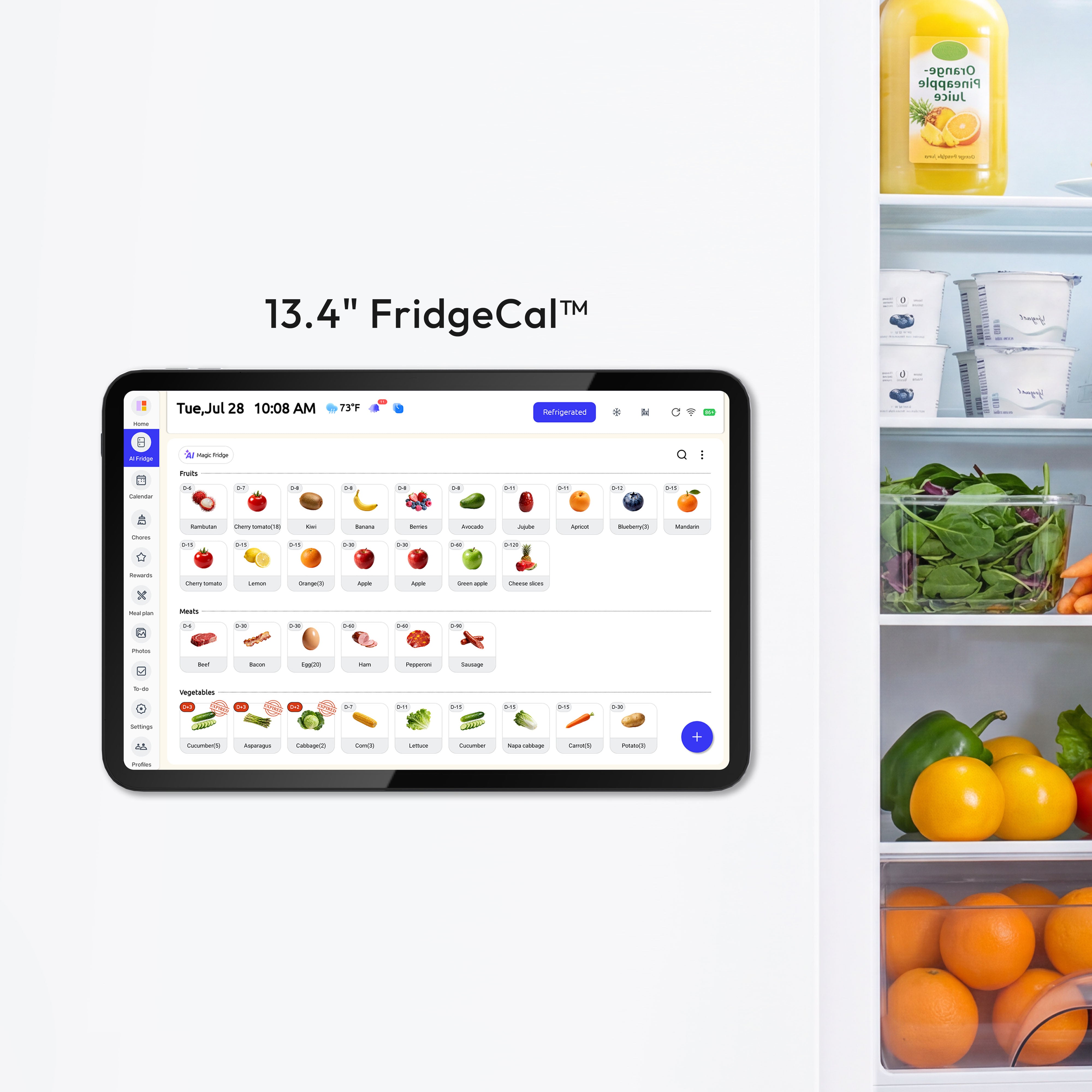
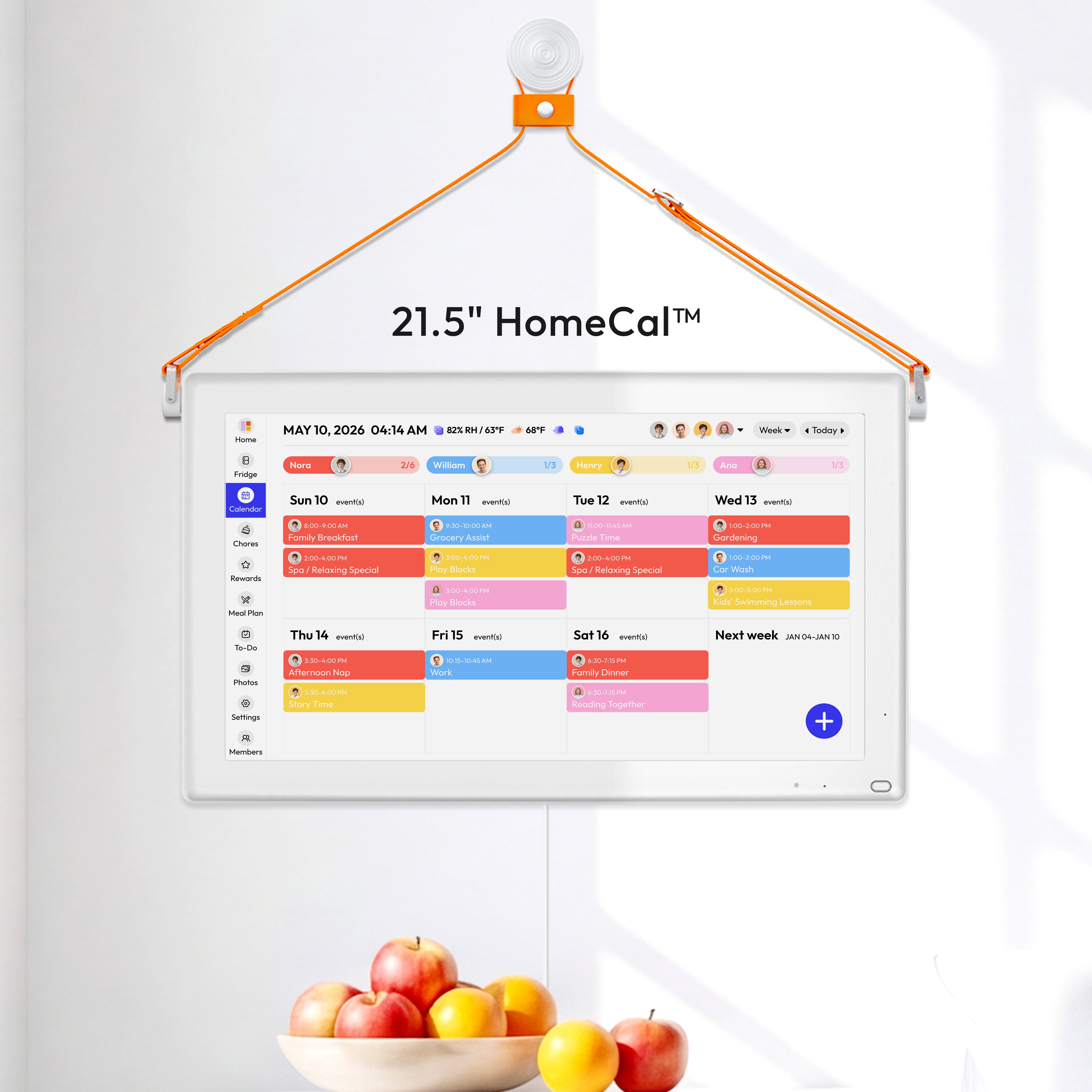
A shared family schedule and list system is most useful when it centralizes schedules and lists, and for shift work households that centralization matters more than fancy features. The strongest setup is usually one main shared calendar for fixed events, paired with one visible home location where everyone can check today and tomorrow without asking. In practice, that can be a smart digital fridge calendar, a wall display in the kitchen, or a shared app that is always open on a household tablet.

The key is not whether the tool is trendy. The key is whether it becomes the household's single source of truth. In real family use, systems fail when one person keeps the real schedule in their head and everyone else works from fragments.
Separate Fixed Plans From Flexible Plans
Nursing time management improves when priorities are clearly identified, and that principle works at home too. Put only fixed appointments, confirmed shifts, school events, games, bills due on a certain date, and true deadlines on the main calendar. Keep flexible tasks such as laundry, calling a parent, or meal prep if energy is good in a second layer, a task list, or an all-day note.
This separation matters because nurse households live with more uncertainty than many nine-to-five homes. If every wish, errand, and reminder is dropped into the main calendar, the screen becomes crowded and nobody trusts it. A clean calendar lowers mental load because it answers one question fast: what absolutely must happen today?
Use Ownership Rules, Not Vague Sharing
Research on home calendars shows that families vary in who controls scheduling, with some homes relying on one main scheduler and others distributing the work. For shift work families, the healthiest version is usually shared visibility with clear ownership. One person might own children's school logistics, another might own bill dates and groceries, while the nurse owns shift updates and sleep blocks. Everyone can see everything relevant, but not everyone has to remember everything.
That small distinction reduces resentment. Visibility creates connection; ownership creates accountability.
How to Schedule Around Night Shifts Without Losing Family Contact
Protect Sleep as a Family Event, Not a Private Preference
Consistent sleep routines and a dark, quiet room matter. Guidance for night shift nurses also emphasizes consistent sleep timing, careful light exposure, and a quick transition to recovery sleep after work. For families, that means the nurse's sleep block belongs on the shared calendar just like a dentist appointment or school recital.
A simple example helps. If a nurse works 7:00 PM to 7:00 AM on Tuesday, Wednesday, and Thursday, the family calendar should not only show those shifts. It should also show "Sleep 9:00 AM to 2:00 PM," or whatever recovery window is realistic. That prevents a partner from scheduling a plumber visit at 11:00 AM or a child from expecting a ride at noon.
Build Handoff Times on Purpose
Weekly planning with extra buffer time reduces stress and overruns, and shift work families need buffers more than they need tightly packed color blocks. Add short transition windows before leaving for work and after arriving home. Those windows are where backpacks get checked, quick updates get exchanged, and tomorrow's surprises get caught early.

A practical household rhythm might look like this: 10 minutes before a shift for a kitchen handoff, a short text update halfway through the week if the schedule changed, and 15 minutes after waking on off days to review the next 24 hours. That sounds modest, but it keeps the calendar alive. Connection usually breaks down not because families never communicate, but because they only communicate when something has already gone wrong.
Cluster What Can Be Clustered
Grouping night shifts can make circadian adjustment easier. At home, the same logic can be applied to chores, meals, and family activities. If three night shifts are grouped together, keep those days operationally simple. Repeat easy dinners, reduce optional outings, and let the calendar reflect a maintenance-mode week.
This is one place where a meal plan earns its keep. A repeating menu tied to a rotating schedule reduces nightly decision fatigue, and practical meal planning works best when it follows the family calendar rather than competes with it. For a nurse household, that may mean soup on the first shift night, leftovers on the second, and a slow family breakfast after the final recovery sleep.

Choosing the Right Tool for Your Household
Option |
Best fit |
Main advantage |
Main drawback |
Smart digital fridge calendar or wall display |
Families who need everyone to see the plan at home |
High visibility and fewer "I didn't know" moments |
Less useful if family members rarely check the home hub |
Shared family app |
Families coordinating across work, school, and activities on the go |
Fast updates from anywhere |
Can become invisible if nobody opens it routinely |
Voice-first smart display |
Families who want quick reminders and simple commands |
Convenient for adding basic items |
Usually weaker for deep family organization |
A shared family organizer is often enough for smaller households or families with older kids who live on their cell phones. A visible home display is usually stronger when the problem is not data entry, but family awareness. Nurses often benefit from using both: mobile updates during the shift and a large at-home display that shows what the next day really looks like.
There is a tradeoff here. More features can help, but they can also create maintenance work. If a system requires too much tapping, tagging, or correcting, tired people will stop using it. The best tool is the one your household can keep current during a hard week.
What to Put on the Calendar, and What to Leave Off
Shared scheduling systems support prospective remembering, which is a formal way of saying they help people remember what still needs to happen. For nurse families, the most important entries are shifts, sleep blocks, child care transfers, school deadlines, recurring bills, key meals, and appointments that affect more than one person.
What usually does not belong on the main shared calendar is every private task or every ideal habit. Exercise, reading time, and personal errands matter, but if they are flexible, they should stay flexible. Otherwise, the calendar becomes a guilt board instead of a support tool.
A good test is this: if someone else in the household needs to know it for the day to run well, it belongs on the shared system. If not, it can probably stay on a personal list.
When Schedule Changes Happen at the Last Minute
Shift work guarantees occasional disruption, so the family system should assume change rather than treat it as failure. When a shift extends, a child gets sick, or staffing turns a planned day off into overtime, the first step is to update the shared calendar before starting a long explanation. The visual change lowers panic because everyone can immediately see what moved.
Then the household needs a simple triage question: what still must happen today, what can move to tomorrow, and who can cover the gap? That decision style matches the way nurses already think at work. Bringing it home makes family logistics feel less emotional and more manageable.
Digital tools can help here, but the role of digital support tools in nursing work offers a useful caution: technology should support judgment, not replace it. Reminders and shared screens are valuable, but they still need a human check for context. A calendar may know there is a piano lesson at 5:00 PM; it does not know that you have been awake for 22 hours and should not be the one driving.
A Calmer Way to Stay Connected
The goal is not a perfect calendar. It is a family rhythm where nobody has to guess, chase updates, or treat exhaustion like poor planning. When the schedule is visible, sleep is protected, and ownership is clear, shift work feels less like a constant interruption and more like a pattern the household knows how to carry together.


