






A Sunday reset works better when the week’s plan lives on one screen everyone can see, not in five private apps. A shared kitchen display turns planning into a quick household conversation, which makes meals, chores, and appointments easier to follow all week.
Ever finish a Sunday planning session and still hear, by Tuesday, “Who’s picking up?”, “What’s for dinner?”, or “I didn’t know that was today”? Families who use a shared kitchen calendar describe a simpler payoff: less rewriting, easier chore checkoffs for kids, and one place where two adults can review the next day together. Here’s how to make that kind of visible system work for the next seven days without turning your house into a project.
Why Sunday Resets Break on Private Devices
A Sunday reset usually fails for a simple reason: the plan disappears into personal devices. A phone calendar can be accurate, but it is not visible to the whole household at the same moment. A shared screen in a central place solves a different problem than a phone does. It makes the plan public, easy to glance at, and easier to talk about.

That matters because household planning is full of handoffs. One parent adds a school event, another assumes they will handle dinner, and a child forgets they promised to unload the dishwasher. When the plan stays private, the work stays private too. A visible command-center style setup helps reduce repeated questions by giving the family one place to check first, which is exactly how many family command centers are designed to work.
Hidden work is the real problem
The hard part is not entering events. The hard part is helping everyone see the same week early enough to act on it. A Sunday reset on separate phones often turns into one person managing reminders for everyone else.
A digital wall calendar helps because it combines calendars, tasks, and often meal plans on one display that updates automatically. That means the weekly plan is not trapped in one person’s app or memory.
A visible plan is easier to reuse
One practical benefit of a shared screen is that it reduces rewriting. In one household example, a kitchen display synced to the main calendar cut down on re-copying the weekly plan and let kids enter and check off chores directly on the screen through the week, not just on Sunday night shared kitchen screen.
That is a better fit for real family life. Most homes do not need a perfect system. They need a system that still works after a late meeting, a missed permission slip, or a tired Tuesday.
Why the Kitchen Works Better Than Almost Anywhere Else
The best screen is not the fanciest one. It is the one people will see several times a day. Reviews and command-center examples keep landing on the same answer: the kitchen works because people naturally pass through it in the morning, after school, and around dinner kitchen placement worked well.

That repeated visibility changes behavior. An office screen can be neat and organized, but it is easy to ignore if only one adult goes in there. A kitchen screen gets seen while pouring cereal, packing lunches, or deciding whether tonight is a leftovers night or a drive-through night.
The screen should sit inside traffic, not outside it
A good rule is simple: place the display where next-day decisions already happen. For many families, that is near the kitchen table, the pantry, or the path between the garage door and the kitchen.
Traditional family command centers work for the same reason. They keep calendars, lists, papers, and chore notes in the place where people already stop. A digital screen just removes the need to copy information over by hand.
Shared view beats separate reminders
A kitchen screen also helps with the moments that matter most: “Can you take pickup if my meeting runs late?” or “If practice ends at 6:30 PM, we need an easy dinner.” A visible household schedule supports those quick conversations better than separate alerts on separate phones.
That is the real advantage. The screen does not replace calendars on personal devices. It gives the household one common view so the week can be adjusted in real time.
What to Put on the Screen During a Sunday Reset
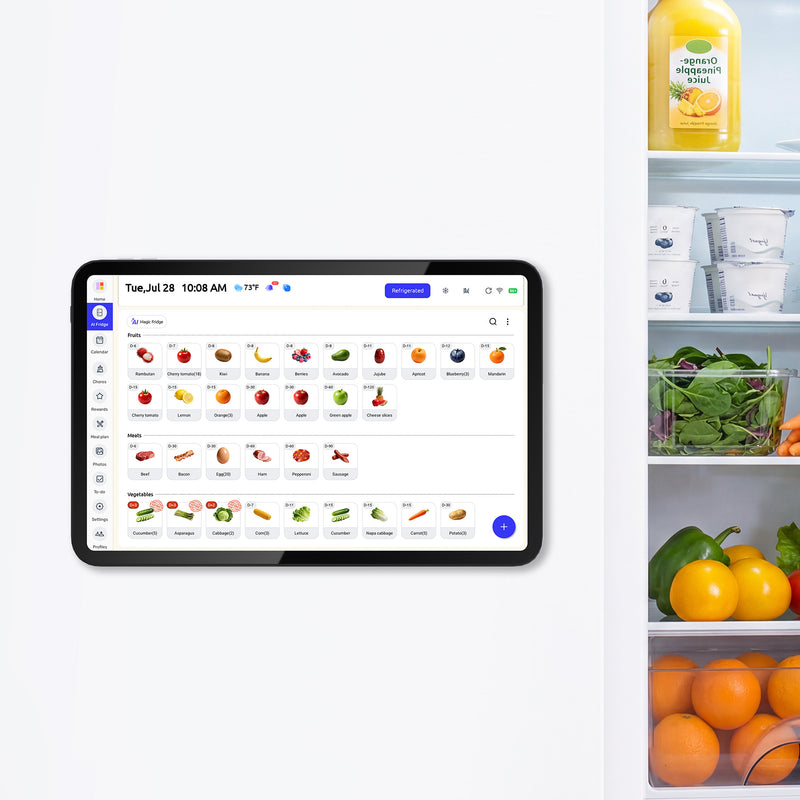
A Sunday reset works best when the screen shows only the things the family actually uses. Start with four categories: schedule, meals, chores, and short lists. That lines up with how many digital family calendars are built, since they often combine appointments with chores, to-dos, and meal planning.
Do not try to make the screen hold every paper, every note, and every long-term plan. The weekly screen should answer the questions people ask all week: Where do we need to be? What are we eating? Who is doing what? What still needs to be bought or signed?
The minimum useful setup
Keep the visible layer simple:
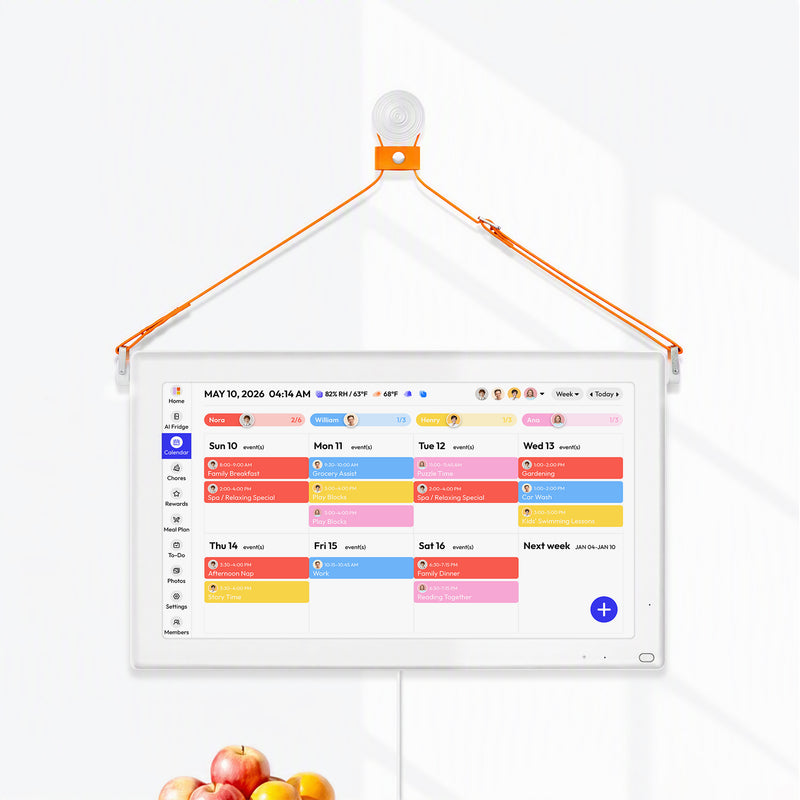
- A color-coded family calendar
- A dinner plan for the next 5 to 7 days
- A short chore list with names
- A grocery or errand list
- One area for school or activity reminders
A wall-mounted option like the Everblog 21.5" Digital Calendar fits that approach because its large touch display is designed to keep plans, tasks, chores, and events visible on one screen in the kitchen.

That setup matches what many shared planning tools already support, from family-organizer style tools to dedicated family dashboards.
What not to show
Too much information is its own failure point. Skip long notes, crowded widgets, and every possible calendar feed. If birthdays, sports, work travel, and neighborhood events all compete for space, people stop reading.
A better approach is to merge only the calendars that affect the household week. Some platforms are built to merge shared events into a single view, which makes the display easier to scan at a glance.
A Simple 20-Minute Sunday Reset Rhythm
A Sunday reset does not need to be a two-hour household meeting. For most families, 20 minutes is enough if the screen is already synced and visible. One reason digital displays help is that the calendars update automatically, sometimes within seconds, so you are reviewing the week instead of rebuilding it real time.
The rhythm matters more than the tool. If the family knows that Sunday at 4:30 PM or 7:00 PM is the reset, the screen becomes part of the weekly routine instead of a gadget that gets ignored.
A practical weekly flow
Use this order:
- Check the next seven days for conflicts and transportation handoffs.
- Pick dinners for the busiest nights first.
- Assign only the chores that must happen this week.
- Add school items, forms, and special reminders.
- Confirm Monday morning: who leaves when, who needs what, and what dinner plan is.

This mirrors how households already use meal planning, grocery lists, chores, and shared schedules inside one family dashboard.
Keep roles clear but light
One adult does not need to own every detail. A better split is:
- One person reviews appointments and school events.
- One person sets dinners and groceries.
- Kids check their own chores and activity times, if they are old enough.
That shared ownership is what makes the system stick. In one example, children could add and check off chores directly from the display, which reduced the usual bottleneck of one adult managing every reminder enter and check off chores.
How to Keep the System Simple When Real Life Gets Uneven
Most Sunday resets do not fail because the idea is bad. They fail because the system asks for too much follow-through. If the screen depends on manual updates, color rules nobody remembers, or a dozen taps to add a dinner, the family will drift back to texting and guessing.
That is why a synced display matters. A shared calendar that pulls from tools people already use lowers friction. The best setup is usually the one that connects to your current a platform, a platform, a platform, or family calendar instead of asking everyone to start over.
Plan for the messy parts
Three things usually break:
- One person stops checking the screen
- The meal plan gets skipped on busy nights
- Papers and verbal reminders stay off-screen
Build for that reality. Keep one “needs attention” area on the display or nearby counter for forms, signup reminders, and anything that cannot live cleanly inside a calendar event.
Use the screen with, not instead of, phones
The goal is not to ban phone reminders. It is to stop relying on them alone. The household still benefits from personal alerts, but the shared screen creates one public source of truth.
If cost is a concern, that does not always mean buying a dedicated device. Some setups use an existing TV, tablet, browser, or a low-cost streaming device, and some tools claim setup in about 5 minutes existing screen. That makes it easier to test the routine before spending a few hundred dollars.
Action Checklist
- Pick one kitchen spot that adults and kids naturally pass at least twice a day.
- Connect only the calendars that affect the household week.
- Add four sections: events, dinner plan, chores, and grocery list.
- Set one fixed Sunday reset time, even if it is only 20 minutes.
- Review the next seven days in the same order every week.
- Keep paper overflow in one nearby tray or folder, not all over the counter.
FAQ
Q: Do we need a dedicated family calendar device?
A: No. A dedicated screen can be convenient, but many families can test the idea with an existing tablet, TV, touch screen, or browser-based display that syncs shared calendars existing TV, tablet, touch screen, or web browser.
Q: What if my family already uses phone calendars?
A: Keep using them. The shared kitchen screen works best as the visible layer on top of personal calendars, so everyone still gets private reminders while the household gets one common weekly view syncs with a phone or favorite calendar.
Q: What should kids actually do during the Sunday reset?
A: Give them small, visible jobs: check activity times, review school items, and confirm 1 to 3 chores for the week. That is more realistic than expecting kids to manage the whole system, and some family calendar setups already support chore checkoffs and rewards on the shared screen chores, dinner plans, tasks, and custom lists.
Practical Next Steps
If your Sunday reset keeps fading by midweek, the fix is usually not more reminders. It is more visibility. One shared screen in the kitchen gives the week a home, so meals, chores, school plans, and handoffs stay in front of the people who need to act on them.
Start small this week. Put the family calendar, dinner plan, and chore list on one visible screen, meet for 20 minutes on Sunday, and see whether Tuesday feels calmer. That is the real test of whether the system is working.


