



A preschool morning chart works best when it uses real photos or simple pictures, keeps the routine short, and lets your child physically mark each step as done. For a no-reading chart, start with three core tasks: brush teeth, wash face or hands, and get dressed.
Is your morning getting stuck at the bathroom door, with one shoe missing and the same reminder repeated five times? A picture-based chart gives preschoolers a concrete “what comes next” cue, so you can shift from constant prompting to calmer check-ins within everyday routines. You’ll learn how to build a simple brush-wash-dress chart, where to place it, how to use it without bribes, and when a digital fridge calendar can support the bigger family schedule.
What Is a Visual Morning Chart?
A visual morning chart is a child-friendly routine tool that shows each step of getting ready through photos, drawings, or icons instead of relying on written words. For preschoolers, this matters because a child may understand the routine perfectly when you say it, yet still struggle to hold all the steps in order while tired, hungry, or distracted.
The strongest preschool charts are small, concrete, and reachable. A child who cannot read “brush teeth” can still recognize a photo of their own toothbrush. A child who cannot track time can still move a Velcro flap, magnet, or clothespin from “to do” to “done.” That tiny physical action gives the routine a beginning, middle, and finish.

Visual schedules are widely used because they make routines predictable and reduce dependence on repeated verbal instructions; one child-development resource describes a visual support as a tool that helps children understand the order of activities. In real family life, that translates into fewer “What do I do now?” moments and more chances for your child to experience, “I know this.”
Why Preschoolers Need Pictures, Not Just Reminders
Preschoolers are still developing planning, sequencing, impulse control, and task persistence. They may know how to brush, wash, and dress, but that does not mean they can independently organize those tasks at 7:10 AM while everyone is trying to leave.
Family routines help children feel secure because they create repeated, predictable patterns; research-backed parenting guidance connects family routines with competence, autonomy, and connection. In practice, the chart should not become a command center for pressure. It should feel like a shared map.
A helpful shift is to stop asking, “Why aren’t you dressed yet?” and start asking, “What picture is next?” That keeps the responsibility with the routine instead of turning the morning into a parent-child power struggle. It also protects connection. Your child still gets guidance, but the chart becomes the neutral reminder.
The Best Three-Step Starter Chart: Brush, Wash, Dress
For a preschooler, three steps are often enough. A chart with ten tasks may look organized to an adult, but it can feel like a wall of demands to a child. Young children usually do better with a small number of responsibilities, and that same principle applies to preschoolers.
The simplest sequence is brush, wash, dress. “Brush” usually means brushing teeth, although some families include brushing hair if that is a daily must-do. “Wash” can mean washing face, washing hands, or wiping up after breakfast, depending on your household. “Dress” should mean clothes your child can realistically manage, such as pull-on pants, a simple shirt, socks, and shoes with easy closures.
Step |
Best Visual |
Parent Prompt |
Child Action |
Brush |
Photo of toothbrush and toothpaste |
“Check your brush picture.” |
Brush teeth, then mark done |
Wash |
Photo of sink, towel, or child washing hands |
“What comes after brush?” |
Wash face or hands, then mark done |
Dress |
Photo of outfit laid out |
“Find the clothes picture.” |
Put on clothes, then mark done |
This chart is intentionally small. Once it works smoothly for two or three weeks, you can add breakfast, backpack, shoes, or a goodbye hug. If mornings are currently tense, resist the urge to build the perfect system on day one.
How to Make a No-Reading Morning Chart
You do not need a special product to begin. A piece of poster board, three photos, tape, and Velcro dots can be enough. Some routine charts use photos, labels, foldable flaps, and Velcro so children can cover each task with a “done” marker after completing it; the most important idea is that the child can mark tasks as completed in a visible, hands-on way.
For preschoolers, real photos usually work better than cute icons. Take one photo of the toothbrush setup, one of your child washing at the sink, and one of tomorrow’s outfit laid on the bed or in a basket. Print them large enough to recognize quickly, roughly the size of an index card. Place them left to right if your child is used to that direction, or top to bottom if the chart will hang on a narrow cabinet or bathroom wall.

Use only a few words if you include text. “Brush,” “Wash,” and “Dress” are enough. The words are not there because your child must read them; they are there to build familiarity over time and help other caregivers use the same language.
A strong chart has a completion movement. Your child can flip a flap, move a magnet, slide a clothespin, or place a checkmark token under the picture. The action should be easy enough to do with sleepy hands and sturdy enough to survive daily use.
Where to Put the Chart
Placement decides whether the chart becomes useful or decorative. Mount it where the routine naturally happens and at your child’s eye level. For a brush-wash-dress routine, that may be near the bathroom sink, on the bedroom door, or on the refrigerator if the kitchen is the family’s morning hub.
Digital wall calendar reviews make a similar point at the household level: a shared calendar is most useful when it sits where the family naturally gathers, especially in the morning; placement strongly affects usefulness. The same is true for a preschool chart. If your child has to leave the bathroom and walk across the house to check it, the chart is too far away.
A refrigerator can work well when your family already uses it as the morning landing zone. It is visible, central, and easy for caregivers to reference. But if the first two tasks happen in the bathroom, consider a second mini-chart there. A three-picture strip on the bathroom mirror may solve more than a beautiful command center in the hallway.
How to Introduce the Chart Without Turning It Into a Battle
Introduce the chart when you are not late. A relaxed weekend morning or quiet afternoon practice is better than Monday at 7:35 AM. Walk through the pictures together and let your child practice moving each marker to “done.”
Involving children in choosing or building the chart can support ownership and independence; for pre-readers, photos or drawings make the steps understandable without text. Let your child choose between two photo styles, pick the marker color, or decide whether the chart goes on the bathroom door or beside the sink.
During the first week, stay nearby. Say, “Let’s check the chart,” instead of reciting every instruction. After a few successful mornings, step back slightly and ask, “What’s next?” If your child skips a step, point to the picture rather than lecturing. The goal is not instant independence. The goal is transferring some of the remembering from your voice to the visual routine.

What to Prepare the Night Before
A morning chart cannot fix a chaotic evening. If clothes are still in the dryer, toothpaste is missing, and no one knows where the backpack went, even the clearest chart will strain under the pressure.
A calmer morning often starts the night before, with clothes, bags, lunches, and supplies prepared in advance; advance preparation can reduce last-minute decisions and rushing. For a brush-wash-dress chart, the key nighttime setup is simple: put the toothbrush and toothpaste where your child can reach them, place a towel or washcloth by the sink, and lay out one complete outfit.
A realistic calculation helps. If brushing takes three minutes, washing takes two minutes, and dressing takes eight minutes with help, the charted routine is already about 13 minutes before breakfast, shoes, coats, or leaving. Add a five-minute buffer, and you have an 18-minute block. If you only leave ten minutes for the whole process, the child is not the main problem; the schedule is too tight.
Pros and Cons of a Visual Morning Chart
A visual chart’s biggest advantage is that it lowers the emotional temperature. Instead of repeating instructions, you can redirect to the chart. It also builds independence, because the child sees the sequence and participates in completing it. Many families find that charts reduce forgotten steps, especially hygiene tasks that are easy to skip when everyone is rushing.
The main downside is maintenance. Photos need updating when the routine changes, markers get lost, and a chart with too many steps becomes visual clutter. A second drawback is that some children treat the chart like a toy at first. That is not failure; it is a sign the chart is interesting. Keep the interaction brief and consistent until the novelty settles.
There is also a fit issue. A child with sensory sensitivities may resist dressing because socks feel wrong, not because they forgot the step. A child who melts down at washing may dislike water temperature, soap smell, or a scratchy towel. The chart can show the expectation, but it should not replace careful observation of what makes the task hard.
Paper Chart, Fridge Chart, or Smart Digital Calendar?
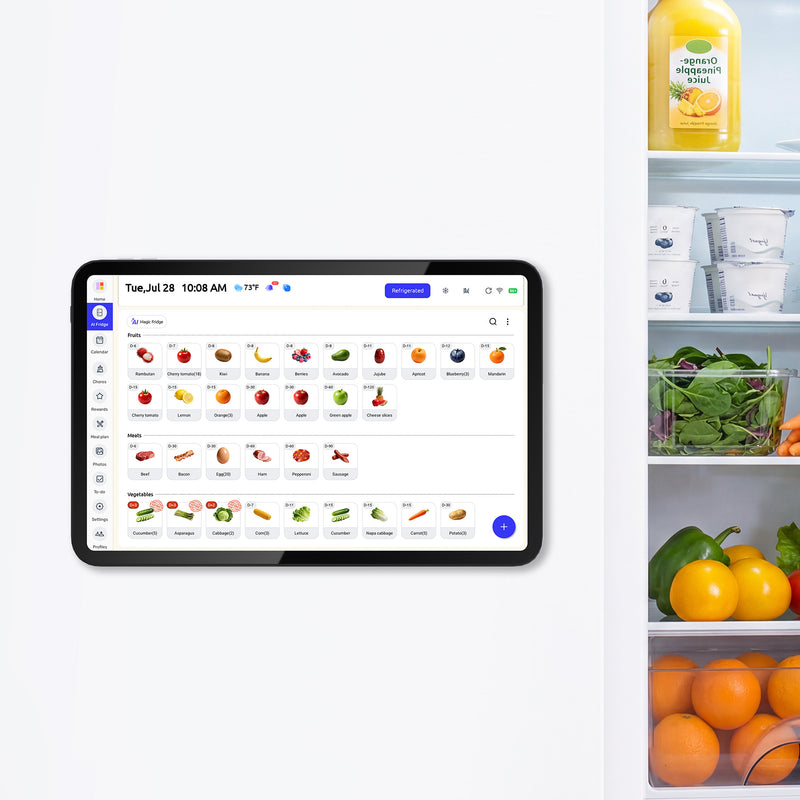
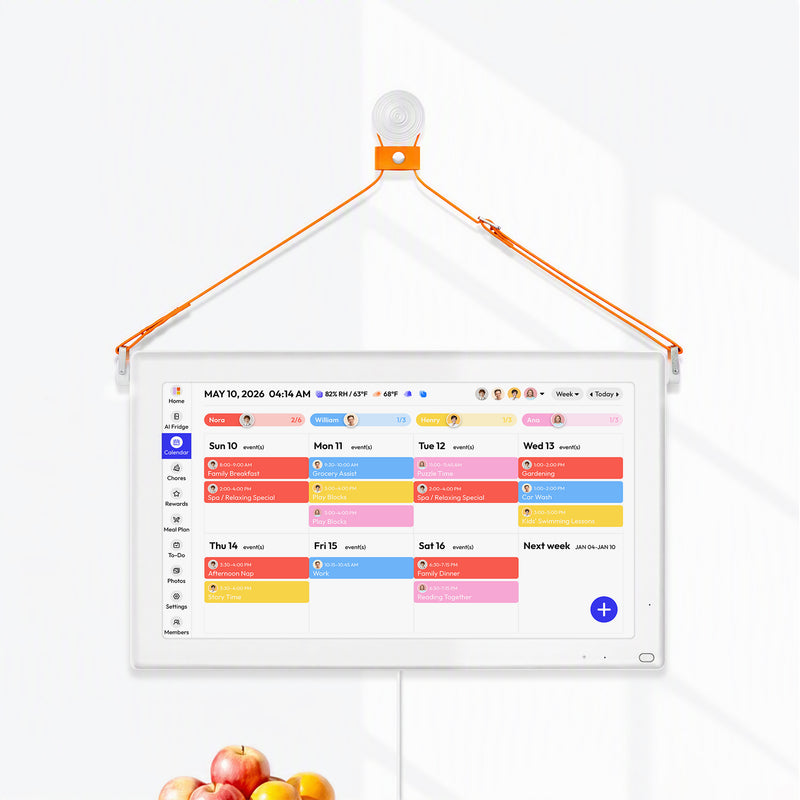
A paper or Velcro chart is usually best for the preschooler’s immediate routine because it is tactile, simple, and always visible at child height. A smart digital fridge calendar is better for the broader family system: school events, appointments, meal plans, caregiver handoffs, and reminders that adults manage.
A dedicated digital family calendar can keep shared schedules visible in one central place, while paper calendars often require someone to copy events manually. A digital wall calendar may help families who already struggle with scattered cell phone calendars. For a preschool morning, think of the digital calendar as the parent layer and the picture chart as the child layer.
Option |
Best For |
Main Limitation |
Preschool independence and no-reading routines |
Needs manual updates |
|
Magnetic fridge chart |
Shared visibility in a high-traffic spot |
Can become crowded |
Smart digital calendar |
Family schedules, chores, meals, reminders |
Costs more and may be too abstract for preschoolers |
If your household uses a smart fridge calendar or family display, you can place the preschool chart nearby without making the child depend on the screen. The family display can show “preschool drop-off at 8:15 AM,” while the child’s chart shows the three actions they can actually do: brush, wash, dress.

Common Mistakes That Make Charts Fail
The most common mistake is making the chart too long. Preschoolers do not need every adult concern represented. They need the next few doable actions. Another mistake is using text-only labels for a child who cannot read, then assuming the child is ignoring the chart. If the chart depends on adult translation, it is not truly independent.
A third mistake is placing the chart at adult height. A preschool tool should belong to the child’s world. If they cannot see it, touch it, or complete it, they will depend on you to operate it.
Finally, avoid turning the chart into a daily performance review. If every missed step becomes a lecture, the chart will feel like pressure. Calmly reset it each night or after school, notice what worked, and adjust what did not. If “dress” is too broad, split it into two pictures: clothes on, pajamas in hamper. If “wash” causes resistance, try a warmer washcloth, a different towel, or washing hands instead of face while you build tolerance.
A Calm Script for Tomorrow Morning
Start with connection before correction. A gentle wake-up, a brief cuddle, or a quiet “Good morning, I’m glad to see you” can change the tone before the chart even begins. Then use the same simple language each day.
You might say, “Your chart is ready. First is brush.” After brushing, pause and let your child move the marker. Then ask, “What picture comes next?” If they stall, point rather than repeat the full instruction. After the third step, connect the routine to a real outcome: “You finished brush, wash, and dress. Now we have time for breakfast together.”
That last sentence matters. The chart is not just about leaving on time. It is about creating a morning where your child feels capable and you do not have to spend the first hour of the day sounding like an alarm.
FAQ
Should I include rewards or stickers?
You can use a simple completion marker, but the routine should not depend on prizes. Preschoolers benefit from seeing progress, and moving a flap or magnet is often enough. If you use stickers, keep them tied to celebration rather than bargaining.
What if my child still refuses to get dressed?
Treat refusal as information. The clothes may be uncomfortable, the task may have too many steps, or your child may need choices narrowed to two outfits. Lay clothes out the night before and choose preschool-friendly pieces with easy waistbands, soft fabrics, and simple closures.
How long should we use the same chart?
Use it as long as it helps. When your child completes the sequence with little support, either keep the chart as a reassuring routine anchor or add one new step, such as shoes or backpack. Change only one part at a time so the system stays familiar.
A good preschool morning chart is not fancy. It is visible, short, physical, and kind. When brush, wash, and dress become pictures your child can follow, mornings begin to feel less like a chase and more like a shared rhythm.


